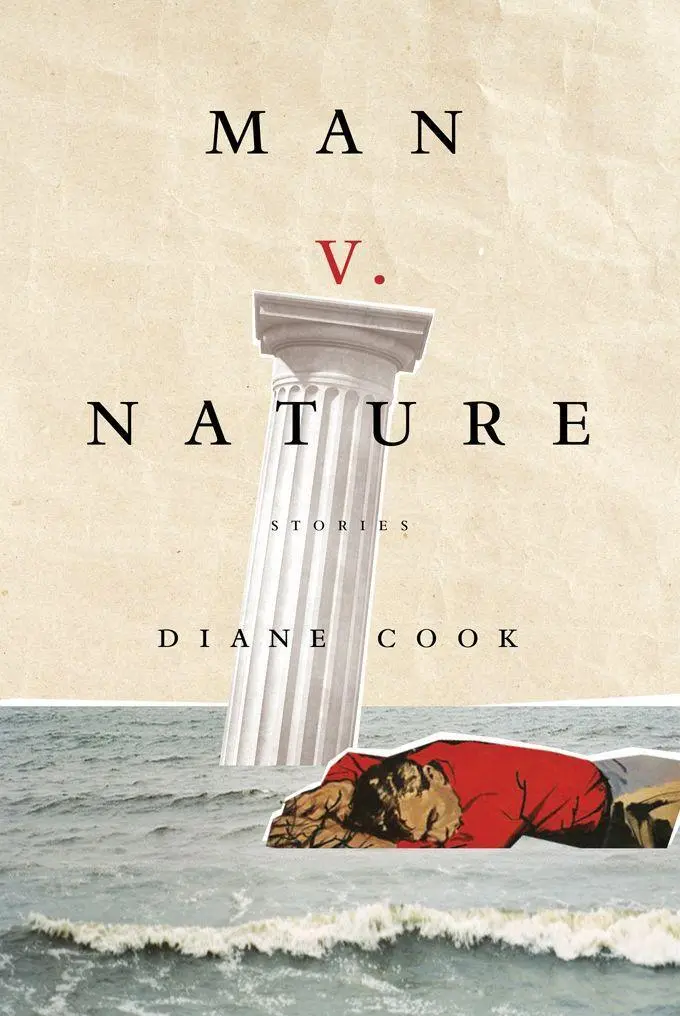
Diane Cook - Man V. Nature - Stories
Здесь есть возможность читать онлайн «Diane Cook - Man V. Nature - Stories» весь текст электронной книги совершенно бесплатно (целиком полную версию без сокращений). В некоторых случаях можно слушать аудио, скачать через торрент в формате fb2 и присутствует краткое содержание. Год выпуска: 2014, Издательство: Harper, Жанр: Современная проза, на английском языке. Описание произведения, (предисловие) а так же отзывы посетителей доступны на портале библиотеки ЛибКат.
- Название:Man V. Nature: Stories
- Автор:
- Издательство:Harper
- Жанр:
- Год:2014
- ISBN:нет данных
- Рейтинг книги:3 / 5. Голосов: 1
-
Избранное:Добавить в избранное
- Отзывы:
-
Ваша оценка:
Man V. Nature: Stories: краткое содержание, описание и аннотация
Предлагаем к чтению аннотацию, описание, краткое содержание или предисловие (зависит от того, что написал сам автор книги «Man V. Nature: Stories»). Если вы не нашли необходимую информацию о книге — напишите в комментариях, мы постараемся отыскать её.
Other stories explore situations pulled directly from the wild, imposing on human lives the danger, tension, and precariousness of the natural world: a pack of not-needed boys take refuge in a murky forest and compete against each other for their next meal; an alpha male is pursued through city streets by murderous rivals and desirous women; helpless newborns are snatched by a man who stalks them from their suburban yards. Through these characters Cook asks: What is at the root of our most heartless, selfish impulses? Why are people drawn together in such messy, complicated, needful ways? When the unexpected intrudes upon the routine, what do we discover about ourselves?
As entertaining as it is dangerous, this accomplished collection explores the boundary between the wild and the civilized, where nature acts as a catalyst for human drama and lays bare our vulnerabilities, fears, and desires.
Man V. Nature: Stories — читать онлайн бесплатно полную книгу (весь текст) целиком
Ниже представлен текст книги, разбитый по страницам. Система сохранения места последней прочитанной страницы, позволяет с удобством читать онлайн бесплатно книгу «Man V. Nature: Stories», без необходимости каждый раз заново искать на чём Вы остановились. Поставьте закладку, и сможете в любой момент перейти на страницу, на которой закончили чтение.
Интервал:
Закладка:
Soon a new man moved into the apartment above me. His footsteps rattled my lamps and china, shook plaster dust down onto my dinner. I knew the kind of power behind footsteps like that. And eventually I married him.
He terrified me. He was more than twice my size. Making love felt like getting run over. I was pancaked like in cartoons. My ribs crunched if he was on top, and my hips were belted with bruises if he was behind. He twirled me until I puked.
He wasn’t particularly bright, but he wasn’t stupid. He wasn’t funny. When I cracked a joke, he just stared. He was violent.
But he took me to the park. It seemed like forever since I’d been outside, but we could go to the pond and feed the remaining ducks, the ones too diseased to consume, and my husband felled all those who set upon us like they were tiny saplings. It felt like a small miracle to be able to go outside.
Each day, my husband left the house swinging a baseball bat. When it splintered, he used his fists. By the end of the day, our street was littered with bodies. At night I dressed his knuckles with ointment, wrapped them in bandages, and did it again the following night, and the night after. Each morning, the tenuous scabs ripped open; the wounds had no time to heal.
When I went into labor, he carried me outside, and we were set upon. My hair was pulled. Someone punched my round belly. But this was a momentary scourge. My husband drove through the wall of them like we were all on a football field and I was the odd-shaped ball in his arms. All around us were moans, hands grabbing as we ran. I thought, How can I bring a child into this world? Then I thought, At least our child will have half my husband’s genes. Whatever the world brings, surely the child of a man like this can meet it.
I almost didn’t make it through the delivery, the child was so large. Its aggressive squirming tore things in me. I was put under.
I was weak from the delivery, and now my boy took every last nutrient; he sucked me dry. I was too exhausted after nursing to move. He grew to an enormous size, a size that scared me, but also delighted me. I was desperate for him to be so big and strong that nothing could ever harm him.
By the time he was six months old, he was too big for me to lift. But he was hungry all the time. To nurse, my husband placed the child on my chest while I lay still beneath. He had to stay home to lay and lift the child off me all day. Eventually he lost his job.
“I think you should stop nursing,” he said one night.
I lay beneath our boy, flattened, barely breathing from the weight of him.
“But how will he grow?”
“Look at you.” He squeezed my flaccid bicep. I tried to make a muscle, but the arm just trembled. “I doubt you’re giving him the kind of nutrition he needs.”
We switched to nutrient packs that he bought from the corner market.
We were a sight. I was all bones; my husband was bruised and bloodied from his nutrient pack outings. Our boy, though, was magnificent; he stomped around the house, able to reach things on the highest shelf for me. His shoulders were broad like a draft animal’s, and he carried me around on them like I weighed zero. He teetered on his trunkish legs like a toddler because he was one. It was scary and thrilling to wobble up so high. I traced the filigree patterns on the ceiling of our once fine home.
My husband insisted we all eat the nutrient packs for strength. We needed it. A man on a lower floor had been attacked in his apartment. We couldn’t count on staying home to keep us safe. But the nutrient packs had the opposite effect on me. I grew heavy but not strong; my muscles quivered under the extra weight.
My husband insisted we run sprints across our living room. Three times a day we did circuits. After lunch, we bench-pressed. He spotted me on the bench, but mostly he lifted the bar for me, and shamed me while I blubbered. Our son watched us with curiosity.
By twenty months he could bench almost as much as his father. He no longer wore clothes; nothing fit. We wrapped him in bath towels instead of diapers. He stomped around and soaked through them onto all the furniture. I did load upon load of laundry. Nothing smelled right in our house any longer.
For money and goods, my husband ran errands for the other apartment owners in our building. He went to the market for them. He acted as a guard when they had to go outside. He escorted them if they had to go to work. Our apartment became stocked with supplies and strange luxuries, all bartered for my husband’s services. Fine sheets, china cups, silver trays. I hammered those silver trays onto one wall so my boy could watch himself do push-ups and bicep curls across their reflective surfaces.
One night, my husband came home with his shirt torn, his abdomen gashed with thick bloody lines like from the tines of a garden fork.
“It’s getting much worse,” he huffed. He made me do extra sets of jumping jacks and squats and then squeezed all my major muscle groups while I tensed. I wanted this to lead him to make his violent kind of love to me, but he just went to the table and put his head down.
I checked the door and turned all the extra bolts. Sometimes my husband locked just two, like it was some test of fate. Could he ward off the intruders with brute strength if they got through a measly two locks? Three? We all knew he could, but I liked eight, a nice curvy number that had a lot in common with infinity. At least in looks. I bolted eight.
Our boy carried me to his room, and I read him a book while he tried to do crunches like his dad.
“You want to feel it deep in your belly,” I instructed. I knelt beside him as he struggled and failed and placed my palm right below his navel. I pressed down, and his breath pushed out and I felt the contraction while his head and shoulders lifted like they were tethered to the ceiling.
My husband made plans to move us to another city, one that was reportedly safer. He said, “We can’t raise our son here. I thought we could, but we can’t.”
“Going elsewhere is much more difficult than staying put,” I argued.
“It’s one thing for us to be cooped up here. But he needs to be able to go outside. To grow.”
He looked at our boy and nodded, and our boy nodded back, but he was only mimicking his father; he didn’t understand what was happening. He lay on the crashed-down couch, broken long ago by his weight and his father’s, and sucked down a nutrient pack. He appeared to grow in chest circumference right before my eyes.
“He’s fine,” I said.
But my husband had made up his mind. He sighed and looked me up and down. “I’ll protect you as much as I can,” he said. “We both will.” Then he looked at his hands, swallowing the inherent but.
I went to the window. Of course I knew what he meant, and I was angry. I had been strong once. I had made it this far. Now, because I’d given him a child, a son, I was weak and would be left behind.
I thought about how I might fare here alone. I looked through the lattice of the window gate at the smoke from the many fires that licked the sky. As the sun fell for the night, it glowed a sickly purple, like it had an awful flu and was giving up.
I could maybe last a week or two. If they noticed that my husband no longer patrolled the street, they might investigate the apartment, find me here, and have a field day. I looked at my son. I wondered if he would fuss at having to say good-bye. How would he remember me? I’d be that funny woman who used to ride on his shoulders. He might remember the feel of me there, almost weightless in light of his strength. But what more could he remember? That I taught him crunches? Gave him all my fortitude? Even though he looked like a man at times, he was just a baby still. It was strange to know, looking at them, that they would make it and be fine. And stranger to know that they looked at me and knew I would not. And that we would go anyway.
Читать дальшеИнтервал:
Закладка:
Похожие книги на «Man V. Nature: Stories»
Представляем Вашему вниманию похожие книги на «Man V. Nature: Stories» списком для выбора. Мы отобрали схожую по названию и смыслу литературу в надежде предоставить читателям больше вариантов отыскать новые, интересные, ещё непрочитанные произведения.







Обсуждение, отзывы о книге «Man V. Nature: Stories» и просто собственные мнения читателей. Оставьте ваши комментарии, напишите, что Вы думаете о произведении, его смысле или главных героях. Укажите что конкретно понравилось, а что нет, и почему Вы так считаете.