Assaf Gavron - The Hilltop
Здесь есть возможность читать онлайн «Assaf Gavron - The Hilltop» весь текст электронной книги совершенно бесплатно (целиком полную версию без сокращений). В некоторых случаях можно слушать аудио, скачать через торрент в формате fb2 и присутствует краткое содержание. Год выпуска: 2014, Издательство: Scribner, Жанр: Современная проза, на английском языке. Описание произведения, (предисловие) а так же отзывы посетителей доступны на портале библиотеки ЛибКат.
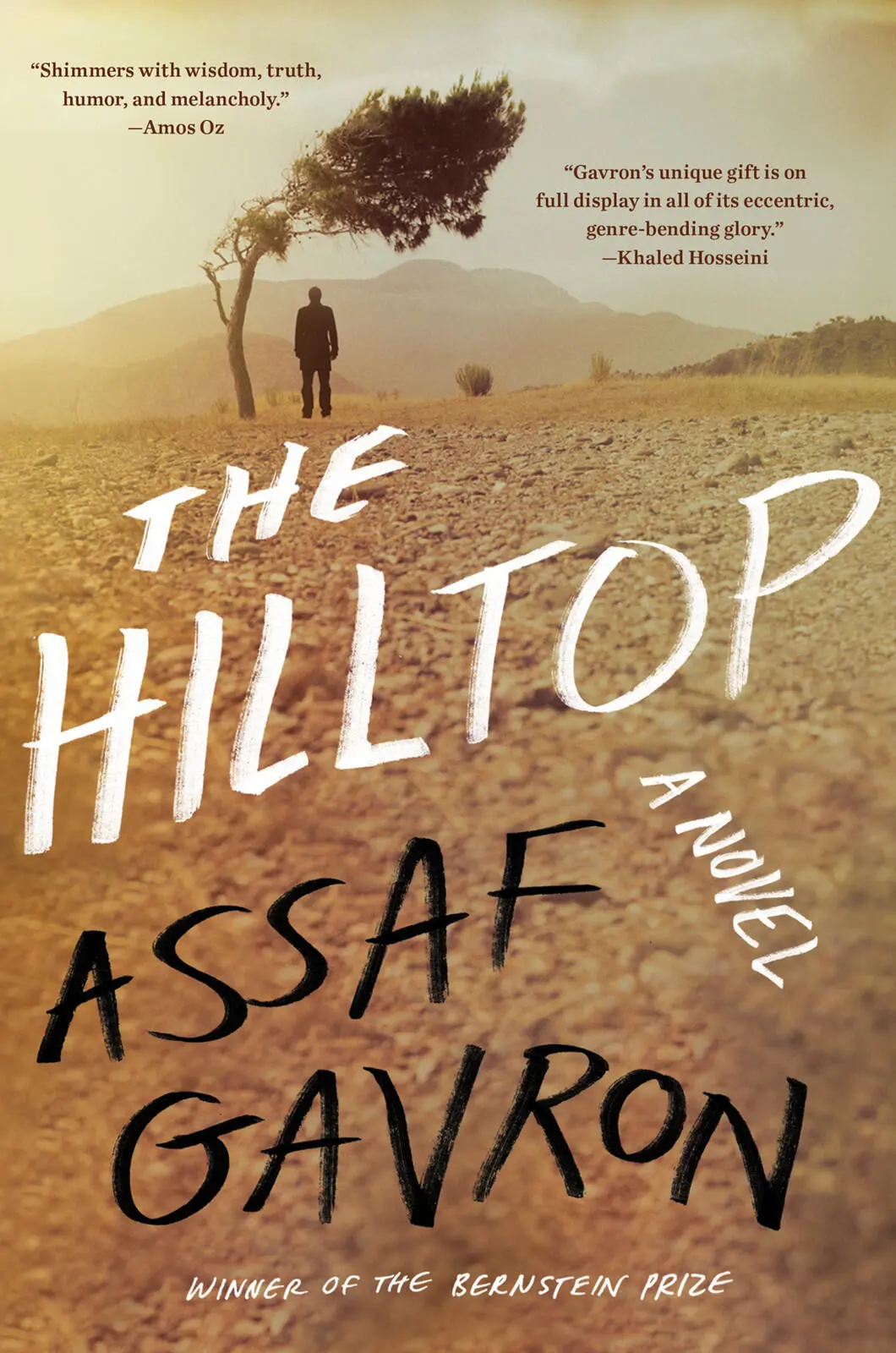
- Название:The Hilltop
- Автор:
- Издательство:Scribner
- Жанр:
- Год:2014
- ISBN:нет данных
- Рейтинг книги:3 / 5. Голосов: 1
-
Избранное:Добавить в избранное
- Отзывы:
-
Ваша оценка:
The Hilltop: краткое содержание, описание и аннотация
Предлагаем к чтению аннотацию, описание, краткое содержание или предисловие (зависит от того, что написал сам автор книги «The Hilltop»). Если вы не нашли необходимую информацию о книге — напишите в комментариях, мы постараемся отыскать её.
Tel Aviv) and winner of the prestigious Bernstein Prize,
is a monumental and daring work about life in a West Bank settlement from one of Israel's most acclaimed young novelists.
On a rocky, beautiful hilltop stands Ma'aleh Hermesh C, a fledgling community flying under the radar. According to the government it doesn't exist; according to the military it must be defended. On this contested land, Othniel Assis — under the wary gaze of the neighboring Palestinian village — plants asparagus, arugula, and cherry tomatoes, and he installs goats — and his ever-expanding family. As Othniel cheerfully manipulates government agencies, more settlers arrive, and, amid a hodge-podge of shipping containers and mobile homes, the outpost takes root.
One of the settlement's steadfast residents is Gabi Kupper, a one-time free spirit and kibbutz-dweller, who undergoes a religious awakening. The delicate routines of Gabi's new life are thrown into turmoil with the sudden arrival of Roni, his prodigal brother, who, years after venturing to America in search of fortune, arrives at Gabi's door, penniless. To the settlement's dismay, Roni soon hatches a plan to sell the "artisanal" olive oil from the Palestinian village to Tel Aviv yuppies. When a curious
correspondent stumbles into their midst, Ma'aleh Hermesh C becomes the focus of an international diplomatic scandal and faces its greatest test yet.
By turns serious and satirical,
brilliantly skewers the complex, often absurd reality of life in Israel, the West Bank settlers, and the nation's relationship to the United States, and makes a startling parallel between today's settlements and the kibbutz movement of Gabi and Roni's youth. Rich with humor and insight, Assaf Gavron's novel is the first fiction to grapple with one of the most charged geo-political issues of our time, and he has written a masterpiece.Hailed as "The Great Israeli Novel" (
Tel Aviv) and winner of the prestigious Bernstein Prize,
is a monumental and daring work about life in a West Bank settlement from one of Israel's most acclaimed young novelists.
On a rocky, beautiful hilltop stands Ma'aleh Hermesh C, a fledgling community flying under the radar. According to the government it doesn't exist; according to the military it must be defended. On this contested land, Othniel Assis — under the wary gaze of the neighboring Palestinian village — plants asparagus, arugula, and cherry tomatoes, and he installs goats — and his ever-expanding family. As Othniel cheerfully manipulates government agencies, more settlers arrive, and, amid a hodge-podge of shipping containers and mobile homes, the outpost takes root.
One of the settlement's steadfast residents is Gabi Kupper, a one-time free spirit and kibbutz-dweller, who undergoes a religious awakening. The delicate routines of Gabi's new life are thrown into turmoil with the sudden arrival of Roni, his prodigal brother, who, years after venturing to America in search of fortune, arrives at Gabi's door, penniless. To the settlement's dismay, Roni soon hatches a plan to sell the "artisanal" olive oil from the Palestinian village to Tel Aviv yuppies. When a curious
correspondent stumbles into their midst, Ma'aleh Hermesh C becomes the focus of an international diplomatic scandal and faces its greatest test yet.
By turns serious and satirical,
brilliantly skewers the complex, often absurd reality of life in Israel, the West Bank settlers, and the nation's relationship to the United States, and makes a startling parallel between today's settlements and the kibbutz movement of Gabi and Roni's youth. Rich with humor and insight, Assaf Gavron's novel is the first fiction to grapple with one of the most charged geo-political issues of our time, and he has written a masterpiece.
The Hilltop — читать онлайн бесплатно полную книгу (весь текст) целиком
Ниже представлен текст книги, разбитый по страницам. Система сохранения места последней прочитанной страницы, позволяет с удобством читать онлайн бесплатно книгу «The Hilltop», без необходимости каждый раз заново искать на чём Вы остановились. Поставьте закладку, и сможете в любой момент перейти на страницу, на которой закончили чтение.
Интервал:
Закладка:
He’d miss this quiet when he was sitting above a busy street in Netanya with his good friend Ababa Cohen. Both the quiet and also the chaos. And also the Arabs, and the settlers. And also the ones who shouted at him — Othniel, and Neta Hirschson. And also Gitit, of course. He was missing her already, ever since she was sent to the all-girls’ high school in Samaria. He gazed at her parents’ trailer. Yes, in Netanya he would miss Ma’aleh Ha-Hermesh, as he mistakenly called the place for the first six months he was there.
He recalled the strange incident that morning involving Neta Hirschson. “Leave us be, you brutes!” the beautician shouted at the soldiers. “Evil bastards! Shame on you! ”
Company commander Omer’s new driver fixed her with a frightened stare.
“Don’t pay any attention,” instructed Omer, who was in the middle of a call with headquarters while his and Yoni’s soldiers posted the Civil Administration orders.
But Neta Hirschson recognized the soft spot and aimed her sharpened darts at it: “You! Is this how you were raised? To expel Jews from their homes? Families? Children? You appear to have been raised in a good home. Don’t let them drag you into their crimes. Disobey the order!”
The driver tried not to look at the small woman who was shouting at him. Again Captain Omer said, “Don’t pay any attention, she’s always like that.” The rain was falling and the orders got wet and tore and the wind was icy and Neta huddled into her coat, yelled one final “Traitors” and suddenly dropped to her knees in the mud and vomited. The terrified driver brought it to the attention of his commander. “Always like that?” he asked. Omer hurried over and laid a hand on her shoulder and asked if everything was okay, and when she failed to lash out at him in response, he realized she was not always like that, and escorted her to the nearest trailer.
Yoni considered stopping by Jean-Marc and Neta’s now to ask how she was feeling, but decided it was too charged a day for a courtesy visit. There wasn’t a soul outside, and twilight had fallen. Sasson’s camel cow was enjoying some weeds, and Condi the dog joined Yoni on the patrol, wagged her tail, and gave in to the pleasure of his stroking. “I’ll miss you, too,” Yoni whispered to her, and then noticed a movement out of the corner of his eye, and lifted his head, and called out, “Hey! What are you doing? Come on, for real.”
“Leave it, come on, you’re getting discharged next week. Turn a blind eye,” Josh requested.
“We didn’t post these orders in the rain so you could come afterward and take them down, doesn’t matter when I’m being discharged. These are signed orders of the State of Israel.”
“Exactly,” said Josh, smiling. “Merely orders of the State of Israel. There are more powerful orders, from a higher place.”
“It’s forbidden for you to do this,” Yoni replied, unsure what the American had meant.
“Forbidden?” Josh chuckled scornfully. “What’s forbidden is to expel people from their homes. Your army won’t tell us that we can’t live in our home. And certainly not you. I didn’t come from Borough Park post-9/11 for the likes of you to tell me where to go. You got that? So scram…” Josh concluded with a rapid remark in English that was intended to sail over the head and fur-trimmed coat of the short Ethiopian soldier. But Yoni was familiar with the words used by the redhead. Certainly the word “Scram,” which had become trendy throughout the country ever since summer, when the defense minister spat it out on this very hilltop.
Yoni called Omer and told him about Josh. Yoni could read the silence on the other end of the line, was familiar with the slow-boiling rage of the commander. Mostly it was a pressure cooker that remained closed after coming to a boil and then cooled, but under the right conditions — if, for example, he had experienced an unsuccessful date, repaired a puncture in the rain, posted orders in the wind, heard that a disrespectful bully cursed and insulted a soldier who was there to protect him — Captain Omer Levkovich could perhaps explode.
When Yoni hung up, Josh taunted, “What’s up, crybaby, did you call Daddy to come help? Daddy’s busy and can’t come?” Josh grabbed hold of another order, on the side of Shaulit Rivlin’s trailer, and tore it off the wall. Yoni went on his way, ignoring Josh’s cries of victory.
Omer arrived in a jeep with his team, and behind him came a command car with more soldiers and tools. Yoni was waiting with his soldiers at the entrance and hopped onto the wing of the command car and rode like that, standing, outside the vehicle, like a thin messiah in a thick military coat, with a Galil SAR diagonally across his back. The convoy drove slowly for dramatic effect, as if to declare, Attention, we are here, look what we’re going to do. The vehicles stopped and spewed out the soldiers and equipment, their powerful front-mounted spotlights directed toward the cabin on the edge of the cliff, tunnels of lights that bore through the deepening darkness. Omer Levkovich assembled the troops for a quick briefing. After that, some lifted sharpened crowbars, and others five-kilo hammers. Omer approached and knocked on the cabin door, on which hung a small sign with the words “Enter Blessed.” There was no answer — Gabi had gone to pray.
Josh appeared from somewhere, and from his mouth shot the words “What the hell…” which were answered almost instantly by a blow from Omer’s crowbar that smashed the door of the cabin.
“Hey, hey, hey!” Josh yelled. “What are you doing? Hello?” The soldiers didn’t respond. One by one they entered the cabin until they stood tightly packed inside. Josh tried to get in but there wasn’t room. He pressed the buttons on his phone in a panic. Inside, the mission was straightforward and clear, and the hammers slammed into the walls and the wooden roof, smashed them, broke them to pieces. Yoni swung the five-kilo hammer in his hands every which way, sweated from the work and the effort and the heat of the many bodies in a small room, though within minutes the space aired out because it was opened on all sides with the disappearance of the roof and the walls, and all that remained was the stone and concrete framework, which Yoni also went to work on in a fit of rage.
Omer looked on with a mixture of wonder and pride at this model soldier who was soon departing, with the bead of sweat on his smooth brow. That’s the way to do it, how to show the young ones the meaning of conviction. Yoni vented the resentment of months. He’d defended these people with his life and force of arms, and they’d responded with complaints and sour faces. Yes, some of them, perhaps most, had invited him to Sabbath meals, brought cakes, and inquired into his well-being, but words like Josh’s hurt, and he knew that others said them in private, particularly since the story with Gitit had emerged.
Josh screamed hysterically into his phone. Where’s the swollen-headed peacock from earlier, thought Yoni, and suppressed the urge to smile at him. Josh tried to enter what used to be the cabin and grab the arm of one of the soldiers, but the soldier’s elbow shot back into Josh’s jaw and stunned him. He backed off, tried to yell something, but only managed a whimper.
Neta Hirschson turned up, screaming. “Who’s in charge here? I demand to speak to the person in charge! What right do you have to destroy a Jewish home? What would you say if I were to come to your house and set about smashing it with hammers? Fascists! Traitors! Brutes! The Nazis would be proud of you!” The soldiers continued without responding. They were almost done — the cabin was so small, and although Gabi had needed over a full year to build it, Omer and his soldiers obliterated it in less than fifteen minutes.
Читать дальшеИнтервал:
Закладка:
Похожие книги на «The Hilltop»
Представляем Вашему вниманию похожие книги на «The Hilltop» списком для выбора. Мы отобрали схожую по названию и смыслу литературу в надежде предоставить читателям больше вариантов отыскать новые, интересные, ещё непрочитанные произведения.










Обсуждение, отзывы о книге «The Hilltop» и просто собственные мнения читателей. Оставьте ваши комментарии, напишите, что Вы думаете о произведении, его смысле или главных героях. Укажите что конкретно понравилось, а что нет, и почему Вы так считаете.