Assaf Gavron - The Hilltop
Здесь есть возможность читать онлайн «Assaf Gavron - The Hilltop» весь текст электронной книги совершенно бесплатно (целиком полную версию без сокращений). В некоторых случаях можно слушать аудио, скачать через торрент в формате fb2 и присутствует краткое содержание. Год выпуска: 2014, Издательство: Scribner, Жанр: Современная проза, на английском языке. Описание произведения, (предисловие) а так же отзывы посетителей доступны на портале библиотеки ЛибКат.
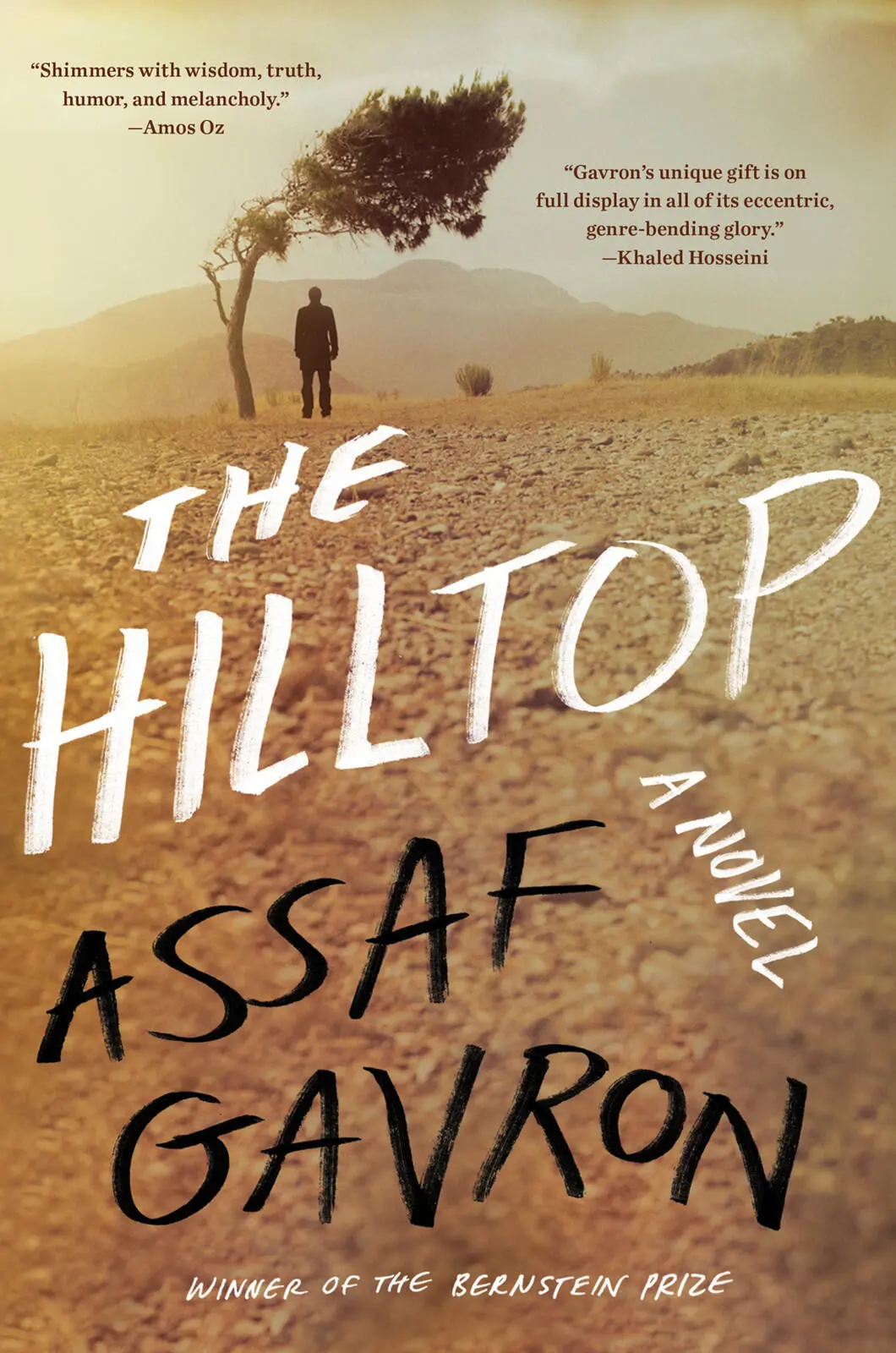
- Название:The Hilltop
- Автор:
- Издательство:Scribner
- Жанр:
- Год:2014
- ISBN:нет данных
- Рейтинг книги:3 / 5. Голосов: 1
-
Избранное:Добавить в избранное
- Отзывы:
-
Ваша оценка:
The Hilltop: краткое содержание, описание и аннотация
Предлагаем к чтению аннотацию, описание, краткое содержание или предисловие (зависит от того, что написал сам автор книги «The Hilltop»). Если вы не нашли необходимую информацию о книге — напишите в комментариях, мы постараемся отыскать её.
Tel Aviv) and winner of the prestigious Bernstein Prize,
is a monumental and daring work about life in a West Bank settlement from one of Israel's most acclaimed young novelists.
On a rocky, beautiful hilltop stands Ma'aleh Hermesh C, a fledgling community flying under the radar. According to the government it doesn't exist; according to the military it must be defended. On this contested land, Othniel Assis — under the wary gaze of the neighboring Palestinian village — plants asparagus, arugula, and cherry tomatoes, and he installs goats — and his ever-expanding family. As Othniel cheerfully manipulates government agencies, more settlers arrive, and, amid a hodge-podge of shipping containers and mobile homes, the outpost takes root.
One of the settlement's steadfast residents is Gabi Kupper, a one-time free spirit and kibbutz-dweller, who undergoes a religious awakening. The delicate routines of Gabi's new life are thrown into turmoil with the sudden arrival of Roni, his prodigal brother, who, years after venturing to America in search of fortune, arrives at Gabi's door, penniless. To the settlement's dismay, Roni soon hatches a plan to sell the "artisanal" olive oil from the Palestinian village to Tel Aviv yuppies. When a curious
correspondent stumbles into their midst, Ma'aleh Hermesh C becomes the focus of an international diplomatic scandal and faces its greatest test yet.
By turns serious and satirical,
brilliantly skewers the complex, often absurd reality of life in Israel, the West Bank settlers, and the nation's relationship to the United States, and makes a startling parallel between today's settlements and the kibbutz movement of Gabi and Roni's youth. Rich with humor and insight, Assaf Gavron's novel is the first fiction to grapple with one of the most charged geo-political issues of our time, and he has written a masterpiece.Hailed as "The Great Israeli Novel" (
Tel Aviv) and winner of the prestigious Bernstein Prize,
is a monumental and daring work about life in a West Bank settlement from one of Israel's most acclaimed young novelists.
On a rocky, beautiful hilltop stands Ma'aleh Hermesh C, a fledgling community flying under the radar. According to the government it doesn't exist; according to the military it must be defended. On this contested land, Othniel Assis — under the wary gaze of the neighboring Palestinian village — plants asparagus, arugula, and cherry tomatoes, and he installs goats — and his ever-expanding family. As Othniel cheerfully manipulates government agencies, more settlers arrive, and, amid a hodge-podge of shipping containers and mobile homes, the outpost takes root.
One of the settlement's steadfast residents is Gabi Kupper, a one-time free spirit and kibbutz-dweller, who undergoes a religious awakening. The delicate routines of Gabi's new life are thrown into turmoil with the sudden arrival of Roni, his prodigal brother, who, years after venturing to America in search of fortune, arrives at Gabi's door, penniless. To the settlement's dismay, Roni soon hatches a plan to sell the "artisanal" olive oil from the Palestinian village to Tel Aviv yuppies. When a curious
correspondent stumbles into their midst, Ma'aleh Hermesh C becomes the focus of an international diplomatic scandal and faces its greatest test yet.
By turns serious and satirical,
brilliantly skewers the complex, often absurd reality of life in Israel, the West Bank settlers, and the nation's relationship to the United States, and makes a startling parallel between today's settlements and the kibbutz movement of Gabi and Roni's youth. Rich with humor and insight, Assaf Gavron's novel is the first fiction to grapple with one of the most charged geo-political issues of our time, and he has written a masterpiece.
The Hilltop — читать онлайн бесплатно полную книгу (весь текст) целиком
Ниже представлен текст книги, разбитый по страницам. Система сохранения места последней прочитанной страницы, позволяет с удобством читать онлайн бесплатно книгу «The Hilltop», без необходимости каждый раз заново искать на чём Вы остановились. Поставьте закладку, и сможете в любой момент перейти на страницу, на которой закончили чтение.
Интервал:
Закладка:
No. None of those factors were behind the sentence that came from his mouth, but rather the law, the plain and simple law. The law from the book of laws of the State of Israel, and the international law, which the minister felt himself entrusted to uphold.
He raised his eyes, cast his gaze over his three colleagues around the table, placed the fax sheet on the dark mahogany surface, positioned it so that its edges lay parallel and flush to the edge of the table, and said, “Giora, evacuate that outpost. I’m serious this time. No games. Remove that thorn from my ass. It’s been digging into me for way too long. Way, way too long.” He handed the fax to Malka, stood up, and left the room.
FEEDING ON CARRION
The Takeoff
The realization came on the eve of Shavuot. He was sitting in the dining hall in a white shirt and felt ridiculous. Some families sat together, but he didn’t want to sit with Dad Yossi; he never sat with him in the dining hall. Children were singing about the first fruits and he knew neither the children nor the songs. Roni was in Tel Aviv, bumming around, living in the apartment of his girlfriend’s father and raising goldfish. Working in some pub. It didn’t sound very appealing to Gabi, and anyway, his brother never invited him to tag along when he came for his monthly visit. Here, too, no one invited him to tag along. He could see his childhood friends Yotam and Ofir, sitting with their girlfriends, joining in on the sing-along. He could see the soldiers with their drooping eyelids, the volunteer girls with their smooth skin and blue eyes.
He was no longer an outcast at the kibbutz. The years since he left the army had passed in relative peace. After wandering for a while from one kibbutz enterprise to another, he finally managed to settle down — in the bananas. The groves were on the shores of the Sea of Galilee, about a forty-minute drive from the kibbutz. The banana boys spent long days out in the open, on the shores of the large lake, under the broad leaves, meals in groups of four or six in the peaceful picnic corner, cruising along the lake in kayaks when they felt like taking a break. It wasn’t light work — bananas are a pampered fruit with a short life cycle that requires digging new furrows every winter, uprooting the groves and planting new ones every spring, endless weeding. Even that morning, the eve of the holiday, with the banana fingers green in their palms and the palms clumped together in their bunches and the sun heralding the first days of summer, he sweated like a pig while digging an irrigation canal with a hoe. But Gabi didn’t shy away from hard work. After all, manual labor wasn’t what broke him at his previous jobs — it was the overpowering smell of tomatoes in the field crops division, the allergic itching caused by the grass in the factory, the condescending treatment from Dalia, who was in charge of the food supply department. His ejection from the army, too, wasn’t brought on by physical hardship, but rather because disrespectful cooks refused to feed him.
Suddenly, in the middle of the holiday dinner, he realized who he reminded himself of: Ezra Dudi. When they were children, Ezra Dudi, who was ten years older, would always sit alone in the dining hall and eat the same meal — yellow cheese, tomato, and a slice of bread. And he’d always shoot basketballs alone in the gym, for hours. And in the factory, Gabi recalled, he operated the forklift in silence and with precision, transporting the ready segments of lawn to the packing hall and the packed parcels to the delivery trucks. He showed up at the dining hall alone every day, in work clothes and with a somewhat dirty face, adorned with an ever-thickening beard.
Gabi thought about the fact that he never once saw Ezra Dudi exchange more than a word or two with anyone. He lived on the kibbutz with his mother, who arrived there from Europe after the war on her own and didn’t speak much about her past, but from here and there — her accent, her pale skin, a passing reference — people pieced together a patchwork of stories and came to the conclusion that she was originally from Ostland, the eastern territories. She may have spent several years in a Siberian gulag; may have been released from there under a repatriation agreement. Whatever the case, she arrived at the kibbutz alone and destitute and ten years later her son, Ezra Dudi, was born. And in this case, too, there was more to the story than met the eye: she became pregnant and gave birth to a dark-skinned and cute baby boy, of that there was no doubt, but no one knew the identity of the father.
There was always something slightly off about Ezra Dudi. His hair was the wrong length, his beard too wild. His eyes were black and large with a soft, though somewhat dim, look in them. He looked a little like Theodor Herzl, the father of Zionism, only a kibbutz version, and curly-haired. His clothes somehow didn’t sit well on his large frame. And his name, too, which no one understood — why two names? Both first names? And if one’s a surname, what kind of name is that?
From the looks he got from the kibbutz’s young children, Gabi could see he risked becoming another Ezra Dudi — with his odd isolation in the dining hall, with his silence and aimless wanderings, and perhaps even in appearance, rarely shaving his beard or cutting his hair, and remaining for the most part in his work clothes and shoes. He was overcome with regret. With the festival of the first fruits in full swing he felt like an onlooker, disengaged, out of place, and he arrived at the realization: that’s the problem. He knew, of course, that he wasn’t really Ezra Dudi, who suffered in all likelihood from a mild mental disorder of sorts. His mind and soul were more or less intact; the short-circuits in his brain over the years were deviations from the norm — the psychiatric medical officers he met with during his military service confirmed that, and added that he was blessed with a high level of intelligence and judgment. But he didn’t have money to leave the kibbutz, and Tel Aviv wasn’t appealing. He didn’t feel comfortable discussing things with Yossi, and when Roni came to visit, he felt his brother wasn’t really interested.
As in the case of previous significant junctures in his life, Uncle Yaron helped to steer him. Gabi went to visit him at the kibbutz on the Golan Heights the weekend after the Shavuot holiday, enjoying as always the cool air and heavy smell of cow dung while lying on the large ragged hammock.
“It’s like being in another country.” The nephew smiled at his uncle, and the uncle responded, “How would you know, you’ve never been overseas.”
“True,” the nephew said, “but it’s the closest to overseas I can get, so let me say it’s like being in another country.”
“You want to go overseas?” the uncle said. And the nephew stopped for a moment — not the hammock, because that moved by the force of inertia — but on the idea, because he had never before considered the option. Then he recalled why he had never considered the option. “How can I go overseas?” he said. “I don’t have a cent to my name.”
Uncle Yaron, with his balding egg-shaped head and glassy eye and half-chopped-off ear, appeared older than ever. Gabi had never thought about it, but Uncle Yaron Kupper had never married, hadn’t raised a family; he was hitched to the kibbutz, or more precisely, the Golan Heights. He paid homage to it with his eye and his ear, and it to him with earth and basalt and fresh air. He looked at his nephew and said to him, “Listen.” Gabi listened.
Uncle Yaron recounted that after taking care of all the matters related to the death of his brother Asher and sister-in-law Ricki — the funerals, the shiva, finding a kibbutz for the children, the sale of the house in Rehovot, locating the savings and closing the bank accounts — he was left with a significant amount of money in hand. With the blessing of Ricki’s father and sister, he opened a savings account for Roni and Gabi, for when they each reached the age of twenty-one. He concealed its existence from their kibbutz. Anyway, the kibbutz received a handsome sum as part of the absorption package. They don’t have to get it all, decided Yaron and the grandmother and the aunt. The savings grew and accrued interest and swelled over the years, and Uncle Yaron continued to monitor the account and keep it on the right investment tracks and top it off with his own money, because over and above his natural sense of responsibility, Uncle Yaron felt terrible guilt. He was the one who’d invited Asher and Ricki that week, he was the one who’d persuaded them to return home at night and not in the morning. And his sense of guilt manifested in his sweat and his money — insofar as he had any, as a member of a pioneering kibbutz on the Golan Heights — into the savings account. When the grandfather, Ricki’s father, passed away, another good dose was injected into the savings plan.
Читать дальшеИнтервал:
Закладка:
Похожие книги на «The Hilltop»
Представляем Вашему вниманию похожие книги на «The Hilltop» списком для выбора. Мы отобрали схожую по названию и смыслу литературу в надежде предоставить читателям больше вариантов отыскать новые, интересные, ещё непрочитанные произведения.







Обсуждение, отзывы о книге «The Hilltop» и просто собственные мнения читателей. Оставьте ваши комментарии, напишите, что Вы думаете о произведении, его смысле или главных героях. Укажите что конкретно понравилось, а что нет, и почему Вы так считаете.