Assaf Gavron - The Hilltop
Здесь есть возможность читать онлайн «Assaf Gavron - The Hilltop» весь текст электронной книги совершенно бесплатно (целиком полную версию без сокращений). В некоторых случаях можно слушать аудио, скачать через торрент в формате fb2 и присутствует краткое содержание. Год выпуска: 2014, Издательство: Scribner, Жанр: Современная проза, на английском языке. Описание произведения, (предисловие) а так же отзывы посетителей доступны на портале библиотеки ЛибКат.
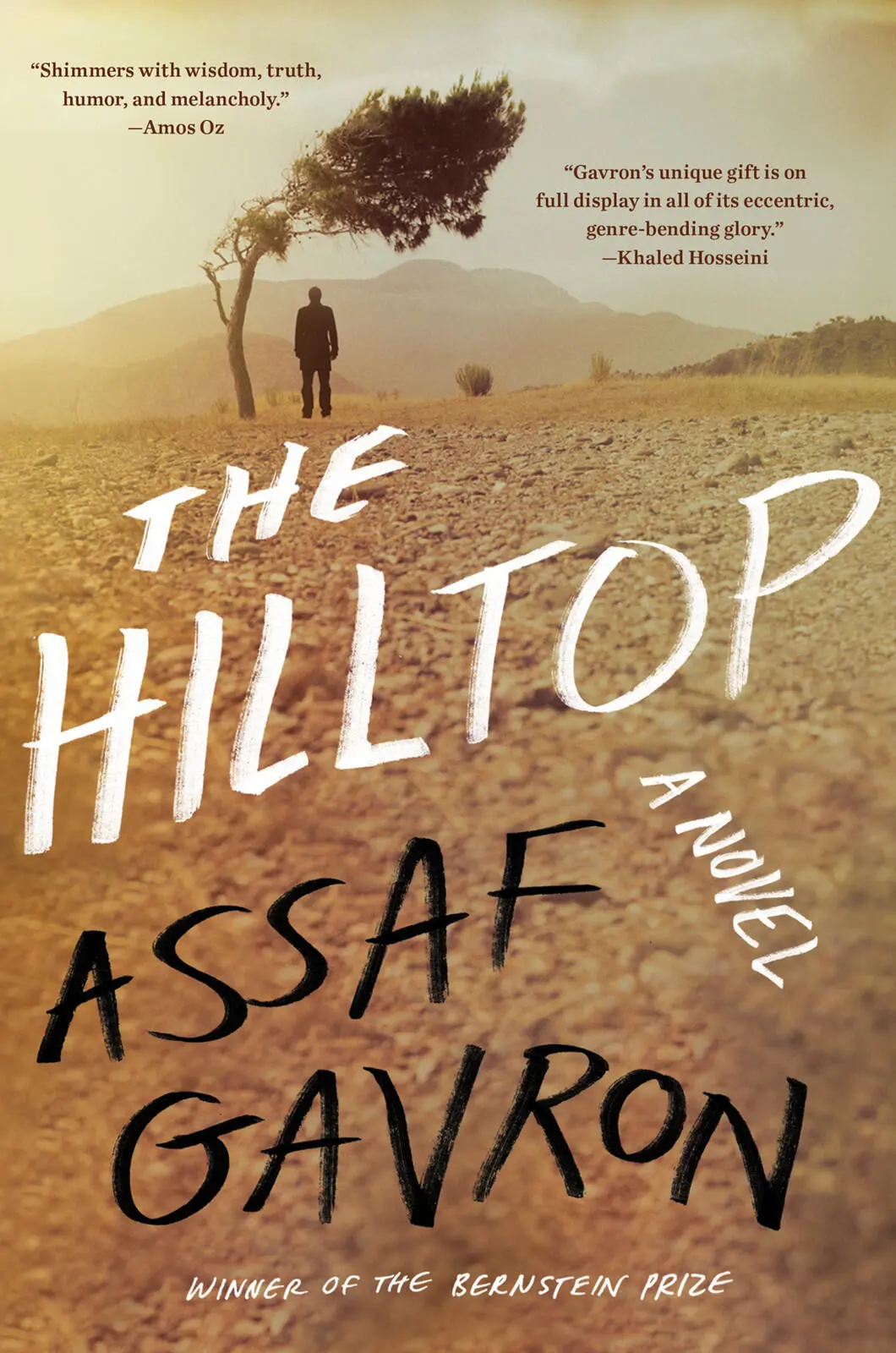
- Название:The Hilltop
- Автор:
- Издательство:Scribner
- Жанр:
- Год:2014
- ISBN:нет данных
- Рейтинг книги:3 / 5. Голосов: 1
-
Избранное:Добавить в избранное
- Отзывы:
-
Ваша оценка:
The Hilltop: краткое содержание, описание и аннотация
Предлагаем к чтению аннотацию, описание, краткое содержание или предисловие (зависит от того, что написал сам автор книги «The Hilltop»). Если вы не нашли необходимую информацию о книге — напишите в комментариях, мы постараемся отыскать её.
Tel Aviv) and winner of the prestigious Bernstein Prize,
is a monumental and daring work about life in a West Bank settlement from one of Israel's most acclaimed young novelists.
On a rocky, beautiful hilltop stands Ma'aleh Hermesh C, a fledgling community flying under the radar. According to the government it doesn't exist; according to the military it must be defended. On this contested land, Othniel Assis — under the wary gaze of the neighboring Palestinian village — plants asparagus, arugula, and cherry tomatoes, and he installs goats — and his ever-expanding family. As Othniel cheerfully manipulates government agencies, more settlers arrive, and, amid a hodge-podge of shipping containers and mobile homes, the outpost takes root.
One of the settlement's steadfast residents is Gabi Kupper, a one-time free spirit and kibbutz-dweller, who undergoes a religious awakening. The delicate routines of Gabi's new life are thrown into turmoil with the sudden arrival of Roni, his prodigal brother, who, years after venturing to America in search of fortune, arrives at Gabi's door, penniless. To the settlement's dismay, Roni soon hatches a plan to sell the "artisanal" olive oil from the Palestinian village to Tel Aviv yuppies. When a curious
correspondent stumbles into their midst, Ma'aleh Hermesh C becomes the focus of an international diplomatic scandal and faces its greatest test yet.
By turns serious and satirical,
brilliantly skewers the complex, often absurd reality of life in Israel, the West Bank settlers, and the nation's relationship to the United States, and makes a startling parallel between today's settlements and the kibbutz movement of Gabi and Roni's youth. Rich with humor and insight, Assaf Gavron's novel is the first fiction to grapple with one of the most charged geo-political issues of our time, and he has written a masterpiece.Hailed as "The Great Israeli Novel" (
Tel Aviv) and winner of the prestigious Bernstein Prize,
is a monumental and daring work about life in a West Bank settlement from one of Israel's most acclaimed young novelists.
On a rocky, beautiful hilltop stands Ma'aleh Hermesh C, a fledgling community flying under the radar. According to the government it doesn't exist; according to the military it must be defended. On this contested land, Othniel Assis — under the wary gaze of the neighboring Palestinian village — plants asparagus, arugula, and cherry tomatoes, and he installs goats — and his ever-expanding family. As Othniel cheerfully manipulates government agencies, more settlers arrive, and, amid a hodge-podge of shipping containers and mobile homes, the outpost takes root.
One of the settlement's steadfast residents is Gabi Kupper, a one-time free spirit and kibbutz-dweller, who undergoes a religious awakening. The delicate routines of Gabi's new life are thrown into turmoil with the sudden arrival of Roni, his prodigal brother, who, years after venturing to America in search of fortune, arrives at Gabi's door, penniless. To the settlement's dismay, Roni soon hatches a plan to sell the "artisanal" olive oil from the Palestinian village to Tel Aviv yuppies. When a curious
correspondent stumbles into their midst, Ma'aleh Hermesh C becomes the focus of an international diplomatic scandal and faces its greatest test yet.
By turns serious and satirical,
brilliantly skewers the complex, often absurd reality of life in Israel, the West Bank settlers, and the nation's relationship to the United States, and makes a startling parallel between today's settlements and the kibbutz movement of Gabi and Roni's youth. Rich with humor and insight, Assaf Gavron's novel is the first fiction to grapple with one of the most charged geo-political issues of our time, and he has written a masterpiece.
The Hilltop — читать онлайн бесплатно полную книгу (весь текст) целиком
Ниже представлен текст книги, разбитый по страницам. Система сохранения места последней прочитанной страницы, позволяет с удобством читать онлайн бесплатно книгу «The Hilltop», без необходимости каждый раз заново искать на чём Вы остановились. Поставьте закладку, и сможете в любой момент перейти на страницу, на которой закончили чтение.
Интервал:
Закладка:
Just then, the door to the trailer opened and Yakir heard the thunderous voice of his father, speaking on the telephone. He quickly switched tabs to open the farm’s Web page. Othniel came up behind Yakir, gave him a friendly pat on the head, with its thick mop of hair that practically swallowed up his green skullcap, sat down next to him, placed the telephone on the armrest of the easy chair, and rubbed his eyes.
“Sorry, another call came through, can you hear me, Assis?” came a voice from the device.
“I hear you, Dov, I hear you,” Othniel said, his head tilted back, his eyes staring up at the ceiling. Yakir pretended to focus on the computer screen.
“So the education minister briefed me on this morning’s cabinet meeting. They discussed the Washington Post article, too. The Foreign Ministry, and the embassy in Washington in particular, will keep tabs on any White House response to the report, prepared of course with strenuous denials and threats to sue the newspaper for implying that any illegal actions have been or are being committed at Ma’aleh Hermesh C. or any other settlement in Israel, either within the Green Line or beyond it.”
“Good.” Othniel chuckled, his fingers rubbing his eyes.
“Furthermore,” the head of the regional council continued, “a decision has been made to send the defense minister to Washington within the next few days, for the stated purpose of attending a charity event organized by the Jewish lobby, but he’ll actually be there to sniff around, drop in on the secretary of state, the defense secretary, and perhaps even the president himself, if and when the opportunity arises—” Just then, the telephone sounded several feeble beeps and died. Othniel gazed at the device, perplexed. Yakir took it from him and immediately understood the problem. He went into the kitchen, retrieved the charger from behind the refrigerator, plugged it into the Nokia, and placed the device on the refrigerator.
His father went to the bathroom, sprayed deodorant under his arms, and tried a little with his fingers to tidy his beard, which had grown hypericum flowers. “Yakir,” he instructed, “make a note in the calendar that Herzl Weizmann, the contractor, is coming tomorrow, and that I need to call Motke at the Housing Ministry to discuss a subsidy for the work he will be doing.”
Red-eyed, Othniel looked at Yakir, who was typing on the keyboard. “Okay, son?” he said abruptly and stepped outside again. Yakir peered cautiously through the window and watched his father get into the dusty Renault Express, the original color of which few at Ma’aleh Hermesh C. were able to recall — in an effort to conserve water, Othniel hadn’t washed it in years.
Yakir promptly returned to Second Life and met up with the small, bearded, skullcap-wearing group outside the Flame of the Revival synagogue. “Ah, Yakir, you’re back,” King Meir said. Hanging from his shoulder was the Uzi that had cost him next to nothing at an arms store in one of Second Life’s commercial areas. “We were just trying to decide where we should go now, after yesterday’s successful action at the mosque.” Yakir helped him to search for an Arab club. There was the Scheherazade Club, a nightclub with belly dancers, and the Orient Bazaar, which sells jalabiyas and kaffiyehs, and also Taste of Arabia, an Arab city with palm trees, mosques, and horses. The problem was that not many people hung out there. King Meir finally opted for the large mosque in Taste of Arabia. They’d go in and do some “item spamming” and bombard the mosque with Stars of David.
“If physical violence is out, spam is good. We’re smarter than them, let’s take advantage of that,” King Meir said, and gave everyone the objective’s coordinates. Yakir entered the details and appeared in the mosque with his friends. They were greeted with a hearty “Salaam alaikum!” from a woman who didn’t appear Arab, and they responded with a barrage of Stars of David: Yakir had used Photoshop to create a Star of David that was compatible with the Second Life graphics, had colored it blue, and had found a simple duplication program. And now, with his mouse, he dragged the Star of David and placed it on the floor of the mosque, where the graphic then duplicated itself thousands of times. The mosque filled with floating blue Stars of David.
“Let’s do the same at the Orient Bazaar!” yelled an exuberant King Meir, and he relayed new coordinates. Two minutes later, the bazaar, too, was filled with Stars of David. The bearded, Uzi-bearing bunch rejoiced. Not only had they filled those loathsome locations with some Jewish beauty, they had also messed with the computers of their owners and anyone who visited them. “You’re the man, Yakir!” King Meir exclaimed as they returned to Revival. “And you know what the next stage is!”
Yakir laughed. He would try to work on creating a copy of a mosque to blow up and a Palestinian flag to burn. Perhaps he’d have some time that night. He heard his father pull up and park, and a minute later, the door opened and heavy-duty work shoes thumped across the floor.
“What are you doing there, son?” Othniel asked.
“Nothing,” replied the son.
“What do you mean, nothing? I heard you laughing… Okay, let’s go, you coming to prayers?”
“Okay,” Yakir said, and clicked on the X in the corner of the screen.
The Campaign
Ariel woke half an hour before his alarm was set to go off. His mind remained clouded for a moment before he snapped to and remembered, and a slight tremor coursed through him, a shudder of anxiety that quickly took flight. He rose, rushed through his morning routine, woke his wife and young son, and prepared breakfast for them.
“What’s up?” his wife asked, and he replied, “Nothing, I just woke up early.” But she had known him long enough to know better. “Do you really have to go there?” she asked, and he responded immediately with “Oy, don’t get started. Yes, I really do have to go there. What’s the problem? I’ve told you a thousand times, it’s a safe road, which the army uses, on which—”
“On which no one has been killed in two years — I know, statistically, the chances of dying in a road accident in the center of the country are much higher.”
“Look, Daddy,” their son said. “Look, Daddy.” He pointed at his plate.
“I can see,” Ariel said. “That’s lovely, a plum!”
“Pum,” his son responded.
Do I really have to do this? he asked himself in the car. Why did I take the day off work? He tuned in to Razi Barkai’s radio talk show: settlements, the U.S. president, the prime minister. Boring. He switched over to 88FM, cold air streamed from the air conditioner, the sun was still rising in front of him as he headed east.
On Route 443, his confidence started to erode. Roni was right, it wasn’t so scary the second time around. But on the 443, there was a real sense of having stepped it up a notch. Not due to the road’s history so much, but more so the discernible changes. The outside temperature displayed on the dashboard dropped, the landscape morphed, the hilltops revealed themselves, Arab villages and villagers appeared on the sides of the road. And then there was the checkpoint, and the fence that rose up along the side of the road on both sides, and he had no idea if he was beyond the barrier or inside it, in a narrow corridor between the sides of the barrier itself. The air, too, was different, and past Jerusalem came the sense of being sucked out of a vacuum into the pale yellowish brown, into the desert, with more villages and mosques, more yellow taxis and Palestinian trucks — green-and-white license plates caused a rise in blood pressure, yellow ones were somewhat soothing — and suddenly the radio switched of its own accord from 88FM to Arabic music. His hands squeezed the wheel, eyes darted back and forth between the hilltops and the road. These Arabs drive like lunatics, he thought, and pictured one of the trucks plowing mercilessly into him, not necessarily with deadly intent but as the result of reckless driving.
Читать дальшеИнтервал:
Закладка:
Похожие книги на «The Hilltop»
Представляем Вашему вниманию похожие книги на «The Hilltop» списком для выбора. Мы отобрали схожую по названию и смыслу литературу в надежде предоставить читателям больше вариантов отыскать новые, интересные, ещё непрочитанные произведения.






Обсуждение, отзывы о книге «The Hilltop» и просто собственные мнения читателей. Оставьте ваши комментарии, напишите, что Вы думаете о произведении, его смысле или главных героях. Укажите что конкретно понравилось, а что нет, и почему Вы так считаете.