Robert Stone - A Flag for Sunrise
Здесь есть возможность читать онлайн «Robert Stone - A Flag for Sunrise» весь текст электронной книги совершенно бесплатно (целиком полную версию без сокращений). В некоторых случаях можно слушать аудио, скачать через торрент в формате fb2 и присутствует краткое содержание. Год выпуска: 2012, Издательство: Vintage, Жанр: Современная проза, на английском языке. Описание произведения, (предисловие) а так же отзывы посетителей доступны на портале библиотеки ЛибКат.
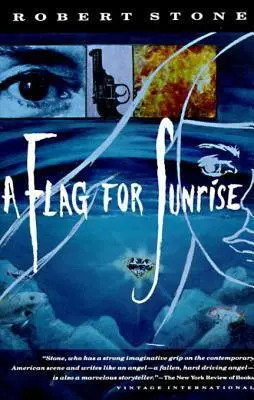
- Название:A Flag for Sunrise
- Автор:
- Издательство:Vintage
- Жанр:
- Год:2012
- ISBN:нет данных
- Рейтинг книги:4 / 5. Голосов: 1
-
Избранное:Добавить в избранное
- Отзывы:
-
Ваша оценка:
A Flag for Sunrise: краткое содержание, описание и аннотация
Предлагаем к чтению аннотацию, описание, краткое содержание или предисловие (зависит от того, что написал сам автор книги «A Flag for Sunrise»). Если вы не нашли необходимую информацию о книге — напишите в комментариях, мы постараемся отыскать её.
A Flag for Sunrise — читать онлайн бесплатно полную книгу (весь текст) целиком
Ниже представлен текст книги, разбитый по страницам. Система сохранения места последней прочитанной страницы, позволяет с удобством читать онлайн бесплатно книгу «A Flag for Sunrise», без необходимости каждый раз заново искать на чём Вы остановились. Поставьте закладку, и сможете в любой момент перейти на страницу, на которой закончили чтение.
Интервал:
Закладка:
“Mind if I take a shower?” Pablo asked them.
Neither man glanced at him.
“We may be fishing tonight,” Callahan said. “You’d just get yourself all gamey again.”
“Fishin?” Pablo asked.
“Anyhow,” Negus said, “the lady’s using the shower. She might be a while.”
Pablo took himself out on deck again, the anticipated clean clothes he carried were just a useless embarrassment now. He was nearly enraged. It was a hell of a thing not to get a shower when you wanted one. It was a bring-down. It made you negative.
He threw the clothes in a heap on his bunk in the lazaret. If they were fishing tonight, he thought, it would be for show, to have shrimp to put on the ice in the holds where the guns were stored. He climbed the ladder and stood scratching at his scroungy frame, looking over the stern as the Cloud picked up power and headed along the coast. His elation fled.
There would be no tying up on this coast, he should have known that. In Serrano, they might have a setup, but here the guns were for people to use against their own government. The coast here would be Reef City all the way; any passage broad enough to be worth dock space would have a town and any town must have some type of cops. The draft of the Cloud, even with her modified hull, could not possibly be less than eight feet loaded — so they would have to lie offshore, beyond the reef, and wait for a small boat to come out to them. Then there would be no way for him to get ashore and when the job was done it would be only the four of them on a big ocean. And whoever was in the small boat would be no friend of Pablo’s.
Showerless and negative, his rush fading, he thought things over several times to make them come out his way. In this, he was not successful.
Not a word had they said about Tino. Not Word One. Back in St. Joost, Naftali’s body would have been discovered. He found it very difficult to believe that the Callahans would ever be prepared to pay him off and let him go. Yet, he thought, if they had wanted to do him they could have done so by now. They were waiting for the deal to go down. For the money.
Pablo began to discern the diagram of events toward which the life of adventure was propelling him. Either the Callahans and Negus would get their money and he, Pablo, die — or he must make it be the other way round. But he was not a killer; he could not conceive of killing them. Even if they forced him — out of their greediness, their paranoia, their natural two-timing way of doing — to defend himself, he was outnumbered and lost and alone. On the other hand, he found his own death even more difficult to conceive.
“Holy shit,” he said.
He tried again to make it come out all right in his mind — another coast somewhere, the diamond in place, cash in hand, a grudging admiration all around. Then a few months on the beach. Daiquiris, elegant flunkies, his tuxedo.
No help. He was boxed. In over his head — and the image of that dreadful game came to him on Naftali’s dying whispers, the game with his skull. He looked at the deep green coast and was frightened.
“I can’t cut it,” he told Naftali. “I’m up the well-known creek.”
Thinking about Naftali made him feel a little bit better because that had been a time when things had looked bad and he had made out. He had put his mind to it and scored.
So, he thought, there was something more than just human to it. There was the Power. He might be Aided — his mother had said that to him. Aided.
He prayed to Jesus and to his mother and to Naftali. They gave him to understand that in the coming days he would know.
Late in the day, Holliwell took the boat ride to Playa Tate and limped along the beach to a small dock that ran thirty feet or so from the sand to the first ridge of coral. He wore long cotton trousers, a windbreaker and a shapeless straw hat to defend himself from the force of the sun. Down a curve of the coast, he could see the beach where he had been spined and the mission building with its pier, its high veranda and wooden cross. In a way, he was spying.
At the other extremity of the Playa, the Cuban hardware dealer, brother to Mrs. Paz, lounged under a desiccated palm cabana with some men who had driven out from town. The men appeared to be local merchants like himself; the dusty late-model Ford in which they all had come was parked at the edge of the dirt road. The Cuban and his friends were drinking piña coladas, mixed in a blender that plugged into the car’s dashboard.
For over an hour, he sat and watched the sun play on the coral shallows, the darting silver shapes of shore-feeding barracuda. Again and again he turned in the direction of the mission beach. It was where he wanted to be. Even with the use of his injured leg, there was no way for him to simply present himself there with discretion. But he wanted to see her.
It was hard, in the sunshine of Playa Tate, to consider repression and retribution, sacrifice and justice. It was hard anywhere for Holliwell to consider such things except as abstract functions of behavior. They were things other people believed themselves to be motivated by, his objects of study, the people who also believed themselves to be at home in the world. Wars he understood, what people did in them and believed they did and how they explained it to themselves and to others. All at once he found himself wondering again about what he would say back home when they came around to ask him. He realized now that they would surely come around to ask him — he had been seen to go. He might tell them nothing, he thought. Or something that explained things or obscured explanation. Of one thing he was certain — he would find out what it was she believed herself to be about over there under the wooden cross. He would find out what it was like for her; that was all he cared about.
It was a little dangerous. The thought made him smile and quickened in him a subtle fine excitement. Like the feeling that had come to him over the black coral — but not so coarse as that. It had to do with the girl. There was something of seduction in it.
He lay back on the splintering boards, his hat beside him, arms across his face, until something, a bird’s shadow, the passing of a cloud, roused him. He sat up then and put on his hat and saw a solitary figure coming toward him along the water’s edge. When he saw that it was she, a rush struck him like cocaine in the blood and he was surprised. He had been hoping against hope that she would come that way.
Upright, his hands clutching the edges of the dock, he watched her draw closer. She was in white and he thought, at her expense, it was appropriate. Loose-fitting white work pants and a short-sleeved shirt. There was a red scarf over her hair.
When she was near the dock, he could see that her face was drawn and paie, her eyes harried and haunted and clouded with fatigue. She walked looking down at the sand.
As soon as he called to her, something like a voice inside him said: You are foolish. A middle-aged drunk, meddling. Foolish. By then he had already spoken. When she turned toward him her look was blank. He took his hat off.
“Oh, it’s you,” she said, and he nodded, lamely agreeing that it was.
“You shouldn’t be out in the sun. How’s your leg?”
“It’s healing,” he said. “I don’t much like sitting around the Paradise.”
“Don’t you like it there?”
“Not much. Do you know it?”
“Not up close,” she said.
“One thing I can’t do is get a fin on. I’m thrown on the cultural resources of the area.”
“That’s a shame,” she said, “because there aren’t any.”
He asked her if she could stop to talk; he was afraid of sounding breathless. He wanted her to sit beside him on the dock but she stood off, tensed for flight.
Читать дальшеИнтервал:
Закладка:
Похожие книги на «A Flag for Sunrise»
Представляем Вашему вниманию похожие книги на «A Flag for Sunrise» списком для выбора. Мы отобрали схожую по названию и смыслу литературу в надежде предоставить читателям больше вариантов отыскать новые, интересные, ещё непрочитанные произведения.







Обсуждение, отзывы о книге «A Flag for Sunrise» и просто собственные мнения читателей. Оставьте ваши комментарии, напишите, что Вы думаете о произведении, его смысле или главных героях. Укажите что конкретно понравилось, а что нет, и почему Вы так считаете.