John McGahern - Amongst Women
Здесь есть возможность читать онлайн «John McGahern - Amongst Women» весь текст электронной книги совершенно бесплатно (целиком полную версию без сокращений). В некоторых случаях можно слушать аудио, скачать через торрент в формате fb2 и присутствует краткое содержание. Год выпуска: 2008, Издательство: Faber & Faber, Жанр: Современная проза, на английском языке. Описание произведения, (предисловие) а так же отзывы посетителей доступны на портале библиотеки ЛибКат.
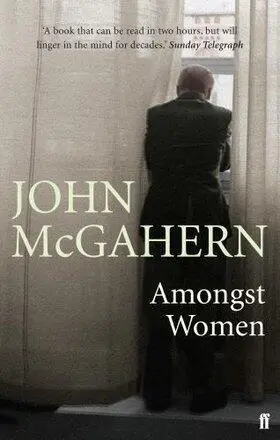
- Название:Amongst Women
- Автор:
- Издательство:Faber & Faber
- Жанр:
- Год:2008
- ISBN:нет данных
- Рейтинг книги:5 / 5. Голосов: 1
-
Избранное:Добавить в избранное
- Отзывы:
-
Ваша оценка:
Amongst Women: краткое содержание, описание и аннотация
Предлагаем к чтению аннотацию, описание, краткое содержание или предисловие (зависит от того, что написал сам автор книги «Amongst Women»). Если вы не нашли необходимую информацию о книге — напишите в комментариях, мы постараемся отыскать её.
Amongst Women — читать онлайн бесплатно полную книгу (весь текст) целиком
Ниже представлен текст книги, разбитый по страницам. Система сохранения места последней прочитанной страницы, позволяет с удобством читать онлайн бесплатно книгу «Amongst Women», без необходимости каждый раз заново искать на чём Вы остановились. Поставьте закладку, и сможете в любой момент перейти на страницу, на которой закончили чтение.
Интервал:
Закладка:
Weekends there was excitement in the house, for Mona now came home from Dublin almost every one. The most beautiful of the girls never married. She had many admirers and kept company with a number of men, bringing several of them home with her for weekends — quiet, deferential, generally older men, content to move within the authority of her beauty without making any serious demands; and if they did they were let go at once. As none of the men posed any threat to Moran he was always amiable, sometimes charming, for he seldom had new company and he seemed to enjoy the casual companionship. Though Mona’s visits were the least noticed or talked about in the house, they too, in time, came to be depended on completely. She became the most reliable link with the outside world that increasingly shadowed their lives.
Maggie had a second child in London at the same time that Mark O’Donoghue lost his job and she came home to Great Meadow with the two children, planning to stay six months. Mark remained in London to look for a better job and to save for a deposit on a house. Moran did not welcome the move. While she was in the house he spent days in the fields or sheds and the atmosphere was tense when he and the young children were together inside the house. She left after two months, too proud and dependent to blame anything connected to Great Meadow for her early departure. She planned to return for the usual three weeks in summer. Back in London Maggie discovered that Mark had drunk everything he had earned while she was away and no money was saved. She put the children into day-care and went back to nursing full time. From then on she would always have her own money.
‘Maggie and her children went back to London. They were welcome to stay with Rose and me under this roof as long as necessary,’ Moran wrote in a letter. ‘But I am very glad to see her go back to Mark. A wife’s place is with her husband.’
Sheila came regularly too to the house but her visits were the most circumspect. She came with Mona on weekends with Sean or when Maggie was home from London. She had three children in three years and the perfect excuse when Moran complained she came less often than the others. Her old resentment of Moran was quick to show whenever he began to assert himself. She could not bear to hear him shout at any of her children.
‘You’d think those children were brought up in a field,’ he roared at her during one visit when their uninhibited playfulness got on his nerves.
‘Well, they’ll go back to that field,’ she met him angrily, rounded up the children and left.
‘There was no need to take a few shouts all that seriously,’ Moran said but she never again brought her children to the house except for very brief visits. They were clever and confident. She did not want that confidence damaged in the way she felt her own had been. She knew that her loyalty was probably ambiguous, that the deepest part of herself was bound to her sisters, this man and house. That could not be changed; but she wanted no part of it for her children: doors would be open to them that had been locked to her, their lives would be different.
In a more sporadic way Michael too kept returning. Generally he arrived unannounced. Moran had given up trying to bend him to his will and was content to leave him to his own devices, glad to see him at all. Some gestures and mannerisms were clearly taken from the father but his nature was not dark. There were times he came and threw himself willingly into the work of the farm, getting through as much work in a day as Moran would in a week on his own and then he would leave as suddenly as he had come. ‘He helped me on the bog. He brightened the whole week for Rose and myself. Michael was marvellous,’ Moran wrote to Maggie after one sudden visit.
In much the same way as he had stopped school and left Great Meadow he married. In Dublin he had turned to his sisters, in London to his brother.
‘What does she want?’ Luke asked when Michael told him that he had met an English girl, a teacher, and that she was pregnant.
‘She wants to marry me, of course.’
‘What do you want to do?’
‘I’m not sure. She’s twenty-eight.’
‘That doesn’t matter if you’re fond of her. You can live together till the child is born if you’re not sure. Then you both can make up your minds what you want to do.’
‘She’d never agree to that. She’s English but she’s Catholic. In ways they are far stricter than we are.’
‘She can’t be all that strict,’ Luke said drily but changed when he saw his brother’s discomfort. ‘What do you like about this girl?’
‘I never met anybody before who made me feel important,’ Michael said emotionally and it was the older brother’s turn to be embarrassed.
‘Do you think it will be all right to get married?’ Michael asked.
‘Of course I do. If that is what you both want.’
‘Should I ask our father anything?’
‘Not unless you want to. I’d just go ahead if I were you. What’s her name?’
‘Ann Smith. The sisters won’t like it, that’s for sure,’ he chuckled happily.
She was a swarthy, handsome woman, definite in her ways and clearly infatuated with Michael. Her entire English family turned out as a solid front for the wedding and that day all the Morans, in their different ways, were made to feel what they were — immigrants. Mona and Sheila came over for the wedding. All the girls took against Ann Smith. They searched for flaws but the real flaw was that they saw her as an interloper who would never be allowed within their own closed circle. She was the immigrant within the family. Michael took her straight from the wedding to Great Meadow.
Because of his youth and history and general unpredictability the news that Michael was marrying an English teacher was received with humorous incredulity.
‘Poor Michael,’ Rose laughed affectionately. ‘I find it hard to see him shaping up as head of a house.’
‘The likes of him often does the best,’ Moran supported. They both took to Ann Smith and would not listen to the girls’ criticisms.
‘She’s a good sensible age. It wouldn’t do if Michael — God forgive me — got some skit like himself. She was busy doing degrees and diplomas till now. She’ll be able to support them both while he gets his qualifications. When you come to think of it didn’t the poor fellow fall on his feet?’ Rose argued with humorous affection.
‘If she suits Michael I am quite sure she suits me,’ Moran stated. ‘As far as I’m concerned she’s just another daughter.’ The girls listened in silence to what they could never accept. They had been brought up to keep the outside at an iron distance and now their father was welcoming it into the house.
Moran had grown noticeably careless about his dress, he who had always dressed with as much care for town or church as if he were stepping out to take on the world and it took all of Rose’s watchful eyes to keep him presentable. They had two pensions now, the old age added to the military. Whether the hay was won or lost grew matterless. The bulk of the cattle was sold before the grass died and the few that were left managed on what they could get under hedges about the fields. A fall of snow that set their neighbours worrying about sheds and fodder became a pleasant break that helped time pass. In the stall world, the white Plains glittering above them, they cut down small trees that were covered with ivy and they stood glowing from the exercise in the dry air to watch cattle tear hungrily at the dark ivy leaves. They had plenty of money now, Rose kept reminding him, and they did not need to slave at land any longer. They had more money than they needed, more money than they could spend, more money now than they had life but this did not give Moran any rest. Often in the evenings he spent hours calculating what he had, what was being spent, what losses were accumulating.
Читать дальшеИнтервал:
Закладка:
Похожие книги на «Amongst Women»
Представляем Вашему вниманию похожие книги на «Amongst Women» списком для выбора. Мы отобрали схожую по названию и смыслу литературу в надежде предоставить читателям больше вариантов отыскать новые, интересные, ещё непрочитанные произведения.


Обсуждение, отзывы о книге «Amongst Women» и просто собственные мнения читателей. Оставьте ваши комментарии, напишите, что Вы думаете о произведении, его смысле или главных героях. Укажите что конкретно понравилось, а что нет, и почему Вы так считаете.