Leslie Silko - Ceremony
Здесь есть возможность читать онлайн «Leslie Silko - Ceremony» весь текст электронной книги совершенно бесплатно (целиком полную версию без сокращений). В некоторых случаях можно слушать аудио, скачать через торрент в формате fb2 и присутствует краткое содержание. Год выпуска: 2006, Издательство: Penguin Classics, Жанр: Современная проза, на английском языке. Описание произведения, (предисловие) а так же отзывы посетителей доступны на портале библиотеки ЛибКат.
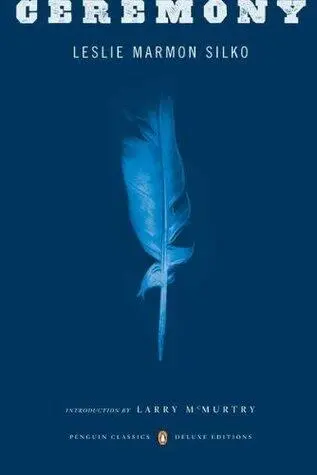
- Название:Ceremony
- Автор:
- Издательство:Penguin Classics
- Жанр:
- Год:2006
- ISBN:нет данных
- Рейтинг книги:5 / 5. Голосов: 1
-
Избранное:Добавить в избранное
- Отзывы:
-
Ваша оценка:
Ceremony: краткое содержание, описание и аннотация
Предлагаем к чтению аннотацию, описание, краткое содержание или предисловие (зависит от того, что написал сам автор книги «Ceremony»). Если вы не нашли необходимую информацию о книге — напишите в комментариях, мы постараемся отыскать её.
Tayo's quest leads him back to the Indian past and its traditions, to beliefs about witchcraft and evil, and to the ancient stories of his people. The search itself becomes a ritual, a curative ceremony that defeats the most virulent of afflictions — despair.
Ceremony — читать онлайн бесплатно полную книгу (весь текст) целиком
Ниже представлен текст книги, разбитый по страницам. Система сохранения места последней прочитанной страницы, позволяет с удобством читать онлайн бесплатно книгу «Ceremony», без необходимости каждый раз заново искать на чём Вы остановились. Поставьте закладку, и сможете в любой момент перейти на страницу, на которой закончили чтение.
Интервал:
Закладка:
“So that’s where our mother went.
How can we get down there?”
Hummingbird looked at all the
skinny people.
He felt sorry for them.
He said, “You need a messenger.
Listen, I’ll tell you
what to do”:
Bring a beautiful pottery jar
painted with parrots and big
flowers.
Mix black mountain dirt
some sweet corn flour
and a little water.
Cover the jar with a
new buckskin
and say this over the jar
and sing this softly
above the jar:
After four days
you will be alive
After four days
you will be alive
After four days
you will be alive
After four days
you will be alive
The Army recruiter looked closely at Tayo’s light brown skin and his hazel eyes.
“You guys are brothers?”
Rocky nodded coolly.
“If you say so,” the recruiter said. It was beginning to get dark and he wanted to get back to Albuquerque.
Tayo signed his name after Rocky. He felt light on his feet, happy that he would be with Rocky, traveling the world in the Army, together, as brothers. Rocky patted him on the back, smiling too.
“We can do real good, Tayo. Go all over the world. See different places and different people. Look at that guy, the recruiter. He’s got his own Government car to drive, too.”
But when he saw the house and Josiah’s pickup parked in the yard, he remembered. The understanding had always been that Rocky would be the one to leave home, go to college or join the Army. But someone had to stay and help out with the garden and sheep camp. He had made a promise to Josiah to help with the Mexican cattle. He stopped. Rocky asked him what was wrong.
“I can’t go,” he said. “I told Josiah I’d stay and help him.”
“Him and Robert can get along.”
“No,” Tayo said, feeling the hollow spread from his stomach to his chest, his heart echoing in his ears. “No.”
Rocky walked on without him; Tayo stood there watching the darkness descend. He was familiar with that hollow feeling. He remembered it from the nights after they had buried his mother, when he stuffed the bed covers around his stomach and close to his heart, hugging the blankets into the empty space of loss, regret for things which could not be changed.
“Let him go,” Josiah said, “you can’t keep him forever.”
Auntie let the lid on the frying pan clatter on top of the stove.
“Rocky is different,” she kept saying, “but this one, he’s supposed to stay here.”
“Let him go,” old Grandma said. “They can look after each other, and bring each other home again.”
Rocky dunked his tortilla in the chili beans and kept chewing; he didn’t care what they said. He was already thinking of the years ahead and the new places and people that were waiting for him in the future he had lived for since he first began to believe in the word “someday” the way white people do.
“I’ll bring him back safe,” Tayo said softly to her the night before they left. “You don’t have to worry.” She looked up from her Bible, and he could see that she was waiting for something to happen; but he knew that she always hoped, that she always expected it to happen to him, not to Rocky.
Part of the five hundred dollar deal was that Ulibarri would deliver the cattle. Tayo helped Josiah separate the best ones from the rest of the herd. Josiah had borrowed Ulibarri’s big palomino horse, the one Ulibarri claimed was a brother to the champion cutting horse at the State Fair. Whenever Josiah cut a cow away from the rest of the herd, Tayo swung the gate open wide and stepped back to let it run into the holding pen. Josiah cut out twenty cows; he looked for the youngest and strongest ones. They didn’t want Ulibarri to try anything funny, like substituting a crippled cow for a sound one or sending one with runny eyes; so before they left, they walked around the pen slowly, memorizing each cow — the shape of the long curved horns, the patterns of the brown spots on their ivory hides, their size and weight. The last thing Josiah did was lean out the window of the truck and tell Ulibarri, “Don’t starve them to death.”
All the way home from Magdalena, Josiah pulled at the short hairs in the little mustache he wore drooping down at the corners of his mouth, always at odds with his mouth because Josiah was always smiling. He looked over at Tayo and grinned.
“I’m thinking about those cattle, Tayo. See, things work out funny sometimes. Cattle prices are way down now because of the dry spell. Everybody is afraid to buy. But see, this gives us the chance. Otherwise, we probably never would get into the cattle business.”
The sun was shining in the back window of the truck, and Tayo had the window rolled down and his arm hanging out, feeling the air rush past. He felt proud when Josiah talked about cattle business. He was ready to work hard with his uncle. They had already discussed it. He was graduating in a month, and then he would work with Josiah and Robert. They would breed these cattle, special cattle, not the weak, soft Herefords that grew thin and died from eating thistle and burned-off cactus during the drought. The cattle Ulibarri sold them were exactly what they had been thinking about. These cattle were descendants of generations of desert cattle, born in dry sand and scrubby mesquite, where they hunted water the way desert antelope did.
“Cattle are like any living thing. If you separate them from the land for too long, keep them in barns and corrals, they lose something. Their stomachs get to where they can only eat rolled oats and dry alfalfa. When you turn them loose again, they go running all over. They are scared because the land is unfamiliar, and they are lost. They don’t stop being scared either, even when they look quiet and they quit running. Scared animals die off easily.” They were driving down the gravel road, going east from Magdalena to catch the highway near Socorro. Tayo was used to him talking like that, going over his ideas and plans out loud, and then asking Tayo what he thought.
“See, I’m not going to make the mistake other guys made, buying those Hereford, white-face cattle. If it’s going to be a drought these next few years, then we need some special breed of cattle.” He had a stack of books on the floor beside his bed, with his reading glasses sitting on top. Every night, for a few minutes after he got in bed, he’d read about cattle breeding in the books the extension agent had loaned to him. Scientific cattle breeding was very complicated, he said, and he used to wait until Rocky and Tayo were doing their homework on the kitchen table, and then he would come in from the back room, with his glasses on, carrying a book.
“Read this,” he would tell Rocky, “and see if you think it’s saying the same thing I think it says,” When Rocky finished it, Josiah pushed the book in front of Tayo and pointed at the passage. Then he’d say, “Well?” And the boys would tell him what they got out of it. “That’s what I thought too,” Josiah would say, “but it seemed like such a stupid idea I wasn’t sure if I was understanding it right.” The problem was the books were written by white people who did not think about drought or winter blizzards or dry thistles, which the cattle had to live with. When Tayo saw Ulibarri’s cattle, he thought of the diagram of the ideal beef cow which had been in the back of one of the books, and these cattle were everything that the ideal cow was not. They were tall and had long thin legs like deer; their heads were long and angular, with heavy bone across the eyes supporting wide sharp horns which curved out over the shoulders. Their eyes were big and wild.
“I guess we will have to get along without these books,” he said. “We’ll have to do things our own way. Maybe we’ll even write our own book, Cattle Raising on Indian Land, or how to raise cattle that don’t eat grass or drink water.”
Читать дальшеИнтервал:
Закладка:
Похожие книги на «Ceremony»
Представляем Вашему вниманию похожие книги на «Ceremony» списком для выбора. Мы отобрали схожую по названию и смыслу литературу в надежде предоставить читателям больше вариантов отыскать новые, интересные, ещё непрочитанные произведения.








Обсуждение, отзывы о книге «Ceremony» и просто собственные мнения читателей. Оставьте ваши комментарии, напишите, что Вы думаете о произведении, его смысле или главных героях. Укажите что конкретно понравилось, а что нет, и почему Вы так считаете.