Sabina Murray - The Caprices
Здесь есть возможность читать онлайн «Sabina Murray - The Caprices» весь текст электронной книги совершенно бесплатно (целиком полную версию без сокращений). В некоторых случаях можно слушать аудио, скачать через торрент в формате fb2 и присутствует краткое содержание. Год выпуска: 2007, Издательство: Grove Press, Жанр: Современная проза, на английском языке. Описание произведения, (предисловие) а так же отзывы посетителей доступны на портале библиотеки ЛибКат.
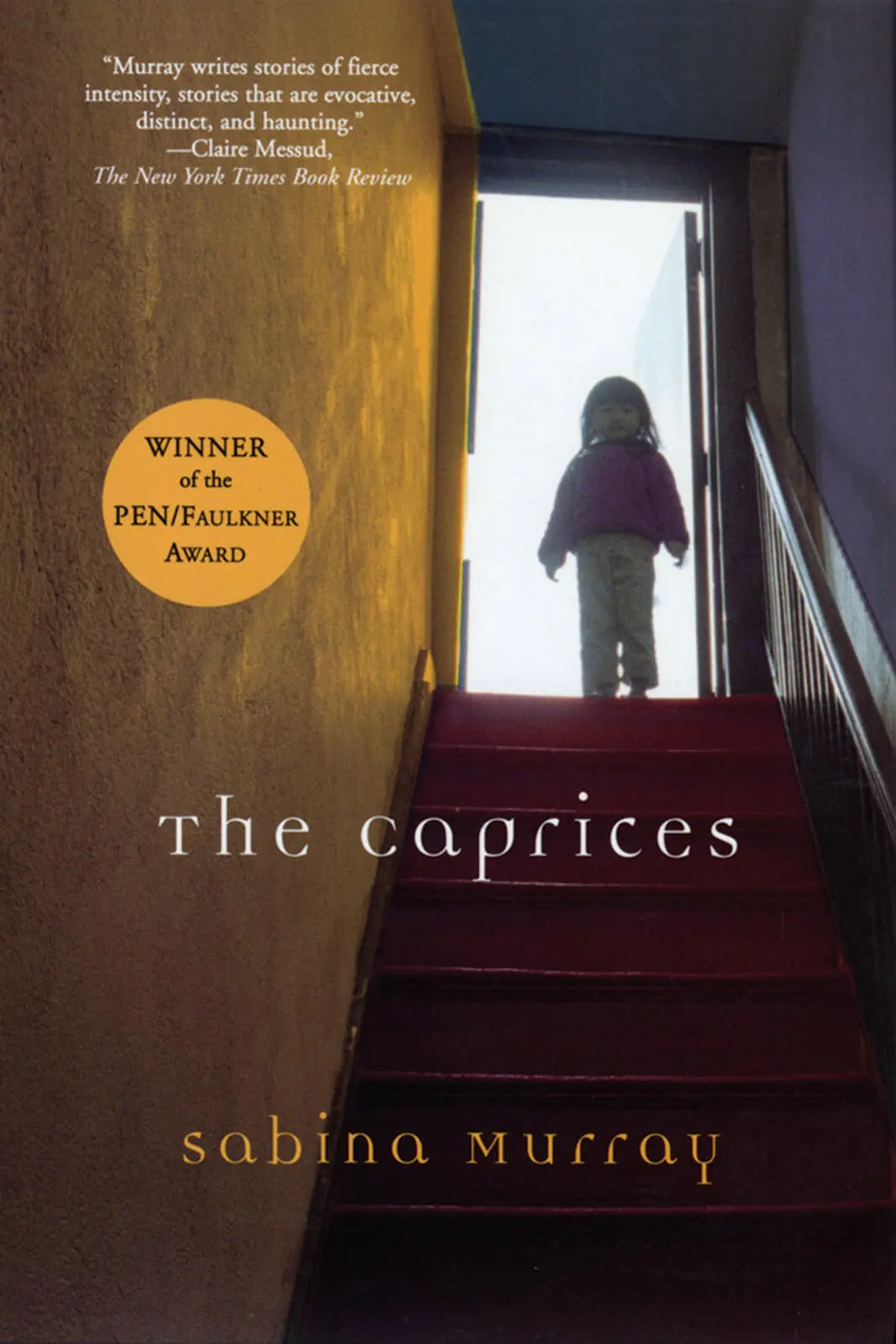
- Название:The Caprices
- Автор:
- Издательство:Grove Press
- Жанр:
- Год:2007
- ISBN:нет данных
- Рейтинг книги:4 / 5. Голосов: 1
-
Избранное:Добавить в избранное
- Отзывы:
-
Ваша оценка:
The Caprices: краткое содержание, описание и аннотация
Предлагаем к чтению аннотацию, описание, краткое содержание или предисловие (зависит от того, что написал сам автор книги «The Caprices»). Если вы не нашли необходимую информацию о книге — напишите в комментариях, мы постараемся отыскать её.
is a collection of stories artfully told across the theatre of the Pacific Campaign of World War II. An Anglo-Indian cavalryman, his homeland on the brink of revolution, finds himself in Malaysia fighting to protect British interests. Two soldiers lost in the jungle with a Japanese prisoner confront their prejudices toward each other, and the nature of being American. An island witnesses the passing of history from Magellan, to Amelia Earhart, to the dropping of the atomic bomb. With exquisite lyricism tempered by a journalist’s eye for detail, Murray shines light on the tangle of battles created by that conflict, the violent reach across the generations, the shattering reverberations in memory. With this collection, Sabina Murray established herself as a passionate and wise voice of literary fiction.
The Caprices — читать онлайн бесплатно полную книгу (весь текст) целиком
Ниже представлен текст книги, разбитый по страницам. Система сохранения места последней прочитанной страницы, позволяет с удобством читать онлайн бесплатно книгу «The Caprices», без необходимости каждый раз заново искать на чём Вы остановились. Поставьте закладку, и сможете в любой момент перейти на страницу, на которой закончили чтение.
Интервал:
Закладка:
“How sad.”
“The Japanese finished us off.”
“Except for you, of course.”
Salas almost laughed. This was not the first time he’d forgotten to include himself among the number. “My mother died in childbirth. There was”—here Salas looked thoughtfully at his entwined hands—“a good deal of blood.” He looked up at Ocampo. “I found her. The baby miraculously survived. He was covered in hair. The local mystic said this was a good omen.”
“Ah, but the mystic was wrong,” said Ocampo with deep-felt sympathy.
“Wrong?”
“Well, yes. The child died in the war.”
“That’s right,” said Salas. “I mean, right in God’s eyes. We must accept his decisions.”
“You are a man of faith!” declared Ocampo.
“Well, I was raised by nuns — a Belgian order in Baguio. They taught me English, introduced me to books. She was a good woman.”
“She?”
“Sister, Sister Mary. She was a good nun although she had a drinking problem and. . and a mustache. She also had a wimple.” Salas traced the wimple with his fingers extending out from his head.
In response, Ocampo stroked his mustache. “And where is she now?”
“The Japanese. . Unspeakable, you know. Even though she was a nun. .”
“And even though she had a mustache!” added Ocampo. Here they fell into awkward laughter, much controlled, yet impossible to completely suppress. “I’m sorry. I’m an insensitive drunken boor!” said Ocampo.
“No, no,” said Salas, patting the man on his arm. “She would have wanted it this way.”
“Ah.” Ocampo filled the glasses and raised his to clink with Salas’s. “To Sister Mary.”
The following morning, Salas was awakened by the ringing of the phone, but he did not answer. He was exhausted from the previous night. He had been tortured by bad dreams, nightmares brought on by scotch, and some mild form of hysteria activated by a change in life, or so Salas argued. A prisoner had come at him in his very bed, this bed, with the rumpled sheets. This skin-and-bones apparition had no head. He also had no shirt, and his bare chest revealed each rib in clear detail, a delicate vault of bones that arched above his flat belly. The navel was stretched open — then blinked: an eye in this unlikely location. He held a sword high above his shoulders. His belly-eye was trained on Salas. Salas counted his final seconds, and then he was back in Fort Santiago in the caves with Balmaceda. All kinds of prisoners were digging, Filipinos and Americans mostly. Balmaceda was making his way through the deep tunnel with a little silver mallet. The prisoners shifted soil to the scrape and scrape of shovels.
Balmaceda, on impulse, took the mallet and cracked it across a man’s skull. Instantly the man collapsed. None of the other prisoners seemed to notice. Salas went over. The man’s skull had split cleanly in two. Balmaceda separated the halves, like two hemispheres of a cracked almond. Balmaceda plunged his hand deep into the brain meat. When his hand came out, bloodied and trailing stringy gore, he held a stone. It was a ruby, uncut and blood red. Then Salas realized that the scar on his stomach had started dripping blood, then trickling. He covered the wound with his hands.
Salas dressed quickly. He had slept until noon. He looked at the table. The pan de sal and coffee were cold. Fernando was sulking by the kitchen door with a black eye.
“Why didn’t you answer the phone?”
“I just missed it. I’m sorry, sir,” said Fernando, whose sweat was still thick with coconut liquor.
Salas took a jeepney to Quiapo. He had the jeepney let him off around the corner from the restaurant where he had seen Balmaceda. He straightened his shirt and combed his hair in the reflection of a parlor window. On the front page of the paper was something about the Liberal Proclamation Rally at Plaza Miranda the following week, but this was dwarfed by a headline describing a restoration project in Intramuros that the first lady had decided to oversee. The engineering firm that had won the contract bid was Japanese.
“Sir, fifty centavos,” said the paper boy.
Salas gave him a five-peso bill.
The restaurant was busy on Sunday. Salas took the same seat by the window, wondering if Balmaceda would turn up, even though he usually only came during the week. No matter. Salas felt a solidarity sharing this seat. Hundreds of sparrows shot through the air. Salas had always hated the sparrows. They symbolized Manila to him — Manila, whose calcified lungs coughed up the little birds much as a consumptive coughed up blood. A waiter came to take his order.
“Where is the owner?” asked Salas.
“On Sunday, he is with his family,” said the waiter.
“Do you work here during the week?”
The waiter shook his head. He was a student at Santo Thomas. He had a scholarship. Salas participated wearily in this accidental conversation, wolfed down his siopao, nodded hastily as he got up from the table, pressing a tip into the student’s hand. He headed for the door, having momentarily forgotten the purpose of his visit.
Then, across the street, Salas saw Dr. Santos again. He was leaning with both hands on the back of the bench in exactly the same attitude Salas had on the day he sighted Balmaceda. Salas jumped into the street, this time confused into pursuit. A jeepney screeched to a stop, then was quickly bumped another half foot by a bus that had been following close behind. Salas was knocked down, although uninjured. He saw the back of the doctor’s head disappearing down the street, just slightly above that of the average-height man, but as he was now lying on the sidewalk, there was nothing he could do.
When Salas returned to his apartment, a soldier was standing in the hallway and his door was open. He paused at the top of the stairs. Fernando, who was at the end of the corridor watching, shrugged apologetically.
“What are you doing?” Salas inquired of the soldier.
The soldier raised his eyebrows, then hissed through the doorway to alert the others to Salas’s presence. A man in a nylon sport shirt and white slacks walked casually into the hallway. He was wearing dark, square sunglasses. His shirt was tight across his belly. His skin was dark, nut brown and shiny, even though he was not sweating. He smiled broadly.
“Do you like the apartment?” Salas asked.
“Who are you?” the man replied. He was holding a handful of mail that Salas had left on his desk unopened. It was open now. The man sorted through the envelopes. “Salas? Is that your name?”
“Carlos Salas.”
“And you are from. .”
“Baguio.”
“Baguio?” Here the man laughed. “I do not think you are from Baguio.”
“I know what you’re looking for.” Salas walked past him and into the apartment, which had been thoroughly searched. Every drawer was overturned. The crash of papers reached him from the other room. A soldier who could not have been more than sixteen years old was slashing the underside of an upholstered chair. “They are not here.”
“Where are they?”
“I will give them to you, but not now, not here.”
“Where then? When?”
“Somewhere public.”
“Plaza Miranda,” the man said. “Saturday night. Nine-thirty.”
“The Liberal Proclamation Rally?” asked Salas.
“Why not?” said the man. “I have business there anyway.”
The man did not whistle to his men and leave. He set a chair upright and sat, then offered Salas a spot on the couch — the cushions were all slashed — across from him.
“How did you get the maps?” he asked.
Salas studied the man. He wondered how much he knew and which version of his past would be believed. “When the Japanese occupied Baguio, it was natural that they would need house help. I spoke a little Japanese — my father, a carpenter, was Japanese, although I was brought up Filipino. Catholic, of course.” The man responded to this with a smile. “I was in charge of keeping General Yamashita’s office. When Baguio was being liberated, there was chaos — many distractions. I stole the maps.”
Читать дальшеИнтервал:
Закладка:
Похожие книги на «The Caprices»
Представляем Вашему вниманию похожие книги на «The Caprices» списком для выбора. Мы отобрали схожую по названию и смыслу литературу в надежде предоставить читателям больше вариантов отыскать новые, интересные, ещё непрочитанные произведения.






Обсуждение, отзывы о книге «The Caprices» и просто собственные мнения читателей. Оставьте ваши комментарии, напишите, что Вы думаете о произведении, его смысле или главных героях. Укажите что конкретно понравилось, а что нет, и почему Вы так считаете.