Sabina Murray - The Caprices
Здесь есть возможность читать онлайн «Sabina Murray - The Caprices» весь текст электронной книги совершенно бесплатно (целиком полную версию без сокращений). В некоторых случаях можно слушать аудио, скачать через торрент в формате fb2 и присутствует краткое содержание. Год выпуска: 2007, Издательство: Grove Press, Жанр: Современная проза, на английском языке. Описание произведения, (предисловие) а так же отзывы посетителей доступны на портале библиотеки ЛибКат.
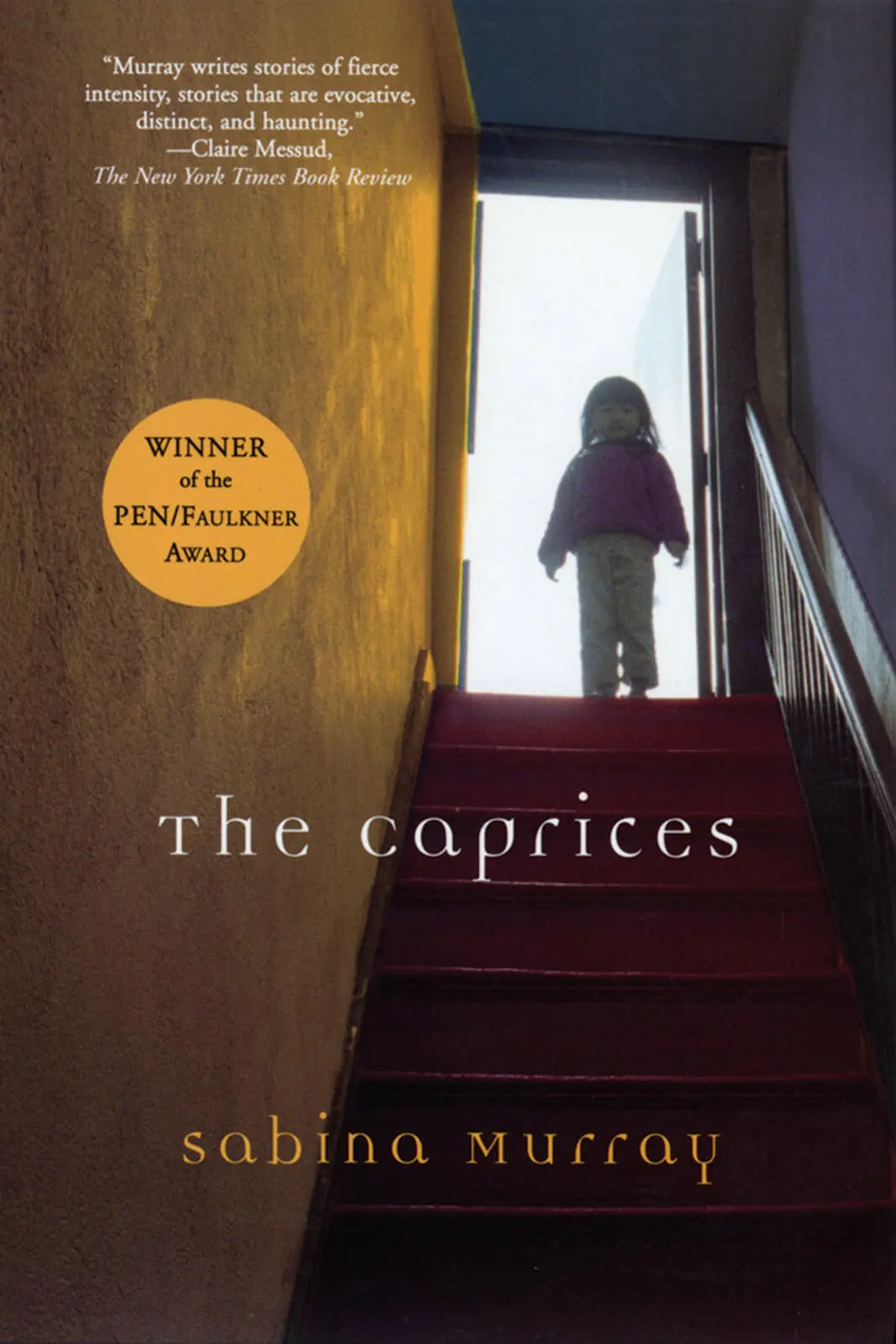
- Название:The Caprices
- Автор:
- Издательство:Grove Press
- Жанр:
- Год:2007
- ISBN:нет данных
- Рейтинг книги:4 / 5. Голосов: 1
-
Избранное:Добавить в избранное
- Отзывы:
-
Ваша оценка:
The Caprices: краткое содержание, описание и аннотация
Предлагаем к чтению аннотацию, описание, краткое содержание или предисловие (зависит от того, что написал сам автор книги «The Caprices»). Если вы не нашли необходимую информацию о книге — напишите в комментариях, мы постараемся отыскать её.
is a collection of stories artfully told across the theatre of the Pacific Campaign of World War II. An Anglo-Indian cavalryman, his homeland on the brink of revolution, finds himself in Malaysia fighting to protect British interests. Two soldiers lost in the jungle with a Japanese prisoner confront their prejudices toward each other, and the nature of being American. An island witnesses the passing of history from Magellan, to Amelia Earhart, to the dropping of the atomic bomb. With exquisite lyricism tempered by a journalist’s eye for detail, Murray shines light on the tangle of battles created by that conflict, the violent reach across the generations, the shattering reverberations in memory. With this collection, Sabina Murray established herself as a passionate and wise voice of literary fiction.
The Caprices — читать онлайн бесплатно полную книгу (весь текст) целиком
Ниже представлен текст книги, разбитый по страницам. Система сохранения места последней прочитанной страницы, позволяет с удобством читать онлайн бесплатно книгу «The Caprices», без необходимости каждый раз заново искать на чём Вы остановились. Поставьте закладку, и сможете в любой момент перейти на страницу, на которой закончили чтение.
Интервал:
Закладка:
The art of hypnotizing sheep. This was serious business, as far as Bob was concerned, but Paul and Sean, who were city boys from Perth, didn’t understand. They had a joke about it. “Mark’s hypnotized that Korean guard,” they said. “Mark’s got him eating out of his hand.” The guard did like Mark, although he was careful that the Japanese officers didn’t notice. His respect for the great Australian expressed itself in extra helpings of rice and the occasional egg that made it into Mark’s dinner. “He treats you like the prize ram,” Bob whispered to his brother. “Be careful. You know what prize rams are used for.” And Mark had nodded, laughing at his brother’s concern. “Breeding stock,” Mark said.
The Korean guard shot himself one evening, wasted one of the emperor’s bullets into his skull. The guard had visited Bob, who was down with wet beriberi, right before he did it. Bob’s body was distended and bulging with fluid; his testicles were as large as grapefruit. He was surprised when the Korean guard came into the hut that served as an infirmary. The guard’s hair stood straight up, but Bob could not remember if it always did that, or if his shock of black hair just looked frightening now that the man seemed so disturbed. Bob saw an unnatural sweat on his brow and noted the way he moved — crazed and afraid — like a sheep with magnesium deficiency. The Korean touched Bob’s shoulder, which was a strange and disquieting gesture. “Same, same, prison-uh,” he said, motioning in a way that made it clear that as far as he was concerned, Koreans and Australians were in a similar position. Then he left. Shortly after that, Paul came in. “Are you in for that ulcer?” Bob had asked. Paul shook his head and glanced at the pussing hole on his leg. He produced a cigarette, which was a minor miracle, and a stick with a glowing ember to light it with. Bob took the cigarette. Paul had been sent out on the same work detail as Mark, and Bob knew immediately. Paul said, “I fell down. Mark was helping me up and someone saw. That Korean guard. .” The guard had been ordered to smash in Mark’s head with the flat back of a shovel. Then they heard the gunshot ring out and the monkeys screamed.
Bob survived the beriberi. The Dutch doctor had scrounged some rice husks from an abandoned village and made biscuits with them, which were a source of vitamin B. He decided the reason he’d survived was to carry back Mark’s spirit and that was enough. In his mind he heard Mark’s mantra often: “You’ll be right. You’ll be right.” Then he’d look to the jungle ceiling, not sure of what he’d see, conscious of Mark’s spirit trapped like a mosquito in the net of vines. Bob was convinced that Mark was still watching over him, as he’d always done. Sometimes, he’d hear his brother’s voice. “Christ, Bob, take care of yourself. Those ulcers’ll kill you.” And Bob would whistle up at the leafy sky the first bar of “The Drover’s Dream,” and Mark would finish off the line.
Bob left his battle against beriberi, and starvation once more became his number-one adversary. He remembered Mark sitting high on his horse, his face set in grim determination. Life had not been easy on the station those prewar years.
“The whole fucking country’s gone broke,” Mark had said, shaking his head.
Bob mounted his horse and trotted up beside him. “Which ones do we shoot?” he asked.
Mark held the rifle in his lap, looking down on it in a pained way. “We shoot the ones that aren’t gonna make it.” The slaughter was to ensure that some had food, but killing one’s own flock was not easy; the sheep were their life blood — Australia rides on the sheep’s back, people said — and this was poor gratitude.
Sean turned to Bob, who was still on the station shooting sheep, and said, “Do you know the Yanks gamble their rice?”
“What?”
“The Yanks, they gamble their rice.”
“What if you keep losing?”
Sean nodded in an emphatic, disgusted way. “They let each other starve. They con each other out of life.”
Bob thought about this for a minute. “Sometimes, the weak make way for the strong,” he whispered, but Sean did not hear. He was too involved sharpening a spoon edge — which was the only surgical instrument in camp — for the doctor. Sean went on to talk about the Poms and their divine right, the Dutch and their cowardice, worked his way up to the Korean guards, and then the Japanese themselves. But Bob knew that among all of these, the real enemy was time and the real war was between its passage and one’s body.
“Take care in the not breaking of the skin,” the Dutch doctor said. “Infection likes it. That is why the tropical ulcer.” Easier said than done. Down the river, the Aussie doctor lopped off the limbs infected with the deep pussing wounds, legs mostly. But the Dutch guy, he knew better. On the railroad, they had marines in place of anesthesia. Four marines, one for each limb, and a good friend to hold one’s head. And the spoon nicely sharpened to scoop away the dead flesh, which ate the living. And now Bob, ready for surgery, lying flat on his back pinned down, Paul at his head the way Bob had been for him before. Bob had seen this done many times and his fear was that of one who knew. He could not scream loud enough. Men died hiding their ulcers, more fearful of the cure than of the disease. He was not one of these. His scream rang out. His life held on in the mud and terror and could not escape. When the marines finally released him and he looked into the doctor’s eyes, which were calm and sympathetic, he thought that little had been done to save him. The truly dead flesh was within, hidden beneath the layers of taut skin, tissue, and bones, in a place where the doctor’s spoon could not remove it.
Of the three in their group that were left, Paul was the sickliest. His battles with amebic dysentery were bloody and hard fought. Sean watched over him like a mother. He would sit by Paul’s bedside, filled with fear and worry.
“You know, Bob, this is all right for us, but not for Paul. He was at the university. He studied physics,” Sean said.
“Still doesn’t make it right for anyone,” said Bob.
“No, listen. He signed up with me because he thought I was too bloody stupid to make it alone.”
“What’d he think we’d be doing out here? Solving problems?”
“Oh, I dunno. Paul shouldn’t be here.”
Which made it seem to Bob as though Sean found the situation tolerable for the rest. Paul took a turn for the worse and was delirious much of the time. Bob found it strange when he entered the hut one evening and found Paul alone, without his usual nurse.
“How’re you doing, Paul?” asked Bob.
“Debloodylightful,” said Paul. Profanity put Bob’s mind at ease. Sean appeared at the door of the hut. At first he revealed himself in silhouette, but after he stepped out of the shadow, Bob saw that Sean’s shorts were gone and in their place was a kind of G-string — a loose swatch of cloth that draped around his loins like a diaper.
“Now there’s one the midwife should have strangled,” said Paul.
Sean was smiling. He made his way over quickly and produced two small bricks wrapped in banana leaves. “One for Paul, and one for Bob and me to split. It’s sugar.”
“And where are your shorts?” asked Paul.
“Covering some Burmese backside,” he replied.
Paul struggled onto one elbow. He looked over at Sean and managed a smile. “Out of gratitude for your generosity, I will recover.” And he lived.
Paul looked terrible, sicker than the sick, emaciated to the point that it was almost comic that he wasn’t dead. Paul had one tooth left, sticking up from his lower gum like a tombstone. His shorts had rotted off his body and he too, like Sean, was now in a diaper, which showed off every protrusion and hollow. He became the object of envy, since he no longer did hard labor. Rumor had it that the Japanese soldiers were scared of him, that they couldn’t figure out which dimension he belonged to; he was a constant memento mori, a specter that wouldn’t quit. Paul worked with the doctor when he could, and lay down when he couldn’t. Sean was pleased at the state of affairs. He had always been a little simple, but as time progressed, he seemed downright loony. He seemed to think that Paul had left the study of physics in Australia for medical school in Thailand.
Читать дальшеИнтервал:
Закладка:
Похожие книги на «The Caprices»
Представляем Вашему вниманию похожие книги на «The Caprices» списком для выбора. Мы отобрали схожую по названию и смыслу литературу в надежде предоставить читателям больше вариантов отыскать новые, интересные, ещё непрочитанные произведения.










Обсуждение, отзывы о книге «The Caprices» и просто собственные мнения читателей. Оставьте ваши комментарии, напишите, что Вы думаете о произведении, его смысле или главных героях. Укажите что конкретно понравилось, а что нет, и почему Вы так считаете.