Sabina Murray - The Caprices
Здесь есть возможность читать онлайн «Sabina Murray - The Caprices» весь текст электронной книги совершенно бесплатно (целиком полную версию без сокращений). В некоторых случаях можно слушать аудио, скачать через торрент в формате fb2 и присутствует краткое содержание. Год выпуска: 2007, Издательство: Grove Press, Жанр: Современная проза, на английском языке. Описание произведения, (предисловие) а так же отзывы посетителей доступны на портале библиотеки ЛибКат.
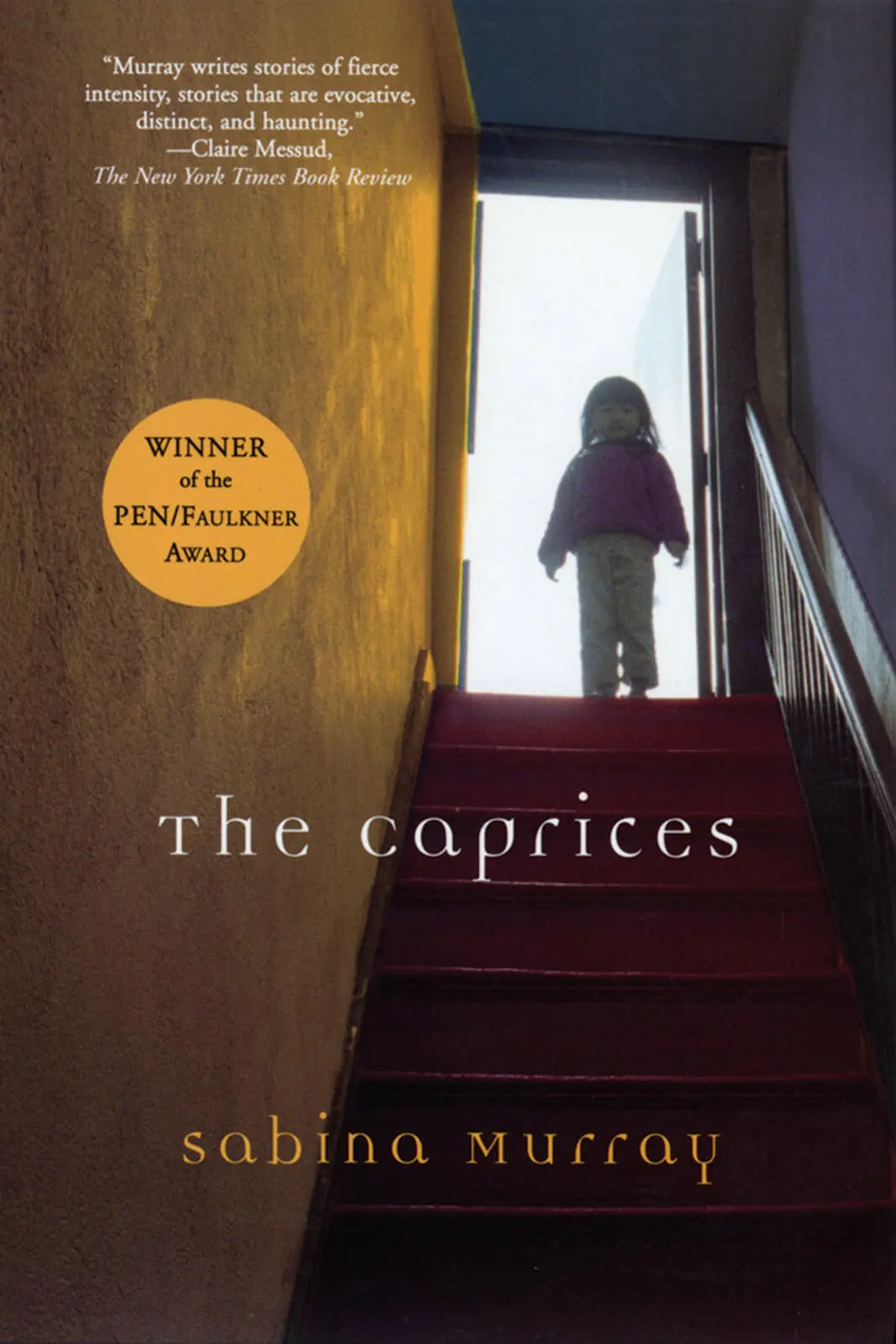
- Название:The Caprices
- Автор:
- Издательство:Grove Press
- Жанр:
- Год:2007
- ISBN:нет данных
- Рейтинг книги:4 / 5. Голосов: 1
-
Избранное:Добавить в избранное
- Отзывы:
-
Ваша оценка:
The Caprices: краткое содержание, описание и аннотация
Предлагаем к чтению аннотацию, описание, краткое содержание или предисловие (зависит от того, что написал сам автор книги «The Caprices»). Если вы не нашли необходимую информацию о книге — напишите в комментариях, мы постараемся отыскать её.
is a collection of stories artfully told across the theatre of the Pacific Campaign of World War II. An Anglo-Indian cavalryman, his homeland on the brink of revolution, finds himself in Malaysia fighting to protect British interests. Two soldiers lost in the jungle with a Japanese prisoner confront their prejudices toward each other, and the nature of being American. An island witnesses the passing of history from Magellan, to Amelia Earhart, to the dropping of the atomic bomb. With exquisite lyricism tempered by a journalist’s eye for detail, Murray shines light on the tangle of battles created by that conflict, the violent reach across the generations, the shattering reverberations in memory. With this collection, Sabina Murray established herself as a passionate and wise voice of literary fiction.
The Caprices — читать онлайн бесплатно полную книгу (весь текст) целиком
Ниже представлен текст книги, разбитый по страницам. Система сохранения места последней прочитанной страницы, позволяет с удобством читать онлайн бесплатно книгу «The Caprices», без необходимости каждый раз заново искать на чём Вы остановились. Поставьте закладку, и сможете в любой момент перейти на страницу, на которой закончили чтение.
Интервал:
Закладка:
“Roku!”
. . shichi, hachi, ku, ju . .
Berystede was not a dream. Harry had seen him, recognized him, despite three years’ wear and alteration. Probably Berystede was in the hospital. Harry had watched him walk from the truck toward the assembly area until he disappeared behind the edge of the barracks. He had watched the determined limp, the pained grimace, and felt sad to see him so low. Only the major’s supposed death had made Harry reconsider his contempt, but now. . Berystede was old and weak, neither dead nor alive, and Harry was unable to articulate his emotion.
After breakfast, Harry went to the hospital to have the doctor dust his genitals with sulfur. The hospital was a long hut with a few low cots and a number of mats laid edge to edge. Harry paused outside the door, arrested by the metallic stench of warm blood. At the screen, two dozen flies buzzed angrily to get in, while just inside the same number were trying to escape. The major was indeed there, lying on a mat, one arm thrown out onto the floor, the fingers curled in a loose fist. Harry watched the major sleep as he endured the stinging shock of the sulfur and the doctor’s sympathetic fanning, which the doctor performed with his broad-brimmed hat.
“Open your mouth for me,” said the doctor.
Harry obliged.
“Jesus Christ. You’ve still got all your teeth. Have you been eating insects?”
“Yes, sir, per your recommendation.” Harry leaned in and whispered, “The major, is he all right?”
“I’m afraid not. It’s a miracle he made it here.”
“Can I talk to him?”
“Do you know him?”
“Yes.”
Harry went to squat beside the major’s mat. The flesh on Berystede’s face had been eaten away and his lips were dry, pulling up on his teeth so that his gums were exposed. When the major breathed, a shallow, rasping sound escaped his mouth, the same sound a shell made when you put it to your ear. Clearly, Berystede was sleeping, but his eyes were open a crack and the whites showed, although the irises quivered into view.
“Major Berystede,” whispered Harry, “it’s Lieutenant Gillen, sir.”
The eyes shuddered open.
“Lieutenant Gillen,” he repeated.
Berystede took a deep breath, “Harry. You look well.”
Harry nodded.
“So,” the major’s face relaxed, “I finally found a club that would take us both.”
• • •
Malaya had been an unqualified disaster.
The 11th Indian were garrisoned at Sitra on the west coast of Malaya, after pulling back from the Siamese border. They were to hold the Japanese here, where there was a road heading south. The Japanese force was inferior in numbers and, Harry had been told, in strength. The Japanese were all nearsighted. They couldn’t aim a rifle. Their legs were bowed so that they scampered when upright in a half-evolved netherworld between ape and man. At their tallest, the Japs hit four feet. They had bucked, protruding teeth. They spat when they talked. Fighting them was presented as an indignity to be suffered. Harry wondered that they hadn’t left for Malaya armed with a sack of rat poison. The first night, when they were still organized with the men sleeping in their regimental rows and a separate officers’ latrine, Harry had been unable to sleep. The English were wrong about the Japs. They were as formidable as any Germans, Boers, or Afghans. Harry knew this, just as he knew that the Indian part of his blood boiled equally with the British.
On December 12, 1941, the soldiers of the 11th Indian, after suffering major losses, began their retreat from Sitra. Three days later, the 11th Indian had been pushed south forty kilometers to the village of Gurun. The supposedly pro-British villagers had refused them food and while Major Berystede made a ridiculous speech about crown and colony, Harry, Tunsdale, and the others “confiscated” as much food as they could. Harry no longer knew whom he was protecting or even why he was fighting, aside from some abstract sense of right and wrong, British perfection and Japanese barbarism.
Two days later, a flanking move by Japanese ground forces had split the British and Commonwealth troops up the middle. Japanese air strikes had forced Harry and the others into the jungle. The 11th Indian was lost. Harry was now one of a band of forty men — separated and hungry — trying to navigate back to the coast. For four days they retreated through solid, snake-infested jungle. While they were wading through a waist-deep creek, sunk to the knees in mud, a steady rain of bullets began to fall and Harry had watched more than twenty men die right there. He’d watched their bodies sinking slowly. The Japanese were silent, efficient, and invisible, nothing more than a singing bullet and rustle of jungle greenery.
None of the 11th Indian were trained in jungle warfare. Some of the older men had been in Shanghai, but their withdrawal from the “Paris of the East” in 1937 had not prepared them for this. Harry had thought through the surrender of Shanghai. If the Japanese were so insignificant, then why had the British surrendered? He had heard other officers explaining this embarrassment away, saying that Hong Kong was more valuable, that the British did not want to provoke the Japanese when the naval base at Singapore, Changi, was still in the process of construction. But the truth of the matter was that the British had no more right to be in Shanghai than the Japanese and with Chiang Kaishek agitating against imperial forces — Japanese and British — withdrawal was the only sensible move. At least an organized, urban withdrawal was something that the Indian army was well equipped to execute.
The Australian troops, also there at the request of Mother England, had outright laughed at Harry and his men, their kits, their swords, the ceremonial panache with which they approached soldiering. The Indian army was trained to give and take orders, but in the jungle you could not see or hear the commanding officer and the situation changed so rapidly that one needed initiative and confidence to act independently, two traits that had been systematically drilled out of the soldiers’ mindset. The jungle made the men crazy. The sky only revealed itself in slivers, the invisible sun only served to raise steam into the air. Harry’s proud sepoys, mostly from the plains of the Punjab, were reduced to struggling on all fours.
Major Berystede led what was left, maybe twenty men, up a rocky creekbed. Progress was slow because of the injured, and Harry was relieved when after four hours’ march, the ground began to level out. Through the dense greenery ahead, Harry could see bright light, which threw all the great leaves and sinewy vines into relief. They were at the edge of the jungle. When Harry’s platoon burst through the last of the tropical growth, they found themselves at the perimeter of a clay tennis court. It was as surprising as Alice’s tumble into Wonderland. Suddenly the sun shone in an acceptable, general way. Birdsong was loud and lovely, without the crash and startle of branches breaking overhead. Beyond the tennis court was a handsome house with a wide veranda and classic columns. Papaya and banana trees grew in attractive clusters bordered with whitewashed rocks and there was a faint smell of blossoms. The lawn, until very recently, had been meticulously maintained.
Harry stepped onto the court. He listened. The place was completely silent, something that made him uneasy. Major Berystede cautiously peered around. He sheltered his eyes with his hand and squinted up at the house. He seemed lost and Harry knew what was running through his head: he couldn’t even keep track of men he’d lost and didn’t want to make any more decisions that would result in more death.
“I’ll go on ahead,” said Harry.
Читать дальшеИнтервал:
Закладка:
Похожие книги на «The Caprices»
Представляем Вашему вниманию похожие книги на «The Caprices» списком для выбора. Мы отобрали схожую по названию и смыслу литературу в надежде предоставить читателям больше вариантов отыскать новые, интересные, ещё непрочитанные произведения.





Обсуждение, отзывы о книге «The Caprices» и просто собственные мнения читателей. Оставьте ваши комментарии, напишите, что Вы думаете о произведении, его смысле или главных героях. Укажите что конкретно понравилось, а что нет, и почему Вы так считаете.