T. Boyle - T. C. Boyle Stories
Здесь есть возможность читать онлайн «T. Boyle - T. C. Boyle Stories» весь текст электронной книги совершенно бесплатно (целиком полную версию без сокращений). В некоторых случаях можно слушать аудио, скачать через торрент в формате fb2 и присутствует краткое содержание. Год выпуска: 1999, Издательство: Penguin (Non-Classics), Жанр: Современная проза, на английском языке. Описание произведения, (предисловие) а так же отзывы посетителей доступны на портале библиотеки ЛибКат.
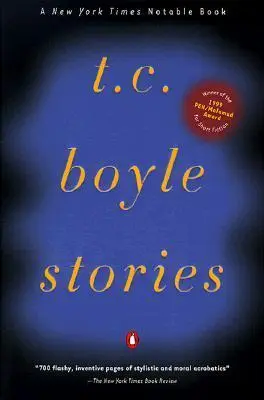
- Название:T. C. Boyle Stories
- Автор:
- Издательство:Penguin (Non-Classics)
- Жанр:
- Год:1999
- ISBN:нет данных
- Рейтинг книги:5 / 5. Голосов: 1
-
Избранное:Добавить в избранное
- Отзывы:
-
Ваша оценка:
T. C. Boyle Stories: краткое содержание, описание и аннотация
Предлагаем к чтению аннотацию, описание, краткое содержание или предисловие (зависит от того, что написал сам автор книги «T. C. Boyle Stories»). Если вы не нашли необходимую информацию о книге — напишите в комментариях, мы постараемся отыскать её.
T. C. Boyle Stories — читать онлайн бесплатно полную книгу (весь текст) целиком
Ниже представлен текст книги, разбитый по страницам. Система сохранения места последней прочитанной страницы, позволяет с удобством читать онлайн бесплатно книгу «T. C. Boyle Stories», без необходимости каждый раз заново искать на чём Вы остановились. Поставьте закладку, и сможете в любой момент перейти на страницу, на которой закончили чтение.
Интервал:
Закладка:
Mishkin was grinning broadly, his gold fillings glistening in the light, grinning as if he and Akaky had just signed some nefarious pact together. “The overcoat, Akaky, the overcoat.”
“Do you like it?”
Mishkin blew on his fingers. “It’s first-rate.”
Akaky was grinning now too. “You wouldn’t believe it — I had it custom-made, but I suppose you can see that in the lines and the distinction of it. A tailor I know, lives in squalor, but he put it together for me in less than a week.”
It was as if Mishkin’s fingertips had suddenly exploded in flame: he was puffing vigorously at them and waving his hands from the wrist. “Oh come off it, Akaky — you don’t have to put on a show for me,” he said, simultaneously flailing his fingers and nudging Akaky with a complicitous elbow.
“It’s the truth,” Akaky said. And then: “Well, I guess it wouldn’t be fair to say less than a week — it took him a full seven days, actually.”
“All right, all right,” Mishkin snapped, bending to his sandwich, “have it any way you want. I don’t mean to pry.”
Puzzled at his friend’s behavior, Akaky looked up to see that a number of heads were turned toward them. He concentrated on his sandwich: raw turnip and black bread, dry.
“Listen,” Mishkin said after a while, “Masha and I are having a few people from the office over tonight — for some dinner and talk, maybe a hand or two at cards. Want to join us?”
Akaky never went out at night. Tickets to sporting events, films, concerts, and the ballet were not only beyond his means but so scarce that only the apparatchiki could get them in any case, and since he had no friends to speak of, he was never invited for dinner or cards. In all the years he’d known Rodion Ivanovich the closest they’d come to intimacy was an occasional exchange on sports or office politics over a lunchtime game of chess. Now Rodion was inviting him to his house. It was novel, comradely. The idea of it — of dinner out, conversation, the company of women other than the dreary Romanov wife and daughter or the vituperative Mrs. Yeroshkina — suddenly burst into flower in his head and flooded his body with warmth and anticipation. “Yes,” he said finally, “yes, I’d like that very much.”
After work, Akaky spent two hours in line at the grocery, waiting to buy a small box of chocolates for his hostess. He had only a few rubles left till payday, but remembered reading somewhere that the thoughtful dinner guest always brought a little gift for the hostess — chocolates, flowers, a bottle of wine. Since he wasn’t a drinker, he decided against the wine, and since flowers were virtually impossible to obtain in Moscow at this time of year, he settled on candy — a nice little box of chocolates with creme centers would be just the thing. Unfortunately, by the time he got to the head of the line, every last chocolate in the store had been bought up, and he was left with a choice between penny bubble gum and a rock-hard concoction of peppermint and butterscotch coated in a vaguely sweet soya substance that sold for two to the kopeck. He took ten of each.
As he hurried up Chernyshevsky Street, clutching the scrap of paper on which Mishkin had scrawled his address, Akaky was surprised by a sudden snow squall. He’d thought it was too cold for snow, but there it was, driving at him like a fusillade of frozen needles. Cocking the hat down over his brow and thrusting his hands deep in his pockets, he couldn’t help smiling — the overcoat was marvelous, repelling the white crystals like a shield, and he was as warm as if he were home in bed. He was thinking of how miserable he’d have been in the old overcoat, shivering and stamping, dashing in and out of doorways like a madman, his bones rattling and nose running — when suddenly he felt an arm slip through his. Instinctively, he jerked back and found himself staring into the perfect oval of a young woman’s face; she had hold of his arm and was matching him stride for stride as if they were old acquaintances out for an evening stroll. “Cold night,” she breathed, looking up into his eyes.
Akaky didn’t know what to do. He stared into her face with fascination and horror — what was happening to him? — captivated by her candid eyes and mas-caraed lashes, the blond curls fringing her fur cap, the soft wet invitation of her Western lipstick. “I–I beg your pardon?” he said, trying to draw his hand from his pocket.
She had a firm grip on him. “You’re so handsome,” she said. “Do you work at the ministry? I love your coat. It’s so, so elegant.”
“I’m sorry,” he said, “I’ve—”
“Would you like to take me out?” she said. “I’m available tonight. We could have a drink and then later—” She narrowed her eyes and squeezed his hand, still buried in the overcoat pocket.
“No, no,” he said, his voice strained and unfamiliar in his ears, as if he’d suddenly been thrust into a stranger’s body, “no, you see I can’t really, I–I’m on my way to a dinner engagement.”
They were stopped now, standing as close as lovers. She looked up at him imploringly, then said something about money. The snow blew in their faces, their breath mingled in clouds. Suddenly Akaky was running, hurtling headlong up the street as if a legion of gypsy violinists and greedy yankee moneylenders were nipping at his heels, his heart drumming beneath the standard-brown serge suit, the layers of down, and the soft, impenetrable elegance of his camel’s-hair overcoat.
“Akaky Akakievich, how good to see you.” Rodion stood at the door, blowing on his fingertips. Beside him, a short, broad-faced woman in an embroidered dressing gown, whom Akaky took to be his wife. “Masha,” Rodion said by way of confirmation, and Akaky made a quick little bow and produced the bag of sweets. To his consternation, he saw that in the confusion on the street it had gotten a bit crushed, and that some of the soya substance had begun to stain the bottom of the white confectioner’s bag. Masha’s smile bloomed and faded as quickly as an accelerated film clip of horticultural miracles. “You shouldn’t have,” she said.
The apartment was magnificent, stunning, like nothing Akaky could have imagined. Three and a half rooms, abundantly furnished, with oil paintings on the walls — and they had it all to themselves. Rodion showed him around the place. There was a new stove and refrigerator, a loveseat in the front room. Little Ludmila lay sleeping on a cot in the bedroom. “Really, Rodion Ivanovich, I’m impressed,” Akaky said, wondering how his friend managed to live so well. It was true that Rodion, as Deputy Assistant to the Chief File Clerk of the Thirty-second Bureau, made somewhat more than he did, and true too that Akaky was effectively operating on half pay because of his mother, but still, this was real opulence as far as he was concerned. Rodion was showing him the Swiss cuckoo clock. “It’s very kind of you to say that, Akaky. Yes”—puffing at his fingers—“we find it comfortable.”
There were a number of courses at dinner: a clear broth; fish in cream sauce; pickled sausages, white bread, and cheese; chicken, galushki , and Brussels sprouts. Rodion poured vodka and French wine throughout the meal, and afterward served a cherry cake and coffee. Akaky recognized some of the other guests from the office — faces but not names — and found himself engaged in a conversation with a man beside him over the melodic virtues of Dixieland jazz as opposed to the dissonance of free jazz. Akaky had never heard of either variety of jazz — in fact, he only vaguely knew what jazz was, a degenerate Negro sort of thing from America, with blaring horns and saxophones — but he smiled agreeably and asked an occasional question, while the man expatiated on one school of musical thought or another. Timidly, Akaky began to sip at the glass of wine before him; each time he turned around the glass was full again, and Rodion was beaming at him from the head of the table. He began to feel a depth of warmth and gratitude toward these people gathered around him, his comrades, men and women whose interests and knowledge ranged so far, whose wit flowed so easily: at one point he realized how much he’d been missing, felt that until now life had been passing him by. When Rodion proposed a toast to Masha — it was her birthday — Akaky was the first to raise his glass.
Читать дальшеИнтервал:
Закладка:
Похожие книги на «T. C. Boyle Stories»
Представляем Вашему вниманию похожие книги на «T. C. Boyle Stories» списком для выбора. Мы отобрали схожую по названию и смыслу литературу в надежде предоставить читателям больше вариантов отыскать новые, интересные, ещё непрочитанные произведения.










Обсуждение, отзывы о книге «T. C. Boyle Stories» и просто собственные мнения читателей. Оставьте ваши комментарии, напишите, что Вы думаете о произведении, его смысле или главных героях. Укажите что конкретно понравилось, а что нет, и почему Вы так считаете.