T. Boyle - T. C. Boyle Stories
Здесь есть возможность читать онлайн «T. Boyle - T. C. Boyle Stories» весь текст электронной книги совершенно бесплатно (целиком полную версию без сокращений). В некоторых случаях можно слушать аудио, скачать через торрент в формате fb2 и присутствует краткое содержание. Год выпуска: 1999, Издательство: Penguin (Non-Classics), Жанр: Современная проза, на английском языке. Описание произведения, (предисловие) а так же отзывы посетителей доступны на портале библиотеки ЛибКат.
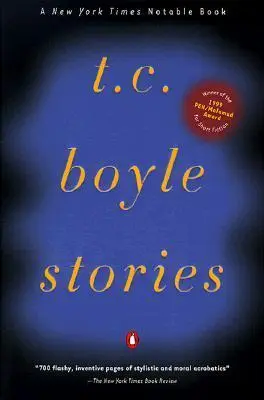
- Название:T. C. Boyle Stories
- Автор:
- Издательство:Penguin (Non-Classics)
- Жанр:
- Год:1999
- ISBN:нет данных
- Рейтинг книги:5 / 5. Голосов: 1
-
Избранное:Добавить в избранное
- Отзывы:
-
Ваша оценка:
T. C. Boyle Stories: краткое содержание, описание и аннотация
Предлагаем к чтению аннотацию, описание, краткое содержание или предисловие (зависит от того, что написал сам автор книги «T. C. Boyle Stories»). Если вы не нашли необходимую информацию о книге — напишите в комментариях, мы постараемся отыскать её.
T. C. Boyle Stories — читать онлайн бесплатно полную книгу (весь текст) целиком
Ниже представлен текст книги, разбитый по страницам. Система сохранения места последней прочитанной страницы, позволяет с удобством читать онлайн бесплатно книгу «T. C. Boyle Stories», без необходимости каждый раз заново искать на чём Вы остановились. Поставьте закладку, и сможете в любой момент перейти на страницу, на которой закончили чтение.
Интервал:
Закладка:
In 1945, when the Russians liberated Auschwitz, they found 129 ovens in the crematorium. The ovens were six feet long, two feet high, one and a half feet wide.
The Union Pacific Railroad had connected New York, Chicago and San Francisco, Ulysses S. Grant was stamping about the White House in hightop boots, Jay Gould was buying up gold and Jared Pink was opening a butcher shop in downtown Chicago.
PINK’S POULTRY, BEEF AND GAME
The town was booming. Barouches and cabriolets at every corner, men in beavers and frock coats lining the steps of the private clubs, women in bustles, bonnets and flounces giving teas and taking boxes at the theater. Thirty-room mansions, friezes, spires, gargoyles, the opera house, the exchange, shops, saloons, tenements. In the hardpan streets men and boys trailed back from the factories, stockyards, docks, their faces mapped in sweat and soot and the blood of animals.
All of them ate meat. Pink provided it. Longhorns from Texas, buffalo from the plains, deer, turkey, pheasant and pigeon from Michigan and Illinois. They stormed his shop, the bell over the door rushing and trilling as they bought up everything he could offer them, right down to the scraps in the brine barrels. Each day he sold out his stock and in the morning found himself at the mercy of his suppliers. A pre-dawn trip to the slaughterhouse for great swinging sides of beef, livers and tripe, blood for pudding, intestine for sausage. And then twice a week to meet the Michigan Line and long low boxcars strung with dressed deer and piled deep with pigeons stinking of death and excrement. Unplucked, their feathers a nightmare, they filled the cars four feet deep and he would bring a boy along to shovel them into his wagon. They sold like a dream.
When his supplier tripled the price per bird Pink sent his brother Seth up to the nesting grounds near Petoskey, Michigan. As Seth’s train approached Petoskey the sky began to darken. He checked his pocket watch: it was three in the afternoon. He leaned over the man beside him to look out the window. The sky was choked with birds, their mass blotting the sun, the drone of their wings and dry rattling feathers audible over the chuff of the engine. Seth whistled. Are those—? he said. Yep, said the man. Passenger pigeons.
Seth wired his brother from the Petoskey station. Two days later he and Jared were stalking the nesting ground with a pair of Smith & Wesson shotguns and a burlap sack. They were not alone. The grove was thronged with hunters, hundreds of them, drinking, shooting, springing traps and tossing nets. Retrievers barked, shotguns boomed. At the far edge of the field women sat beneath parasols with picnic lunches.
Jared stopped to watch an old man assail the crown of a big-boled chestnut with repeated blasts from a brace of shotguns. A grim old woman stood at the man’s elbow, reloading, while two teenagers scrambled over the lower branches of the tree, dropping nestlings to the ground. Another man, surrounded by dirt-faced children, ignited a stick of dynamite and pitched it into a tree thick with roosting birds. A breeze ruffled the leaves as the spitting cylinder twisted through them, pigeons cooing and clucking in the shadows — then there was a flash, and a concussion that thundered over the popping of shotguns from various corners of the field. Heads turned. The smoke blew off in a clot. Feathers, twigs, bits of leaf and a fine red mist began to settle. The children were already beneath the tree, on their hands and knees, snatching up the pigeons and squab as they fell to earth like ripe fruit.
Overhead the sky was stormy with displaced birds. Jared fired one barrel, then the other. Five birds slapped down, two of them stunned and hopping. He rushed them, flailing with the stock of his gun until they lay still. He heard Seth fire behind him. The flock was the sky, shrieking and reeling, panicked, the chalky white excrement like a snowstorm. Jared’s hair and shoulders were thick with it, white spots flecked his face. He was reloading. There’s got to be a better way, he said.
Three weeks later he and his brother returned to Petoskey. They rode out to the nesting grounds in a horse-drawn wagon, towing an old Civil War cannon behind them. In the bed of the wagon lay a weighted hemp net, one hundred feet square, and a pair of cudgels. Strips of cotton broadcloth had been sewed into the center of the net to catch the wind and insure an even descent, but the net fouled on its maiden flight and Seth had to climb a silver maple alive with crepitating pigeons to retrieve it. They refolded the net, stuffed it into the mouth of the cannon, and tried again. This time they were successful: Seth flushed the birds from the tree with a shotgun blast, the cannon roared, and Jared’s net caught them as they rose. Nearly two thousand pigeons lay tangled in the mesh, their distress calls echoing through the trees, metallic and forlorn. The two brothers stalked over the grounded net with their cudgels, crushing the heads of the survivors. When the net had ceased to move and the blood had begun to settle into abstract patterns in the broadcloth, they dropped their cudgels and embraced, hooting and laughing like prospectors on a strike. We’ll be rich! Seth shouted.
He was right. Within six months PINK’S POULTRY, BEEF AND GAME was turning over as many as seventeen thousand pigeons a day, and Jared opened a second and then a third shop before the year was out. Seth oversaw the Petoskey operation and managed one of the new shops. Two years later Jared opened a restaurant and a clothing store and began investing in a small Ohio-based petroleum company called Standard Oil. By 1885 he was worth half a million dollars and living in an eighteen-room mansion in Highland Park, just down the street from his brother Seth.
On a September afternoon in 1914, when Jared Pink was seventy-two, a group of ornithologists was gathered around a cage at the Cincinnati zoo. Inside the cage was a passenger pigeon named Martha, and she was dying of old age. The bird gripped the wire mesh with her beak and stiffened. She was the last of her kind on earth.
The variola virus, which causes smallpox, cannot exist outside the human body. It is now, as the result of pandemic immunization, on the verge of extinction.
Numerous other lifeforms have disappeared in this century, among them the crested shelduck, Carolina parakeet, Kittlitz’s thrust, Molokai oo, huia, Toolach wallaby, freckled marsupial mouse, Syrian wild ass, Schomburgk’s deer, rufous gazelle, bubal hartebeest and Caucasian wisent.
George Robertson was infused with the spirit of Christianity. When he arrived in Tasmania in 1835, the island’s autochthonous population had been reduced from seven thousand to less than two hundred in the course of the thirty-two years that the British colony at Risdon had been in existence. The original settlers, a group of convicts under the supervision of Lieutenant John Bowen, had hunted the native Tasmanians as they would have hunted wolves or rats or any other creatures that competed for space and food. George Robertson had come to save them.
Picture him: thirty, eyes like rinse water, hair bleached white in the sun, the tender glossy skin showing through the molt of nose and cheekbone. A gangling tall man who walked with a limp and carried an umbrella everywhere he went. He was an Anglican clergyman. His superiors had sent him to the island on a mission of mercy: to save the aboriginal Tasmanians from extinction and perdition both. Robertson had leaped at the opportunity. He would be a paraclete, a leader, an arm of God. But when he stepped ashore at Risdon, he found that no one had seen a native Tasmanian — alive or dead — in nearly five years. Like the thylacines and wombats, they had withdrawn to the desolate slopes of the interior.
Читать дальшеИнтервал:
Закладка:
Похожие книги на «T. C. Boyle Stories»
Представляем Вашему вниманию похожие книги на «T. C. Boyle Stories» списком для выбора. Мы отобрали схожую по названию и смыслу литературу в надежде предоставить читателям больше вариантов отыскать новые, интересные, ещё непрочитанные произведения.









Обсуждение, отзывы о книге «T. C. Boyle Stories» и просто собственные мнения читателей. Оставьте ваши комментарии, напишите, что Вы думаете о произведении, его смысле или главных героях. Укажите что конкретно понравилось, а что нет, и почему Вы так считаете.