T. Boyle - T. C. Boyle Stories
Здесь есть возможность читать онлайн «T. Boyle - T. C. Boyle Stories» весь текст электронной книги совершенно бесплатно (целиком полную версию без сокращений). В некоторых случаях можно слушать аудио, скачать через торрент в формате fb2 и присутствует краткое содержание. Год выпуска: 1999, Издательство: Penguin (Non-Classics), Жанр: Современная проза, на английском языке. Описание произведения, (предисловие) а так же отзывы посетителей доступны на портале библиотеки ЛибКат.
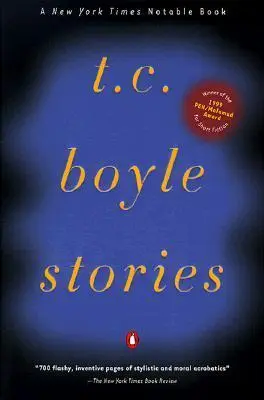
- Название:T. C. Boyle Stories
- Автор:
- Издательство:Penguin (Non-Classics)
- Жанр:
- Год:1999
- ISBN:нет данных
- Рейтинг книги:5 / 5. Голосов: 1
-
Избранное:Добавить в избранное
- Отзывы:
-
Ваша оценка:
T. C. Boyle Stories: краткое содержание, описание и аннотация
Предлагаем к чтению аннотацию, описание, краткое содержание или предисловие (зависит от того, что написал сам автор книги «T. C. Boyle Stories»). Если вы не нашли необходимую информацию о книге — напишите в комментариях, мы постараемся отыскать её.
T. C. Boyle Stories — читать онлайн бесплатно полную книгу (весь текст) целиком
Ниже представлен текст книги, разбитый по страницам. Система сохранения места последней прочитанной страницы, позволяет с удобством читать онлайн бесплатно книгу «T. C. Boyle Stories», без необходимости каждый раз заново искать на чём Вы остановились. Поставьте закладку, и сможете в любой момент перейти на страницу, на которой закончили чтение.
Интервал:
Закладка:
He’d been hoping for a leftover hamburger or a hard-boiled egg, but he isn’t ready for this: the thing is packed, top to bottom, with cold cuts, big blocks of cheese, bratwurst and Tiroler. Käse , reads the label on a wedge of white cheese, Product of Germany. Tilsiter , reads another. Schmelzkäse, Mainauer, Westfälischer Schinken. For a long moment Calvin merely sits there, the cold air in his face, the meats and blocks of cheese wrapped in white butcher’s paper, stacked up taller than his head. Somehow, he doesn’t feel hungry anymore. And then it hits him: something like anger, something like fear.
The refrigerator door closes behind him with an airtight hiss, flies scatter, an overturned cup on the floor spins wildly away from his right wheel, and he’s back in the hallway again, but this time he’s turning left into the living room. Bottles, ashtrays, crumpled newspapers, he ignores them all. On the far side of the room stands a cheap plywood door, a door he’s never been through: the door to Ormand and Lee Junior’s room. Sitting there evenings, watching TV, he’s caught a glimpse of the cluttered gloom beyond the doorway as one or the other of the boys slams in or out, but that’s about it. They’ve never invited him in, and he’s never much cared. But now, without hesitation, he wheels himself across the room, shoves down on the door latch with the heel of his hand, and pushes his way in.
He’s no fool. He knew what he would find. But still, the magnitude of it chokes up his throat and makes the blood beat in his head like a big bass drum. From one end of the room to the other, stacked up to the ceiling as if the place were a warehouse or something, are stereo sets, radios, TVs, power tools, toaster ovens, and half a dozen things Calvin doesn’t even recognize except to know that they cost an arm and a leg. In one corner are cases of beer — and, yes, Patio soda — and in the other, beneath a pair of huge PA speakers, guns. Shotguns, rifles, semiautomatics, a sack full of handguns with pearly and nickel-plated grips spilled on the floor like treasure. He can’t believe it. Or no, worse, he can. Shaken, he backs out of the room and pulls the door shut.
The house is silent as a tomb. But wait: is that Jewel? Calvin’s underarms are soaked through, a bead of sweat drops from his nose. The house stirs itself, floorboards creak of their own accord, the refrigerator starts up with a sigh. Is that Ormand? No, there: he can hear Jewel’s snores again, stutter and wheeze, faint as the hum of the flies. This is his chance: he knows what he must do.
Outside, the sun hits him like a slap in the face. Already his shoulder sockets are on fire and the cast feels like an anchor twisted round his arm. For an instant he sits there beside the door as if debating with himself, the watery old eyes scanning the street for Ormand’s pickup. Then all at once he’s in motion, rocking across the loose floorboards, past the mounds of debris, and down the ramp Ormand fixed up for him at the back end of the porch. Below, the ground is littered with tires and machine parts, with rags and branches and refuse, and almost immediately he finds himself hung up on something — part of an auto transmission, it looks like — but he leans over to wrestle with it, heart in his throat, fingers clawing at grease and metal, until he frees himself. Then he’s out the ramshackle gate and into the street.
It’s not much of a hill — a five-degree grade maybe, and fifty or sixty yards up — but to the old man it seems like Everest. So hot, his seat stuck to the chair with his own wetness, salt sweat stinging his eyes, arms pumping and elbows stabbing, on he goes. A station wagon full of kids thunders by him, and then one of those little beetle cars; up ahead, at the intersection of Tully and Commerce, he can see a man on a bicycle waiting for the light to change. Up, up, up, he chants to himself, everything clear, not a number in his head, the good and bad of his life laid out before him like an EKG chart. The next thing he knows, the hill begins to even off and he’s negotiating the sidewalk and turning the corner into the merciful shade of the store fronts. It’s almost a shock when he looks up and finds himself staring numbly at his gaunt, wild-haired image in the dark window of Eva’s European Deli.
The door stands open. For a long moment he hesitates, watching himself in the window. His face is crazy, the glint of his glasses masking his eyes, a black spot of grease on his forehead. What am I doing? he thinks. Then he wipes his hands on his pants and swings his legs through the doorway.
At first he can see nothing: the lights are out, the interior dim. There are sounds from the rear of the shop, the scrape of objects being dragged across the floor, a thump, voices. “I got no insurance, I tell you.” Plaintive, halting, the voice of the German woman. “No money. And now I owe nearly two thousand dollars for all this stock”—more heavy, percussive sounds—“all gone to waste.”
Now he begins to locate himself, objects emerging from the gloom, shades drawn, a door open to the sun all the way down the corridor in back. Christ, he thinks, looking round him. The display racks are on the floor, toppled like trees, cans and boxes and plastic packages torn open and strewn from one end of the place to the other. He can make out the beer cooler against the back wall, its glass doors shattered and wrenched from the hinges. And here, directly in front of him, like something out of a newsreel about flooding along the Mississippi, a clutter of overturned tables, smashed chairs, tangled rolls of butcher’s paper, the battered cash register and belly-up meat locker. But all this is nothing when compared with the swastikas. Black, bold, stark, they blot everything like some killing fungus. The ruined equipment, the walls, ceiling, floors, even the bleary reproductions of the Rhine and the big hand-lettered menu in the window: nothing has escaped the spray can.
“I am gone,” the German woman says. “Finished. Four times is enough.”
“Eva, Eva, Ea.” The second voice is thick and doleful, a woman’s voice, sympathy like going to the bathroom. “What can you do? You know how Mike and I would like to see those people in jail where they belong—”
“Animals,” the German woman says.
“We know it’s them — everybody on the block knows it — but we don’t have the proof and the police won’t do a thing. Honestly, I must watch that house ten hours a day but I’ve never seen a thing proof positive.” At that moment, Mrs. Tuxton’s head comes into view over the gutted meat locker. The hair lies flat against her temples, beauty-parlor silver. Her lips are pursed. “What we need is an eyewitness.”
Now the German woman swings into view, a carton in her arms. “Yah,” she says, the flesh trembling at her throat, “and you find me one in this … this stinking community. You’re a bunch of cowards — and you’ll forgive me for this, Laura — but to let criminals run scot-free on your own block, I just don’t understand it. Do you know when I was a girl in Karlsruhe after the war and we found out who was the man breaking into houses on my street, what we did? Huh?”
Calvin wants to cry out for absolution: I know, I know who did it! But he doesn’t. All of a sudden he’s afraid. The vehemence of this woman, the utter shambles of her shop, Ormand, Lee Junior, the squawk of the police radio: his head is filling up. It is then that Mrs. Tuxton swivels round and lets out a theatrical little gasp. “My God, there’s someone here!”
In the next moment they’re advancing on him, the German woman in a tentlike dress, the mean little eyes sunk into her face until he can’t see them, Mrs. Tuxton wringing her hands and jabbing her pointy nose at him as if it were a knife. “You!” the German woman exclaims, her fists working, the little feet in their worn shoes kneading the floor in agitation. “What are you doing here?”
Читать дальшеИнтервал:
Закладка:
Похожие книги на «T. C. Boyle Stories»
Представляем Вашему вниманию похожие книги на «T. C. Boyle Stories» списком для выбора. Мы отобрали схожую по названию и смыслу литературу в надежде предоставить читателям больше вариантов отыскать новые, интересные, ещё непрочитанные произведения.









Обсуждение, отзывы о книге «T. C. Boyle Stories» и просто собственные мнения читателей. Оставьте ваши комментарии, напишите, что Вы думаете о произведении, его смысле или главных героях. Укажите что конкретно понравилось, а что нет, и почему Вы так считаете.