T. Boyle - The Women
Здесь есть возможность читать онлайн «T. Boyle - The Women» весь текст электронной книги совершенно бесплатно (целиком полную версию без сокращений). В некоторых случаях можно слушать аудио, скачать через торрент в формате fb2 и присутствует краткое содержание. Год выпуска: 2009, Издательство: Viking Adult, Жанр: Современная проза, на английском языке. Описание произведения, (предисловие) а так же отзывы посетителей доступны на портале библиотеки ЛибКат.
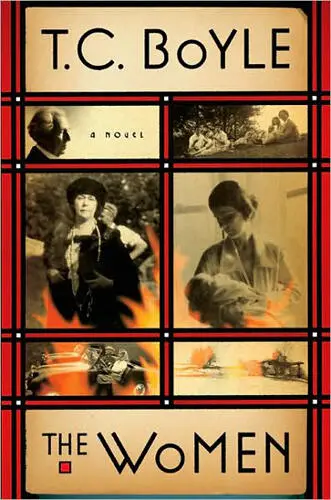
- Название:The Women
- Автор:
- Издательство:Viking Adult
- Жанр:
- Год:2009
- ISBN:нет данных
- Рейтинг книги:5 / 5. Голосов: 1
-
Избранное:Добавить в избранное
- Отзывы:
-
Ваша оценка:
The Women: краткое содержание, описание и аннотация
Предлагаем к чтению аннотацию, описание, краткое содержание или предисловие (зависит от того, что написал сам автор книги «The Women»). Если вы не нашли необходимую информацию о книге — напишите в комментариях, мы постараемся отыскать её.
and sex researcher Alfred Kinsey in
, T.C. Boyle now turns his fictional sights on an even more colorful and outlandish character: Frank Lloyd Wright. Boyle's account of Wright's life, as told through the experiences of the four women who loved him, blazes with his trademark wit and invention. Wright's life was one long howling struggle against the bonds of convention, whether aesthetic, social, moral, or romantic. He never did what was expected and despite the overblown scandals surrounding his amours and very public divorces and the financial disarray that dogged him throughout his career, he never let anything get in the way of his larger-than-life appetites and visions. Wright's triumphs and defeats were always tied to the women he loved: the Montenegrin beauty Olgivanna Milanoff; the passionate Southern belle Maud Miriam Noel; the spirited Mamah Cheney, tragically killed; and his young first wife, Kitty Tobin. In
, T.C. Boyle's protean voice captures these very different women and, in doing so, creates a masterful ode to the creative life in all its complexity and grandeur.
The Women — читать онлайн бесплатно полную книгу (весь текст) целиком
Ниже представлен текст книги, разбитый по страницам. Система сохранения места последней прочитанной страницы, позволяет с удобством читать онлайн бесплатно книгу «The Women», без необходимости каждый раз заново искать на чём Вы остановились. Поставьте закладку, и сможете в любой момент перейти на страницу, на которой закончили чтение.
Интервал:
Закладка:
“But he’s delirious, soaked in sweat. He’s — he’s been calling out in the night, talking nonsense.” She had a sudden vision of her son Thomas, stricken with influenza when he was boy, the sticks of his legs beneath the sweated sheets, the hair pasted to his forehead, his lips cracked and dry. She’d been sure he was going to die and she was so paralyzed by the thought she couldn’t nurse him, couldn’t look at him, couldn’t even pass by his door without breaking down.
The doctor glanced across the room to where Hayashi-San, who’d attempted to act as interpreter, but with limited success, clutched his hands before him and bowed. “Dysentery,” the doctor said. “Very serious.”
“But aren’t you going to give him anything? Any treatment, any medicine? You do know medicine, don’t you?” In exasperation, she turned to Hayashi-San. “Tell him medicine — what is the word for medicine?”
Hayashi-San bowed again and said something to the doctor in Japanese, to which the doctor replied with his own bow before turning back to her. “Rice ball,” he said. “Only rice ball.”
It must have been a month or so later when she came back from a shopping expedition, feeling as Japanese as she ever would, having haggled with various dealers over a brocade screen, a statue of the bodhisattva Guanyin Frank had had his eye on and a beautiful little inlaid rosewood table, to find Frank sitting up in bed, looking pleased with himself. Over the past weeks he’d made a steady improvement, graduating from the rice balls to broth, tea and finally noodles with bits of fish and vegetables, but he’d been irritable, frustrated, cursing his foreman, the houseboy, the diet and the delay in construction this was costing him, and, of course, taking it out on her whenever he could. But now he was propped up against the headboard, the bed strewn with books and papers, whistling one of his music hall tunes.
“You look like you’re feeling chipper,” she said, removing her wrap and draping it over a chair.
He didn’t answer. Just kept whistling.
“I got the most adorable little table”—she held off telling him of the bodhisttva, knowing what a fuss he’d make of it, criticizing the smallest flaws, badgering her over the price no matter what she’d paid—“and a screen I thought was quite. . What’s that I smell? Perfume?”
The whistling abruptly died.
There was a tray beside him, the tea things laid out, two cups, English biscuits, mochi. “And what’s this? You didn’t wait tea for me?”
His smile flashed and faded just as quickly. She saw that his hair had been carefully combed and that he was wearing his best robe and one of his stiff high-collared shirts. And a tie. “Oh, yes,” he said, as if it were an afterthought, “Olga stopped by to see how I was doing, and we—”
“Olga?” she repeated. 131
It was at that moment that the bathroom swung open and Madame Krynska — La Krynska, Olga —appeared, a washcloth in her hand. “Oh, Miriam,” she chirped, “I didn’t know you’d come back. How nice to see you.” And she proceeded across the floor of the bedroom as if she were in her own Polish hovel to bend over Frank and lay the wet compress on his forehead, just as she had that day in the country. “Isn’t it a marvel how well he’s looking?” she said, still bent at the waist and glancing over one shoulder, her petite pretty manicured hand pressed to Frank’s brow and Frank looking like a Pomeranian with a belly full of chopped liver.
Miriam was astonished. Slack-jawed. So stunned at the audacity of this woman — of Frank, the cheat, the liar, the adventurer — that she couldn’t speak a word.
“There,” La Krynska was cooing, her yellow hair burgeoning round her like some unnatural growth, like fur grafted to her head above the yellow paste of her Polish eyebrows, “does that feel better?”
In her own room, in the drawer where she kept her pravaz — right beside it — Miriam also kept a pistol. It was a small shiny thing that held two shots only and she’d bought it in Albuquerque the day she arrived, when she was feeling low, and she couldn’t have said why she’d thought to buy it — she wasn’t suicidal, not at all, no man could make her sink to that level and no man was worth it, not even the high and mighty Frank Lloyd Wright — except that having it near her, in her purse or in the desk drawer, gave her a sense of security, of power in reserve. She’d never fired it. Never even given it a thought. Till now.
“Miriam,” Frank called out in the voice of a dog, the petted voice, false and callow, “come join us. The tea’s hot still.”
But she was already out the door, already crossing the hall to her own room and the drawer there. She was utterly calm. She fit the key in the lock and pulled out the drawer to reveal the pravaz and the pistol beside it and her hand never trembled the way it sometimes did when she was upset and needed a shot for relief. The pistol — it was called a derringer and she’d known women in Paris who carried such things in their purses in the most casual way — was cold to the touch, as if its shiny nickel plating had just been dug from the earth. She took it in one hand and crossed the hall to Frank’s bedroom, all the world solidly in place, his prints and rugs and statues, and La Krynska just bending to the teapot, a thumb pressed to the lid as she lifted it and poured.
It took a moment. Frank’s eyes leapt at her and retreated. “Miriam, what are you—?”
“I’ll kill her, Frank,” she said, and she was pointing the gun now, her finger on the miniature trigger, a sudden tide of emotion gushing up in her so that she was no longer calm, even as her voice rose and rose till it was a shriek, “and you. I’ll kill you too. I’ll kill both of you!” she screamed. “And myself! Myself too!”
Of course, she killed no one, least of all herself. But she would have — she knew it, she swore it — if that little Pole hadn’t bolted out of the room and Frank hadn’t come up out of the bed and wrestled the gun away from her. But it was finished in any case. He was a beast. A criminal. He didn’t love her and he never had, no matter what he said. And even before she heard the news that his mother was on her way to Tokyo — the old dragon herself — to nurse him through his illness, as if she weren’t perfectly capable, as if he hadn’t recovered already and put the rice balls and all the rest behind him, she moved out. Bolted the door against him, packed up two suitcases — and no, she wouldn’t shed a tear, not for him — and took the train back to the mountains and the dead cherry blossoms and any inn that would receive her. She was in Japan and she would live in Japan as she’d lived in Albuquerque, free of him, rid of him, in exile, one white face among all those yellow ones.
CHAPTER 9: THE AXIS OF BLISS
It was raining heavily as she walked up from the station to the squat wooden inn on the hillside, preceded by a porter carrying her suitcases. Her shoes were all but ruined in the rutted dirt street that resembled nothing so much as a streambed at this juncture, everything dripping and sizzling with the rain, but it didn’t really matter — they could toss them on the ash pit for all she cared. She was going native. Throwing off worldly things. Dwelling within herself. And to hell with Frank. She concentrated on the porter’s back as the planes of his muscles clenched and shifted under the weight of the suitcases, the water streaming from his straw hat that was like an inverted funnel, the hill rising ever more sharply. She put one foot in front of the other, trying her best to avoid the deeper puddles and thinking only of a bed and a hot bath. There was no one in the street. Nothing stirred. Just the rain.
Читать дальшеИнтервал:
Закладка:
Похожие книги на «The Women»
Представляем Вашему вниманию похожие книги на «The Women» списком для выбора. Мы отобрали схожую по названию и смыслу литературу в надежде предоставить читателям больше вариантов отыскать новые, интересные, ещё непрочитанные произведения.


Обсуждение, отзывы о книге «The Women» и просто собственные мнения читателей. Оставьте ваши комментарии, напишите, что Вы думаете о произведении, его смысле или главных героях. Укажите что конкретно понравилось, а что нет, и почему Вы так считаете.