T. Boyle - The Women
Здесь есть возможность читать онлайн «T. Boyle - The Women» весь текст электронной книги совершенно бесплатно (целиком полную версию без сокращений). В некоторых случаях можно слушать аудио, скачать через торрент в формате fb2 и присутствует краткое содержание. Год выпуска: 2009, Издательство: Viking Adult, Жанр: Современная проза, на английском языке. Описание произведения, (предисловие) а так же отзывы посетителей доступны на портале библиотеки ЛибКат.
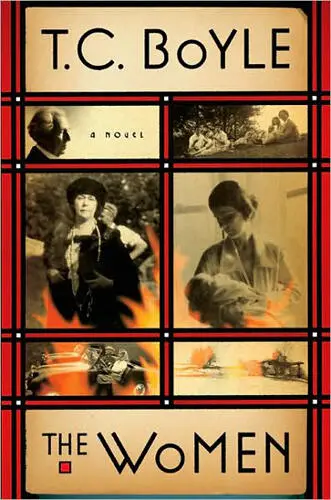
- Название:The Women
- Автор:
- Издательство:Viking Adult
- Жанр:
- Год:2009
- ISBN:нет данных
- Рейтинг книги:5 / 5. Голосов: 1
-
Избранное:Добавить в избранное
- Отзывы:
-
Ваша оценка:
The Women: краткое содержание, описание и аннотация
Предлагаем к чтению аннотацию, описание, краткое содержание или предисловие (зависит от того, что написал сам автор книги «The Women»). Если вы не нашли необходимую информацию о книге — напишите в комментариях, мы постараемся отыскать её.
and sex researcher Alfred Kinsey in
, T.C. Boyle now turns his fictional sights on an even more colorful and outlandish character: Frank Lloyd Wright. Boyle's account of Wright's life, as told through the experiences of the four women who loved him, blazes with his trademark wit and invention. Wright's life was one long howling struggle against the bonds of convention, whether aesthetic, social, moral, or romantic. He never did what was expected and despite the overblown scandals surrounding his amours and very public divorces and the financial disarray that dogged him throughout his career, he never let anything get in the way of his larger-than-life appetites and visions. Wright's triumphs and defeats were always tied to the women he loved: the Montenegrin beauty Olgivanna Milanoff; the passionate Southern belle Maud Miriam Noel; the spirited Mamah Cheney, tragically killed; and his young first wife, Kitty Tobin. In
, T.C. Boyle's protean voice captures these very different women and, in doing so, creates a masterful ode to the creative life in all its complexity and grandeur.
The Women — читать онлайн бесплатно полную книгу (весь текст) целиком
Ниже представлен текст книги, разбитый по страницам. Система сохранения места последней прочитанной страницы, позволяет с удобством читать онлайн бесплатно книгу «The Women», без необходимости каждый раз заново искать на чём Вы остановились. Поставьте закладку, и сможете в любой момент перейти на страницу, на которой закончили чтение.
Интервал:
Закладка:
Somewhere in there — and in looking back on it she could never be quite sure which trip it was 130—Frank fell seriously ill. It was springtime, that much she remembered, because they were out in the country with Baron Ōkura, the princess and some of the others (and here the name Olga Krynska rose up in her memory in a dark gnarl of hate and envy) viewing the cherry blossoms, which were then at the height of their beauty. For the Japanese, a quaint diminutive people so much in tune with nature and the change of the seasons they might have been a nation of satyrs and wood nymphs, the sakura bloom was one of the high points of the year, and everyone, from the murkiest slum dweller to the Emperor himself, made a point of celebrating the occasion. When the Baron proposed a blossom-viewing party at his country house, Frank — who’d been working himself to death in a din of noise and dust as his army of masons pounded away at the peculiar volcanic rock he insisted on using for the hotel’s superstructure — agreed to take a hiatus. “How would you like a little ramble in the country?” was the way Frank put it to her. “Why not?” she said, because for all its brilliant company, Tokyo was an ugly squat over-bursting city, and its smells and sounds were beginning to weigh on her, especially now that she found herself compelled to leave the windows open in order to keep from stifling. A jaunt in the country sounded like just the thing.
The sky was brilliant that first day, the cherry trees marshaled in rows of pink clouds that softened the horizon as far as she could see or standing solitary on a sculpted slope where they seemed to concentrate the light, flaming out against the dull grays and greens of the surrounding landscape as if on a stage, and the entire party made a picnic of the occasion, the Baron providing boxed lunches and champagne, various people sketching or reading, lying stretched out on mats in the sun, chatting in the soft revolving tones of perfect contentment. In short, it was an idyll. And she was enjoying herself despite Madame Krynska, the little unattached Pole the Lubienskys had brought along for what seemed the express purpose of separating her from Frank, as if she would ever allow that to happen, even for a minute. . The champagne was chilled, the sandwiches were of white bread, butter and cucumber instead of rice and raw fish, the servants attentive. She was just communing with the Baron over their mutual love for things Gallic and reflecting aloud on how much the blossoms reminded her of spring in Paris, particularly in the urban oases, the Tuileries, the Jardin des Plantes, the Luxembourg Gardens (and he was as much under her spell as Hayashi-San, leaning forward over his tented knees, his black eyes fixed on her so as not to miss a single syllable), when Frank, who hadn’t uttered a word in the past five minutes, suddenly let out a gasp as if the wind had been knocked out of him.
He’d been sitting beside her, or rather just behind her, in a circle that included the Lubienskys and Countess Ablomov, and as she turned round in alarm she could see immediately that he was in trouble — he seemed shrunken all of a sudden, deflated, his skin bleached and bloodless, his legs drawn up under him like a child’s. He gasped again, but before she could reach out to him or even call his name he buckled over on his side, both hands clutching his abdomen, his face pressed awkwardly into the grass at the edge of the mat. Her first thought was that he must have had an attack of some kind — only that week Leora had written her in excruciating detail about her husband’s heart problems — and even as she scrambled to him on her knees she felt the loss of him, the future closing over her like a dark engulfing cloud, and she would be nobody’s widow because she was nobody’s wife. She pulled him to her, already in tears, as he attempted, feebly, to push her away. “Frank, what’s wrong, what is it?”
He was wincing. He kicked his legs out. Writhed on the grass. He was trying to say something, but she couldn’t make out the words.
The others were on their feet now, gathered round in a constellation of apprehensive faces, and no one seemed to know what to do. Someone said it was appendicitis and then someone else said that if it was he’d have to be operated on, but weren’t they getting ahead of themselves? Shouldn’t someone call for a doctor? That was when La Krynska — slim, young, butter-haired, dressed in some sort of athletic costume and with a badminton racket still clutched in one hand — appeared on the scene, pushing her way through the circle to kneel beside him. “He needs water,” she said. “Ice. Here”—and she rose to dip her handkerchief in the ice bucket and press it to Frank’s brow—“try this. Does that feel better?”
Miriam felt the champagne float to her head. Here she was on her knees on the lawn of a baronial estate in the mountains overlooking the Kantō Plain and this Pole was kneeling beside her as if they were praying over a corpse, Frank’s corpse, and it was the strangest thing in the world. Fear seized her. Loathing. Terror. He was going to die, she was sure of it.
“I need,” Frank gasped, and she could see how weak he was, how reduced and mortified, “I want, if someone could help me. .”
“What, Frank?” she heard herself cry out. “What do you need?”
Krynska let her fingers slip behind his ears a moment, to feel in the hollows there, then pulled back his eyelids to peer into the whites of his eyes. When finally she lifted her head, she let her gaze sweep over Miriam and take in the faces gathered round them. “I’m afraid he’s got what we all contract here in Japan at one time or another, we non-Asiatics, that is”—a glance for the Baron, who was shouting over his shoulder for one of the servants to go and fetch the doctor—“and what he needs, most immediately, is a little privacy.” She pressed one hand to the cloth on his forehead and looked back down at him. “And a bathroom.”
Dysentery was common enough in the Far East, where primitive sanitary practices encouraged its spread, and the Japanese Isles were no exception. No matter how often Frank sang the praises of the cleanliness of the country and its people, the rituals involved in the washing of the hands, the scouring of the public baths, the simplicity and purity of the tatami mats and the robes they wore, there was no denying it. Plumbing was nonexistent. Flush toilets unheard of. For all the rustic charm of the lavatories in the inns and private homes — the bamboo screens, the ferns, pottery, flowers — you were nonetheless squatting over a hole in the ground, no different from the hillbillies in the mountains of Tennessee. Miriam could only account herself lucky that she hadn’t come down with the scourge.
The Baron summoned the local physician, who tapped and auscultated and peered into Frank’s ears and up his nose and confirmed Krynska’s diagnosis, after which Frank slept for the better part of two days while Miriam sat beside him in a state of nervous exhaustion and the others took rambles over the hillside, observed the farmers at work in their paddies, played parlor games and watched the cherry blossoms shimmer in the breeze. Then it was back to Tokyo — the driver stopping at intervals so that poor Frank could be helped out to relieve himself — and on to the premier physician in all the country, who tapped and auscultated and peered into Frank’s ears and up his nose and put him on a strict diet of water and rice balls and nothing else.
She was shocked. And she took the man aside and told him so. “Is that all you’re going to do? Give him rice balls? Can’t you see he has a fever?”
The man was tall for a Japanese, with a black brush of the chin whiskers they all seemed to affect. His English was minimal. They stood outside the door of the bedroom, surrounded by the artifacts Frank had collected. “Hai,” he said, bowing. “Rice ball.”
Читать дальшеИнтервал:
Закладка:
Похожие книги на «The Women»
Представляем Вашему вниманию похожие книги на «The Women» списком для выбора. Мы отобрали схожую по названию и смыслу литературу в надежде предоставить читателям больше вариантов отыскать новые, интересные, ещё непрочитанные произведения.









Обсуждение, отзывы о книге «The Women» и просто собственные мнения читателей. Оставьте ваши комментарии, напишите, что Вы думаете о произведении, его смысле или главных героях. Укажите что конкретно понравилось, а что нет, и почему Вы так считаете.