Mary Keane - Fever
Здесь есть возможность читать онлайн «Mary Keane - Fever» весь текст электронной книги совершенно бесплатно (целиком полную версию без сокращений). В некоторых случаях можно слушать аудио, скачать через торрент в формате fb2 и присутствует краткое содержание. Год выпуска: 2013, Издательство: Scribner, Жанр: Современная проза, на английском языке. Описание произведения, (предисловие) а так же отзывы посетителей доступны на портале библиотеки ЛибКат.
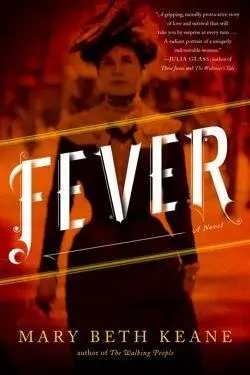
- Название:Fever
- Автор:
- Издательство:Scribner
- Жанр:
- Год:2013
- ISBN:нет данных
- Рейтинг книги:3 / 5. Голосов: 1
-
Избранное:Добавить в избранное
- Отзывы:
-
Ваша оценка:
Fever: краткое содержание, описание и аннотация
Предлагаем к чтению аннотацию, описание, краткое содержание или предисловие (зависит от того, что написал сам автор книги «Fever»). Если вы не нашли необходимую информацию о книге — напишите в комментариях, мы постараемся отыскать её.
In order to keep New York’s citizens safe from Mallon, the Department of Health sent her to North Brother Island where she was kept in isolation from 1907–1910. She was released under the condition that she never work as a cook again. Yet for Mary — spoiled by her status and income and genuinely passionate about cooking — most domestic and factory jobs were heinous. She defied the edict.
Bringing early twentieth-century New York alive — the neighborhoods, the bars, the park being carved out of upper Manhattan, the emerging skyscrapers, the boat traffic — Fever is as fiercely compelling as Typhoid Mary herself, an ambitious retelling of a forgotten life. In the hands of Mary Beth Keane, Mary Mallon becomes an extraordinarily dramatic, vexing, sympathetic, uncompromising, and unforgettable character.
Fever — читать онлайн бесплатно полную книгу (весь текст) целиком
Ниже представлен текст книги, разбитый по страницам. Система сохранения места последней прочитанной страницы, позволяет с удобством читать онлайн бесплатно книгу «Fever», без необходимости каждый раз заново искать на чём Вы остановились. Поставьте закладку, и сможете в любой момент перейти на страницу, на которой закончили чтение.
Интервал:
Закладка:
What had Mr. Kirkenbauer done when his wife died? He’d embraced her — lifted her from the bed and held her close to his broad chest. He’d cried big, hot tears and didn’t care who saw. He’d kissed the top of her head and told her he loved her. In the total silence of their rooms Mary put the tip of her finger to Alfred’s hand, the familiar row of knuckles. She examined the jagged fingernails. She studied his blank face. Where did a person go? She wished she knew. She said her good-bye in silence. I don’t think I understand what’s happened yet, but when I do, I will miss you. And I’m sorry.
The coroner came at eleven o’clock, with his teenage son to assist him. She signed the paper he placed on the table. “Right here, Mrs. Briehof,” he said. “And here.” She didn’t bother correcting him, and signed “Mary Briehof” because it was easy, and then they would go away. They got Alfred onto a stretcher, and as they moved into the hall, the boy walking backward, the father forward, she heard the man say quietly to his son that this is what happened to druggies, he saw it all the time. The son said something Mary couldn’t make out, and she tried to ignore the sound of them struggling on the stairs, tried to turn away from the image of his body shifting, sliding. The coroner had given her a contact name and address for the next morning, where she’d have to go to make arrangements, and she folded it over and over until it was as small as a pebble. Then she shoved it deep in her pocket.
It was impossible to sleep that night, and a little before dawn, still wearing the clothes she’d worn the day before, Mary went down to the sidewalk to clear her head. She walked west, to the Hudson, and crouched on the river’s sloped bank to watch a small barge approach from the north. She wondered how long until it didn’t feel as if he were at home, waiting for her. How long until the space he’d made began to narrow and close and until she wondered what it had been like to ever have known him, and to be known by him. Even in those months when they lost track of each other she knew he was out there somewhere, a dot on a map, and she could pass the time wondering if he was thinking of her, and if the dot that was him and the dot that was her were moving closer together without either of them realizing. A woman and child walked by and nodded to her. They can’t tell by looking at me, she thought, staring after them as they ambled up the embankment and back up to the street. Seems like something they should be able to tell by looking at me.
She hadn’t considered going to the hospital that day, but when the sun had fully risen it seemed better that she work, at least for a few hours, and besides, it already seemed like such a long, long time had passed. In the light of morning she remembered that it might not be Typhoid that was going around the hospital. Not every fever was Typhoid Fever, and the nurse hadn’t been sure. And even if it was Typhoid, it mightn’t have anything to do with her. She was only one person, and there were so many in and out of the hospital every day, from deliverymen to proud grandmothers. Who knew what invisible infestations they swept in with them when they came? She thought of the Borriello boys, and how they’d eaten anything she made for them and never got sick. She’d never made Alfred sick. Fran. Aunt Kate. She thought back on all the families she’d worked for. It was a coincidence. A strange coincidence, but still. What could she have done differently? What would they have done differently if they were in her shoes? She thought of the dairyman up in Camden and imagined him skimming the cream from his milk, walking his property with his grandchildren.
Staring across the broad Hudson at New Jersey, she also wondered whether it was possible for a person to know something and not know something at the same time. She wondered whether it was possible to know a truth, and then quickly unknow it, bricking up that portal of knowledge until every pinpoint of light was covered over. When she thought back on the hot blur of days that marked her hearing, way back in 1909, and all the things they’d said about her — that she had no friends, that she didn’t keep a clean kitchen — she felt that animal fight rise up in her again. They blamed her because she was opinionated, and Irish, and unmarried, and didn’t bow to them. She walked quickly to the water to kick stones. The wind on her face felt cleansing, and she closed her eyes to it. And yet, and yet, and yet. As if crouched behind a small door that didn’t draw attention to itself, a different truth sat. And now, as she considered how cold the river water was at that moment, how quickly it would numb the limbs of a swimmer, she closed her eyes and looked at that door, nondescript as it was, unadorned, just sitting, waiting to be opened.
• • •
She’d tell the administrator about Alfred so he’d be prepared when she asked for time off for the funeral. She might tell a few among the kitchen staff. Maybe she’d go over to the old building and tell Jimmy in person, stop in for a talk with Fran or Mila. It had been too long.
And anyway, if she didn’t go to the hospital they might find it strange, and start looking into Mary Brown’s history as a cook.
When she got to the hospital, she nodded to the doorman as usual but found herself studying his face for signs of exhaustion, signs that the fever was on its way. When she got to her floor, she opened the door to disconcerting silence, and continued down the hall passing empty rooms, not a single nurse. The recovery rooms were similarly empty, not only of patients, but also of beds. Only when she approached the kitchen did she hear the ebb and flow of voices in conversation. As she passed the doctors’ lounge, Dr. Henshaw was standing in the frame of the door, watching her pass. She said good morning, but he didn’t reply.
Fly away, she told herself as she took another step, and then another, toward the voices in the kitchen. Do it now. Moving down the hall was like walking through water, and she felt both light and heavy at the same time. Fly out now into the brittle winter air and don’t look back. She glanced over her shoulder at the stair door. To her right was the bank of elevators, but it was as if they had her on a tether and now they were shortening the chain, wrapping it around the broadest part of their hands to draw her closer, and closer, until they had her where they wanted her.
Finally, she arrived at the kitchen. She was lifting her bag from her shoulder and toward the usual hook when, at the same moment, she noticed Soper standing not five feet away. Next to him was the head doctor and behind them were two men Mary didn’t recognize. The mood in the room was one of calm patience, as if they’d been waiting for her all night and now that she’d arrived they could check off that final item on their long list of things to do. One of the unfamiliar men moved to the doorway through which Mary had just entered.
“Mary Mallon,” Dr. Soper said without moving. He looked so pleased to see her that Mary wondered for a second if he could be there on other business. But no, she saw when he exchanged glances with one of the unfamiliar men; Mary had confirmed something that he’d suspected, that he’d suggested to the other men standing around, also waiting, and he was pleased to have his suspicion proven true. They spread out, almost imperceptibly, to fill the corners of the room. She went ahead and hung her coat alongside her bag as she did every morning, and then without looking at any of them she walked over to the stove and checked on the oats. She opened the icebox and made note of the fresh eggs and cream. Then she sat on the single stool, the one they used for peeling, put her hands over her face, and cried.
TWENTY-SEVEN
Интервал:
Закладка:
Похожие книги на «Fever»
Представляем Вашему вниманию похожие книги на «Fever» списком для выбора. Мы отобрали схожую по названию и смыслу литературу в надежде предоставить читателям больше вариантов отыскать новые, интересные, ещё непрочитанные произведения.











Обсуждение, отзывы о книге «Fever» и просто собственные мнения читателей. Оставьте ваши комментарии, напишите, что Вы думаете о произведении, его смысле или главных героях. Укажите что конкретно понравилось, а что нет, и почему Вы так считаете.