Mary Keane - Fever
Здесь есть возможность читать онлайн «Mary Keane - Fever» весь текст электронной книги совершенно бесплатно (целиком полную версию без сокращений). В некоторых случаях можно слушать аудио, скачать через торрент в формате fb2 и присутствует краткое содержание. Год выпуска: 2013, Издательство: Scribner, Жанр: Современная проза, на английском языке. Описание произведения, (предисловие) а так же отзывы посетителей доступны на портале библиотеки ЛибКат.
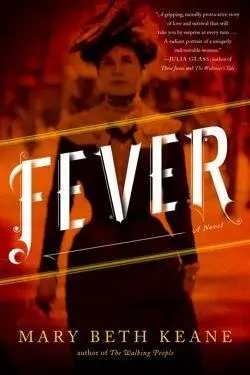
- Название:Fever
- Автор:
- Издательство:Scribner
- Жанр:
- Год:2013
- ISBN:нет данных
- Рейтинг книги:3 / 5. Голосов: 1
-
Избранное:Добавить в избранное
- Отзывы:
-
Ваша оценка:
Fever: краткое содержание, описание и аннотация
Предлагаем к чтению аннотацию, описание, краткое содержание или предисловие (зависит от того, что написал сам автор книги «Fever»). Если вы не нашли необходимую информацию о книге — напишите в комментариях, мы постараемся отыскать её.
In order to keep New York’s citizens safe from Mallon, the Department of Health sent her to North Brother Island where she was kept in isolation from 1907–1910. She was released under the condition that she never work as a cook again. Yet for Mary — spoiled by her status and income and genuinely passionate about cooking — most domestic and factory jobs were heinous. She defied the edict.
Bringing early twentieth-century New York alive — the neighborhoods, the bars, the park being carved out of upper Manhattan, the emerging skyscrapers, the boat traffic — Fever is as fiercely compelling as Typhoid Mary herself, an ambitious retelling of a forgotten life. In the hands of Mary Beth Keane, Mary Mallon becomes an extraordinarily dramatic, vexing, sympathetic, uncompromising, and unforgettable character.
Fever — читать онлайн бесплатно полную книгу (весь текст) целиком
Ниже представлен текст книги, разбитый по страницам. Система сохранения места последней прочитанной страницы, позволяет с удобством читать онлайн бесплатно книгу «Fever», без необходимости каждый раз заново искать на чём Вы остановились. Поставьте закладку, и сможете в любой момент перейти на страницу, на которой закончили чтение.
Интервал:
Закладка:
“It isn’t nonsense,” Mary said, raising her voice. “They chased me down like a dog. They harassed me at the Bowens’ first, then in my own rooms, then they got me one day when the Bowens were out. They had to carry me! They each took an arm or a leg and they carried me. They didn’t even give me a chance to get my things.”
“What things?” John asked. “You’ll send for them. Tell the matron.” But Mary didn’t know the matron, didn’t know what brand of woman she was. Perhaps the matron would like to get her hands on Mary’s hidden envelope, her three good blouses, her beautiful cobalt hat.
How to explain that if it wasn’t the hat specifically, it was the fact that Mary had purchased the hat, had worn it, had admired herself in it. That she was the type of woman who counted out her earnings — a full month’s worth of earnings! — and slid it in a neat stack across a counter to purchase for herself something as impractical as a beautiful hat. If she’d been the type of woman who saved her money, or gave it to someone who needed it more, a neighbor with children, perhaps, or the church, if she’d been a married woman who handed every dollar over to her husband, or better yet a married woman who didn’t have any earnings because she was taken up with the care of her own home, she’d never be in the situation she was in. She couldn’t prove it, but it was the truth nonetheless.
She’d broached the idea with Mr. O’Neill two years later when he came to see her on North Brother, but it was like trying to explain to a cook in training how to tell when a duck is done even when the juices lie, how to predict whether a soufflé will fall just by feeling the air in the room. “A hat?” Mr. O’Neill said. Then he changed the subject and she could see him dismiss it entirely.
SIX
Mary followed Mr. O’Neill by several paces as they entered the courtroom. The time was two minutes past ten o’clock.
Almost every chair was occupied when she walked down the narrow center aisle. She’d pictured benches, polished wood, the judge elevated above them on a kind of throne, but instead the cramped and musty room was filled with straight-backed chairs in uneven lines. Some reporters had turned their chairs to make a cluster with others they knew. Some people who had no involvement in the case but had been following it in the papers nudged their chairs out of line bit by bit with impatient shifting. She wanted to know if Alfred was there, but she kept her eyes fixed on the neat seams of Mr. O’Neill’s suit jacket. There was a momentary hush when those closest to the door spotted her, and a collective creak as several dozen spectators turned to see her for themselves.
Some were on her side, Mary hoped as she crossed the room and kept her focus above the heads of the witnesses. She’d seen the editorials in the paper, the people who believed she’d committed no crime and should be set free to live and work in society like everyone else. Then there were the papers that refused to use her real name even after it had become public knowledge. The Germ Woman, their headlines still read. Readers had written in to ask if breathing near Mary Mallon put a person at risk. What about touching what she touched? What about entering a room shortly after she’d left? She hoped the sympathetic were in attendance at the hearing, but all she felt as she made her way to the front of the room was the scrutiny of fifty people looking at her so closely in the muggy air that she felt handled, groped, every bit as dirty as she was accused of being.
Mr. O’Neill placed his briefcase on a scratched and dented wood table at the front of the room. The men from the Department of Health were already seated at a similar table across the aisle, and Mary made the mistake of looking at them, one by one, until her glance jumped to the row behind them, where Dr. Soper’s dark head was bent over his notes. A man in a blue uniform stepped forward and announced the arrival of Judges Erlinger and Giegerich. Mary hadn’t expected two judges, but she was relieved to see that she’d be able to keep them apart in her thoughts: Erlinger was a big man and Giegerich was no larger than a girl.
“All stand,” the court officer called out, and the clap of chairs being pushed back was thunderous. Mary looked toward the three large windows on the western side of the room and noted that the day had darkened, the metallic smell of rain had seeped indoors. When the people returned to their seats, there was stirred up in the room the odor of vegetables, of horse, of blood. Judge Erlinger pressed a handkerchief to his forehead and then briefly to his nose.
Mr. O’Neill cleared his throat. He began the way they’d discussed, with an account of her arrest in March of 1907. “Without a warrant,” he said, “without due process, the liberty of a perfectly healthy individual…”
Mary could see that he was nervous. He was five years younger than she, only thirty-four, but he never seemed as young to her as he did when he touched his fingertips to the edge of the battered table and stood.
“Mary Mallon has been quarantined for twenty-seven months with no one to keep her company but a gardener who delivers her meals three times a day. She has submitted to testing — urine, blood, and stool — twice a week for that entire period. The nurses who collect her samples are certainly no company, and she dreads their visits because of the anguish they cause. Her friends are not permitted to visit, despite the fact that every doctor associated with her case admits she is contagious only through cooking.”
Mr. O’Neill continued, sticking only to what was relevant, and as he spoke Mary found her thoughts drifting. For twenty-seven months she’d craved the streets of Manhattan, the chaos, the noise, haggling over the price of an orange, debating the accuracy of the butcher’s scale. She missed her work, rising before the rest of the house, removing the first shining pot from its hook, lighting the fire under it, dropping in a spoon of butter and watching it skid across the warmed bottom. She missed earning money, walking to Dicer’s on First Avenue, picking out a basket full of groceries, paying for it with clean, new bills.
She missed Alfred most of all and every morning when she woke she wondered whether he was also awake. She often caught herself thinking of him the same way she once thought of the people from home when she first got to America, all the way across the ocean, twenty-one days at sea. And then when she remembered that the East River was not the ocean, was not even as broad as the mighty Hudson, everything felt more urgent and these were the moments that made her wild, as the doctors called it. Combative. Difficult. Stubborn. Obstinant. Ignorant. Female. There were almost five million souls rushing through their days over there. She could see their chimneys and hear the sharp whistle of trains. Somewhere over there walked Alfred, and unlike those she missed from Ireland who were so far away that she’d quickly drawn a curtain across the possibility of ever seeing them again, the idea of being so close to him and not seeing him made everything worse.
If she had more courage she might have tried swimming across like the young men from the House of Refuge on Rikers tried from time to time, but then she reminded herself that most times, if the papers told the truth, those men turned back, often stopping at North Brother for a rest before doing so, or drowned. John Cane once told her that the East River was the fastest, roughest river he ever knew, especially around North Brother. At the time, she’d been on the island only a month and thought he’d been rubbing it in, reminding her that there were no options for her. But after watching those same waters for twenty-seven months, she knew he’d just been stating the truth.
Читать дальшеИнтервал:
Закладка:
Похожие книги на «Fever»
Представляем Вашему вниманию похожие книги на «Fever» списком для выбора. Мы отобрали схожую по названию и смыслу литературу в надежде предоставить читателям больше вариантов отыскать новые, интересные, ещё непрочитанные произведения.












Обсуждение, отзывы о книге «Fever» и просто собственные мнения читателей. Оставьте ваши комментарии, напишите, что Вы думаете о произведении, его смысле или главных героях. Укажите что конкретно понравилось, а что нет, и почему Вы так считаете.