Vikram Seth - A Suitable Boy
Здесь есть возможность читать онлайн «Vikram Seth - A Suitable Boy» весь текст электронной книги совершенно бесплатно (целиком полную версию без сокращений). В некоторых случаях можно слушать аудио, скачать через торрент в формате fb2 и присутствует краткое содержание. Год выпуска: 2012, Издательство: Orion Publishing Co, Жанр: Современная проза, на английском языке. Описание произведения, (предисловие) а так же отзывы посетителей доступны на портале библиотеки ЛибКат.
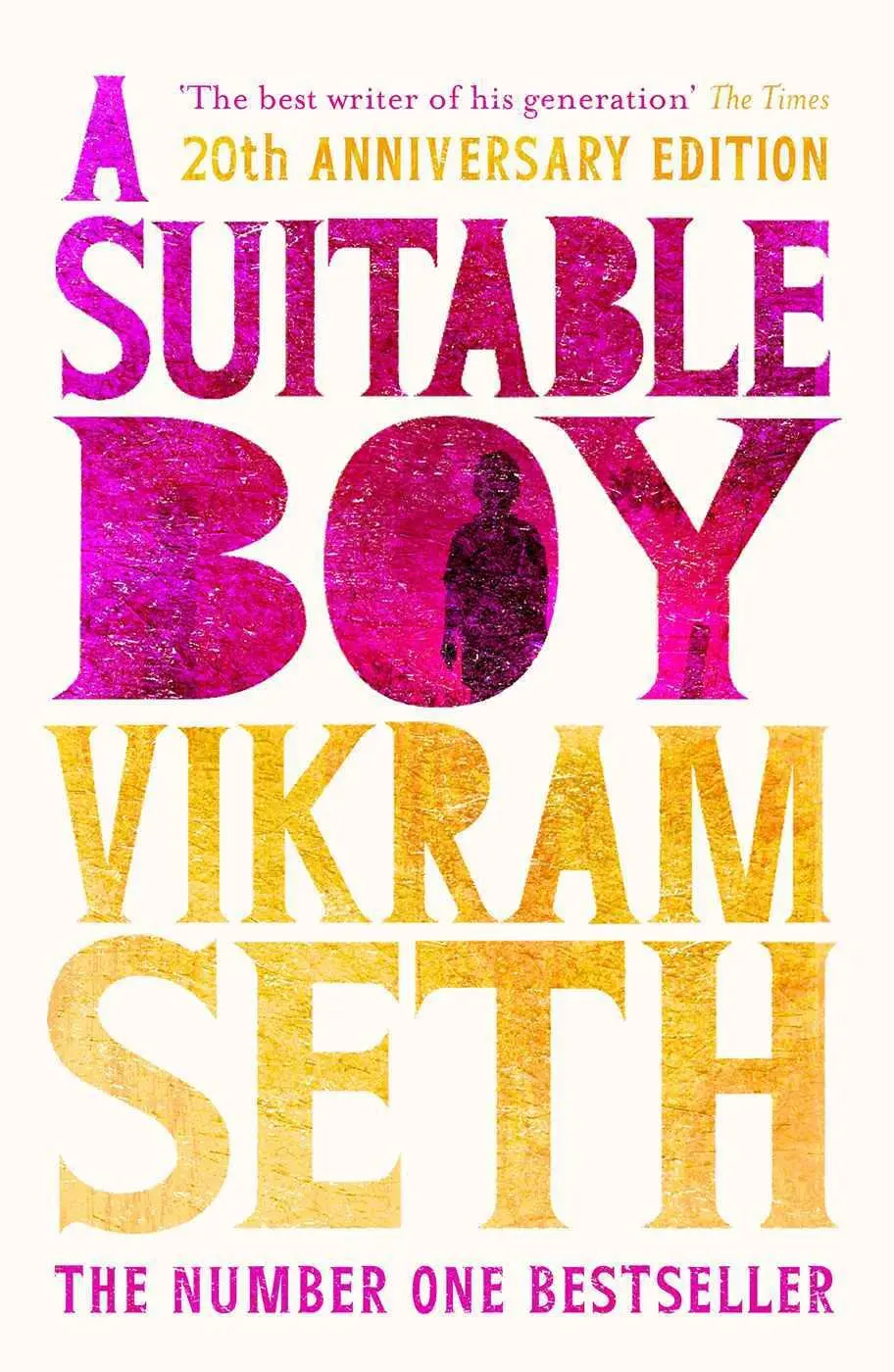
- Название:A Suitable Boy
- Автор:
- Издательство:Orion Publishing Co
- Жанр:
- Год:2012
- ISBN:нет данных
- Рейтинг книги:5 / 5. Голосов: 1
-
Избранное:Добавить в избранное
- Отзывы:
-
Ваша оценка:
A Suitable Boy: краткое содержание, описание и аннотация
Предлагаем к чтению аннотацию, описание, краткое содержание или предисловие (зависит от того, что написал сам автор книги «A Suitable Boy»). Если вы не нашли необходимую информацию о книге — напишите в комментариях, мы постараемся отыскать её.
A Suitable Boy — читать онлайн бесплатно полную книгу (весь текст) целиком
Ниже представлен текст книги, разбитый по страницам. Система сохранения места последней прочитанной страницы, позволяет с удобством читать онлайн бесплатно книгу «A Suitable Boy», без необходимости каждый раз заново искать на чём Вы остановились. Поставьте закладку, и сможете в любой момент перейти на страницу, на которой закончили чтение.
Интервал:
Закладка:
Haresh, impressed by the young man’s looks and manner, held out his hand, smiled in a clipped sort of way, and introduced himself. ‘And this is Bhaskar, a friend’s son.’
The young man seemed a bit troubled about something, but did his best to make conversation.
‘Hello, Bhaskar,’ said Kabir. ‘How old are you?’
‘Nine,’ said Bhaskar, not objecting to this least original of questions. He was pondering what all this was about.
After a while Kabir said, ‘I wonder what’s keeping my father,’ and went back in.
When Dr Durrani finally came into the drawing room, he was quite surprised to see his visitors. Noticing Bhaskar, he asked Haresh:
‘Have you come to see one of my, er, sons?’
Bhaskar’s eyes lit up at this unusual adult behaviour. He liked Dr Durrani’s strong, square face, and in particular the balance and symmetry of his magnificent white moustache. Haresh, who had stood up, said:
‘No indeed, Dr Durrani, it’s you we’ve come to see. I don’t know if you remember me — we met at Sunil’s party. . ’
‘Sunil?’ said Dr Durrani, his eyes scrunched up in utter perplexity, his eyebrows working up and down. ‘Sunil. . Sunil. .’ He seemed to be weighing something up with great seriousness, and coming closer and closer to a conclusion. ‘Patwardhan,’ he said, with the air of having arrived at a considerable insight. He appraised this new premise from several angles in silence.
Haresh decided to speed up the process. He said, rather briskly:
‘Dr Durrani, you said that we could drop in to see you. This is my young friend Bhaskar, whom I told you about. I think his interest in mathematics is remarkable, and I felt he should meet you.’
Dr Durrani looked quite pleased, and asked Bhaskar what two plus two was.
Haresh was taken aback, but Bhaskar — though he normally rejected considerably more complex sums as unworthy of his attention — was not, apparently, insulted. In a very tentative voice he replied:
‘Four?’
Dr Durrani was silent. He appeared to be mulling over this answer. Haresh began to feel ill at ease.
‘Well, yes, you can, er, leave him here for a while,’ said Dr Durrani.
‘Shall I come back to pick him up at four o’clock?’ asked Haresh.
‘More or less,’ said Dr Durrani.
When he and Bhaskar were left alone, both of them were silent. After a while, Bhaskar said:
‘Was that the right answer?’
‘More or less,’ said Dr Durrani. ‘You see,’ he said, picking up a musammi from a bowl on the dining table, ‘it’s rather, er, it’s rather like the question of the, er, sum of the angles in a — in a triangle. What have they, er, taught you that is?’
‘180 degrees,’ said Bhaskar.
‘Well, more or less,’ said Dr Durrani. ‘On the, er, surface of it, at least. But on the surface of this, er, musammi, for instance—’
For a while he gazed at the green citrus, following a mysterious train of thought. Once it had served his purpose, he looked at it wonderingly, as if he could not figure out what it was doing in his hand. He peeled it with some difficulty because of its thick skin and began to eat it.
‘Would you, er, like some?’ he asked Bhaskar matter-of-factly.
‘Yes, please,’ said Bhaskar, and held out both hands for a segment, as if he were receiving a sanctified offering from a temple.
An hour later, when Haresh returned, he got the sense that he was an unwelcome interruption. They were now both sitting at the dining table, on which were lying — among other things — several musammis, several peels of musammis, a large number of toothpicks in various configurations, an inverted ashtray, some strips of newspaper stuck together in odd-looking twisted loops, and a purple kite. The remaining surface of the dining room table was covered with equations in yellow chalk.
Before Bhaskar left with Haresh, he took with him the loops of newspaper, the purple kite, and exactly sixteen toothpicks. Neither Dr Durrani nor Bhaskar thanked each other for the time they had spent together. In the tonga back to Misri Mandi, Haresh could not resist asking Bhaskar:
‘Did you understand all those equations?’
‘No,’ said Bhaskar. It was clear from the tone of his answer, however, that he did not think this mattered.
Though Bhaskar did not say anything when he got home, his mother could tell from one glance at his face that he had had a wonderfully stimulating time. She took his various objects off him and told him to wash his gummy hands. Then, almost with tears in her eyes, she thanked Haresh.
‘It’s so kind of you to have taken this trouble, Haresh Bhai. I can tell what this has meant to him,’ Veena said.
‘Well,’ said Haresh with a smile, ‘that’s more than I can.’
4.11
Meanwhile, the brogues were sitting on their lasts in Jagat Ram’s workshop. Two days passed. On the appointed day at two o’clock, Haresh came to collect the shoes and the lasts. Jagat Ram’s little daughter recognized him, and clapped her hands at his arrival. She was entertaining herself with a song, and since he was there, she entertained him too. The song went as follows:
Ram Ram Shah,
Ram Ram Shah,
Alu ka rasa,
Gravy made from spuds,
Mendaki ki chatni—
Chutney made from female frog—
Aa gaya nasha!
Drink it, and you’re drunk!
Haresh looked the shoes over with a practised eye. They were well made. The uppers had been stitched excellently, though on the simple sewing machine in front of him. The lasting had been carefully done — there were no bubbles or wrinkles. The finishing was fine, down to the coloration of the leather of the punched brogue. He was well pleased. He had been strict in his demands, but now he gave Jagat Ram one and a half times as much as he had promised him by way of payment.
‘You will be hearing from me,’ he promised.
‘Well, Haresh Sahib, I certainly hope so,’ said Jagat Ram. ‘You’re really leaving today? A pity.’
‘Yes, I’m afraid so.’
‘And you stayed on just for this?’
‘Yes, I would have left in two days instead of four otherwise.’
‘Well, I hope they like this pair at CLFC.’
With that they parted. Haresh did a few chores, made a few small purchases, went back to Sunil’s, returned his brogues, packed, said goodbye, and took a tonga to the station to catch the evening train to Kanpur. On the way he stopped at Kedarnath’s to thank him.
‘I hope I can be of some help to you,’ said Haresh, shaking his hand warmly.
‘You already have, Veena tells me.’
‘I meant, by way of business.’
‘I certainly hope so,’ said Kedarnath, ‘and, well, if I can help you in any way—’
They shook hands.
‘Tell me—’ said Haresh suddenly. ‘I have been meaning to ask you this for several days now — how did you get all those scars on the inside of your hands? They don’t look as if they’ve been caught in a machine — they’d be scarred on both sides if they had.’
Kedarnath was silent for a few seconds, as if adjusting to a change of thought. ‘I got those during Partition,’ he said. He paused and continued, ‘At the time that we were forced to flee from Lahore, I got a place in a convoy of army trucks and we got into the first truck — my younger brother and I. Nothing, I thought, could be safer. But, well, it was a Baluchi regiment. They stopped just before the Ravi Bridge, and Muslim ruffians came from behind the timber yards there and started butchering us with their spears. My younger brother has marks on his back and I have these on my palms and my wrist — I tried to hold on to the blade of the spear. . I was in hospital for a month.’
Haresh’s face betrayed his shock. Kedarnath continued, closing his eyes, but in a calm voice:
Читать дальшеИнтервал:
Закладка:
Похожие книги на «A Suitable Boy»
Представляем Вашему вниманию похожие книги на «A Suitable Boy» списком для выбора. Мы отобрали схожую по названию и смыслу литературу в надежде предоставить читателям больше вариантов отыскать новые, интересные, ещё непрочитанные произведения.








Обсуждение, отзывы о книге «A Suitable Boy» и просто собственные мнения читателей. Оставьте ваши комментарии, напишите, что Вы думаете о произведении, его смысле или главных героях. Укажите что конкретно понравилось, а что нет, и почему Вы так считаете.