Vikram Seth - A Suitable Boy
Здесь есть возможность читать онлайн «Vikram Seth - A Suitable Boy» весь текст электронной книги совершенно бесплатно (целиком полную версию без сокращений). В некоторых случаях можно слушать аудио, скачать через торрент в формате fb2 и присутствует краткое содержание. Год выпуска: 2012, Издательство: Orion Publishing Co, Жанр: Современная проза, на английском языке. Описание произведения, (предисловие) а так же отзывы посетителей доступны на портале библиотеки ЛибКат.
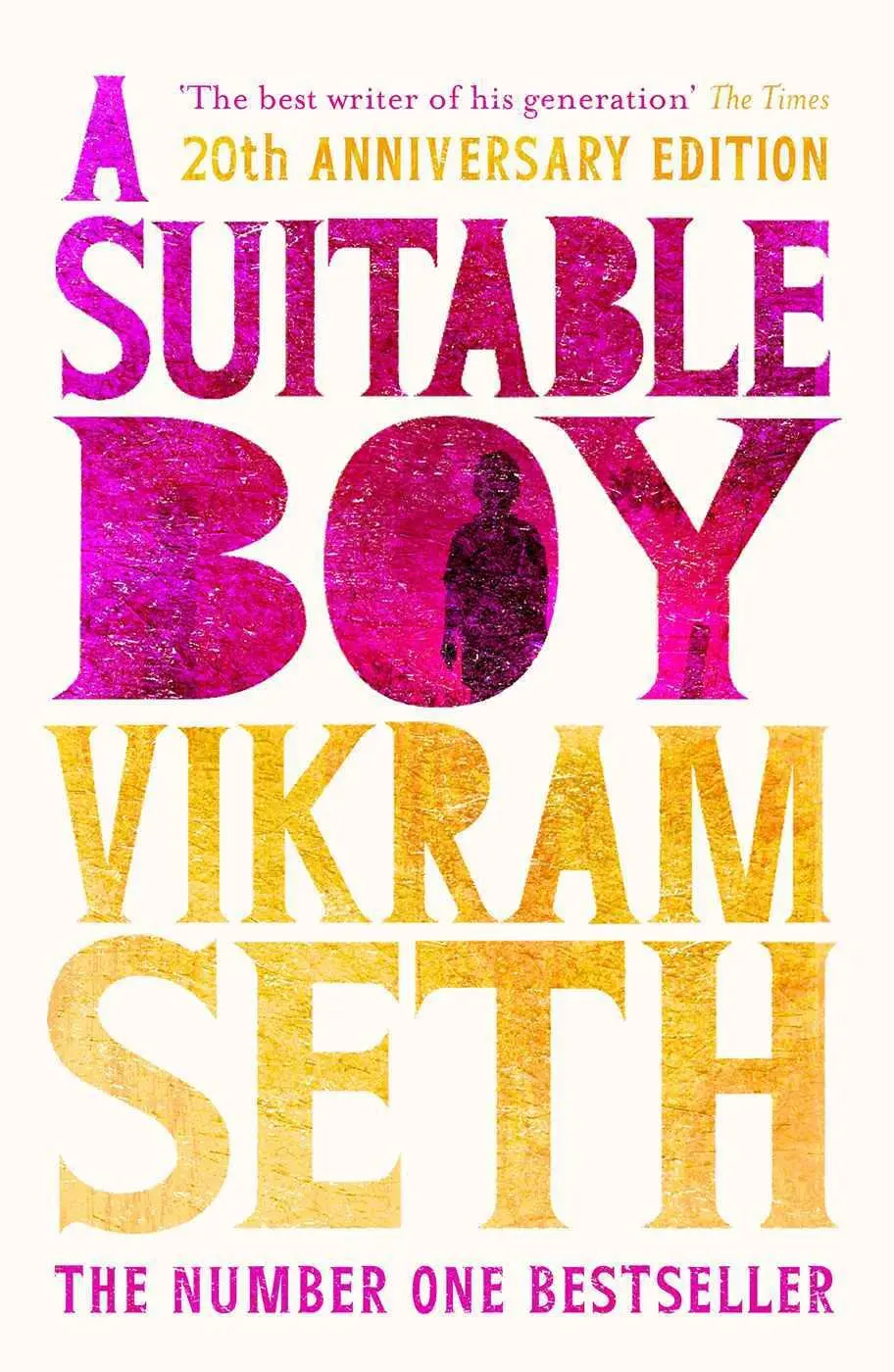
- Название:A Suitable Boy
- Автор:
- Издательство:Orion Publishing Co
- Жанр:
- Год:2012
- ISBN:нет данных
- Рейтинг книги:5 / 5. Голосов: 1
-
Избранное:Добавить в избранное
- Отзывы:
-
Ваша оценка:
A Suitable Boy: краткое содержание, описание и аннотация
Предлагаем к чтению аннотацию, описание, краткое содержание или предисловие (зависит от того, что написал сам автор книги «A Suitable Boy»). Если вы не нашли необходимую информацию о книге — напишите в комментариях, мы постараемся отыскать её.
A Suitable Boy — читать онлайн бесплатно полную книгу (весь текст) целиком
Ниже представлен текст книги, разбитый по страницам. Система сохранения места последней прочитанной страницы, позволяет с удобством читать онлайн бесплатно книгу «A Suitable Boy», без необходимости каждый раз заново искать на чём Вы остановились. Поставьте закладку, и сможете в любой момент перейти на страницу, на которой закончили чтение.
Интервал:
Закладка:
‘Does that mean you will shoot us if we get out of hand?’ asked Rasheed with a malignant look.
‘I would prefer not to,’ said the Home Minister, as if the idea was not entirely unpleasant, ‘but, needless to say, it will not come to that.’ At any rate, he added to himself, the legislature is not presently in session to take me to task about it.
‘This is like the days of the British,’ continued Rasheed furiously, staring at the man who had justified the police firing in Chowk, and perhaps seeing embodied in him the image of other arbitrariness and authoritarianism. ‘The British used lathis on us, they even shot at us, at us students, during the Quit India movement. Our blood was spilt by the British here in Brahmpur — in Chowk, in Captainganj—’
The rest of the delegation began to buzz rather angrily in response to his oratory.
‘Yes, yes,’ said the Home Minister, cutting him short. ‘I know it. I lived through it. You must have been a boy of twelve then, watching anxiously in the mirror for the first signs of a man’s hair. When you say “us students” you don’t mean yourselves, it was your predecessors whose blood was spilt. And, I may mention, some of mine. It’s easy enough to lubricate your way to office on others’ blood. And as for Quit India, this is an Indian government now, and I hope you don’t want us to quit India.’ He laughed shortly. ‘Now if you have anything useful to say, say it. Otherwise go. You may not have your books to read, but I have my files. I know exactly what this march is about. It isn’t about the salaries of primary schoolteachers. It is a way of concertedly attacking the Congress government of the state and the country, and trying to spread disaffection and disorder in the town.’ He made a dismissive gesture with the back of his hand. ‘Stick to your books. That is my advice to you as your true friend — and as the Treasurer of the university — and as the Home Minister — and as the Acting Chief Minister; and it is the advice of your Vice-Chancellor too. And your teachers. And your parents.’
‘And God,’ added the President of the students’ union, who was an atheist.
‘Get out,’ said the Home Minister in a calm voice.
12.21
But the evening before the day fixed for the march an incident occurred in town that brought the two sides temporarily together on the same side of an issue.
Manorma Talkies, the cinema hall in Nabiganj that was showing Deedar , that had indeed been showing Deedar continuously to packed or almost packed houses for months, became the scene of what was almost a student riot.
The Brahmpur University ordinances forbade students from going to the second or late-night show, but this was an ordinance that hardly anyone paid any heed to. In particular, those students who lived outside the university hostels flouted it whenever they saw fit. Deedar was an immensely popular movie. Its songs were on everyone’s lips, and it appealed to old and young alike; it may well have happened that on some evening Dr Kishen Chand Seth and the Rajkumar of Marh sobbed their hearts out to it simultaneously. People saw it several times over. It had an unusually tragic ending, but one which did not make one wish to tear the screen apart or set fire to the theatre.
What caused the trouble was that on this evening the management had given exceptionally strict instructions to the ticket office not to honour student concessions if they got enough ticket-buyers at the full price. It was the early evening show. Two students, one of whom had seen the film before, had been told that the house was full. From past experience they had learned to mistrust the management. When several others who came after them were sold tickets, they began to harangue first the people in the ticket queue — when one woman told them to shut up, they told her the ending of the film — and then began to yell at the employees at the box office. The employees went about their business unperturbed — until the students, one of whom had an umbrella, became desperate enough to smash the glass panes of the doors of the cinema hall. Some of the patrons started shouting and threatening to call the police, but the management was not keen that the police be called. The employees got the projectionist and a few other people together, beat the students up, and threw them out. The mild mêlée was over in a few minutes, and did not disturb too deeply the subsequent mood of the audience.
By the time the first show ended, however, there was a crowd of about four hundred angry students demonstrating threateningly against the illegal actions of the management — and particularly the manhandling of their two fellows. They had driven away from the box office all those who were thinking of buying tickets for the second show or who, having bought their tickets in advance, were seeking to enter the lobby.
It had begun to drizzle, but the students refused to leave. They were angry, and yet they were elated, for here they were, displaying their might in front of the portals of the infamous Manorma Talkies which, because of the continuing success of Deedar in attracting customers at the full price, and also because of its hard-headed manager, who cared less for law than profits, had been discriminating against them for months. Refreshed by their vacation, excited by the recent student elections, and indignant at the attack on their pride and their pockets, the students shouted that they would show the management what stuff they were made of, that the cinema hall must ‘either learn or burn’, and that sticks would teach the employees what passes couldn’t. The sorrowful and subdued patrons of the first show began to come out. They were astonished to be faced by a belligerent crowd which condemned their acquiescence in the earlier violence. ‘Shame! Shame!’ shouted the students. The audience, among them old people and even children, looked perplexedly at them with tear-stained faces.
The scene began to grow ugly. There was no violence, but some of the patrons were not allowed to enter their cars, and hurried away, fearing that if they stayed, their own safety would be threatened. Finally the District Magistrate, the Deputy Superintendent of Police, and the Proctor of the university all arrived on the scene. They tried to ascertain the nature of the problem. All of them felt that the management was to blame but that the students should have taken their complaint through the proper channels. The Proctor even tried to make the point that the students had no right to demonstrate before the second show, but it was clear that when facing four hundred angry students on a rainy night, he could not immediately exercise his normally awesome authority. His voice was drowned out by the shouting. When he perceived that the students would not be pacified or persuaded about the adequacy of the proper channels except by office-bearers of their own union, he tried to seek them out. Two of them, though not Rasheed, happened to be in the crowd. But they made it clear that they would not act unless the Treasurer appeared on their behalf as a representative of the Executive Council in order to show that the Council in general acted to protect, not merely to impose its will on the student body. This was a way of demanding L.N. Agarwal’s presence.
The manager, who had gone home just after the students had been thrashed and before the crowd had collected, came hurriedly to the scene when he heard that the police would protect his person from injury but that only he could protect Manorma Talkies. He was abject. He called the students ‘my dear dear friends’. He wept when he saw the bruises on the arms and back of one of the students. He talked about his own student days. He offered them all a special showing of Deedar. It would not do. ‘Our university Treasurer will represent us,’ insisted the students’ union. ‘Only he knows how to restrain us.’ As a matter of fact, they themselves were keen that the incident should not turn violent, because it would affect the next day’s victory-cum-protest march, and they did not want it to be perceived by the public at large that students demonstrated only for their own trivial privileges and not for the good of society.
Читать дальшеИнтервал:
Закладка:
Похожие книги на «A Suitable Boy»
Представляем Вашему вниманию похожие книги на «A Suitable Boy» списком для выбора. Мы отобрали схожую по названию и смыслу литературу в надежде предоставить читателям больше вариантов отыскать новые, интересные, ещё непрочитанные произведения.








Обсуждение, отзывы о книге «A Suitable Boy» и просто собственные мнения читателей. Оставьте ваши комментарии, напишите, что Вы думаете о произведении, его смысле или главных героях. Укажите что конкретно понравилось, а что нет, и почему Вы так считаете.