Helen Oyeyemi - The Opposite House
Здесь есть возможность читать онлайн «Helen Oyeyemi - The Opposite House» весь текст электронной книги совершенно бесплатно (целиком полную версию без сокращений). В некоторых случаях можно слушать аудио, скачать через торрент в формате fb2 и присутствует краткое содержание. Год выпуска: 2008, Издательство: Bloomsbury UK, Жанр: Современная проза, на английском языке. Описание произведения, (предисловие) а так же отзывы посетителей доступны на портале библиотеки ЛибКат.
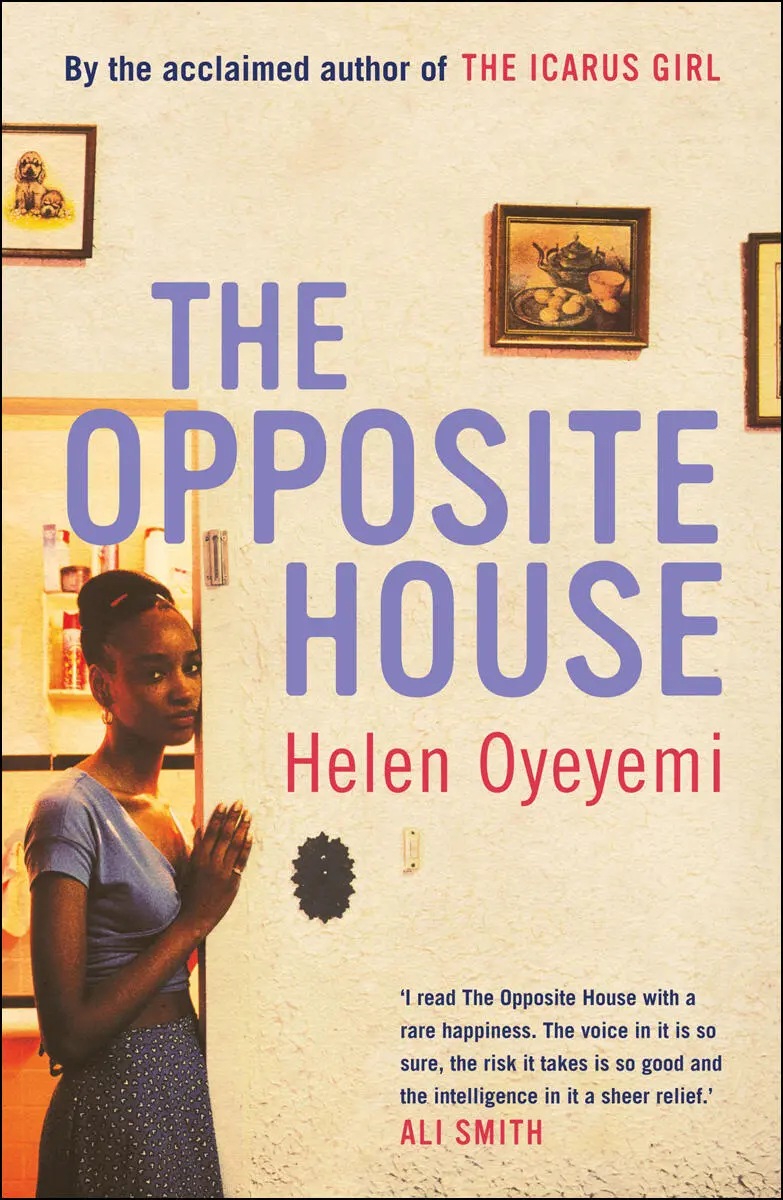
- Название:The Opposite House
- Автор:
- Издательство:Bloomsbury UK
- Жанр:
- Год:2008
- ISBN:нет данных
- Рейтинг книги:4 / 5. Голосов: 1
-
Избранное:Добавить в избранное
- Отзывы:
-
Ваша оценка:
The Opposite House: краткое содержание, описание и аннотация
Предлагаем к чтению аннотацию, описание, краткое содержание или предисловие (зависит от того, что написал сам автор книги «The Opposite House»). Если вы не нашли необходимую информацию о книге — напишите в комментариях, мы постараемся отыскать её.
The Opposite House — читать онлайн бесплатно полную книгу (весь текст) целиком
Ниже представлен текст книги, разбитый по страницам. Система сохранения места последней прочитанной страницы, позволяет с удобством читать онлайн бесплатно книгу «The Opposite House», без необходимости каждый раз заново искать на чём Вы остановились. Поставьте закладку, и сможете в любой момент перейти на страницу, на которой закончили чтение.
Интервал:
Закладка:
These days after school Tomás comes home with a group of raggedly uniform boys who live around the way. Tomás walks amongst them with his hands in his pockets, smiling and shaking his head as they whoop and hang off lamp posts. He is careful talking to the other boys; he is kindly. It’s as if he’s trying his best not to let the others know that they are not real, that he is talking to himself.
Some schools think being quiet is a sign of genius-level intelligence. Last year Tomás’s school put him on the Gifted and Talented programme to help him get to a top university. His friends were annoyed; they were losing him to books and extra homework, and he was getting to be a good striker. But Tomás found that in his Gifted and Talented classes his hearing became so faulty that he couldn’t understand anything except for the end-of-lesson bell. He couldn’t hear, and he panicked and froze. Chabella worried that he would become completely deaf. I worried that he would become completely deaf. His teachers said it was frightening, uncanny, unheimlich; that they could shout out his name within five paces of him and, unless he was looking directly at them, he didn’t turn a hair, or show any understanding.
Chabella withdrew him from those classes after a meeting with his Gifted and Talented English Literature teacher, even though Papi pointed out that it was most curious that Tomás could hear well enough to watch Pinky and the Brain on TV before dinner. Tomás’s weekends took their old shape once again; he went back to playing striker on the local football team, a position that Jon had kept warm for him. He also resumed his post as Papi’s book assistant, lying on his back in Papi’s study shuffling through notes with a fluorescent marker, typing out references when Papi’s fingers felt too stiff.
But even if he is Papi’s boy, there are things that Tomás will only ask of Mami. It’s the same with me. Sometimes there are things that you need to say, and you know that the right person to say them to is the person whose logic works two ways; the person who can sit through Mass without staring sardonically at the boy in the dress who waves incense in their face.
Chabella was making guava pasteles , hands working a mass of pastry and sweetener when Tomás came back from football huffing and sweating, the collar of his tracksuit top turned up around his neck in a funnel. He looked urgent, the way he used to when he was smaller and would come to Mami during an argument with another boy, tug at her arm and say, ‘Tell him.’
He sidled up to the counter and tore off a hunk of dough. Chabella clucked, ‘Tomás, why? You’ll only throw it up.’
I laughed, ‘What’s the point of feeding him at all, then?’ and Tomás ignored me and said to her through a sticky mouthful, ‘Chabella, it’s getting stupid. We’re supposed to learn our names really early, no? Like, a few months after being born we’re supposed to respond to our names or whatever.’
I was leaning on the counter, reading and breathing in Chabella’s sweetened steam. I looked up and said, ‘Are you trying to tell us you’re retarded?’
Chabella flung a handful of sweetener at me, and she missed. ‘What’s wrong with you? Don’t say these things, they’ll come true!’
Tomás plucked more dough out from under Chabella’s hands.
‘Listen, Chabella, really it’s getting. . I don’t know. When someone nearby calls a name, I have this thing where I look round at them as if they’re calling me, it doesn’t matter what name they call out. Just now on the road this boy shouted out “Oi, Jack!” and I turned round to him and looked him in the face and he said in some properly nasty voice, “Oh, are you Jack?” And I said, “No, sorry —”’
I called out to Tomás, ‘You should have put your hand in your pocket and said, “Who wants to know?” Or you should have said “Depends who’s asking. .” and then put your hand in your pocket. Then you should have narrowed your eyes and made a clicking sound with your tongue.’
Tomás rolled his eyes, ‘Yeah, standardly I should have said that. And then he would have pissed himself laughing. This boy was tonk, trust me. Anyway I said, “No my name isn’t Jack,” and this boy was all like, “Well don’t watch that, then,” and I was thinking, but this happens all the time, it happens all the time — I just keep looking round when someone calls, as if I haven’t learnt my name or something. One of these days I’m going to end up smeared into a wall.’
Mami didn’t look up. She blew on her rolling pin, tapped it on the counter, bent over her pastries to inspect the frills she’d drawn into their edges. Only I could see, over the top of my book, the tension on Tomás’s face. Mami didn’t look; Tomás placed his palms on the counter and leant far over into Mami’s way. He kissed her cheek, he swung, he waited for Mami to look. But when Mami turned to him, her gaze got lost somewhere on the way to meet his; her eyes were guilty somehow. She fed him some guava and told him, ‘It’s OK, London baby. You must trust yourself. Tomás is not your name; it’s just a tag we gave you until you find something you like.’
Late in the night Aya sits still, her head resting against Amy’s. She is knocked comatose by the twin thicknesses of Amy’s hair and honey.
Tayo has dragged out a drawer from his cupboard; he lays it carefully on the floor, he bids Aya look. His eyes are full, too full, brimming.
The drawer foams damp white; at first she thinks, snow?
No — row after immaculate row of drowned paper flowers. They pull at her heart, these flowers, they do not ask for light the way that real flowers do. She puts her hands out to make them well again, and as she touches them, one by one, they dry out and crackle under her fingers. Rice paper.
Aya asks, ‘They’re yours?’
He is vehement: ‘No.’
When Aya holds the flowers close to her face, she sees that each has a black word bled into it in spidery writing. On each flower, the same word.
‘Then I want them,’ she says.
He recoils. ‘They’re not meant for you.’
She asks who gave them to him, and he shakes his head.
‘A her?’ Aya asks.
‘Mm.’
‘And you parted?’
‘Not exactly. Kind of. Well, she doesn’t know.’
‘How can she not know that you’ve parted?’
He shrugs.
Aya hugs the flowers. She tries to hug all of them at once but her arms do not have enough space between them.
‘She knows,’ Aya says.
In her bedroom, in the morning, Amy says, ‘Yemaya, I have the trick of crossing heaviness with lightness. I could jump in the air right now and not come down. I wouldn’t go any higher, either. I’d just stay there. They’d ring bells and tell lies: a soul has gone to heaven. Yemaya Saramagua?’
When Amy leans over from her bed, there is no more early light; Amy’s face is desperate, her granite eyes disappearing under eddying water. She scratches at the bruises on her arms, trying to lift them away, bringing down blood instead. Aya tries to help her to lie down again, but Amy will not. ‘Amy, what is it? What is it?’ Aya asks her.
‘Ochun, Ochun. Please say it. Yemaya Saramagua, you must know my name,’ Amy weeps. She bites Aya to make her let go. Aya won’t let go. Finally Amy lays still and rattles out a breath that sounds like her last, sounds like her heart is broken.
‘I should never have left. Why doesn’t anybody know my name? Why doesn’t someone come for me?’
13 the hour of lead
I offer up Saturday night for a vigil. I flip through travel brochures. The purple UV lamps hurt my eyes. According to the brochures, Habana Vieja is old and beautiful and majestically crumbling, and Miramar has great beaches. Everything is very picturesquely blue and or a very surly brown, and set on a slant that sands down the sky’s edges. Cubans are, apparently, very friendly if they feel their gestures are reciprocated. Do I count, am I like that too? I thought everybody was like that.
Читать дальшеИнтервал:
Закладка:
Похожие книги на «The Opposite House»
Представляем Вашему вниманию похожие книги на «The Opposite House» списком для выбора. Мы отобрали схожую по названию и смыслу литературу в надежде предоставить читателям больше вариантов отыскать новые, интересные, ещё непрочитанные произведения.






Обсуждение, отзывы о книге «The Opposite House» и просто собственные мнения читателей. Оставьте ваши комментарии, напишите, что Вы думаете о произведении, его смысле или главных героях. Укажите что конкретно понравилось, а что нет, и почему Вы так считаете.