Ann-Marie MacDonald - Way the Crow Flies
Здесь есть возможность читать онлайн «Ann-Marie MacDonald - Way the Crow Flies» весь текст электронной книги совершенно бесплатно (целиком полную версию без сокращений). В некоторых случаях можно слушать аудио, скачать через торрент в формате fb2 и присутствует краткое содержание. Год выпуска: 2004, Издательство: Vintage Canada, Жанр: Современная проза, на английском языке. Описание произведения, (предисловие) а так же отзывы посетителей доступны на портале библиотеки ЛибКат.
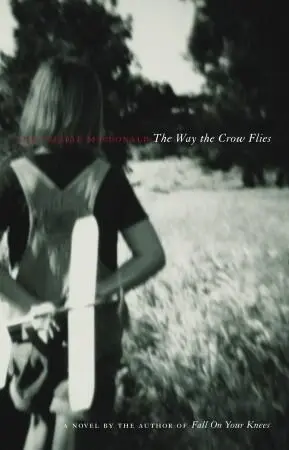
- Название:Way the Crow Flies
- Автор:
- Издательство:Vintage Canada
- Жанр:
- Год:2004
- ISBN:нет данных
- Рейтинг книги:5 / 5. Голосов: 1
-
Избранное:Добавить в избранное
- Отзывы:
-
Ваша оценка:
Way the Crow Flies: краткое содержание, описание и аннотация
Предлагаем к чтению аннотацию, описание, краткое содержание или предисловие (зависит от того, что написал сам автор книги «Way the Crow Flies»). Если вы не нашли необходимую информацию о книге — напишите в комментариях, мы постараемся отыскать её.
Centralia is the station where, years ago, Jack crashed his plane and therefore never went operational; instead of being killed in action in 1943, he became a manager. Although he is successful, enjoys “flying a desk” and is thickening around the waist from Mimi’s good Acadian cooking, deep down Jack feels restless. His imagination is caught by the space race and the fight against Communism; he believes landing a man on the moon will change the world, and anything is possible. When his old wartime flying instructor appears out of the blue and asks for help with the secret defection of a Soviet scientist, Jack is excited to answer the call of duty: now he has a real job.
Madeleine’s secret is “the exercise group”. She is kept behind after class by Mr. March, along with other little girls, and made to do “backbends” to improve her concentration. As the abusive situation worsens, she is convinced that she cannot tell her parents and risk disappointing them. No one suspects, even when Madeleine’s behaviour changes: in the early sixties people still believe that school is “one of the safest places.” Colleen and Ricky, the adopted Metis children of her neighbours, know differently; at the school they were sent to after their parents died, they had been labelled “retarded” because they spoke Michif.
Then a little girl is murdered. Ricky is arrested, although most people on the station are convinced of his innocence. At the same time, Ricky’s father, Henry Froelich, a German Jew who was in a concentration camp, identifies the Soviet scientist hiding in the nearby town as a possible Nazi war criminal. Jack alone could provide Ricky’s alibi, but the Cold War stakes are politically high and doing “the right thing” is not so simple. “Show me the right thing and I will do it,” says Jack. As this very local murder intersects with global forces,
reminds us that in time of war the lines between right and wrong are often blurred.
Ann-Marie MacDonald said in a discussion with Oprah Winfrey about her first book, “a happy ending is when someone can walk out of the rubble and tell the story.” Madeleine achieves her childhood dream of becoming a comedian, yet twenty years later she realises she cannot rest until she has renewed the quest for the truth, and confirmed how and why the child was murdered..
, in a starred review, called
“absorbing, psychologically rich…a chronicle of innocence betrayed”. With compassion and intelligence, and an unerring eye for the absurd as well as the confusions of childhood, MacDonald evokes the confusion of being human and the necessity of coming to terms with our imperfections.
Way the Crow Flies — читать онлайн бесплатно полную книгу (весь текст) целиком
Ниже представлен текст книги, разбитый по страницам. Система сохранения места последней прочитанной страницы, позволяет с удобством читать онлайн бесплатно книгу «Way the Crow Flies», без необходимости каждый раз заново искать на чём Вы остановились. Поставьте закладку, и сможете в любой момент перейти на страницу, на которой закончили чтение.
Интервал:
Закладка:
Jack reaches across and takes her hand. “Why are you crying, Missus? The war’s over, Henry’s fine, happy as a clam.”
Mimi shouldn’t be shocked by the information, she knew it was a possibility as soon as she learned Henry was Jewish, so she is surprised at her inability to get the words out. Maybe she’s getting her period — in itself a disappointing event — maybe that’s why she is overreacting. What she can’t manage to say without crying: Henry may be fine but his family is not. His first family. Not only parents and relations, but children — she is suddenly certain. She blows her nose, she’s fine. She resumes working on the bills.
Jack finds himself replaying conversations with Henry Froelich. Einstein is a Jew . It had sounded anti-Semitic from Froelich’s lips last summer. Of course there is nothing wrong with the word “Jew”—especially if you are one — but there is something about the single syllable, it sounds less polite than “Jewish.” Perhaps the noun sounds anti-Semitic because Jack has rarely heard it pronounced by people other than anti-Semites. Vivid in his memory are radio broadcasts of Hitler railing against “die Jüden!” And in newsreels after the war, when the horrors began to come out, a narrator’s voice describing in solemn tones “the persecution of the Jew …”—even then it bore a stigma, the shame of death. And Jack has known few Jews — Jewish people. There was one family in his hometown in New Brunswick, the Schwartzes — they played rugger like anybody else, fished, never had a Christmas tree, no one gave it a second thought. Jack has come across the odd Jewish fellow in the air force, but they are Canadian. You don’t expect to run into too many German Jews. Not any more. His cheeks burn a little at the thought of how often he has jokingly accused Henry of being “typically German.” Not to mention that crack about lederhosen. Christ. Well, the tattoo explains why Froelich is content to be here, teaching grade school.
“Doris Day is Jewish,” says Mimi.
“Really?”
“Mm-hm.”
DOMESTIC SCIENCE
If you are a highly excitable mother with certain needs, you may find it impossible to get along with a daughter of similar temperament and needs.
Chatelaine, July 1962MADELEINE SPENDS THE NEXT week and a half looking over her shoulder, scared Colleen Froelich is lying in wait, ready to pound her. But nothing happens. And while she is relieved, she is also oddly disappointed.
Life goes on as usual, and on Saturday October 20, Mimi asks Madeleine to help her get ready for the Oktoberfest dance.
Madeleine kneels against the side of the tub while her mother, wearing a sparkly shower cap, takes a bubble bath. She gets Madeleine to scrub her back with a loofah—“that keeps a lady’s skin nice and soft”—and shows her how to push her cuticles back in order to avoid hangnails.
Madeleine holds the towel, then waits while Maman powder-puffs her underarms after shaving with her electric Lady Sunbeam. “You can start shaving when you’re twelve, Madeleine.” Madeleine doesn’t point out that she has already been shaving with Dad for years. She follows her mother into the bedroom and watches her put on itchy-looking underpants and matching lace bra, leaning forward into it, expertly reaching behind to fasten it. Then her garter belt, then her stockings—“always roll them first, like this, then point your toes”—resting one foot on her hope chest, “comme ça ,” stroking her leg to draw the stocking up to her thigh, “so you don’t get runs,” and fastening it to the garter belt with the rubber snaps.
“Help me with my girdle, Madeleine.” It doesn’t matter if you are slim, “a lady is not fully dressed without a girdle.” There are a million hooks and eyes. Finally, she slides her silk slip over her head, and sits down on the cushioned stool at her vanity table— “Donne-moi le hairspray, s’il te plaît, ma p’tite.”
At this point, Mike joins them and sits on the end of their parents’ bed with a Hardy Boys book. This is one activity he has not abandoned: he still comes in to watch Maman get ready to go out for the evening and chat with her in the mirror. Madeleine can’t figure out why he doesn’t consider it to be sissy.
They speak French together, easily, rapidly. Madeleine tries to make out the gist of what they are saying. Maman calls him her “p’tit gentilhomme,” and when he is with her he acts like a little gentleman, too. He tells her of his latest victories: first in the hundred-yard dash, picked to play centre on his hockey team, the highest mark in science. He is going to be in the NHL. Then he is going to be a doctor. Who flies Sabres.
“Tu peux faire n’importe quoi, Michel.”
Madeleine looks at her brother and it seems that, when Maman says it, it’s true: he can be whatever he wants to be.
She enters her parents’ open closet, walking between her father’s suits and shirts as though through a curtain, breathing in — wool, shoe leather, faint cigar smell and fresh cotton. Her mother’s voice reaches her as though from a great distance. “Madeleine, où vas-tu?”
She comes out and returns to her mother’s side in front of the big round mirror, and watches as she tilts her head back, lowers her lids and applies black eyeliner with a tiny brush, “only in the evening, Madeleine,” then forward to apply mascara, “but fais attention, pas trop.” She puts on her lipstick, “always stay inside the lip line.” Madeleine nods to her mother in the mirror, contemplating the possibilities of the red lipstick on her own cheeks and nose. Bozo.
Maman places a tissue between her lips and presses, then, “Aimestu cette couleur, Michel?”
Mike looks up from The Mystery at Devil’s Paw and replies that it’s a very nice colour indeed. Madeleine looks at the discarded tissue, a blown kiss, and pictures Marilyn Monroe with her carsick eyes. Dead now and in her grave.
“Do me up, Madeleine.”
Madeleine zips her up and breathes in her perfume—“My Sin” by Lanvin. Mingled with VO-5 hairspray. Mysterious and alluring.
“Comment vous me trouvez, les enfants?” Maman is wearing a dirndl. Low-cut laced-up embroidered bodice with a full red and white skirt. It cost a fortune in Garmisch.
“Très chic,” says Mike.
“Sehr schön ,” says Madeleine, and Mimi hugs her.
Downstairs Jack says, “Frau McCarthy, you’re a knockout.” He is in Harris tweed, plaid tie, brogues and a green Tyrolean hat with a feather. Mike finds a flash cube and snaps their picture before they leave for the mess.
Marsha Woodley babysits them as usual and, as usual, Mike behaves as though she were there to babysit Madeleine only. He tightens the cord on his plaid housecoat and strokes his chin while inquiring what channel Marsha would like to watch.
Marsha is so nice, Madeleine feels she can’t shun the offer to “play Barbies.” “I used to be crazy about dolls too when I was your age, Madeleine.” Marsha has brought Barbie’s convertible, which mitigates things somewhat, but she insists that Ken drive. Madeleine is relieved when Mike offers to show Marsha his airplane models.
“Sure, Mikey,” she says.
His manly frown doesn’t flicker. “After you.”
He has lost his mind.
A knock at the door. Madeleine runs to answer it. There on the other side of the screen, standing in the dusk, is Ricky Froelich.
“Hi pal,” he says. He is leaning, one arm against the wall.
She turns and hollers, “Marsha! It’s Ricky!” Then to him, “Come on in.”
“Naw, that’s okay.”
Читать дальшеИнтервал:
Закладка:
Похожие книги на «Way the Crow Flies»
Представляем Вашему вниманию похожие книги на «Way the Crow Flies» списком для выбора. Мы отобрали схожую по названию и смыслу литературу в надежде предоставить читателям больше вариантов отыскать новые, интересные, ещё непрочитанные произведения.










Обсуждение, отзывы о книге «Way the Crow Flies» и просто собственные мнения читателей. Оставьте ваши комментарии, напишите, что Вы думаете о произведении, его смысле или главных героях. Укажите что конкретно понравилось, а что нет, и почему Вы так считаете.