Alasdair Gray - Old Men in Love
Здесь есть возможность читать онлайн «Alasdair Gray - Old Men in Love» весь текст электронной книги совершенно бесплатно (целиком полную версию без сокращений). В некоторых случаях можно слушать аудио, скачать через торрент в формате fb2 и присутствует краткое содержание. Год выпуска: 2009, Издательство: Bloomsbury UK, Жанр: Современная проза, на английском языке. Описание произведения, (предисловие) а так же отзывы посетителей доступны на портале библиотеки ЛибКат.
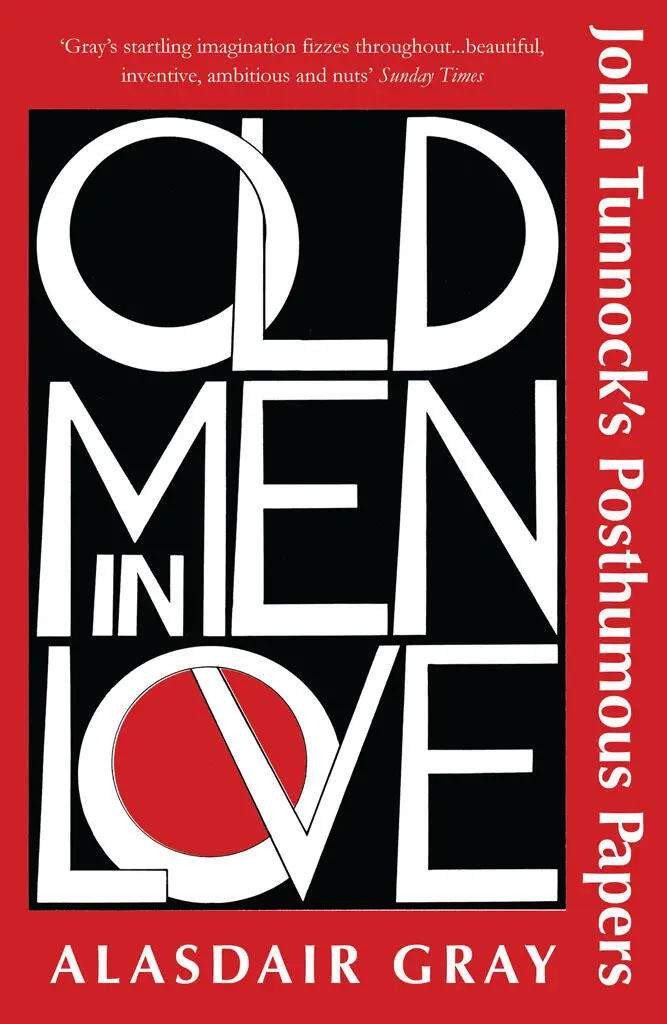
- Название:Old Men in Love
- Автор:
- Издательство:Bloomsbury UK
- Жанр:
- Год:2009
- ISBN:нет данных
- Рейтинг книги:3 / 5. Голосов: 1
-
Избранное:Добавить в избранное
- Отзывы:
-
Ваша оценка:
Old Men in Love: краткое содержание, описание и аннотация
Предлагаем к чтению аннотацию, описание, краткое содержание или предисловие (зависит от того, что написал сам автор книги «Old Men in Love»). Если вы не нашли необходимую информацию о книге — напишите в комментариях, мы постараемся отыскать её.
"Our nearest contemporary equivalent to Blake, our sweetest-natured screwed-up visionary."-"London Evening Standard"
Alasdair Gray's unique melding of humor and metafiction at once hearken back to Laurence Sterne and sit beside today's literary mash-ups with equal comfort. "Old Men in Love" is smart, down-to-earth, funny, bawdy, politically inspired, dark, multi-layered, and filled with the kind of intertextual play that Gray delights in.
As with Gray's previous novel "Poor Things," several partial narratives are presented together. Here the conceit is that they were all discovered in the papers of the late John Tunnock, a retired Glasgow teacher who started a number of novels in settings as varied as Periclean Athens, Renaissance Florence, Victorian Somerset, and Britain under New Labour.
This is the first US edition (updated with the author's corrections from the UK edition) of a novel that British critics lauded as one of the best of Gray's long career. Beautifully printed in two colors throughout and featuring Gray's trademark strong design, "Old Men in Love" will stand out from everything else on the shelf. Fifty percent is fact and the rest is possible, but it must be read to be believed.
Alasdair Gray is one of Scotland's most well-known and acclaimed artists. He is the author of nine novels, including "Lanark," "1982 Janine," and the Whitbread and Guardian Prize-winning "Poor Things," as well as four collections of stories, two collections of poetry, and three books of nonfiction, including "The Book of Prefaces." He lives in Glasgow, Scotland.
Old Men in Love — читать онлайн бесплатно полную книгу (весь текст) целиком
Ниже представлен текст книги, разбитый по страницам. Система сохранения места последней прочитанной страницы, позволяет с удобством читать онлайн бесплатно книгу «Old Men in Love», без необходимости каждый раз заново искать на чём Вы остановились. Поставьте закладку, и сможете в любой момент перейти на страницу, на которой закончили чтение.
Интервал:
Закладка:
But how can I stop her bringing terrible people to the house? Last night one of them, a big lad with a bright blue saltire tattooed on his ugly mug, brandished a switch blade when I told him “fucking” was not an adjective appropriate to every noun. I was terrified, may have gone pale but stared frigidly back. Zoe lost her temper and made him apologize. Why did he fear her more than he hated me? Why does she invite him here? That’s the third time. I can’t believe they are lovers. Should I ask her to come drinking with me? She would meet nobody like that in Tennants, but going public with her would be a step toward proposing marriage. Query: is that what she wants? O my God, of course that’s what she wants. Well she won’t get it. Should I accompany her to the Dumbarton Road pubs where she drinks? But that might not stop her inviting ruffians back with us on leaving. Another insoluble pancake.

This has been an odd year that began with winter prolonged through an extra month, not by frost and snow — for decades snow starts to thaw as soon as it falls in Glasgow — but by occasional sunlit days, each followed by two or three rainy ones. In Hillhead gardens and parks the trees were bare branched far into May, then suddenly in less than a week it seemed that buds unfurled, exploded into dense varieties of lovely green, followed by a warm bright season refreshed by a few cool moist days, a season that has not stopped. Toward the 20 thcentury’s end I noticed a few chairs and tables appearing on the pavement before some Byres Road snack bars. I did not notice the increase of this practice (due to global warming?) until recently, but Hillhead on fine evenings and weekends has an astonishingly Parisian look. I believe a social history of Glasgow — of Britain! — could appear in a short description of how Hillhead shops have changed in the last sixty years, if we count Byres Road and the adjacent part of Great Western Road. Here goes!
In my childhood and student days the main Hillhead streets had all the small useful provision shops found in any British country town or large village. They included a Woolworths, two Post Offices (the biggest with a sorting and telegram office), two bookshops (one of them second-hand), a cobbler or shoe repair shop, and a clock mender. I do not remember who mended defective radios, gramophones (as record players were called), hoovers and other household appliances, but think it was done by taking them to shops where we had bought them. Hillhead had at least three restaurants of a sort called tea-rooms, where genteel women like my aunts took afternoon tea or sometimes a lunch they regarded as dinner. The many university students lodging here ensured customers for many pubs, cafés, fish-and-chip shops. There must have been an estate agent’s office somewhere but I cannot remember it.
A change began in the 1970s when two big, useful, well supplied hardware shops closed, the owner of one telling me he could no longer afford to pay the increased rates. It may not be a coincidence that a mile away in Anniesland a huge B&Q arrived selling every sort of household tool and appliance but mending none. There is still a shop selling clocks and jewellery, and twenty years ago I took in a very pretty little clock presented to me by my staff when I left Molendinar Primary. They had several of the same kind for sale, but explained that mending it would cost me £7.50 but I could buy a new one for £5.50. Then a big supermarket opened at the top of Byres Road and soon the butchers and most small provision shops vanished leaving only one shop I remember from childhood, selling fish and game. The others have been taken by several glossy estate agents’ offices that can easily pay the district councils high rates, and many second-hand or foreign craft shops largely exempt from rates by being registered charities, and which are mostly staffed by voluntary workers. Other shops are chiefly staffed by young folk who know nothing about the manufacture and quality of what they sell, do not even need to know arithmetic because cash machines do their addition, multiplication and subtraction. Universal state education was made the law in 1870 Britain because (as Napoleon said) Britain was a nation of shopkeepers, highly productive ones, who could not have lasted as long as they did without a big workforce able to read, write and count. A Victorian statesman 56who had hitherto opposed state education because it might lead to social revolution of the French sort, now publically announced, “We must now educate our new masters!” and became foremost in committees that ensured state schools taught children:
1) to sit still in rows,
2) to never question a teacher,
3) to only talk when asked by a teacher,
4) to learn , not think .
This system was imperfect because it enlarged the middle class with more teachers than could be drawn from its upper ranks. Many of these liked thinking and encouraged it in some of the state-funded schools, generally called Board Schools because Britain is a Kingdom whose governments don’t want to rule a state. But the increase of literate thinking people in Britain led to the founding of the old Labour Party, though the people who governed Britain still graduated from those ancient privatized English schools misleadingly called Public. These no longer care if or what the state schools now teach, since productive British industries are now reduced to banking and weapons manufacture. The owners of British shops and stores fill them with goods packaged in outsourced factories. 57
The genteel Byres Road tea-rooms are long gone, but many more restaurants, cafes and pubs have opened there or in back lanes. The customers are partly the local middle class enriched by the privatisation of public wealth begun in Thatcher’s reign, and partly Glasgow University students who have been more than doubled by a huge intake of students from abroad. They are taken because their fees make up for the lost student grants once paid by the government, so the entrance qualifications have been lowered and in some courses the standard of teaching. Students from poorer families support themselves with bank loans or by working locally as waiters and bar tenders or some other counter job. Their wages are often less than the minimum that European regulations are meant to impose. The two Post Offices are closed but packages can be posted from the back of a Pakistani general dealer.
Will think about other changes I have seen in Hillhead streets.
After Zoe left on her mysterious businesses this morning I stayed in, brooding brooding brooding on which avenue of research to explore in the library, then grew aware of distant crowd susurrations punctuated by erratic music. The West End Festival had started. 58 Don’t know who organizes this which has happened for several years, closing upper Byres Road to motor traffic, replacing it with funfair stalls, a bouncy castle, musicians on platforms, and filling the street wall to wall with mobile citizens. Have avoided it hitherto but today was strangely attracted. Wandered there and among the huge undisciplined genial crowd, bathing in it, enjoying I suppose the mild communal ecstasy Walt Whitman enjoyed in 19 thcentury Manhattan. I lunched at a table outside the Antipasti, pondering the great changes in people’s clothing for the Byres Road history.
Before the 1970s I think nearly half of all women over thirty-five in Hillhead wore skirts or dresses. Now only a minority of young women do, mostly girls in the brown or green skirts that are the Notre Dame and Laurelbank school uniforms. I believe women’s trouser suits became fashionable in the 1960s and miniskirts in the 1970s, and when I first saw each I was amused, thinking them not at all sexually attractive, but in a few days they started exciting me as I suppose any eye-catching women’s fashion always will. I was glad when the Turkish bare midriff became fashionable before the 20 thcentury ended. I have always liked women’s stomachs, perhaps because as a child I believed sexual intercourse was through the navel. At the same time young folk, not all of them women, began sporting tattoos, also studs and rings through parts of their faces. Though used to earrings I hate seeing that. I cannot help thinking it painful. Hey ho. But the main fashion change is in pockets.
Читать дальшеИнтервал:
Закладка:
Похожие книги на «Old Men in Love»
Представляем Вашему вниманию похожие книги на «Old Men in Love» списком для выбора. Мы отобрали схожую по названию и смыслу литературу в надежде предоставить читателям больше вариантов отыскать новые, интересные, ещё непрочитанные произведения.








Обсуждение, отзывы о книге «Old Men in Love» и просто собственные мнения читателей. Оставьте ваши комментарии, напишите, что Вы думаете о произведении, его смысле или главных героях. Укажите что конкретно понравилось, а что нет, и почему Вы так считаете.