Daša Drndić - Trieste
Здесь есть возможность читать онлайн «Daša Drndić - Trieste» весь текст электронной книги совершенно бесплатно (целиком полную версию без сокращений). В некоторых случаях можно слушать аудио, скачать через торрент в формате fb2 и присутствует краткое содержание. Год выпуска: 2014, Издательство: Houghton Mifflin Harcourt, Жанр: Современная проза, на английском языке. Описание произведения, (предисловие) а так же отзывы посетителей доступны на портале библиотеки ЛибКат.
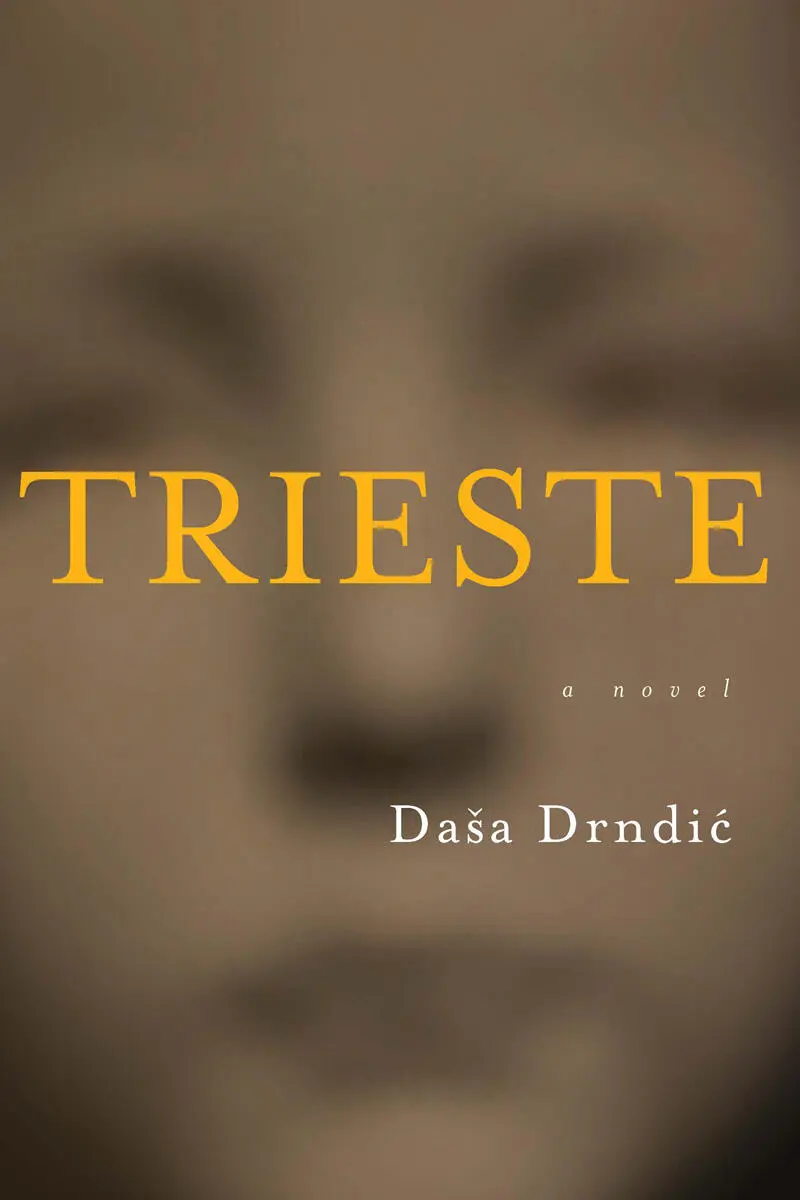
- Название:Trieste
- Автор:
- Издательство:Houghton Mifflin Harcourt
- Жанр:
- Год:2014
- ISBN:нет данных
- Рейтинг книги:3 / 5. Голосов: 1
-
Избранное:Добавить в избранное
- Отзывы:
-
Ваша оценка:
Trieste: краткое содержание, описание и аннотация
Предлагаем к чтению аннотацию, описание, краткое содержание или предисловие (зависит от того, что написал сам автор книги «Trieste»). Если вы не нашли необходимую информацию о книге — напишите в комментариях, мы постараемся отыскать её.
project. Haya reflects on her Catholicized Jewish family’s experiences, dealing unsparingly with the massacre of Italian Jews in the concentration camps of Trieste. Her obsessive search for her son leads her to photographs, maps, and fragments of verse, to testimonies from the Nuremberg trials and interviews with second-generation Jews, and to eyewitness accounts of atrocities that took place on her doorstep. From this broad collage of material and memory arises the staggering chronicle of Nazi occupation in northern Italy.
Written in immensely powerful language and employing a range of astonishing conceptual devices,
is a novel like no other. Daša Drndić has produced a shattering contribution to the literature of twentieth-century history.
Trieste — читать онлайн бесплатно полную книгу (весь текст) целиком
Ниже представлен текст книги, разбитый по страницам. Система сохранения места последней прочитанной страницы, позволяет с удобством читать онлайн бесплатно книгу «Trieste», без необходимости каждый раз заново искать на чём Вы остановились. Поставьте закладку, и сможете в любой момент перейти на страницу, на которой закончили чтение.
Интервал:
Закладка:
Files found in Heidelberg and information preserved (and hidden) in the former East Germany are also in Berlin, and the only ones with access to this archive, once they have overcome the numerous bureaucratic hurdles, are those who hope to find a lost piece of themselves among the boxes on shelves resembling the shelves in Bad Arolsen.
I was in Ludwigsburg, near Stuttgart. At a former women’s prison in Ludwigsburg is the Central Office of the State Justice Administrations for the Investigation of National Socialist Crimes (Zentrale Stelle der Landesjustizverwaltungen zur Aufklärung von N.S. Verbrechen). The Office opened in 1958 and to date they have investigated more than 7,000 cases with more than 100,000 suspects. Ludwigsburg is a picturesque little town on the outskirts of Stuttgart. The Dukes of Württemberg used to spend time in Ludwigsburg. Schiller was born there; in the house where he was born there is now a restaurant, one of the Wienerwald chain, and right next to the Wienerwald restaurant they sell McDonald’s hamburgers. The Duke of Württembergs financial adviser, a Jew named Süs, was hanged there in the eighteenth century, and at the entrance to the Duke’s palace stands a plaque which says, This castle shows its bright and cheery face. Its lively, liberal atmosphere is visible even today, as long as one is prepared to visit the other parts of Ludwigsburg, and not just its palaces and parks. Next to the Central Office is a seventeenth-century fortress which housed a prison until 1990; the oldest prison in Germany, now in the fortress, is a museum of crime.
I was at the museum in Ludwigsburg, Ian Buruma told me. The boy who brought me in smiled and enumerated the museums treasures, Buruma said. This is a guillotine that was in use until the late 1940s, the boy said, these are thumbscrews, here, these are the uniforms, ropes and belts they used to hang prisoners, here are the renovated death cells, here, the boy said, is the executioner’s axe, Buruma said, then he showed me lively copper etchings with torture scenes, and the menu for Sus the Jew’s last meal, Buruma said. Sus the Jew was given bouillon, stewed veal, beans and white bread. Then Buruma told me of a taxi driver who had brought him to the Central Office for Investigating Nazi Crimes, when Buruma was looking for something or someone there. He told me how the taxi driver first claimed he didn’t know where the Office was. No clue, the taxi driver said, and went on to say, that office should be scrapped; it’s high time for us to forget those old tales about the Nazis, that is exactly what the taxi driver said, those old tales, as if there aren’t more important things to be doing, as if the Communists weren’t every bit as bad, the taxi driver said, and so on and so forth, repeated the taxi driver, said Buruma.
The Office in Ludwigsburg is the brain, a paper memory, a bureaucratic memory of the Nazi past. In the Central Office, as in Bad Arolsen, lost lives huddle in steel cabinets. At the Ludwigsburg Central Office, filed tidily in alphabetical order, are more than 1,400,000 testimonies of witnesses and victims, various dossiers, Gestapo documents, archival court transcripts, not just from Germany but from everywhere — Poland, the former Soviet Union, France, Romania, Hungary and the Netherlands (Buruma is from the Netherlands), and so forth, as the taxi driver would say. Lord, it’s as if all of Germany is crisscrossed with hidden, underground waterways, subterranean conduits of lamentation, woe and oblivion, the inexhaustible Acheron, the Cocytus and the Lethe.
I was at the Berlin Federal Archive — the largest Nazi archive there is, with more than 50 million pages registered, including the originals of the personnel files of members of the National Socialist Party and S.S. officials — and there I stumbled upon a little clue that took me further. Later, when I established that my genetic father might have been S.S.-Untersturmführer Kurt Franz, I went back to the Berlin Archive and leafed through his past, which was a source of incredible distress to me, in fact, of physical revulsion , though I kept telling myself I had no tie to this man, which was not, of course, true. In Kurt Franz’s dossier there were photographs, especially from Treblinka, showing Kurt Franz riding, or in white sports shorts, running through a lovely, dense forest, Aryan and sexy, all the more nauseating. The Berlin Federal Archive, like the International Tracing Service in Bad Arolsen, is in a dense forest. But unlike Bad Arolsen, which is completely hidden , the Berlin Archive is not far from downtown Berlin, though both buildings — the main building in Bad Arolsen and the one in Grunewald on the outskirts of Berlin — used to belong to the Gestapo, which can be quietly chilling for the visitor.
Aud Rigmor Harzendorf from Kohren-Sahlis told me that they never spoke of the past in East Germany before 1989, and I told her that in West Germany they didn’t speak of it either, nor did they in Austria, though, of course, they talked a lot about the more distant past, they spoke of several distant pasts, the more distant the pasts were, the greater the detail in which they spoke of them, but there was very little talk, only quiet and secretive talk, about the recent past, on the basis of which one might conclude that the recent past was quite a dirty past. Then I learned that in East Germany there was a major secret scam perpetrated with the names of the Lebensborn children, which was why the whole story had been unknown there until recently. The Stasi needed new names for its spies, so they stole the original identities of the Lebensborn children who had been given up for adoption, meaning their real names, and if these children decided to poke around the archives later, they would come upon a whole heap of alarming political and police hurdles. My adoptive mother told me I have no parents, that I was left with no parents. You were left without both parents, my adoptive mother said, Aud told us. And that is why they gave you to me, said my adoptive mother, whom I loved as if she were my own, and that is absolutely all she said, said Aud, but we lived five hundred metres from the former Lebensborn home in Koren-Sahlis, and I had no idea what kind of a home it was, what went on there, I didn’t know I was born inside. Today there is a children’s nursery school in the building, it is very cheery, but I still don’t know who gave birth to me or what her name was, Aud told me when I met her at a gathering of other children who are searching for themselves, frantically, and who are no longer children, of course, some have children of their own, grown children, some even have grandchildren, like me, for example. I am sixty-two and I will have to tell my children, my grandchildren, everything I have discovered in the course of my eight years of searching, which will confuse them, because everything I have come across since 1998, when my mother Martha Traube told me You are not Hans Traube as she was dying, until today, 3 July, 2006, all of this sounds incredible, and I will have to speak with them about it, and they will have to drag this shit around with them for years, decades, like a punishment, a curse, and they will forever be wondering What is hidden in my genes? and I will tell them and I’ll say it over and over: Your genes contain the genes of a member of the S.S. and a war criminal and the genes of a Jewish woman. I will have to tell them, and they will have to find a way of dealing with it. History, history which we Germans (and Austrians) have repeatedly mucked up, as Grass says, is a clogged toilet. We flush and flush, but the shit keeps coming up.
Читать дальшеИнтервал:
Закладка:
Похожие книги на «Trieste»
Представляем Вашему вниманию похожие книги на «Trieste» списком для выбора. Мы отобрали схожую по названию и смыслу литературу в надежде предоставить читателям больше вариантов отыскать новые, интересные, ещё непрочитанные произведения.







Обсуждение, отзывы о книге «Trieste» и просто собственные мнения читателей. Оставьте ваши комментарии, напишите, что Вы думаете о произведении, его смысле или главных героях. Укажите что конкретно понравилось, а что нет, и почему Вы так считаете.