Rabih Alameddine - The Hakawati
Здесь есть возможность читать онлайн «Rabih Alameddine - The Hakawati» весь текст электронной книги совершенно бесплатно (целиком полную версию без сокращений). В некоторых случаях можно слушать аудио, скачать через торрент в формате fb2 и присутствует краткое содержание. Год выпуска: 2009, Издательство: Anchor, Жанр: Современная проза, на английском языке. Описание произведения, (предисловие) а так же отзывы посетителей доступны на портале библиотеки ЛибКат.
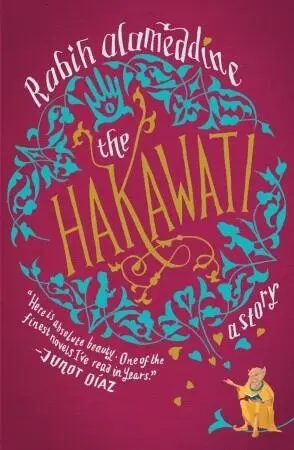
- Название:The Hakawati
- Автор:
- Издательство:Anchor
- Жанр:
- Год:2009
- ISBN:нет данных
- Рейтинг книги:4 / 5. Голосов: 1
-
Избранное:Добавить в избранное
- Отзывы:
-
Ваша оценка:
The Hakawati: краткое содержание, описание и аннотация
Предлагаем к чтению аннотацию, описание, краткое содержание или предисловие (зависит от того, что написал сам автор книги «The Hakawati»). Если вы не нашли необходимую информацию о книге — напишите в комментариях, мы постараемся отыскать её.
, or storyteller, and his bewitching tales are interwoven with classic stories of the Middle East. Here are Abraham and Isaac; Ishmael, father of the Arab tribes; the beautiful Fatima; Baybars, the slave prince who vanquished the Crusaders; and a host of mischievous imps. Through Osama, we also enter the world of the contemporary Lebanese men and women whose stories tell a larger, heartbreaking tale of seemingly endless war, conflicted identity, and survival. With
, Rabih Alameddine has given us an
for this century.
The Hakawati — читать онлайн бесплатно полную книгу (весь текст) целиком
Ниже представлен текст книги, разбитый по страницам. Система сохранения места последней прочитанной страницы, позволяет с удобством читать онлайн бесплатно книгу «The Hakawati», без необходимости каждый раз заново искать на чём Вы остановились. Поставьте закладку, и сможете в любой момент перейти на страницу, на которой закончили чтение.
Интервал:
Закладка:
“A snake fit for such a magnificent tree,” Adam said.

In November 1968, the Farouks moved into our building, into the Daouds’ apartment. It had been over a year since the latter had left.
The doorbell was shrill. “Buon giorno, signora,” Uncle Jihad said to Mrs. Farouk when she opened the door. Those were the only words I understood as he rattled hundreds more in Italian. He had the opportunity to practice his Italian quite a bit, because there was one Milanese family in the neighborhood, and one Genovese bachelor, a pilot.
Mrs. Farouk blushed, opened the door wider. She had reddish-brown hair and a complexion that easily flushed. She spoke in Italian, gestured grandly, inviting us in. We followed her into the living room, my white tennis shoes squeaking on the polished blond wood. Her husband sat reading an Arabic novel. Oud music wafted from hidden speakers. Mrs. Farouk introduced Uncle Jihad, Lina, and me to Mr. Farouk, who stood up to greet us.
“We’re the welcome wagon,” Uncle Jihad said, his face bright and beaming. When he was excited, his voice slipped into a higher register. “And I brought the kids to meet yours.”
I felt Lina stiffen before I saw the Farouk girls walk in. Fatima was eight, a year older than I, pretty, skinny, but not the cause of my sister’s consternation. Mariella, thirteen, was the most beautiful girl I had ever seen. Long, light-brown hair, green eyes, full lips, and a large mouth. She strolled in, knowing her effect on a room.
“Che belle,” Uncle Jihad said, looking at her father. “They seem to have inherited the best features of both of you. A delectable mix of Iraq and Italy. How wonderful.”
She ignored Lina, approached me, offered her creamy hand. “Hello, I’m Mariella,” she said in a fully adult voice. “This is my little sister.”
Mrs. Farouk cleared her throat. “We were so happy to find this place,” she said. Her accent was funny, an amalgam of numerous Arabic dialects. “We weren’t sure about moving to Beirut. We got tired of Amman, and I thought maybe Rome, but then we decided Beirut offers the best of both worlds, don’t you think? And then we found this apartment. How gorgeous, a sign from heaven. It was in such good shape. Do you know who was living here? I intend to send them a note of thanks.”
“You’d have to send it to Israel,” I chirped.
“The Daouds emigrated to Israel,” Uncle Jihad said. “They retired, sold their chocolate factory, and left.”
“Israel?” Mrs. Farouk asked. “Why would they do that? It’s such a dull country. The people are so serious.”
“They’re Jewish,” Uncle Jihad said. “I think they felt safer.”
“I’m Jewish, too. You don’t see me packing to go live on a kibbutz.”
I checked the windows, saw that they were open, a soft, cold breeze rippling the muslin curtains. The oud music was still playing as we all got to know each other. Even Lina asked questions, animated, chattering. “You’ll love the neighborhood. Lots of people of all ages.”
I tuned everyone out and concentrated on the exquisite melody. I had no idea who the musician was, but he was a magnificent oud player. Uncle Jihad laughed loudly. I strained to hear the soft music. Madame Farouk laughed. Noise. I shushed them.
The room turned quiet. Shocked faces stared back at me as I realized what I had done. Quiet seconds elapsed. My heart beat faster; I was about to cry. Uncle Jihad laughed nervously. “I apologize for the boy,” he said. “Sometimes he lives in a world all his own.” He looked at me with a worried expression. Everyone seemed to wait for me to say something.
The oud player took his maqâm into a different key. “I’m sorry.” My voice much softer than usual. “I’m very sorry. I was listening to the music and forgot where I was.” I paused. No one said anything. “I was lost in the music and my lack of manners.”
They broke out in laughter. Fatima was the only one who didn’t. She regarded me with an unwavering, measuring gaze. Uncle Jihad, his arm around my shoulders, said, “This boy is a treasure. Always says the most amazing things.”
“This boy is a jackass,” Lina said.
“How charming that a boy his age can get lost in this music,” Mrs. Farouk said. “My husband will probably want to adopt him.”
Mr. Farouk was smiling, looking intently at me. “This is music from my home.”
“This is Maqâm Râst,” I said, and sat on the palms of my hands.
“How did you know that?” Mr. Farouk asked, surprise registering on his face. I shrugged.
“The boy here is very talented,” Uncle Jihad said. “He plays the oud beautifully, plays day and night. He can play maqâms. He’s studying with Camil Halabi.”
“I can play one maqâm only.”
“I’d love to hear you play,” Mr. Farouk said. “I can play for you, and you can play for me. Would you like that? Your teacher is a great musician. I always thought he was dead. I heard him once, when he came to Baghdad, a long time ago, when the city was still alive, when we still cared about beauty.” He looked up at the ceiling. “Why don’t you let him borrow the album, dear?” he said to his wife. “He can listen to it without anyone disturbing him.”
Fatima appeared in my class two days later. She wore white stockings and a short, lace-trimmed blue dress littered with white daisies. Fragile and wispy, she walked over to Nabeel, who was sitting next to me. “I want to sit here.” Nabeel shrugged, and moved from the seat he had occupied for weeks. She sat down, kept her head lowered, but looked up at me with her brown eyes, appearing both nervous and confident. “You have to be my friend,” she said.
The crystal palace lay atop the second mountain peak. Its size, architecture, and translucence dazzled the eyes. Everything inside — stairs, columns, balustrades; tables, chairs, bookshelves — was made of clear crystal without any obvious imperfection. Sunlight refracted within the great hall, producing shards of fiery color. It was eerily quiet, devoid of life. “I could live here,” said Jacob. “I would want to redecorate a bit, but the lighting is stupendous.”
“It is too sterile,” huffed Isaac. He jumped on one of the lounges, dropped his loincloth, and peed. “You cannot stain the furniture. I could not live here.”
“We might have to,” said Fatima. “The door just closed by itself.”
The eight little demons scampered about the hall in every direction. Ishmael tried the door, which was locked and bolted tight. Ezra and Elijah checked the windows.
“The trials are getting more difficult,” said Job. “I hate that.”
“Cumbersome,” said Isaac, “but not difficult.” He hiccupped, burped, and regurgitated a seed out of his mouth. “Sweet,” he said. “Sister, allow me to have one of the remaining bags.”
“Pick,” said Fatima.
“This one,” Isaac said. “It smells of rich earth.” He spilled the mud onto a spot in the center of the hall and planted the seed. “Watch,” he said. He stood back and admired his handiwork. “Grow,” he commanded, and the ivy crept gradually. Each small vine sprouted another and another.
“Poison ivy?” asked Fatima.
“A variant,” replied Isaac. “Worry not. You are one of us. Poisons are your lifeblood.”
The ivy twined around ankles, covered the floor, and began to ascend the walls. Greenish flowers erupted on the branches as the ivy snaked its way to the ceiling.
“Dull flowers, though,” said Ishmael. He threw morning glories upon the ivy.
“My damned turn,” announced Adam. He changed the floor cover into ground ivy with blue-purple flowers. Noah threw in hyacinth beans. Ezra added cypress vines.
Читать дальшеИнтервал:
Закладка:
Похожие книги на «The Hakawati»
Представляем Вашему вниманию похожие книги на «The Hakawati» списком для выбора. Мы отобрали схожую по названию и смыслу литературу в надежде предоставить читателям больше вариантов отыскать новые, интересные, ещё непрочитанные произведения.










Обсуждение, отзывы о книге «The Hakawati» и просто собственные мнения читателей. Оставьте ваши комментарии, напишите, что Вы думаете о произведении, его смысле или главных героях. Укажите что конкретно понравилось, а что нет, и почему Вы так считаете.