Rabih Alameddine - The Hakawati
Здесь есть возможность читать онлайн «Rabih Alameddine - The Hakawati» весь текст электронной книги совершенно бесплатно (целиком полную версию без сокращений). В некоторых случаях можно слушать аудио, скачать через торрент в формате fb2 и присутствует краткое содержание. Год выпуска: 2009, Издательство: Anchor, Жанр: Современная проза, на английском языке. Описание произведения, (предисловие) а так же отзывы посетителей доступны на портале библиотеки ЛибКат.
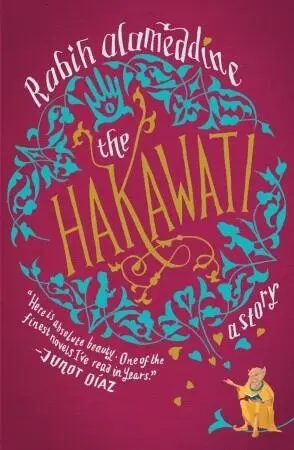
- Название:The Hakawati
- Автор:
- Издательство:Anchor
- Жанр:
- Год:2009
- ISBN:нет данных
- Рейтинг книги:4 / 5. Голосов: 1
-
Избранное:Добавить в избранное
- Отзывы:
-
Ваша оценка:
The Hakawati: краткое содержание, описание и аннотация
Предлагаем к чтению аннотацию, описание, краткое содержание или предисловие (зависит от того, что написал сам автор книги «The Hakawati»). Если вы не нашли необходимую информацию о книге — напишите в комментариях, мы постараемся отыскать её.
, or storyteller, and his bewitching tales are interwoven with classic stories of the Middle East. Here are Abraham and Isaac; Ishmael, father of the Arab tribes; the beautiful Fatima; Baybars, the slave prince who vanquished the Crusaders; and a host of mischievous imps. Through Osama, we also enter the world of the contemporary Lebanese men and women whose stories tell a larger, heartbreaking tale of seemingly endless war, conflicted identity, and survival. With
, Rabih Alameddine has given us an
for this century.
The Hakawati — читать онлайн бесплатно полную книгу (весь текст) целиком
Ниже представлен текст книги, разбитый по страницам. Система сохранения места последней прочитанной страницы, позволяет с удобством читать онлайн бесплатно книгу «The Hakawati», без необходимости каждый раз заново искать на чём Вы остановились. Поставьте закладку, и сможете в любой момент перейти на страницу, на которой закончили чтение.
Интервал:
Закладка:
The girl shook her head. My mother rearranged the clothes.
Lina gave me her “I’m about to tell you something you don’t know because you don’t know anything” look. “Mom’s checking to see if she’s stealing anything,” she said in French.
“Tais-toi!” my mother snapped. She reached into her pocket, took out a hundred-dollar bill. “Listen,” she said to the girl. “I want you to have this. You’ve been very good to us. I know it’s a lot of money, but I want you to promise me something. You will hide it. It is only for you. Under no circumstances are you to show it to your father or your brothers. Not even to your husband if they marry you off. This is for you. Only for you. Do you understand?”
“Yes, madame.” She hid the bill in her brassiere. “Thank you, madame.”
“Now get the hell out of here.”
The radio moaned about betrayals, a defeated voice. The air seemed thick. I stood in the concierge’s living room looking at a family of strangers. The concierge’s wife hovered around her guests, concerned. There were four of them: a husbandless woman, a tattered version of the concierge’s wife, and her three children. The woman’s lips were pursed, her eyes blurry. She seemed not to inhabit her ghostlike face. A lethargic fan stirred the air.
“They had so many planes,” said her eldest son, almost a man. “They kept coming and coming. They lit up the skies at night and bombed everything. We didn’t have a chance. Everyone ran away.”
Elie stared. “Did you fight, cousin?”
“Fight? We didn’t have a chance to breathe. They came across so fast we barely had time to run. They used napalm. It burns your skin down to the bone before it kills you. How can we fight that with rifles?”
“We’re lost,” another cousin said. Elie walked out in a huff. I followed quietly.
I tried not to be noticed. My mother refused to look at Uncle Jihad, stilled her gaze upon the ceiling. Both sat on the divan, their legs resting on the glass coffee table. My mother’s morning demitasse remained untouched, no longer steaming.
“She’s gone, Jihad,” she said softly. “She’s gone.” My mother had found out that Madame Daoud had left in the dark of night, gone to Italy to visit family, her husband said.
“No word, no note, nothing.” My mother closed her eyes and sighed.
“Why do you think she’s not coming back?” Uncle Jihad asked. “Her husband is still here.”
My mother slowly lowered her head, opened her eyes, and gave him a “let’s-be-serious” look. “He needs to take care of things before he joins her.”
“You’re being morose.” My uncle laid his hand upon her shoulder. “She’ll always be your friend.”
“Nothing remains,” my mother said, shaking her head. “All is lost.”
“I’ve lost my childhood innocence,” Lina sighed. She was sitting on the piano stool, the upright to her back, its top lid open as if it were letting out a sigh of its own. Forlorn, she showed me her profile like a dejected Egyptian film star. She kept smoothing her skirt without looking down, a practiced, automatic gesture.
“What do you mean?” I asked.
“How can I witness the suffering of the Palestinian children and remain childhood-innocent?” She exhaled loudly. “I suffer with them. I’m no longer a child.”
“But you’re ten, stupid.”
“No longer. Because of what I’ve seen, I am now a woman.”
I shoved her off the stool and ran. She came after me.
“It’s over,” my mother said, “and our army didn’t fire a single bullet.”
“It’s not our government’s fault the war ended so quickly,” Uncle Jihad said. “They’re probably still in session, contemplating action.”
We watched the news on television in the family room, thousands of Palestinian refugees arriving in Lebanon, like the rolling, rolling, rolling cattle on Rawhide .
“This chaos is disconcerting. There are so many of them,” my mother said. “What will they do?”
“They’ll wait,” my father said.
“What’s Lebanon? Some kind of purgatory?”
“What’s purgatory?” I asked.
“Come here and I’ll tell you,” Uncle Jihad said, patting his thigh. My legs dangled over the edge of his lap. “According to Dante, there’s paradise above, inferno below, and purgatory, which is like a hospital waiting room or train station until it is decided where one will go.”
“Who gets to decide, God?”
His grin widened. His head shuddered, a noncommittal nod. “Anyone but us.”

And King Kade sent the faithless wind against them. “Now, that is more like it,” said Isaac. Thick white clouds approached. The passengers held on to the carpet hems as the winds grew stronger. A cold, swirling gust blew Jacob off. He fell a few lengths, vanished, and popped back into place. The carpets turned fractious and began to misbehave.
The company was forced to alight in a green meadow with shin-high grass. Noah folded the three carpets into wallet-sized squares and swallowed them.
“This is a lovely meadow,” said Job, “and its color perfect.”
Fatima and the imps walked north. “This is exhausting,” Elijah said. “By the time we get where we are going, I will be too tired to do anything. My hooves are sore. I think we should fly again and risk the winds.” Below them was a deep valley they had to cross to get to the second mountain.
“The next wave comes,” announced Ishmael, pointing his tiny hand. White horses with white warriors atop them galloped toward the imps from below. The riders brandished silver swords above their heads. “I count a hundred, twenty rows of five.”
“Look behind the wave of attackers,” Ezra said. “There are another hundred, and more waiting. They are over a thousand at least.”
“Why are they lined up that way?” asked Fatima.
“Fanatics are not imaginative,” replied Isaac. “Metaphor becomes more important than substance.”
In the center of the valley, a giant white-leaved oak birthed both horses and riders. A leaf would fall to the ground and would change into either man or beast. “May I?” said Adam.
“No,” replied Noah. “Allow me. Sister, may I have one of the bags?”
“Which one?” asked Fatima, hand holding out Bast’s three gifts.
“Methinks it matters not,” the blue imp answered. “I will take this one. It smells of the sacred Nile.” He opened the bag and emptied its contents on the meadow in front of him. “Stand back and admire.” The mud fell upon the abundant grass, divesting it of its fastidiousness and sanctity. The mud spread and burbled. A tiny spring erupted. “Let me help.” Noah brought his hands together. The tiny spring exploded into a river, and the water coursed toward the riders.
“More,” said Isaac. “Teach them suffering.”
Noah brought his hands together once again, and the river water rose. “And it shall be,” Noah said, and unleashed a flood.
The valley basin was soon covered with blue. The horses panicked, and their riders attempted to calm them. When the water covered the bark of the giant tree, the horses had to swim. The spring gushed forth more water, and a lake formed, grew monstrously large. Warriors and steeds drowned. The water reached the top of the white-oak tree. Blue swallowed white.
“Plop goes the white army,” Isaac said.
“Will the oak survive?” asked Jacob.
“Yes,” said Adam, “but it needs protection.” With his arms held high, he formed an orb of dust out of which a giant violet serpent with a golden crest and fiery eyes thrust its head. The snake hissed, flicked its tri-forked tongue. “Come out, Thebes,” Adam said. “This is your new home.” The snake uncoiled its body, swollen and plump. Out of the orb it slithered and slithered and slithered, and into the lake it entered, its scales glittering beneath the water. Thebes devoured the straggling riders one by one. Once sated, it wound its body around the giant white oak below the surface of the lake and rested its head atop the highest branches.
Читать дальшеИнтервал:
Закладка:
Похожие книги на «The Hakawati»
Представляем Вашему вниманию похожие книги на «The Hakawati» списком для выбора. Мы отобрали схожую по названию и смыслу литературу в надежде предоставить читателям больше вариантов отыскать новые, интересные, ещё непрочитанные произведения.









Обсуждение, отзывы о книге «The Hakawati» и просто собственные мнения читателей. Оставьте ваши комментарии, напишите, что Вы думаете о произведении, его смысле или главных героях. Укажите что конкретно понравилось, а что нет, и почему Вы так считаете.