Eddie Joyce - Small Mercies
Здесь есть возможность читать онлайн «Eddie Joyce - Small Mercies» весь текст электронной книги совершенно бесплатно (целиком полную версию без сокращений). В некоторых случаях можно слушать аудио, скачать через торрент в формате fb2 и присутствует краткое содержание. Год выпуска: 2015, Издательство: Viking, Жанр: Современная проза, на английском языке. Описание произведения, (предисловие) а так же отзывы посетителей доступны на портале библиотеки ЛибКат.
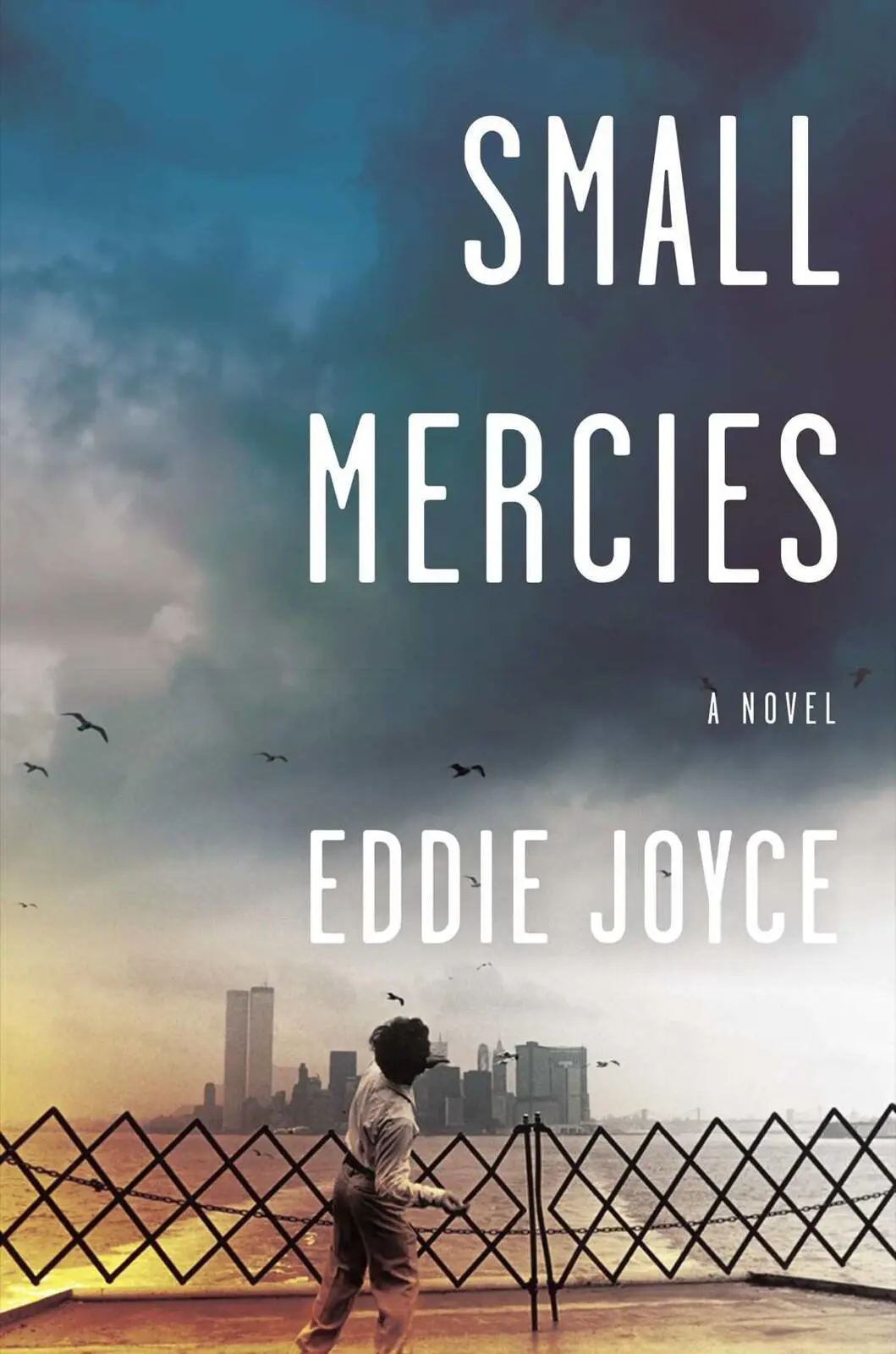
- Название:Small Mercies
- Автор:
- Издательство:Viking
- Жанр:
- Год:2015
- ISBN:нет данных
- Рейтинг книги:3 / 5. Голосов: 1
-
Избранное:Добавить в избранное
- Отзывы:
-
Ваша оценка:
Small Mercies: краткое содержание, описание и аннотация
Предлагаем к чтению аннотацию, описание, краткое содержание или предисловие (зависит от того, что написал сам автор книги «Small Mercies»). Если вы не нашли необходимую информацию о книге — напишите в комментариях, мы постараемся отыскать её.
Presented through multiple points of view,
explores the conflicts and deep attachments that exist within families. Heart-wrenching and profoundly relatable, Joyce’s debut is a love letter to Staten Island and a deeply affecting portrait of an American family.
Small Mercies — читать онлайн бесплатно полную книгу (весь текст) целиком
Ниже представлен текст книги, разбитый по страницам. Система сохранения места последней прочитанной страницы, позволяет с удобством читать онлайн бесплатно книгу «Small Mercies», без необходимости каждый раз заново искать на чём Вы остановились. Поставьте закладку, и сможете в любой момент перейти на страницу, на которой закончили чтение.
Интервал:
Закладка:
“There are gonna be a lot of girls at this party, Mikey,” Tiny says, as though he could read his friend’s mind. “Lot of girls looking to welcome home an army man.”
* * *
The party is in full swing when they arrive. Despite the cold, people are out in the front yard talking, drinking, making out. Music — the Stones — blares out of an open window. Michael looks up as they sidle past the revelers out front; the house is enormous, but it looks like it could collapse at any moment. As soon as they’re inside, Tiny abandons him in search of his ever-elusive prey. Michael wanders from room to room for a bit, bumping into old friends, yelling to be heard over the music. He runs into Danny Olsen and they reminisce about the Thanksgiving Day game they played in a torrential downpour. He throws a friendly shoulder into John Feeney, still clearly a lunatic, who launches a mock punch at him. He talks to Amanda Panek for a bit until her boyfriend shows up. He chats a while with Paul DiZinno, a high school buddy who’s also recently returned from a two-year stint in the army.
The house is packed, the party a little wilder than the ones he attended before he left. People are drinking with abandon, the girls are a little more flirtatious. There is an edge in the air. The prospect of Vietnam casts a long shadow. People are nervous. Michael feels unsettled, like he’s somehow both older and younger than everyone at the party. The house is thick with hormones, overheated. Too many bodies in the same place at the same time.
Michael walks into the less populated kitchen, steps out onto the back porch to get some air. He is a little drunk. From the back porch, he can see the lights of Manhattan. He watches a ferry slink toward the city, takes a sip of beer. His gaze wanders over the low bulk of Brooklyn. He leans over the railing to get a better view of the Verrazano.
“Checking out the ginny gangplank?”
He turns, startled, and sees a bright red ember floating in the darkness on the other side of the porch.
“Incoming,” says an older man’s voice. A second later, a can of beer flies out of the shadows. Michael raises his right hand just in time to snag the can.
“Good hands.”
“Thanks.”
The ember disappears, then blazes full. He watches the red circle rise and move toward him until a burly man with a bald head and a thick, reddish brown mustache emerges from the shadows, a cigar trapped between his teeth. He walks up, stands against the railing next to him. He’s holding a large, yellow container — a Polly-O cheese tin, with the parrot in the chef’s hat — in his right hand. He takes the cigar out, raises the container to his lips, and drinks deeply. He points the stub of the cigar out toward the bridge.
“That fucking bridge is gonna ruin this Island.”
He turns back to Michael, looks him over.
“You played ball against one of my boys.”
“Yes, sir. I played football against Ryan. Baseball too. Michael Amendola.”
The man snaps a finger in recognition.
“That’s right. Amendola. Fullback.”
“And third base, sir.”
“Stop calling me ‘sir.’” He puts the cigar back in his mouth, moves the Polly-O container to his left hand, extends his right. “Gus Feeney. Pleasure to meet ya, kid.”
They shake. He smiles at Michael, his whole face creasing into an exuberant Celtic grin.
“You blocked for that little fucking rabbit Terrio.”
“That’s right, Mr. Feeney.”
“Shit, kid. If you don’t start calling me Gus, I’m gonna put this fucking cigar out in your eye.”
He raises the cigar in mock menace, laughing as he does.
“What are you doing now, kid?”
“I just got out of the army.”
“Well, hell, crack that beer, Private Amendola. Congrats.”
Michael opens the beer, takes a long pull.
“Were you in Vietnam?”
“For six months.”
“See any action?”
He wants to say yes, wants to impress the legend. But he doesn’t want to lie.
“Not much, sir. Gus. I got lucky.”
“Don’t be ashamed of that, kid. Better to be lucky than good.”
He drapes his elbows over the railing, leans over. The wood creaks; Michael worries for a moment that the whole railing might snap, sending them both sprawling into the yard.
“So what are you doing now?”
Michael takes another sip of beer.
“My father has a store, a butcher’s shop, on Hylan Boulevard. I’m working there.”
Gus spits a large loogie out into the darkness.
“You like it, working there?”
“I hate it. I absolutely hate it.”
He has never said this out loud to anyone, not even Tiny. He’s a little drunk, yes, but it’s more than that. Gus Feeney is a legend for a reason; the man has charisma. Michael has known him all of five minutes and already wishes he were part of the family, wishes he had seven brothers, wishes he had a father like Gus Feeney. He met men like Gus in the army — men who could lead other men — but they were all pricks. Gus is a rough-and-tumble uncle, a jovial soul who can give you a kick in the ass when you need it. Michael can just sense it.
“You’ll be all right, kid. We’ll get you straightened out.”
The back door opens and another reveler staggers out onto the porch. A scrawny, blond-haired kid, completely tanked. He walks over to the space between them, a crooked smile on his face. When he reaches the railing, he leans over and pukes. Michael watches Gus put his hand on the kid’s neck.
“Get it out. Get it all out, son.”
The kid vomits, sporadically, for another minute. After a few dry heaves, he rises up, wipes his mouth with the back of his hand.
“You okay?”
The kid nods.
“Good. Take a sip of this.”
He gives the kid a sip from his container. He looks over at Michael, winks.
“No man should go into the army sober.”
Gus pulls the container away, whirls the kid around so he faces Michael.
“Jerry, this is Michael Amendola. He played ball against Ryan. Michael, this is my youngest, Jerry.”
Jerry smiles, extends the same hand he used to wipe the vomit from his face. Michael shakes it. Gus points his cigar at Michael’s chest.
“We’re gonna make a firefighter out of him.”
* * *
The following Saturday, after Enzo closes the shop, Michael goes to the Feeney house to start training for the firemen’s test. Gus and his sons run him ragged, but he loves every minute. The following spring, he takes the test. In September 1967, after Gus pulls a few strings and gets his name bumped up the list, Michael enters the academy.
He graduates the same week that Jerry Feeney comes home from Vietnam in a box.
* * *
Tina looks happy, a little glow in her face. Michael gives her a peck on the cheek, a quick hug.
“To what do I owe the pleasure?” she asks, as she shuffles some papers off the kitchen table. He sits. “Coffee?”
“Don’t bother yourself.”
“It’s already made. I’ll zap a cup for you.”
“No work today?”
“They have me down to three days a week. Barely enough work for that.”
“You could run that bank.”
She takes a mug out of the microwave, hands it to him.
“I’ll tell ’em you said that.”
He sits down across from her. She looks like she did back in those early years with Bobby: never far from a smile. Some people aren’t meant to be unhappy, doesn’t suit them. He’s always thought of her as family, the daughter he never had. He’s happy she met someone.
“So what’s up?”
He takes the sheet out of his pocket, unfolds it, slides it across to her.
“So when the boys were young, we’d only put in one entry for the family. Each of us would pick one team and Gail would choose the winner. I don’t know why we stopped doing it that way, but we did. Anyways, this year, I’m going old school. I already picked my team, so did Peter. I figure you could make Bobby’s pick. Sound okay?”
Читать дальшеИнтервал:
Закладка:
Похожие книги на «Small Mercies»
Представляем Вашему вниманию похожие книги на «Small Mercies» списком для выбора. Мы отобрали схожую по названию и смыслу литературу в надежде предоставить читателям больше вариантов отыскать новые, интересные, ещё непрочитанные произведения.










Обсуждение, отзывы о книге «Small Mercies» и просто собственные мнения читателей. Оставьте ваши комментарии, напишите, что Вы думаете о произведении, его смысле или главных героях. Укажите что конкретно понравилось, а что нет, и почему Вы так считаете.