John Barth - Letters
Здесь есть возможность читать онлайн «John Barth - Letters» весь текст электронной книги совершенно бесплатно (целиком полную версию без сокращений). В некоторых случаях можно слушать аудио, скачать через торрент в формате fb2 и присутствует краткое содержание. Год выпуска: 1994, Издательство: Dalkey Archive Press, Жанр: Современная проза, на английском языке. Описание произведения, (предисловие) а так же отзывы посетителей доступны на портале библиотеки ЛибКат.
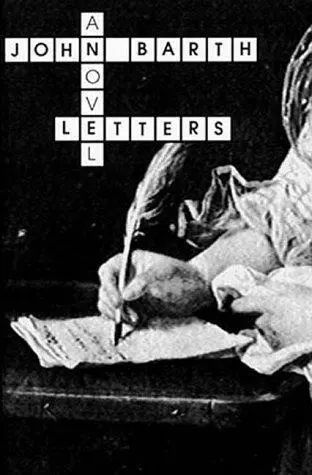
- Название:Letters
- Автор:
- Издательство:Dalkey Archive Press
- Жанр:
- Год:1994
- ISBN:нет данных
- Рейтинг книги:3 / 5. Голосов: 1
-
Избранное:Добавить в избранное
- Отзывы:
-
Ваша оценка:
Letters: краткое содержание, описание и аннотация
Предлагаем к чтению аннотацию, описание, краткое содержание или предисловие (зависит от того, что написал сам автор книги «Letters»). Если вы не нашли необходимую информацию о книге — напишите в комментариях, мы постараемся отыскать её.
Letters — читать онлайн бесплатно полную книгу (весь текст) целиком
Ниже представлен текст книги, разбитый по страницам. Система сохранения места последней прочитанной страницы, позволяет с удобством читать онлайн бесплатно книгу «Letters», без необходимости каждый раз заново искать на чём Вы остановились. Поставьте закладку, и сможете в любой момент перейти на страницу, на которой закончили чтение.
Интервал:
Закладка:
Over the next couple days the “Baratarians” assembled: the technicians, I mean, for (except for some unrehearsed “rehearsal” sequences at the Remobilisation Farm, to be duly reported) Prinz seems not ready yet to deploy his actors on these locations. On the Monday afternoon and all day Tuesday (bright, mild, pleasant) they shot footage of the Falls, as if the film were to be a remake of Niagara minus Joseph Cotten, Marilyn Monroe, and any connexion whatever with your work! Having shared blind Joyce’s interest in the cinema, and that of most of the other European writers I’ve had to do with, I do not especially share my lover’s mystification of that medium, his mythicised antithesis of Image and Word. I watched with crowds of others; sure enough, the American Falls was half shut off by a temporary dam above the rapids… But stop: you’ve no doubt been up to view it; may even have been among the throng of camera-clicking tourists who photographed with equal interest the Falls, the non-Falls, and the film crew photographing both and them.
On the Wednesday (at first bright, then turning muggy) the Baratarians and I “did” Queenston Heights across the river, where good General Brock won the battle but lost his life in 1812; Fort George, captured, lost, and burnt by the Americans in 1813; and handsome Fort Niagara, taken at night by bayonet from the Americans that same year, by Canadians who then swooped down with the Indians to burn Buffalo. If the “2nd War of Independence” is not yet in your fiction, you’d best see to putting it there, for it is most certainly in the film!
Ambrose played with his logarithmic spirals till noon and then joined me, as we’d planned, at the Rush-Bagot Memorial near the French Castle, on the Lake Ontario rampart of the fort. In the crowd I felt slightly less ridiculous; moreover, three days had passed (and, I learnt shortly, the episode he’d been drafting all morning was erotic): he was horny; I likewise, and only in that humour did his petty despotising arouse me. If I have given the impression in recent letters that our friend has been merely insufferable, I here correct it: insufferable indeed have been the matters I’ve complained of (and suffered him to lay upon me), but he has not even now lost his engaging, affectionately attentive side; had not in particular in the three days of our visit thus far, when his work was going well and neither Bea Golden nor Magda Giulianova Mensch nor starlets nor coeds were on the scene. We watched the “Baratarians” at work for a while, especially fascinated by Prinz’s inarticulate communion with his technicians when cinematography alone, without actors and story, was the business at hand (he began, I now recall, as an avant-garde documentarist). But we were “turning on”; could not leave off touching each other; people were beginning to look at us. Prinz wanted us all to move before dinnertime from the mouth of the Niagara River to its head: specifically, back across to the Canadian shore and down (on the map, but upriver, most confusing) to Fort Erie, to the motel on whose stationery this is written, which he’d reserved for the next five nights. There was to be a “general story session”—filmed, of course — in the evening, after he’d inspected the locations at Old Fort Erie and the Remobilisation Farm, where most of the rest of the cast would rejoin us.
Touching, gripping, squeezing arms and hands, we hurried back to make love in our “old” motel before packing and checking out to move to the new. I wept a bit; was given permission (I hadn’t sought it) to pick up a midlength skirt for morning wear if I wished to explore “the Cook/Castine business” whilst he was writing. Ambrose was tender; it was love we made. We have not since, may never again, though I have been inseminated daily in the three days since (it’s ovulation time), despite my being shut off and dry as the American Falls.
Then we passed through customs and across the Rainbow Bridge to Canada again, around the Horseshoe Falls and down (up) along the flowered margin of the dominion to that less prepossessing other fort — captured, recaptured, rerecaptured, leveled by accidental explosions, rebuilt, releveled by Lake Erie storms, rebuilt, de- and re-lapidated, restored — near where I write this; across the river from where you write whatever you write as I write this.
Near the Erie Motel is a dull Chinese-Canadian restaurant. There we dined, joined towards the end of our Moo Shoo pork by Prinz, who managed to say as I opened my fortune cookie…
Oh God, enough of this writing! It is all insane, and for all I know you may be quite apprised of, may even be party to, the madness. We inspected Old Fort Erie, Prinz framing views with his fingers and murmuring things about the light. On 4 July 1814, 38th birthday of your republic, an American general with your initials recaptured the fort first captured in May of the year before. Six weeks later the place exploded as the Canadians attempted to retake it (“Takes and retakes,” Prinz murmurs happily), either accidentally or because a U.S. lieutenant fired the magazine, blowing himself and two dozen others to kingdom come and repulsing the assault. “We” are to replicate that explosion on 15 August, its 155th anniversary. Indeed, it seems there is to be a series, a montage of bombardments, fires, explosions from the period: red rockets will glare and bombs burst in air this season, not only here but at Fort McHenry in Baltimore and at Washington, all which got theirs in the busy summer of 1814. The last big bang at Fort Erie — indeed, the last on the Niagara Frontier — came in November of that same year, when General Izard, withdrawing his American garrison back to Buffalo, blew up what was left standing after the August explosion.
As we dutifully reviewed this noisy history, Ambrose took my elbow and informed me that Prinz had just that day informed him that the “patients” at the Remobilisation Farm, apparently under the direction of Bea Golden (one of their number, you know, from time to time, when under the nom de guerre Bibi she dries out between failed marriages), were involved in some sort of ongoing recapitulation of your End of the Road novel, which either inspired or was inspired by the original farm for remobilising the immobile, down in Maryland. Thus there is a black doctor in chief known simply as the Doctor, and a half-patient, half-administrator who goes by the name of Jacob Horner and is even thought by some to be the original of your soulless anti-hero. A patient known as “St Joseph” plays or lives the role of poor Joseph Morgan; “Bibi” herself has assumed the part of Rennie Morgan (Sexual Therapy, no doubt), caught between her rationalist husband and antirationalist “lover”… All very convenient for “our” film, of course, as I would soon see, in keeping with Ambrose’s (and presumably Prinz’s) notion of echoes and reenactments significant in themselves, without necessary reference to their originals. (Did you know that Reg Prinz has “kept his imagination pure” by not even reading your books, any of them, so that viewers of his film won’t have had to either? How I wish, in my ever rarer moments of relative calm, that I were outside this madness enough to savour its paradoxical aesthetics!) What was more — and what Prinz had evidently told Ambrose only over the fortune cookies, as I braved the stares of proper Ontarians to make my way to the Ladies’—the Doctor having declined for one reason or another to play himself in this psychodramatical masquerade, his role had been assumed by a patient known as “Monsieur Casteene.”
I do not reenact, here in this letter, my reactions to this news there on the twilit, Buffalo-facing rampart of Fort Erie. I do not even call to my aid my trusty suspension points, that have got me out of many an epistolary paragraph heretofore. I merely report to you this initial detonation. Still holding my arm, Ambrose regarded me. We turned to a nearby whir: Prinz with his “hand-held,” photographing my reaction, Ambrose’s indignation.
Читать дальшеИнтервал:
Закладка:
Похожие книги на «Letters»
Представляем Вашему вниманию похожие книги на «Letters» списком для выбора. Мы отобрали схожую по названию и смыслу литературу в надежде предоставить читателям больше вариантов отыскать новые, интересные, ещё непрочитанные произведения.



Обсуждение, отзывы о книге «Letters» и просто собственные мнения читателей. Оставьте ваши комментарии, напишите, что Вы думаете о произведении, его смысле или главных героях. Укажите что конкретно понравилось, а что нет, и почему Вы так считаете.