Cheryl Strayed - Wild
Здесь есть возможность читать онлайн «Cheryl Strayed - Wild» весь текст электронной книги совершенно бесплатно (целиком полную версию без сокращений). В некоторых случаях можно слушать аудио, скачать через торрент в формате fb2 и присутствует краткое содержание. Год выпуска: 2012, ISBN: 2012, Жанр: Современная проза, на английском языке. Описание произведения, (предисловие) а так же отзывы посетителей доступны на портале библиотеки ЛибКат.
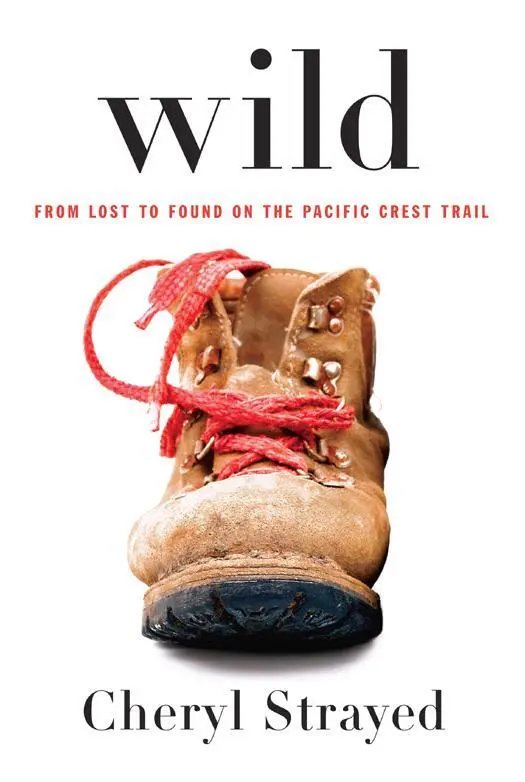
- Название:Wild
- Автор:
- Жанр:
- Год:2012
- ISBN:978-0-307-95765-8
- Рейтинг книги:4 / 5. Голосов: 1
-
Избранное:Добавить в избранное
- Отзывы:
-
Ваша оценка:
Wild: краткое содержание, описание и аннотация
Предлагаем к чтению аннотацию, описание, краткое содержание или предисловие (зависит от того, что написал сам автор книги «Wild»). Если вы не нашли необходимую информацию о книге — напишите в комментариях, мы постараемся отыскать её.
Wild — читать онлайн бесплатно полную книгу (весь текст) целиком
Ниже представлен текст книги, разбитый по страницам. Система сохранения места последней прочитанной страницы, позволяет с удобством читать онлайн бесплатно книгу «Wild», без необходимости каждый раз заново искать на чём Вы остановились. Поставьте закладку, и сможете в любой момент перейти на страницу, на которой закончили чтение.
Интервал:
Закладка:
Go above your Nerve –
EMILY DICKINSON8
CORVIDOLOGY
Kennedy Meadows is called the gateway to the High Sierra, and early the next morning I walked through that gate. Doug and Tom accompanied me for the first quarter mile, but then I stopped, telling them to go on ahead because I had to get something from my pack. We embraced and wished one another well, saying goodbye forever or for fifteen minutes, we didn’t know. I leaned against a boulder to lift some of Monster’s weight from my back, watching them go.
Their leaving made me melancholy, though I also felt something like relief when they disappeared into the dark trees. I hadn’t needed to get anything from my pack; I’d only wanted to be alone. Alone had always felt like an actual place to me, as if it weren’t a state of being, but rather a room where I could retreat to be who I really was. The radical aloneness of the PCT had altered that sense. Alone wasn’t a room anymore, but the whole wide world, and now I was alone in that world, occupying it in a way I never had before. Living at large like this, without even a roof over my head, made the world feel both bigger and smaller to me. Until now, I hadn’t truly understood the world’s vastness — hadn’t even understood how vast a mile could be — until each mile was beheld at walking speed. And yet there was also its opposite, the strange intimacy I’d come to have with the trail, the way the piñon pines and monkey flowers I passed that morning, the shallow streams I crossed, felt familiar and known, though I’d never passed them or crossed them before.
I walked in the cool of the morning to the rhythm of my new white ski pole clicking against the trail, feeling the lightened-but-still-ridiculously-heavy weight of Monster shift and settle in. When I’d set off that morning, I thought that it would feel different to be on the trail, that the hiking would be easier. My pack was lighter, after all, not only thanks to Albert’s purge but because I no longer needed to carry more than a couple of bottles of water at a time, now that I’d reached a less arid stretch of the trail. But an hour and a half into the day I stopped for a break, feeling the familiar aches and pains. At the same time, I could ever so slightly feel my body toughening up, just as Greg had promised would happen.
It was day 1 of week 3, officially summer — the last week of June — and I was not only in a different season now, but in different country too, ascending higher in the South Sierra Wilderness. In the forty miles between Kennedy Meadows and Trail Pass, I’d climb from an elevation of just over 6,100 feet to nearly 11,000. Even in the heat of that first afternoon back on the trail, I could feel an edge of cool in the air that would no doubt envelop me at night. There was no question I was in the Sierra now — Muir’s beloved Range of Light. I walked beneath great dark trees that put the smaller plants beneath in almost complete shadow and past wide grassy meadows of wildflowers; I scrambled over snowmelt streams by stepping from one unsteady rock to another, aided by my ski pole. At foot speed, the Sierra Nevada seemed just barely surmountable. I could always take another step. It was only when I rounded a bend and glimpsed the white peaks ahead that I doubted my abilities, only when I thought how far I had yet to go that I lost faith that I would get there.
Doug’s and Tom’s tracks periodically appeared on the alternately muddy and dusty trail, and by midafternoon I came upon them as they sat near a stream, their faces registering surprise when I walked up. I sat next to them and pumped water and we chatted for a while.
“You should camp with us tonight if you catch up with us,” said Tom before they hiked on.
“I already have caught up to you,” I replied, and we laughed.
That evening I strolled into the small clearing where they’d pitched their tents. After dinner, they shared the two beers they’d brought from Kennedy Meadows, giving me swigs as we sat in the dirt bundled in our clothes. As we drank, I wondered which one of them had taken the eleven ultrathin nonlubricated Trojan condoms I’d purchased in Portland a few weeks before. It seemed it had to be one of them.
The next day when I was hiking alone I came to a wide swath of snow on a steep incline, a giant ice-crusted sheath that obliterated the trail. It was like the rockslide, only scarier, a river of ice instead of stones. If I slipped while attempting to cross it, I would slide down the side of the mountain and crash into the boulders far below, or worse, fall farther into who knew what. Air, it seemed, from my vantage point. If I didn’t attempt to cross it, I’d have to go back to Kennedy Meadows. That didn’t seem like an altogether bad idea. And yet here I was.
Hell, I thought. Bloody hell. I took out my ice ax and studied my course, which really only meant standing there for several minutes working up the nerve. I could see that Doug and Tom had made it across, their tracks a series of potholes in the snow. I held my ice ax the way Greg had taught me and stepped into one of the potholes. Its existence made my life both harder and easier. I didn’t have to chip my own steps, but those of the men were awkwardly placed and slippery and sometimes so deep that my boot got trapped inside and I’d lose my balance and fall, my ice ax so unwieldy it felt more like a burden than an aid. Arrest , I kept thinking, imagining what I’d do with the ax if I started to slide down the slope. The snow was different from the snow in Minnesota. In some places it was more ice than flake, so densely packed it reminded me of the hard layer of ice in a freezer that needs defrosting. In other places it gave way, slushier than it first appeared.
I didn’t look at the bank of boulders below until I’d reached the other side of the snow and was standing on the muddy trail, trembling but glad. I knew that little jaunt was only a sample of what lay ahead. If I didn’t opt to get off the trail at Trail Pass to bypass the snow, I’d soon reach Forester Pass, at 13,160 feet the highest point on the PCT. And if I didn’t slip off the side of the mountain while going over that pass, I’d spend the next several weeks crossing nothing but snow. It would be snow far more treacherous than the patch I’d just crossed, but having crossed even this much made what lay ahead more real to me. It told me that I had no choice but to bypass. I wasn’t rightly prepared to be on the PCT in a regular year, let alone a year in which the snow depth measurements were double and triple what they’d been the year before. There hadn’t been a winter as snowy as the previous one since 1983, and there wouldn’t be another for more than a dozen years.
Plus, there wasn’t only the snow to consider. There were also the things related to the snow: the dangerously high rivers and streams I’d need to ford alone, the temperatures that would put me at risk of hypothermia, the reality that I’d have to rely exclusively on my map and compass for long stretches when the trail was concealed by the snow — all of those made more grave by the fact that I was alone. I didn’t have the gear I needed; I didn’t have the knowledge and experience. And because I was solo, I didn’t have a margin for error either. By bailing out like most of the other PCT hikers had, I’d miss the glory of the High Sierra. But if I stayed on the trail, I’d risk my life.
“I’m getting off at Trail Pass,” I told Doug and Tom as we ate dinner that night. I’d hiked all day alone — logging my second fifteen-plus-mile day — but caught up with them again as they made camp. “I’m going to go up to Sierra City and get back on the trail there.”
“We decided to push on,” said Doug.
“We talked about it and we think you should join us,” said Tom.
Читать дальшеИнтервал:
Закладка:
Похожие книги на «Wild»
Представляем Вашему вниманию похожие книги на «Wild» списком для выбора. Мы отобрали схожую по названию и смыслу литературу в надежде предоставить читателям больше вариантов отыскать новые, интересные, ещё непрочитанные произведения.







Обсуждение, отзывы о книге «Wild» и просто собственные мнения читателей. Оставьте ваши комментарии, напишите, что Вы думаете о произведении, его смысле или главных героях. Укажите что конкретно понравилось, а что нет, и почему Вы так считаете.