Laila Lalami - Secret Son
Здесь есть возможность читать онлайн «Laila Lalami - Secret Son» весь текст электронной книги совершенно бесплатно (целиком полную версию без сокращений). В некоторых случаях можно слушать аудио, скачать через торрент в формате fb2 и присутствует краткое содержание. Год выпуска: 2010, Издательство: Algonquin Books, Жанр: Современная проза, на английском языке. Описание произведения, (предисловие) а так же отзывы посетителей доступны на портале библиотеки ЛибКат.
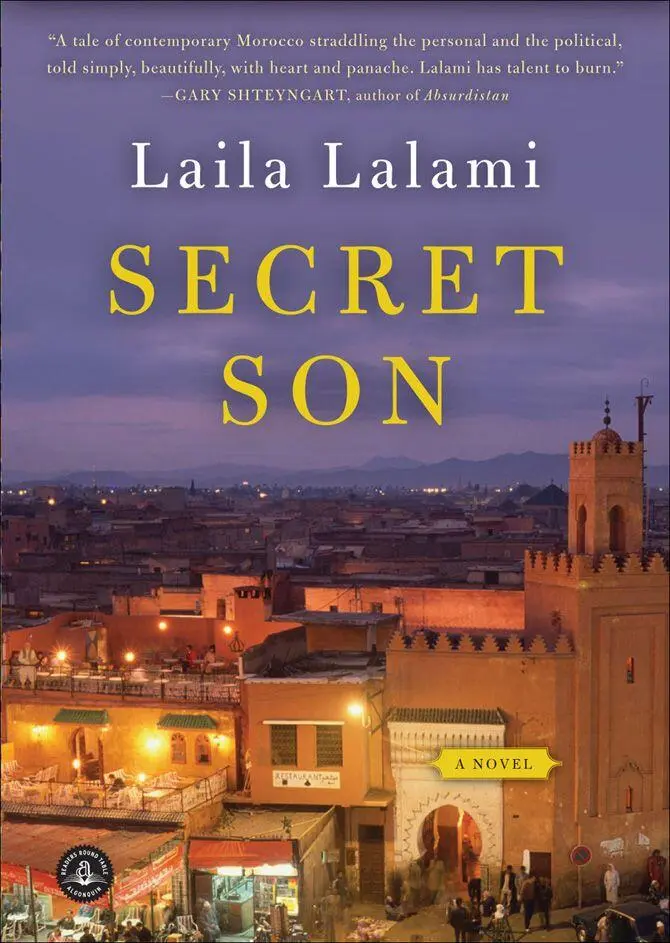
- Название:Secret Son
- Автор:
- Издательство:Algonquin Books
- Жанр:
- Год:2010
- ISBN:нет данных
- Рейтинг книги:5 / 5. Голосов: 1
-
Избранное:Добавить в избранное
- Отзывы:
-
Ваша оценка:
Secret Son: краткое содержание, описание и аннотация
Предлагаем к чтению аннотацию, описание, краткое содержание или предисловие (зависит от того, что написал сам автор книги «Secret Son»). Если вы не нашли необходимую информацию о книге — напишите в комментариях, мы постараемся отыскать её.
In the spirit of
and
, Laila Lalami’s debut novel looks at the struggle for identity, the need for love and family, and the desperation that grips ordinary lives in a world divided by class, politics, and religion.
Secret Son — читать онлайн бесплатно полную книгу (весь текст) целиком
Ниже представлен текст книги, разбитый по страницам. Система сохранения места последней прочитанной страницы, позволяет с удобством читать онлайн бесплатно книгу «Secret Son», без необходимости каждый раз заново искать на чём Вы остановились. Поставьте закладку, и сможете в любой момент перейти на страницу, на которой закончили чтение.
Интервал:
Закладка:
“By bus.”
“I thought Fernando would drop you off.”
“I didn’t ask him.”
“You should have told me. I could have picked you up or sent a cab for you.”
“Where’s Papa?” Amal asked, wanting to change the subject.
“He didn’t come.”
“Why not?”
“I just didn’t feel like spending such a beautiful morning with him. It’s just us two,” Malika said. Amal smiled; she felt a touch of their lost complicity returning. Her mother linked arms with her, and they walked through the double doors of the museum. As they strolled through the galleries, stopping occasionally in front of one or another painting, Malika shared all the gossip from back home: her driver’s son had managed to get into engineering school; the maid had decided to wear a hijab and refused to serve alcohol when there were guests; there was a journalist who kept hounding Uncle Othman for an interview; Aunt Khadija had taken a secret trip to Paris to get a face-lift; Cousin Jaafar had been caught with drugs at the airport and his father had to call in favors to prevent his arrest.
They stopped in front of a small Delacroix, an 1833 water-color of Moroccan street musicians. Strolling Players was the kind of Orientalist painting that must have been in high demand in the salons of Europe at the time. It looked nothing like Amal’s memories of home, and yet it made her miss it. Her mother squeezed her hand. “You have to come back with us.”
Amal did not reply, as if silence could make the demand go away.
Malika drew her breath. “I know you love each other,” she said. “But someday you will learn that love is not enough. People in America are not like us. They are different. They live together without being married, they don’t think about what families they’re getting into, they break off relationships as easily as they start them. That’s not how we are.”
Amal pulled her hand away and turned to look at her mother. “Are you saying that Fernando’s going to break up with me?”
“Amal, you don’t understand. A relationship is difficult enough without all the other complications you’re adding to it. I only want what is best for you. And this young man may be nice, and you’ve had fun with him, but now you’ve finished your degree and it’s time to think about the future, to think about what you’ll do next. You belong in your own country, with your people, with us, your family.”
“I can’t go back for good. Not after what Papa did.”
“Your father loves you. He is just too proud to admit he made a mistake. But look what happened to him. He’s learned his lesson, I think, and I know he wants you back, too. Otherwise he wouldn’t be here.”
“I can’t go back, Maman.”
“Of course you can. You can come back with us after graduation. We’ll spend a couple of weeks in Spain, and when fall comes, you can start work. You don’t have to work with your father; you can find work anywhere you like.”
Amal shook her head.
“If you won’t do it for yourself, do it for me. Do you know what I’ve gone through? Everyone is talking about how crazy your father has been acting, and your uncles are upset about the appearance of this boy — this Youssef. They’re worried what your father will do with his share of the company, whether he’ll give him something. They told me they won’t let it happen. I need you back home. If you come home with me, I’m sure your father will come to his senses, and everything can go back to the way it was before. Please, Amal.”
Amal looked at her mother’s pleading face, at the despair so clearly painted upon it. Amal had made a tacit promise of love, and she had been happy, but now she was being asked to be loyal to another bond, one that did not ask just for love; it demanded duty as well, and it rewarded with approval, with ridat el-walidin. A part of her crumbled right then, and as they walked through the galleries, she became aware of an emptiness inside her that widened slowly and steadily.
They went to lunch at a restaurant nearby, and as they waited for their orders, Nabil appeared and pulled up a chair. “How was the museum?” he asked.
Amal looked at her mother, who hid behind her menu. How carefully they had planned the meeting; Amal had not suspected anything.
“Fine,” Amal replied.
“It was wonderful,” Malika said. “We had a good time.” She started to talk about what she wanted to do during her stay in Los Angeles, and complained that there was not enough time to go to San Francisco for a few days. “We were supposed to get here on Thursday night, but we missed our connecting flight from New York,” Malika said. “We had to wait for an early morning flight on Friday.”
“It took us three hours to go through immigration,” Nabil explained. “It was bad enough that they fingerprinted me, like a common criminal, but then they took me to another room for a full search, and then after that, we still had to wait an hour and answer more questions.”
“Every time we come to this country,” Malika said, “we see it getting worse.”
“Your mother told me you wanted to stay here,” Nabil said. “Why? They hate us.”
“It’s not like that,” Amal said.
“How quickly you forget, my daughter. Do you remember your first year here, when you called me, crying, because someone taped a photo of Osama bin Laden on your dorm room door?”
“It was Halloween. Some idiot thought he was making a joke,” she said.
“And?”
“And nothing,” she said. “You’re right. I was very upset.”
When she went home that night, she huddled under the covers in bed and tried to quiet the pull of allegiances inside her. She closed her eyes, hoping for sleep, for escape.
IN THE WEEK leading up to graduation, Malika called every day. She asked Amal to go out, and each time they met, she chipped away at Amal’s resolve. Amal was so busy with her that she barely saw Fernando, instead staying out late with her mother, driving her around town, from Olvera Street to the Santa Monica Pier, from the Getty Center to Griffith Park, though what her mother really loved was Rodeo Drive. They often brought back shopping bags full of clothes to the apartment, and Malika would try on the new outfits, admiring herself in the mirror, while Amal lay across the bed watching her and offering comments.
Her father often joined them. He sat quietly in the backseat, and once, when Amal took a shortcut and Malika protested that they would get lost, he simply said, “Let her be. She knows what she’s doing.” They ordered pizza one night and stayed in, and when it arrived, Malika complained about the grease while Nabil got up and looked through the kitchen for napkins. He sat on the old sofa, balancing a paper plate with a pizza slice on his lap. How easily they fell into their old patterns, Amal noticed, Malika chatting away while smoking a cigarette, Nabil periodically contradicting her, and Amal sitting between them, alternately agreeing with one or the other, trying to keep them both happy.
WHEN GRADUATION DAY ARRIVED, Amal was too worried about lunch — to which she had insisted that Fernando come — to follow the commencement speakers, with their talk of new beginnings and their words of admiration for the grandness of youth. She was the first to get into the car when they headed for the restaurant. By the time Fernando walked in, five minutes late as was his habit, Amal and her parents were already seated at their table. He was wearing a green shirt that brought out the color of his eyes, and a dark-rinse pair of jeans that were a nice change from the frayed ones he usually wore. Malika stood up to welcome him and smiled at him with the practiced ease of a woman who could turn the charm on or off at will. “How are you?” she said in her accented English as she signaled to him to take a seat next to Amal. “Did you have trouble finding the restaurant?”
Читать дальшеИнтервал:
Закладка:
Похожие книги на «Secret Son»
Представляем Вашему вниманию похожие книги на «Secret Son» списком для выбора. Мы отобрали схожую по названию и смыслу литературу в надежде предоставить читателям больше вариантов отыскать новые, интересные, ещё непрочитанные произведения.










Обсуждение, отзывы о книге «Secret Son» и просто собственные мнения читателей. Оставьте ваши комментарии, напишите, что Вы думаете о произведении, его смысле или главных героях. Укажите что конкретно понравилось, а что нет, и почему Вы так считаете.