Laila Lalami - Secret Son
Здесь есть возможность читать онлайн «Laila Lalami - Secret Son» весь текст электронной книги совершенно бесплатно (целиком полную версию без сокращений). В некоторых случаях можно слушать аудио, скачать через торрент в формате fb2 и присутствует краткое содержание. Год выпуска: 2010, Издательство: Algonquin Books, Жанр: Современная проза, на английском языке. Описание произведения, (предисловие) а так же отзывы посетителей доступны на портале библиотеки ЛибКат.
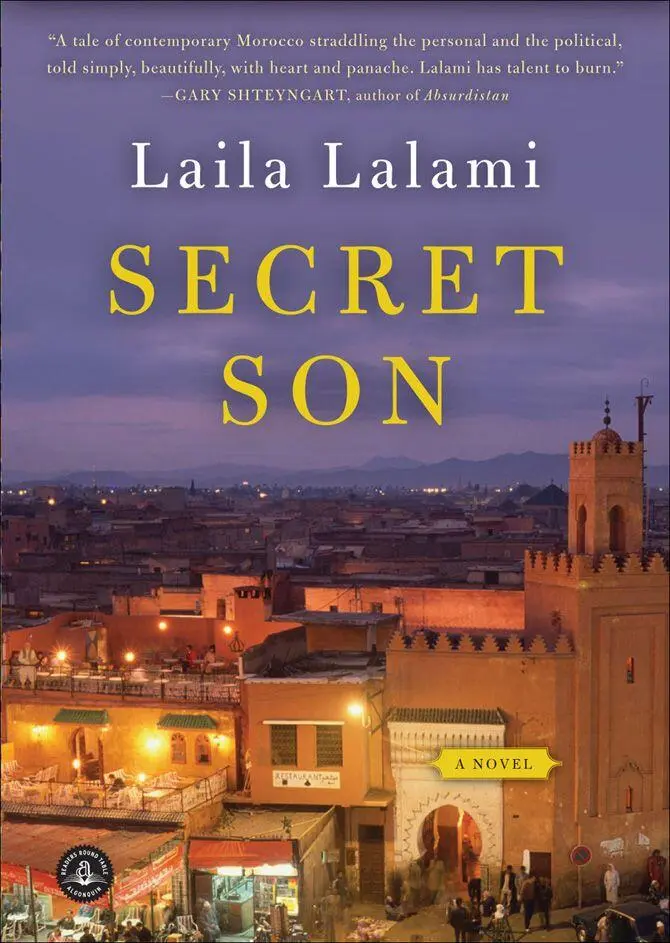
- Название:Secret Son
- Автор:
- Издательство:Algonquin Books
- Жанр:
- Год:2010
- ISBN:нет данных
- Рейтинг книги:5 / 5. Голосов: 1
-
Избранное:Добавить в избранное
- Отзывы:
-
Ваша оценка:
Secret Son: краткое содержание, описание и аннотация
Предлагаем к чтению аннотацию, описание, краткое содержание или предисловие (зависит от того, что написал сам автор книги «Secret Son»). Если вы не нашли необходимую информацию о книге — напишите в комментариях, мы постараемся отыскать её.
In the spirit of
and
, Laila Lalami’s debut novel looks at the struggle for identity, the need for love and family, and the desperation that grips ordinary lives in a world divided by class, politics, and religion.
Secret Son — читать онлайн бесплатно полную книгу (весь текст) целиком
Ниже представлен текст книги, разбитый по страницам. Система сохранения места последней прочитанной страницы, позволяет с удобством читать онлайн бесплатно книгу «Secret Son», без необходимости каждый раз заново искать на чём Вы остановились. Поставьте закладку, и сможете в любой момент перейти на страницу, на которой закончили чтение.
Интервал:
Закладка:
Amal gathered the sheets over her, turning to face the other side. “Don’t,” she said, her voice still hoarse from sleep. She heard the shutter click again. It felt like a tiny hammer hitting her skull. She groaned. Another click. She drew her breath and, pushing the covers off, sat up, feeling tired. She stretched her arms above her head. Behind her, she heard Fernando taking another picture of her back. “The light was too good to pass up,” he said, finally capping the lens and putting the camera on the nightstand. He came around the bed and dropped on his knees before her, slipping his arms around her waist. He was still in his boxers and a T-shirt with the logo of Amnesty International — he had interned for them two years before and had a stack of these shirts at her apartment for the times when he spent the night.
“Yeah?” She ran her hand over his shaved head. She felt the spiky growth of hair under her fingertips. “You want a picture of me looking grumpy?”
He laughed and kissed her. He tasted of coffee, and she thought how a cup might be just the thing, but before she could ask whether there was any left, he bent down to look underneath the bed. He pulled out what looked like a picture, covered with brown paper and tied with blue raffia ribbon. “This is for you,” he said.
“What’s the occasion?” she asked.
“Graduation, of course.”
“It’s not for another ten days.”
“I know,” he said. “I just wanted it to be a surprise, especially since I won’t be able to make it to the ceremony.”
Amal pulled the ribbon off and tore the paper to find a photograph of her, transformed into a Warholesque silkscreen, her hair shaded green, her eyes a light blue, her lips a dark pink. On the back of the picture was a receipt for a printmaking course she had seen advertised some weeks ago in the Santa Monica College catalog and had wanted to take. “I love it,” she said. “Thank you.” He smiled, clearly taking pleasure in her happiness.
She reached for her T-shirt and a pair of shorts from the other side of the bed. “God, I’m so tired.” The night before, they had gone dancing at a club in Los Feliz and stayed up until 3 a.m.
“Want some coffee?” he asked.
“Sure.” Amal followed him out of the bedroom. She put the silkscreen photograph on the mantelpiece in the living room, pushing aside three votive candles and a pack of cigarettes and sweeping the dust off with her hand. This class would be a nice release after work. She was doing an internship for a market research company, running polls and statistical analyses. She went to the kitchen, where she sat across from Fernando at the Formica-topped table by the window. The book he had been reading lay open, the inside facing down. He poured her a cup of coffee and pushed a plate of already-prepared toast in front of her. Then he let his chin rest on his hand as he watched her.
“How does it feel?”
“How does what feel?” she asked, looking up.
“Graduating, of course.”
“Good, I guess,” she said. “You’ve done it, too.” Since finishing school at UCLA the year before, Fernando had kept up his part-time job as a photographer and freelance music reviewer for a weekly magazine while trying to decide what he wanted to do next. He still had not figured it out; he had been talking about going to graduate school.
“Yeah,” he said, “but …” His voiced trailed off.
Outside, cars passed by on Franklin Avenue, their pace slower on this Saturday morning. A woman was pushing a cart full of recycled cans down the sidewalk. At the diner across the street, a line was already forming even though it was only a little after ten in the morning. “Do you want to go look at the apartment?” she asked.
“It’s a bit expensive.”
“We can manage it,” she said. “I’ll be working soon.”
The doorbell rang.
“I’ll get it,” Fernando said, getting up.
“If it’s the neighbor, tell him we don’t know who steals his newspaper, and he should stop bothering us,” she said as she carried her plate to the sink.
There were indistinct voices; the rising tone of questions, the falling one of answers. Amal walked out of the kitchen into the corridor. Her father was on her doorstep, his tall frame filling the doorway. She gasped. At once she noticed the extra strands of gray in his hair, the new wrinkles, the leaner waist, made more apparent by the black leather belt. He wore a polo shirt and beige slacks, and he jiggled his keys in his pocket — a sign, she remembered suddenly, that he was angry. A shiver went down her spine. Behind him, nearly hidden from view, stood her mother, looking at once exhausted, happy, and surprised. Malika was in a white skirt suit with a diamond brooch pinned to the lapel. Her hair was styled in a bob, her lips meticulously rouged.
“Mais qu’est-ce que vous faites içi?” Amal croaked.
“Eh bien, on est là pour ton diplôme !” Nabil replied, and then, in a heavily accented English, he added, “You did not think we would miss it!” After what seemed like an interminable pause, he pulled her to him, hugging her tightly against his chest, nearly taking the breath out of her lungs. On his shirt she smelled cigarettes and Dior Homme, reminding her of all those times she had sat next to him on the terrace of their home in Casablanca, where she would keep him company while he smoked his after-lunch Dunhill. When he let go, she stepped gingerly aside, unsure her legs could carry her. “Come in,” she said.
It was her mother’s turn to embrace her. Had it been two years already? Amal remembered a time when she, too, would wear Givenchy or carry Hermès because she wanted so much to look like her mother. She already had the same long hair, the same brown eyes, the light complexion, but she had wanted the elegance, too, the soft touch, and, above all, the strength. Where would Amal be if not for her mother? The words from Malika’s first letter after the argument were still imprinted in her memory: You will find this out soon enough on your own, dear child, but a man’s honor is easily bruised. What you might not know is that he’ll be the last one to admit it to other men. So when I pointed out to your father that your sudden return home in the middle of the term would surely make his brothers ask questions, that they’d want to know what had happened, he suddenly wasn’t so eager to go and get you . Now Amal noticed that Malika looked shorter, or perhaps it was Amal who had grown taller since the last time they had seen each other. “Qu’est ce que tu as grandi !” Malika said.
“It’s only been a couple of years, Maman.”
“Still, you look so different,” Malika said, scrutinizing her daughter’s face. “And your hair is so much longer.” She stroked the ends of it on Amal’s shoulders.
A stunned Fernando was still standing by the door. Realizing this, Amal opened her hands wide and, switching back to English, said, “Fernando Stewart, this is my father, Nabil Amrani.”
“We have already met,” Nabil said, looking up and down at Fernando, who stood barefoot, hand extended. The print on his boxers — red cherries on a blue background — seemed suddenly ridiculous and out of place. Amal wished he had taken the trouble to put his jeans on before opening the door. Nabil continued staring but did not offer his hand.
“Yes,” Fernando said, regaining his composure. A familiar twinkle of defiance lit up his eyes. “Yes, we did. Please come in,” he said, stepping aside.
“And this is my mother,” Amal added.
“How do you do?” Malika said, extending her hand and smiling stiffly.
Everyone walked in. For the first time since she had moved in, Amal felt ashamed of the faded curtains, the coffee table with two pens stuck under one leg to keep it steady, the dusty miniature TV in the corner. There were no crystal vases, no silver-framed portraits, no souvenirs from faraway vacation places, none of the things that might have been there had her father still been a part of her life, had he still made all the decisions — had he still paid for everything. (He had helped her move into her first apartment in Westwood and had decorated it himself. Amal had sold most of those knickknacks at a garage sale to pay her utility bills.) Now, instead, there was a Berber rug she had not been willing to part with, stacks of books by the window, running shoes under the coffee table. There was also that silkscreen on the mantelpiece, which her father examined closely before sitting down.
Читать дальшеИнтервал:
Закладка:
Похожие книги на «Secret Son»
Представляем Вашему вниманию похожие книги на «Secret Son» списком для выбора. Мы отобрали схожую по названию и смыслу литературу в надежде предоставить читателям больше вариантов отыскать новые, интересные, ещё непрочитанные произведения.









Обсуждение, отзывы о книге «Secret Son» и просто собственные мнения читателей. Оставьте ваши комментарии, напишите, что Вы думаете о произведении, его смысле или главных героях. Укажите что конкретно понравилось, а что нет, и почему Вы так считаете.