Laila Lalami - Secret Son
Здесь есть возможность читать онлайн «Laila Lalami - Secret Son» весь текст электронной книги совершенно бесплатно (целиком полную версию без сокращений). В некоторых случаях можно слушать аудио, скачать через торрент в формате fb2 и присутствует краткое содержание. Год выпуска: 2010, Издательство: Algonquin Books, Жанр: Современная проза, на английском языке. Описание произведения, (предисловие) а так же отзывы посетителей доступны на портале библиотеки ЛибКат.
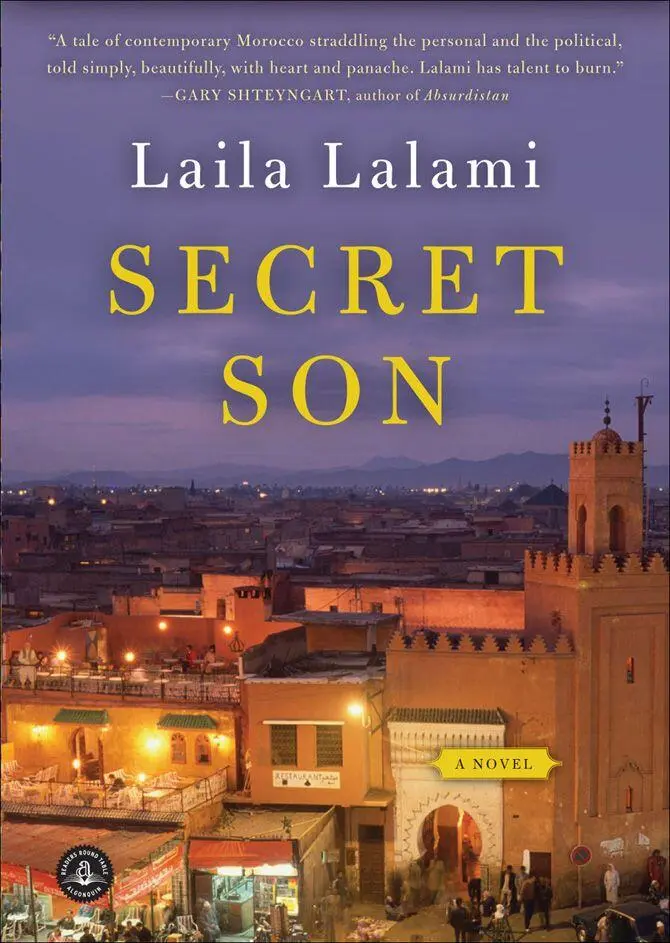
- Название:Secret Son
- Автор:
- Издательство:Algonquin Books
- Жанр:
- Год:2010
- ISBN:нет данных
- Рейтинг книги:5 / 5. Голосов: 1
-
Избранное:Добавить в избранное
- Отзывы:
-
Ваша оценка:
Secret Son: краткое содержание, описание и аннотация
Предлагаем к чтению аннотацию, описание, краткое содержание или предисловие (зависит от того, что написал сам автор книги «Secret Son»). Если вы не нашли необходимую информацию о книге — напишите в комментариях, мы постараемся отыскать её.
In the spirit of
and
, Laila Lalami’s debut novel looks at the struggle for identity, the need for love and family, and the desperation that grips ordinary lives in a world divided by class, politics, and religion.
Secret Son — читать онлайн бесплатно полную книгу (весь текст) целиком
Ниже представлен текст книги, разбитый по страницам. Система сохранения места последней прочитанной страницы, позволяет с удобством читать онлайн бесплатно книгу «Secret Son», без необходимости каждый раз заново искать на чём Вы остановились. Поставьте закладку, и сможете в любой момент перейти на страницу, на которой закончили чтение.
Интервал:
Закладка:

For weeks and weeks, Youssef watched his father. Nabil used his knife to cut his meat, but switched the fork back to his right hand before placing it in his mouth. He held his glass of Bordeaux by the stem and swirled the wine inside before taking a sip. He never took a nap after lunch. The cigarettes he smoked were red Dunhills. Whenever he commented on an article in the newspaper, which was often, he used words like déontologiquement . He loved the films of Martin Scorsese, a name he pronounced Scor-say-zee, which was news to Youssef — he had been saying Scor-sayz, the way it was spelled. Nabil spoke to his driver and to the maid in brief, utilitarian sentences, and he never said please or thank you. Sometimes government ministers would call to ask him for advice or favors; he always said yes. He always stared at beautiful women, even college girls he would have been far too old to pursue, but maybe he did that for a reason. He loved listening to Umm Kulthum, and when he didn’t know he was being watched, he would sing along with her, rolling the words of Ahmed Rami in his mouth as he looked out the window of his car. He couldn’t stand men with long hair, or girls who smoked, but he hated the Ikhwan with long beards and the women with headscarves even more. He never went to mosque, but he let Messaouda take a long break on Fridays so she could go to prayers. He gave her so much alms money to distribute among the beggars that Youssef began to wonder if his father had a guilty conscience. Nabil drank far too much — or at least Youssef, who was not used to alcohol, thought it was too much. Nabil never talked about Amal. He never talked about his wife. He never talked about his brothers. He was worried about gaining weight and always asked Messaouda to cook with less fat. When he saw a band of children selling single sticks of chewing gum on the Corniche, he complained that they were ruining the neighborhood. At the store where they had gone to buy some clothes for Youssef, he offered expert advice: If you get this Lacoste shirt, it will go well with your pair of dark-rinse jeans; don’t buy this wide-lapelled shirt, it’s out of style; and what are you thinking? You can’t wear yellow with that complexion. His French was exquisite, of course, but his English was so good that he was able to answer an American reporter’s questions. He complained about the African migrants who had started to appear all over town — don’t we have enough problems finding jobs for our own people? He called them all ‘azziyin, and he said they should all be sent home. In traffic he yelled at other cars even though he did not drive. He never went anywhere without his two mobile phones. Once, as they were smoking cigarettes on the balcony, he quoted a verse from Laabi ( Ô comme les pays se ressemblent / Et se ressemblent les exils ) — Youssef did not know it was Laabi; it was Nabil who had said so. He cracked his knuckles. He was allergic to avocado. On two separate occasions, he showed up at the apartment without his wedding ring. He stubbornly insisted that England had a written constitution, until Youssef pulled out one of the encyclopedias that lined the bookshelf in the hallway and showed him he was wrong. He loved to tell stories, and often he would start to laugh before the punch line of a joke had been delivered. Youssef watched his father. And he learned.
8. HEIR TO THE PAST
RAMADAN CAME, WITH its slow days and busy nights. Because most bars were closed for the entire month, Nabil brought a friend of his to the apartment for drinks, introducing him as Farid Benaboud of Casablanca Magazine . Youssef recognized the name; this was the man Hatim complained about incessantly. Nabil presented Youssef as his cousin’s nephew, who had come to visit from Moulay Driss Zerhoun, near Meknès. The journalist seemed not to suspect anything — didn’t everyone have lost relatives, aunts and uncles and cousins from a small town, people whom one hardly thought of except on those occasions, every few years, when they visited?
Benaboud was doing a piece on the economy. The government had launched yet another campaign to promote Morocco to wintering Europeans looking for sun and sand and the obligatory bit of the exotic, and Benaboud wanted to know whether Nabil Amrani thought this campaign might work. When Nabil spoke, his voice had a different cadence, as though he were reading from a prepared text. “We do have the capacity, of course,” he said, “to attract more tourists, from around the world. The Ministry of Tourism was right to call Morocco “the most beautiful country in the world.’ We do have a beautiful country. That is not the issue at all. The issue, frankly, is that the Islamists are giving us an image problem. You have Jean-Pierre or Marie-Louise sitting at home in Paris, they see people like those imbeciles from the Party on the TV news, screaming about how everything in this country should be done ‘by God,’ or ‘with God,’ or ‘through God,’ so of course Jean-Pierre and Marie-Louise get scared, and they decide to go to Mar-bella instead of Marrakech for their Christmas holidays.” He paused, allowing Benaboud enough time to write down what he had said.
“But aren’t you giving the Party more credit than they deserve?” Benaboud asked. “There are plenty of tourists around. They don’t seem to pay attention to the Party.”
“No. These people — they don’t want what’s best for the country. We do. We’re creating jobs; we’re offering training; we’re providing services. But what are they doing? Preaching!” He had spoken so fast that flakes of peanut appeared around the edges of his mouth.
“They are popular for a reason,” Benaboud said. “Maybe they have serious concerns about how the country is being run, just like everyone else.”
“The country is doing fine, if they will just let it be.”
At this, Benaboud sat back in his chair. “But are the jobs you’re creating really helping? If you’re creating a hundred jobs at fifteen hundred dirhams a month, how are people supposed to live on that? They’re still going to live below the poverty line and they won’t be able to send their children to school.”
“Rome wasn’t built in a day,” Nabil said, putting a second peanut into his mouth. “Do you want another beer?”
“Yes, please,” Benaboud said.
“I’ll get it,” Youssef said, jumping to his feet. He was grateful for the break in the conversation. Even though he had not said anything, he felt as if he had been gossiping about someone he loved, and en-namima haram. It made him feel guilty. He took his time fetching a beer from the refrigerator and then returned to the living room.
“The government really needs to help our sector,” Nabil was saying. “One problem, for example, is the false guides. It’s impossible for a foreign tourist to have a good time if he’s going to be hounded by guides at every corner. And sometimes, even in the resorts, the tour guides pester them. So we need a more”—he chewed while trying to come up with the right word—“a more muscular approach to this problem. We need state help in ensuring that our tourists can have a good time in peace.” As he spoke, his eyes bulged in indignation, as if it had been he who had been bothered by guides on his way around town. He got up to use the bathroom, leaving Youssef alone with Benaboud. On the stereo, Jacques Brel was singing, and the journalist drummed his fingers along with the rhythm of the guitar.
For lack of anything else to do, Youssef cleared his throat. Benaboud turned to look at him. “What do you think? Do you agree with your uncle?” he asked.
Читать дальшеИнтервал:
Закладка:
Похожие книги на «Secret Son»
Представляем Вашему вниманию похожие книги на «Secret Son» списком для выбора. Мы отобрали схожую по названию и смыслу литературу в надежде предоставить читателям больше вариантов отыскать новые, интересные, ещё непрочитанные произведения.










Обсуждение, отзывы о книге «Secret Son» и просто собственные мнения читателей. Оставьте ваши комментарии, напишите, что Вы думаете о произведении, его смысле или главных героях. Укажите что конкретно понравилось, а что нет, и почему Вы так считаете.