Julia Pierpont - Among the Ten Thousand Things
Здесь есть возможность читать онлайн «Julia Pierpont - Among the Ten Thousand Things» весь текст электронной книги совершенно бесплатно (целиком полную версию без сокращений). В некоторых случаях можно слушать аудио, скачать через торрент в формате fb2 и присутствует краткое содержание. Издательство: Random House, Жанр: Современная проза, на английском языке. Описание произведения, (предисловие) а так же отзывы посетителей доступны на портале библиотеки ЛибКат.
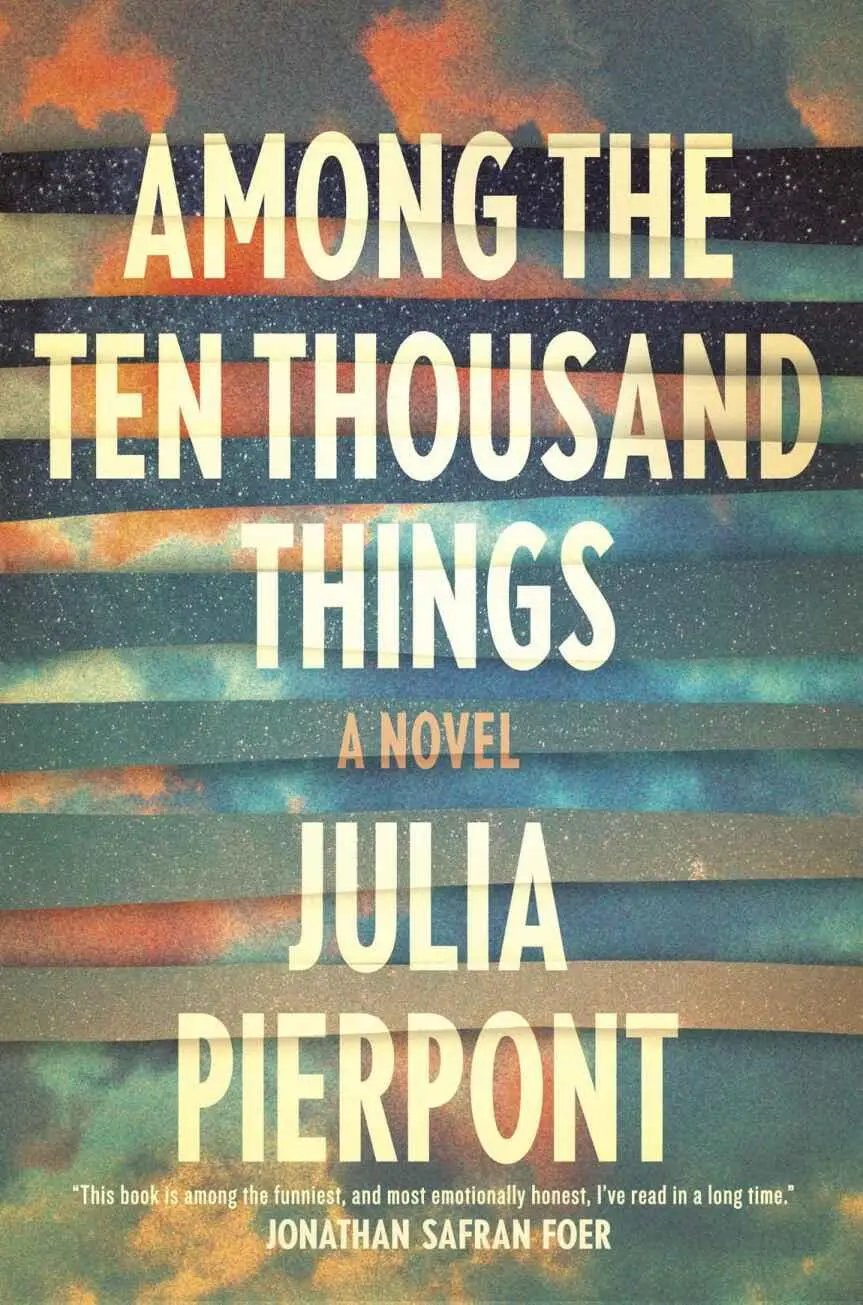
- Название:Among the Ten Thousand Things
- Автор:
- Издательство:Random House
- Жанр:
- Год:неизвестен
- ISBN:нет данных
- Рейтинг книги:5 / 5. Голосов: 1
-
Избранное:Добавить в избранное
- Отзывы:
-
Ваша оценка:
Among the Ten Thousand Things: краткое содержание, описание и аннотация
Предлагаем к чтению аннотацию, описание, краткое содержание или предисловие (зависит от того, что написал сам автор книги «Among the Ten Thousand Things»). Если вы не нашли необходимую информацию о книге — напишите в комментариях, мы постараемся отыскать её.
Jack Shanley is a well-known New York artist, charming and vain, who doesn’t mean to plunge his family into crisis. His wife, Deb, gladly left behind a difficult career as a dancer to raise the two children she adores. In the ensuing years, she has mostly avoided coming face-to-face with the weaknesses of the man she married. But then an anonymously sent package arrives in the mail: a cardboard box containing sheaves of printed emails chronicling Jack’s secret life. The package is addressed to Deb, but it’s delivered into the wrong hands: her children’s.
With this vertiginous opening begins a debut that is by turns funny, wise, and indescribably moving. As the Shanleys spin apart into separate orbits, leaving New York in an attempt to regain their bearings, fifteen-year-old Simon feels the allure of adult freedoms for the first time, while eleven-year-old Kay wanders precariously into a grown-up world she can’t possibly understand. Writing with extraordinary precision, humor, and beauty, Julia Pierpont has crafted a timeless, hugely enjoyable novel about the bonds of family life — their brittleness, and their resilience.
Among the Ten Thousand Things — читать онлайн бесплатно полную книгу (весь текст) целиком
Ниже представлен текст книги, разбитый по страницам. Система сохранения места последней прочитанной страницы, позволяет с удобством читать онлайн бесплатно книгу «Among the Ten Thousand Things», без необходимости каждый раз заново искать на чём Вы остановились. Поставьте закладку, и сможете в любой момент перейти на страницу, на которой закончили чтение.
Интервал:
Закладка:
They soared, higher. Somewhere a tray that should not have been open during takeoff rattled. Jack looked out at the sky and had to stop himself from smiling whenever the wing broke through another school of clouds. Flying was the same, even if the airlines had changed. They were run less like hotels now, more like branches of government. Stewardesses had become flight attendants had become security guards. They tell us that a nail clipper is not a nail clipper, a nail clipper is a weapon, and we become people who have had to imagine how a nail clipper might be a weapon. Maybe by splitting it down the middle, pressing the sharp end into the jugular of somebody. Of some body.
He leaned his forehead against the window. At this angle he could see a sliver of a woman a few rows ahead, the pulse of her temple. Probably trying to keep her ears from popping. Jack’s own ears popped a little.
Maybe they’re right, and we will be safer when we finally think of everything, of all the things that can do us harm, and make rules against them.
—
One hour later and thirty thousand feet in the air:
The SkyMall catalog had lost its charm. He felt cold but did not like the blankets in their plastic bags. They reminded him of felt, of a school project. He did not like the pillows either, in their gauzy cases.
The screen overhead showed they were leaving Eastern Daylight Time. The red arc on the screen began in New York, New York, and ended in Phoenix, Arizona, the little white plane blinking somewhere in between.
—
A few more hours, a little closer to the ground:
Jack woke to something cold and wet in his lap. His tray was open, a plastic cup spinning on its side, the orange juice he’d ordered everywhere, seeping.
“Excuse me,” he called toward the front of the plane. A man across the aisle was staring. Jack gestured, palms up, toward his lap: Can you believe this?
“Hey. Excuse me,” he called again. He pressed the silver button on the armrest, which made the seat recline, gave up, and went to the bathroom, pushing the door to make it fold open at the middle and punching it shut behind him. Waited for the light to come on.
He was wrong to believe he would ever evolve beyond those moments of wondering how he’d come to a particular place in life. Specifically, here, in this sallow light, rushing handfuls of water onto his shorts.
He dropped lumps of soggy paper towel into the toilet below the sign that said to please not drop paper towels in it. When he flushed, the bowl filled with blue and the sound was frighteningly loud.
—
The plane landed and no one clapped for the pilot. Off it, they stood together, all twenty of them, on the tarmac, or whatever that area was around the tarmac, and waited for the shuttle to arrive. Some fanned themselves. To Jack the blazing heat was a welcome respite from the cold on board the plane. It was thawing his insides, bringing him back to normal.
He did not think his shorts would stain.
Chapter 8
Simon, because he was older, retained a stronger impression of Gary than his sister had. It was a negative impression, which is not to say it was bad, only that Gary’s presence had always signified a sort of absence — the absence of his mother’s attention, of his father’s, the absence of any conversation directed toward himself. He found that to be true again the next morning, over breakfast — Gary-scrambled eggs and Deb still in her robe, laughing too hard at Gary’s jokes and trying too hard to bridge lulls in the conversation — and then it was true in the afternoon, when Simon had announced he would be bringing his book to lunch down by the docks, and his mother, who couldn’t take a hint, suggested they all go along with him.
God did him the small favor of filling the green table with fat old people who left no room, so they couldn’t sit in front of the shop directly. “They’re getting up over there,” Kay said, pointing to a bench in front of one of the real estate places (their father had taught them to point with a finger hidden behind the other hand, which his sister actually did around people). Simon prayed the bench was far enough away that Teagan would not hear his mom when she said the day looked like a painting.
“Order me a turkey provolone,” he said, not wanting to get so near as to read the chalkboard menu. He’d angled himself absurdly on the bench, legs to one side, his back to the store.
“But they have all these cute specials.” Deb squinted at the sign. “Sea something…Sea Treasures? That’s probably tuna.”
“I think it’s crab,” Gary said.
“Turkey provolone and Sprite,” Simon said, wanting to be done with it. He was wondering what the back of his head looked like, how long his hair had gotten on his neck and whether his shirt was wrinkled. Whether he was very recognizable from behind.
“The Beauty and the Roast Beef, ” Gary read. “Kay, that sounds like a good one for you. What do you think’s in a Beauty?”
Deb shook her head. “Roast beef’s too tough for her.”
“It’s too much you have to chew.” Kay’s arms were crossed and she hopped foot to foot, holding her elbows.
“Kay,” Deb said, “I asked if you had to go before we left.”
“I don’t. ”
Simon ignored them as they walked away, opened his book to the where it was dog-eared. He was finding he had a lot in common with this character Peter Keating. He wondered whether he really liked his mother. But she was his mother and this fact was recognized by everybody as meaning automatically that he loved her, and so he took for granted that whatever he felt for her was love. He’d brought the book thinking it would give Teagan something more to say to him. Also because he knew, though not why, that his reading it irritated his mom (“So, you’re liking that?”).
They came back with a Cool Hand Cuke and two B-L-Ta-Da!s, which did look better than his no-name sandwich. “Sy, we were just talking about our new houseguest,” Deb said.
“Mm.” All morning a great gray cat had been turning up in the closet where Kay kept her clothes (mostly on the floor, his sister too stupid for hangers). He did not know whether there was any reason why he should respect her judgment. She was his mother; this was supposed to take the place of reasons.
“Sweetie, that’s fine if you feed him,” Deb said. “We’re just saying you can’t do it in the house.”
“I’m not, Mom, God .” Kay slumped nearer her sandwich. “Gosh.”
Simon filled his mouth with meat and cheese. If he chewed hard enough, he could almost tune out the conversation. Mother means well, but she drives me crazy. He wasn’t very far yet, but he thought when he finished that the book would be his favorite.
“The real stumper to me,” Gary was saying, “is how he gets in there by himself, Kay.”
“The front door doesn’t always close.”
“ None of the doors close,” Simon pronounced through his food. “Because Dad painted over the locks, like an idiot.” He took another mouthful and did not look at them. Easy because of how they were lined up on the bench, like ducks. Dad was not someone they’d talked about yet.
Deb sighed. “So.”
“What?” Simon exploded. “It’s not like he’s dead.” He felt great saying it because he was so right.
A stroller at the next bench began to cry. Deb shrunk from the sound.
“That’s exactly what Grandma does,” Simon said, lips curling. “You look exactly like her.”
“Sy.”
“I’m just saying.”
Now his chewing was the only thing to listen to. After a minute Deb said, “I don’t know, do you all want to talk to Dad?”
Читать дальшеИнтервал:
Закладка:
Похожие книги на «Among the Ten Thousand Things»
Представляем Вашему вниманию похожие книги на «Among the Ten Thousand Things» списком для выбора. Мы отобрали схожую по названию и смыслу литературу в надежде предоставить читателям больше вариантов отыскать новые, интересные, ещё непрочитанные произведения.









Обсуждение, отзывы о книге «Among the Ten Thousand Things» и просто собственные мнения читателей. Оставьте ваши комментарии, напишите, что Вы думаете о произведении, его смысле или главных героях. Укажите что конкретно понравилось, а что нет, и почему Вы так считаете.