Philipp Meyer - The Son
Здесь есть возможность читать онлайн «Philipp Meyer - The Son» весь текст электронной книги совершенно бесплатно (целиком полную версию без сокращений). В некоторых случаях можно слушать аудио, скачать через торрент в формате fb2 и присутствует краткое содержание. Год выпуска: 2013, Издательство: Ecco, Жанр: Современная проза, на английском языке. Описание произведения, (предисловие) а так же отзывы посетителей доступны на портале библиотеки ЛибКат.
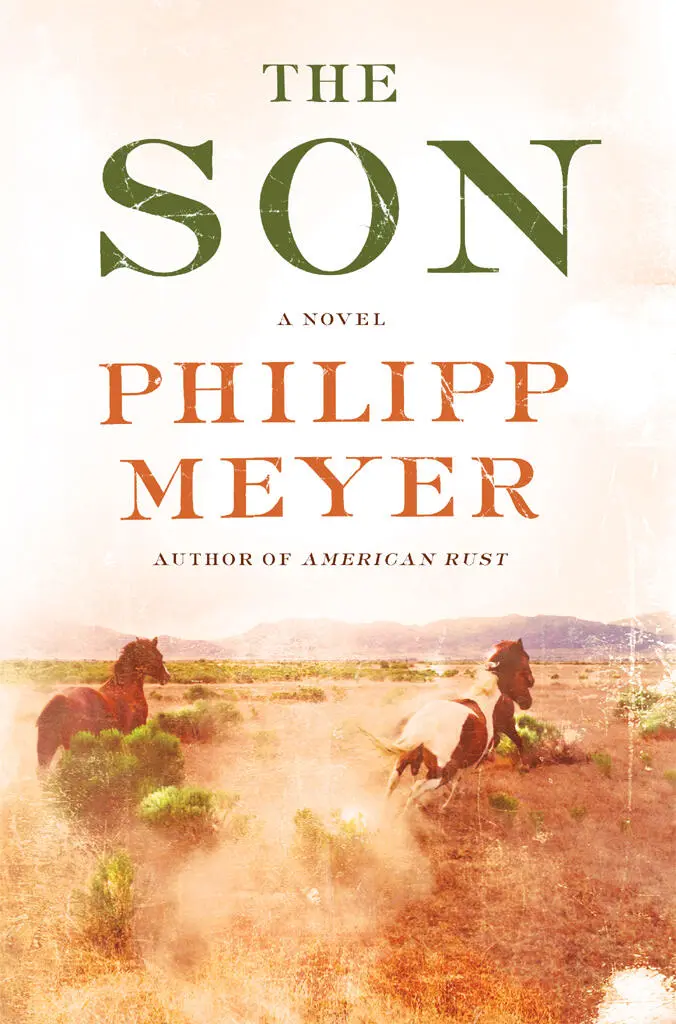
- Название:The Son
- Автор:
- Издательство:Ecco
- Жанр:
- Год:2013
- ISBN:нет данных
- Рейтинг книги:3 / 5. Голосов: 1
-
Избранное:Добавить в избранное
- Отзывы:
-
Ваша оценка:
The Son: краткое содержание, описание и аннотация
Предлагаем к чтению аннотацию, описание, краткое содержание или предисловие (зависит от того, что написал сам автор книги «The Son»). Если вы не нашли необходимую информацию о книге — напишите в комментариях, мы постараемся отыскать её.
Part epic of Texas, part classic coming-of-age story, part unflinching portrait of the bloody price of power, The Son is an utterly transporting novel that maps the legacy of violence in the American West through the lives of the McCulloughs, an ambitious family as resilient and dangerous as the land they claim.
Spring, 1849. The first male child born in the newly established Republic of Texas, Eli McCullough is thirteen years old when a marauding band of Comanche storm his homestead and brutally murder his mother and sister, taking him captive. Brave and clever, Eli quickly adapts to Comanche life, learning their ways and language, answering to a new name, carving a place as the chief's adopted son, and waging war against their enemies, including white men-complicating his sense of loyalty and understanding of who he is. But when disease, starvation, and overwhelming numbers of armed Americans decimate the tribe, Eli finds himself alone. Neither white nor Indian, civilized or fully wild, he must carve a place for himself in a world in which he does not fully belong-a journey of adventure, tragedy, hardship, grit, and luck that reverberates in the lives of his progeny.
Intertwined with Eli's story are those of his son, Peter, a man who bears the emotional cost of his father's drive for power, and JA, Eli's great-granddaughter, a woman who must fight hardened rivals to succeed in a man's world.
Phillipp Meyer deftly explores how Eli's ruthlessness and steely pragmatism transform subsequent generations of McCulloughs. Love, honor, children are sacrificed in the name of ambition, as the family becomes one of the richest powers in Texas, a ranching-and-oil dynasty of unsurpassed wealth and privilege. Yet, like all empires, the McCoulloughs must eventually face the consequences of their choices.
Harrowing, panoramic, and vividly drawn, The Son is a masterful achievement from a sublime young talent.
The Son — читать онлайн бесплатно полную книгу (весь текст) целиком
Ниже представлен текст книги, разбитый по страницам. Система сохранения места последней прочитанной страницы, позволяет с удобством читать онлайн бесплатно книгу «The Son», без необходимости каждый раз заново искать на чём Вы остановились. Поставьте закладку, и сможете в любой момент перейти на страницу, на которой закончили чтение.
Интервал:
Закладка:
“Some old fat squaw, I imagine.”
I shook my head. “You are only allowed to do it with the young ones. Once they get married they are off-limits.”
I could see this idea appealed to him but he did not believe me.
“The one who popped my cherry was twenty and the others were even younger.”
“Son of a bitch,” he said. “Maybe they will kidnap me.”
Then I felt low speaking that way about Prairie Flower. And Hates Work, Big Water Falling, and Always Visiting Someone. It occurred to me that they were the last people in the world who had actually loved me. I got up and went over to the window. I could feel myself getting dauncy.
I heard the sheriff go back to his desk and move some things around and then he came up next to me. He handed me a glass of whiskey.
“So what the hell happened?” he said. “Why’d you come back?”
“Everyone died,” I said.
THINKING ABOUT THE Indians had put me in a state and when they let me out I went back to my stepmother’s house, thinking I would make good with her, but no one was home. I felt low and I was tired of being by myself. Still no one came home. I got restless. I went to my stepbrothers’ room, where I found several nice steel fishhooks, which I pocketed, and a large collection of wrinkled pornographic postcards, which I left in the kitchen for my stepmother. Then I took all their gunpowder and percussion caps and headed back into the woods.
I SLEPT UNDER the brush arbor or under the open sky, set traps, caught raccoons and tanned their hides, killed deer and tanned them as well. I found a pool by an old beaver dam where the water was brown from oak leaves and I buried the hides in the mud under the water. After a few weeks the hair slipped and they were nicely tanned, just stiff.
Among the whites in town I was as popular as the tax collector. I knew they wouldn’t put up with much more horse stealing and stock-killing so I mostly stayed where it was natural. But eventually it got to where the deer and wolves did not cut through my lonesome, not to mention I was in a fierce rutting mood, so I went back to check on the judge’s wife.
Eventually she came out on the porch. One of the Negroes brought her tea. I was in dire need of stimulation and afterward I fell asleep. When I woke up she was not on the porch and the sun had sunk a good ways. The judge had a few shoats and piglets in a pen and looking at them I got very hungry, I had forgotten to eat for nearly a day. I arrowed one of the piglets but despite all the squealing no one came, I took my time and went into his smokehouse and got a big helping of salt and carried the piglet back to camp.
A few hours later I was lying there, my belly full of the crispy meat, watching the sun go down from my perch. I could not remember why the Comanches hated pork so much. It was likely the best thing I had ever tasted. The wolves howled and I howled back and they howled back at me.
THE NEXT MORNING the wife went on her daily walk to the swimming hole, but instead of following her I waited until her two Negroes went out on an errand, likely to hump, then slipped into the kitchen. I liberated a bottle of sweet wine and several cigars, smoked one of the cigars and nearly threw up. I was sure I would be sick. I lay there on a couch while my head spun. It was a nice house with wood paneling, thick rugs, paintings everywhere. The couch was firm like no one had ever sat on it.
When I opened my eyes someone was standing over me and I was running before I even woke up. I was nearly to the door when I stopped.
It was the judge’s wife.
“You don’t have to run,” she said. “You looked so peaceful that I didn’t want to wake you.”
I didn’t say anything.
“It is nice to see you again,” she said. “I mean, not behind bars. Though I’ve also seen you out in the yard.”
I didn’t want to evidence against myself, but I didn’t want to lie, either. I stayed quiet.
“So. How is the wild Indian?”
“I am fine,” I said.
“People say you’re very dangerous.”
“Only to hogs.”
“Are you responsible for our missing piglet?”
“Depends who’s asking.”
“We were just going to eat her anyway. Or was it a him? I can’t remember.” She shrugged. “You can sit down, you know. I’m not going to tell anyone you were here.”
“That is all right,” I said.
“Did you eat it? They say you just like to kill them.”
“That one I ate.”
“Well, I am glad.”
I didn’t say anything.
“You really should have a seat. I can see you were smoking one of Roy’s cigars. They’re awfully strong.”
At the mention of the cigars, I began to feel green at the gills again. I decided I would stay a few minutes. If the judge came home, I would kill him and go back to the Indians.
“What are you doing here?” I said.
“This is my house.”
“I mean in Bastrop.”
“The judge was the business partner of my first husband.”
“Did he pull stakes?”
“He caught the fever in Indianola. The heat here was quite a shock. As were the insects.”
“They are worse in Indianola,” I said. “Along with everything else.”
“I suppose you could slather yourself with mud.”
There was something about the way she looked at me and I went and sat on the couch. She sat down as well.
“Are you going to call for the sheriff?”
“I’m thinking about it. You’re not going to scalp me, are you?”
“I’m thinking about it.”
“How old are you?” she said.
“Nineteen.” Of course I was only sixteen but on account of being in the sun I never had carbuncles.
“Did they treat you badly?”
“The sheriff?”
She thought this was funny. “The Comanches, of course.”
“They adopted me.”
“But you were of a lower caste than a natural-born, no?”
“I was mostly the same. I was a member of their band.”
“That is very interesting.”
“My Comanche family died,” I said. “That’s why I came back.”
Her face went all motherly. She really was a sweet woman. But before we got too far down the path of righteousness I said, “I’m going to drink some of the judge’s port wine and then I’m going to steal one of his horses. Do you want some or not?”
“I could have a drink with you,” she said. She wrinkled her nose at me. “But would you object to a bath?”
“Are you gonna give it to me?”
She acted surprised but I could tell she wasn’t.
Chapter Thirty-five. Jeannie McCullough
They heard it before they saw it, but when it finally appeared over the trees, it was clumsy and ponderous and not much to look at and most wished they had not taken off work. The sheriff and his men backed everyone out of the way, and, when it was safe, the helicopter dropped through the air until it settled in the dirt next to Hollis Frazier’s spinach field.
A tall man with a big nose uncurled himself from the machine and, once the dusty crowd had formed around him, stood on a wooden box and began to speak. Someone else distributed peaches from the Hill Country. The man insisted that Coke Stevenson was giving away the state to big ranchers and northern oilmen, with nothing left over for the workingman. It occurred to her that she would have been nervous to speak in front of four hundred strangers, but it was plain he was not nervous, he was enjoying it, and he turned his megaphone on a group of people at the outskirts of the crowd and urged them to come in and hear him. Bullshit Johnson, they called him.
Watching him shake hands with all the shorter men around him, she knew Phineas was right. She had met Coke Stevenson, a nice man who did not particularly care what your opinion was. He had his own moral compass; a do-gooder, the sort of man you hoped your children would become. The man she saw in front of her was so happy in the crowd, so happy to be watched and paid attention to, there could not be room inside him for anything else. There wasn’t an oilman in the state who didn’t back him.
Читать дальшеИнтервал:
Закладка:
Похожие книги на «The Son»
Представляем Вашему вниманию похожие книги на «The Son» списком для выбора. Мы отобрали схожую по названию и смыслу литературу в надежде предоставить читателям больше вариантов отыскать новые, интересные, ещё непрочитанные произведения.





Обсуждение, отзывы о книге «The Son» и просто собственные мнения читателей. Оставьте ваши комментарии, напишите, что Вы думаете о произведении, его смысле или главных героях. Укажите что конкретно понравилось, а что нет, и почему Вы так считаете.