Philipp Meyer - The Son
Здесь есть возможность читать онлайн «Philipp Meyer - The Son» весь текст электронной книги совершенно бесплатно (целиком полную версию без сокращений). В некоторых случаях можно слушать аудио, скачать через торрент в формате fb2 и присутствует краткое содержание. Год выпуска: 2013, Издательство: Ecco, Жанр: Современная проза, на английском языке. Описание произведения, (предисловие) а так же отзывы посетителей доступны на портале библиотеки ЛибКат.
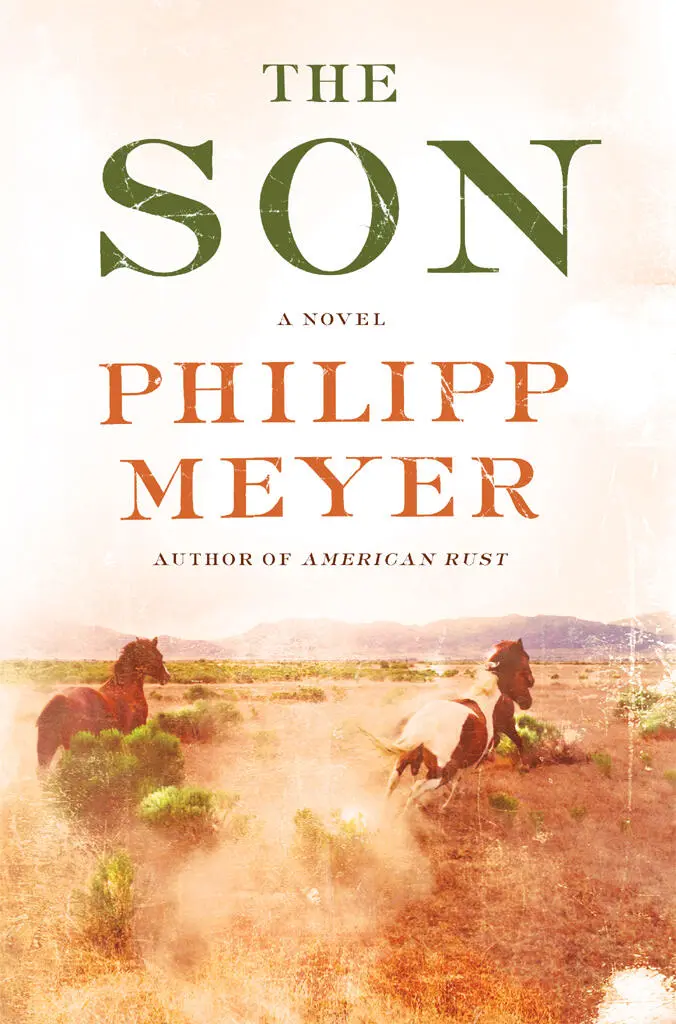
- Название:The Son
- Автор:
- Издательство:Ecco
- Жанр:
- Год:2013
- ISBN:нет данных
- Рейтинг книги:3 / 5. Голосов: 1
-
Избранное:Добавить в избранное
- Отзывы:
-
Ваша оценка:
The Son: краткое содержание, описание и аннотация
Предлагаем к чтению аннотацию, описание, краткое содержание или предисловие (зависит от того, что написал сам автор книги «The Son»). Если вы не нашли необходимую информацию о книге — напишите в комментариях, мы постараемся отыскать её.
Part epic of Texas, part classic coming-of-age story, part unflinching portrait of the bloody price of power, The Son is an utterly transporting novel that maps the legacy of violence in the American West through the lives of the McCulloughs, an ambitious family as resilient and dangerous as the land they claim.
Spring, 1849. The first male child born in the newly established Republic of Texas, Eli McCullough is thirteen years old when a marauding band of Comanche storm his homestead and brutally murder his mother and sister, taking him captive. Brave and clever, Eli quickly adapts to Comanche life, learning their ways and language, answering to a new name, carving a place as the chief's adopted son, and waging war against their enemies, including white men-complicating his sense of loyalty and understanding of who he is. But when disease, starvation, and overwhelming numbers of armed Americans decimate the tribe, Eli finds himself alone. Neither white nor Indian, civilized or fully wild, he must carve a place for himself in a world in which he does not fully belong-a journey of adventure, tragedy, hardship, grit, and luck that reverberates in the lives of his progeny.
Intertwined with Eli's story are those of his son, Peter, a man who bears the emotional cost of his father's drive for power, and JA, Eli's great-granddaughter, a woman who must fight hardened rivals to succeed in a man's world.
Phillipp Meyer deftly explores how Eli's ruthlessness and steely pragmatism transform subsequent generations of McCulloughs. Love, honor, children are sacrificed in the name of ambition, as the family becomes one of the richest powers in Texas, a ranching-and-oil dynasty of unsurpassed wealth and privilege. Yet, like all empires, the McCoulloughs must eventually face the consequences of their choices.
Harrowing, panoramic, and vividly drawn, The Son is a masterful achievement from a sublime young talent.
The Son — читать онлайн бесплатно полную книгу (весь текст) целиком
Ниже представлен текст книги, разбитый по страницам. Система сохранения места последней прочитанной страницы, позволяет с удобством читать онлайн бесплатно книгу «The Son», без необходимости каждый раз заново искать на чём Вы остановились. Поставьте закладку, и сможете в любой момент перейти на страницу, на которой закончили чтение.
Интервал:
Закладка:
But she was still walking. It was brush and farmland. Her feet, in her good shoes, sank into the dust; they would be ruined. It was stupid talking to people without Phineas around. It was stupid what she’d said about the pipeline. She should not be taking these meetings alone. But that made no sense, either. Phineas would not live forever, he was no different from her father.
Ed Freeman was in his onion field, tinkering with his irrigator. Did he still owe her father money? She waved and he looked as if something might be wrong — as if he might be required to help her. She continued along the bar ditch, sweat running down her back now.
Her father had allowed her to hate mathematics; he’d told her it didn’t matter if she were good at it or not. He had been wrong about that as well. It did matter. What had the man figured — five thousand times five thousand? No, it was a geometry problem. I haven’t the faintest, she thought.
She watched a car pass, roiling up the dust, a white man taking four Mexicans to work. License number 7916. Seventy-nine times sixteen. It seemed impossible. She did not see how the man had done it. And yet he had.
AS SOON AS she got home she had called Phineas and told him what happened, including what she’d said about the pipeline. He told her not to worry: she hadn’t said anything they weren’t already thinking. She felt relieved but Phineas was still talking. He was inviting her to Austin. He had someone for her to meet.
Chapter Twenty-seven. Diaries of Peter McCullough,APRIL 17, 1917
“Would you ever go into farming yourself, Colonel?”
“Sure,” he says. “Natural progression of the land.”
There are perhaps fifty of them, all in their Sunday best, eating tenderloin and drinking claret in the great room, listening to the Colonel expound on the wonders of our southern climate. I consider leaving my shady spot on the gallery to tell them that his policy was to shoot at any farmers who tried to toll us on cattle drives. And has said his whole life that grubbing in the dirt is the lowest form of human existence. He blames this on his time with the Indians, though it is common among all horse people, from landed cattleman to poorest vaquero.
“… the winter garden of Texas,” he is saying, “two hundred eighty-eight growing days… you’ll never lift a hand to shovel snow again.” Scattered applause. “Further,” he says, “you will find the proportion of advanced females greatly reduced compared to what you are used to in Illinois.” Laughter and more applause. I close my ears; I decide to go for a walk.
Naturally they will only show the farms that are doing well; none whose water was too salty for irrigation, none of the farms on the old Cross S land, subdivided less than ten years ago, most of which are reverting to the lowest class of scrub rangeland. The soil as dead as anything you might find in Chihuahua.
APRIL 18, 1917
Ran into Midkiff’s son Raymond at the store. He was driving a few critters along the road after the hailstorm this afternoon when he saw the caravan of Illinois farmers pulled over under some trees.
They were standing in the road examining hailstones the size of oranges, remarking how they might have been killed. One of them called to Raymond to ask if this weather was unusual.
“Sure is,” he told them. “But you should have been here last year, when it rained!”
When the Colonel returned he was furious and told me we needed to fire the limp-dicked droop-eyed son of a bitch who was driving brindle calves on the lower road.
Explained we could not fire Raymond Midkiff. He said that was fine — we would shoot him instead. Reminded him the Midkiffs are our neighbors.
Naturally, all the farmers thought Midkiff was joking. The irrigated fields are quite lush. They have no mental ruler to understand the country here; a few of them were overheard repeating the old saw “if you plow, the rains will follow.” I wonder what century they are living in.
ALL OF IT, for some reason, makes me feel almost unbearably lonely… but I have always been a keen student of that emotion.
APRIL 19, 1917
The entire Pinkard Ranch — over one hundred sections — has been sold and divided. The family is moving to Dallas. I went to visit with Eldridge Pinkard. He could barely look at me. We are nearly the same age — his father settled this country not long after the Colonel.
“The bank would have taken it one of these days, Pete.” He shrugged. “Even with beef where it is, this drought… I had to pull the money out before there was none left.”
“Heard you bought a little in the cross timbers.”
He chuckled bitterly: “Two whole sections.”
“Probably run a few head.”
He shrugged and scuffed the dirt, looked out over what had been his pastures. “Before you get to thinking I am too badly looed…”
“I don’t,” I lied.
“You do, but I appreciate it. I wasn’t going to say this to any of you who’s staying, but you and me have known each other since there was Indians.”
“Sure,” I said.
“I was mighty down in the mouth about this until I got to talking to Eustice Caswell. On the draft board?” He shook his head. “Pete, a year from now all the good men’ll be overseas. I can’t even take a piss without some bond salesman drumming me for ten dollars. And… truthfully I am jealous of some of those boys who are shipping out, because by the time they get to France, they will have seen more country than I’ve seen in my whole life. And once I realized that, I got to seeing this as the last clear swing I’d ever get. And that I was a fool if I didn’t take it.”
“I guess.”
“It ain’t like our daddies grew up here, Pete. It ain’t like people have lived here long. This is just the place they happened to stop.”
“The fences got all of us,” I said.
He looked as if he might cry, but he didn’t, and then I saw that he was not happy, but he was not sad, either. The idea of moving away from here appealed to him. “You know if I was staying, I’d build roads through the whole place, get to where I could run it with a quarter of the hands, drive ten minutes instead of riding four hours, eat home every night, do the feeding out of trucks. You could get it pretty well oiled, if you put your mind to it. But even so…” He lifted his boot and ground it down on a mesquite seedling. “Let’s face it, Pete. This land is niggered out. I wish they’d taken pictures when we were kids, because I want to forget it ever looked like this.”
WHEN I GOT home, my father revealed he has known about it for months — he picked up half the minerals underneath the Pinkard land. I asked how we were going to pay for it.
“I decided to sell the pastures across the Nueces.”
“Where are we going to keep the bulls?”
“After the promoter’s cut we’re clearing $31.50 an acre. We can fence off whatever we want. This pays for the minerals under the Pinkard, plus half the Garcia acquisition.”
“You can see those pastures from every high point on our property,” I said.
“So what? We’ll look at the pretty farmer girls.”
“What if I refuse to sign the deed?”
“You can refuse whatever you want,” he said.
Except I cannot. I signed as he knew I would. I console myself with the fact that the Nueces pastures were not exactly convenient, anyway. The Colonel consoled me by pointing out we kept mineral rights. “Anymore, the surface ain’t worth two shits,” he said. “Luckily them ignorant Yankees were too busy carrying on about their college to figure that out.”
Fine except the Nueces pastures were the only sensible place to keep the bulls. It will be much harder to control breeding now, more work for us, more work for the vaqueros, and much more expensive.
Читать дальшеИнтервал:
Закладка:
Похожие книги на «The Son»
Представляем Вашему вниманию похожие книги на «The Son» списком для выбора. Мы отобрали схожую по названию и смыслу литературу в надежде предоставить читателям больше вариантов отыскать новые, интересные, ещё непрочитанные произведения.




Обсуждение, отзывы о книге «The Son» и просто собственные мнения читателей. Оставьте ваши комментарии, напишите, что Вы думаете о произведении, его смысле или главных героях. Укажите что конкретно понравилось, а что нет, и почему Вы так считаете.