Philipp Meyer - The Son
Здесь есть возможность читать онлайн «Philipp Meyer - The Son» весь текст электронной книги совершенно бесплатно (целиком полную версию без сокращений). В некоторых случаях можно слушать аудио, скачать через торрент в формате fb2 и присутствует краткое содержание. Год выпуска: 2013, Издательство: Ecco, Жанр: Современная проза, на английском языке. Описание произведения, (предисловие) а так же отзывы посетителей доступны на портале библиотеки ЛибКат.
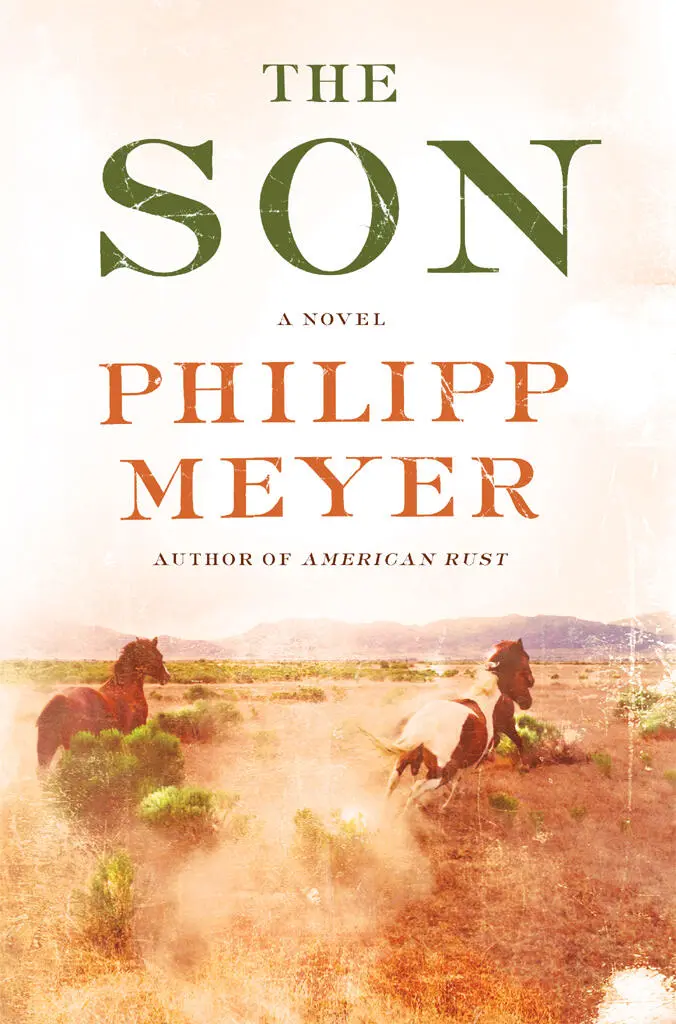
- Название:The Son
- Автор:
- Издательство:Ecco
- Жанр:
- Год:2013
- ISBN:нет данных
- Рейтинг книги:3 / 5. Голосов: 1
-
Избранное:Добавить в избранное
- Отзывы:
-
Ваша оценка:
The Son: краткое содержание, описание и аннотация
Предлагаем к чтению аннотацию, описание, краткое содержание или предисловие (зависит от того, что написал сам автор книги «The Son»). Если вы не нашли необходимую информацию о книге — напишите в комментариях, мы постараемся отыскать её.
Part epic of Texas, part classic coming-of-age story, part unflinching portrait of the bloody price of power, The Son is an utterly transporting novel that maps the legacy of violence in the American West through the lives of the McCulloughs, an ambitious family as resilient and dangerous as the land they claim.
Spring, 1849. The first male child born in the newly established Republic of Texas, Eli McCullough is thirteen years old when a marauding band of Comanche storm his homestead and brutally murder his mother and sister, taking him captive. Brave and clever, Eli quickly adapts to Comanche life, learning their ways and language, answering to a new name, carving a place as the chief's adopted son, and waging war against their enemies, including white men-complicating his sense of loyalty and understanding of who he is. But when disease, starvation, and overwhelming numbers of armed Americans decimate the tribe, Eli finds himself alone. Neither white nor Indian, civilized or fully wild, he must carve a place for himself in a world in which he does not fully belong-a journey of adventure, tragedy, hardship, grit, and luck that reverberates in the lives of his progeny.
Intertwined with Eli's story are those of his son, Peter, a man who bears the emotional cost of his father's drive for power, and JA, Eli's great-granddaughter, a woman who must fight hardened rivals to succeed in a man's world.
Phillipp Meyer deftly explores how Eli's ruthlessness and steely pragmatism transform subsequent generations of McCulloughs. Love, honor, children are sacrificed in the name of ambition, as the family becomes one of the richest powers in Texas, a ranching-and-oil dynasty of unsurpassed wealth and privilege. Yet, like all empires, the McCoulloughs must eventually face the consequences of their choices.
Harrowing, panoramic, and vividly drawn, The Son is a masterful achievement from a sublime young talent.
The Son — читать онлайн бесплатно полную книгу (весь текст) целиком
Ниже представлен текст книги, разбитый по страницам. Система сохранения места последней прочитанной страницы, позволяет с удобством читать онлайн бесплатно книгу «The Son», без необходимости каждый раз заново искать на чём Вы остановились. Поставьте закладку, и сможете в любой момент перейти на страницу, на которой закончили чтение.
Интервал:
Закладка:
“Now we ride.”
“Does it hurt?”
“Does it hurt. Oh, Tiehteti.”
There was shooting along the river — they had found someone from the band. The noise slowed and then stopped. I wondered who it was.
“Keep going,” said Toshaway.
BY THE TIME the sun came up, the horse was nearly dead. Toshaway was pale and sweaty and we were looking north into a dry basin that went on for dozens of miles.
“How is your water?”
“The pihpóo was shot at the river.”
“Very bad,” he said.
The horse was lying on its side. There was no hope for it.
He cut a vein on the animal’s neck and drank for a minute. Then he made me do the same. The horse didn’t protest. Toshaway began to drink again. My mouth was full of hair and my stomach was full of blood and I wanted to air my paunch. He made me drink some more. The horse’s breathing got quicker.
“Now we walk,” he said. “And hope the buzzards don’t lead our friends to the tusanabo .”
I inspected my rifle and saw the lock was wrecked so I threw it into the brush.
“Those were fucking Indians leading them,” he said. “Lipans. And there were white men as well.” He shook his head. “The Apaches sucking the cocks of the Mexicans who are sucking the cocks of the whites. The world is against us.”
BY AFTERNOON WE had dropped into the basin. From the top we could see a tree line farther north — a stream — but to reach it we would have to cross miles of open ground, no cover but cane cholla and giant dagger. Anyone looking would see us right away.
“Unfortunately I do not think I will make it if we skirt the edge.”
“We’ll cross the flat.”
“No,” he said. “Give me a few of your arrows. You will take the long way and stay hidden.”
“We’ll cross the flat,” I repeated.
“Tiehteti,” he said. “It is good to give your life, but not for a dead man.”
“We’re crossing the flat,” I said.
By late afternoon we were in the shade along the creek. It was not much more than a muddy trickle and as gyppy as I’d ever tasted, but we both lay drinking for several minutes. I left Toshaway and went off with my bow to see if I could find a deer or something we might eat and also we needed a stomach for a water carrier.
I had been sitting in the willows, hoping to see some game, when I noticed a man on a bay horse picking his way up the stream. He was leading a small paint that was saddled and covered in handprints, similar to the horse Ten Buffalo had been riding.
The man was white and wearing new buckskin and there were scalps on his belt. I began to shift my weight. Then he stopped. He was staring at my footprints in the mud. I had been drawing my bow so slowly he would not have seen it even if he’d looked directly at me, and the way the light came through the leaves there was a pattern all over him and I found a bright spot and popped my fingers. He saw the arrow and then his horse turned and pitched through the bushes. There was more crashing. I moved about another ten yards and nocked another arrow and waited. I thought I could see his horse just past the trees. Finally I circled around.
He was lying in the grass in the shade. He had pulled out the arrow and it was still in his hand and something made me think of my father, but there was only a slim resemblance, dirty black hair and bloodshot eyes and pale skin under his hat. He looked right at me but it was an illusion; I counted the scalps tied to his saddle and then rolled him onto his belly to take his.
In addition to the two horses, he had a pair of brand-new Colt Navys, a.69 rifle, a nearly new gun belt, a powder flask, a knife, a heavy bullet pouch, three water gourds, and a wallet full of food. I notched the arrow with an X, then stripped off all his clothes and bundled them in case Toshaway wanted them.
The paint was grazing at the edge of the stream. I nickered and it came immediately. I was no longer sure it had belonged to Ten Buffalo but it was wearing a Comanche saddle and there were red and yellow handprints all over it.
I was looking out over the mountains to the north where I could see trees and good grass; it would be nothing to ride away, there would be no more ambushes, I could reach Bexar in eight days. But the feeling soon passed and I went to find Toshaway.
WE SAT EATING the man’s dried beef and drinking his clean water and eating the dried plums and apples he’d been carrying as well. I was starting to feel good about things when Toshaway decided it was time to cut the bruised parts out of his leg. He had split and cut more pear pads and gathered up creosote leaves for a poultice and mashed them with water and soaked two clean pieces of the man’s shirt. Then he sat down near the stream.
“Don’t be a fucking butcher,” he said, “but don’t take your time, either.”
He put a stick in his mouth and I took up my scalping knife and cut around the bullet hole. His eyes rolled and the stick fell out of his mouth. I finished cutting, then rolled him over and cut out the bruise from the other side. Then I pushed the pieces of the man’s shirt through the wound and drew them out. I was packing it when he woke up. Piss continued to run out from between his legs, but he did not seem to notice. The wound was bleeding freely and he told me that was a good sign. When I had packed it full and covered it with the split pear pads, we tied a tight bandage with another piece of the scalp hunter’s shirt.
As we were sitting there he told me he knew on the night I was captured that I had been the one to shoot Skulking Bear, but he had not told anyone else in the tribe.
“It did not make sense to me, either,” he said. “I knew you had done it and yet I did not tell anyone.”
I was quiet.
“I knew what you had in you,” he said. “Now everyone else will see it as well.”
I wasn’t really listening. I was thinking about the night I was captured, about my mother and brother and sister. He saw something in my face and told me that his grandfather had been a captive Mexican — the tribe was all from captives — it was the way of the Comanche; it had kept our blood strong all these years.
WE CONTINUED TO ride and change his poultice. A few days later we found a honey tree and filled our wallets from it, eating some but saving the rest to pack his wound, resting while the sun was up and traveling only at night.
By the time we reached the plains, two weeks later, there was still a gash in his leg, but the redness and swelling were gone. In another two weeks we were back in camp.
Chapter Twenty-three. Jeannie, Spring 1945
It was a bad storm, a gully washer, the rain coming so fast the ground had no time to absorb it, the clouds so heavy they blotted out the light. By noon it was completely dark. The lightning was echoing through the house and she was sure it was a gunnery raid, a mission from the Kaufman air base gone off target. She watched fire leap through a patch of cedar close to the house, entire trees erupting ahead of the flames; a great sheave of rain put it out.
Her father had been out in the far pastures. He did not return for supper but a few hours later his horse showed up at the gate, alone and still saddled. It was even darker now; she could barely see her own feet. There was no chance of going after him, but it was not cold, and he was resourceful, and she expected he would show up sometime in the morning, soaked and footsore but otherwise intact.
Still, she slept in fits, waking every hour or so until at some point she looked out and saw the moon. The vaqueros were all waiting downstairs; her horse was already saddled. At first light they followed the dim tracks of her father’s grullo, nearly obliterated by the rain but, when she put herself in the right mind, clear enough to follow.
Читать дальшеИнтервал:
Закладка:
Похожие книги на «The Son»
Представляем Вашему вниманию похожие книги на «The Son» списком для выбора. Мы отобрали схожую по названию и смыслу литературу в надежде предоставить читателям больше вариантов отыскать новые, интересные, ещё непрочитанные произведения.



Обсуждение, отзывы о книге «The Son» и просто собственные мнения читателей. Оставьте ваши комментарии, напишите, что Вы думаете о произведении, его смысле или главных героях. Укажите что конкретно понравилось, а что нет, и почему Вы так считаете.