Eva Ibbotson - A Song For Summer
Здесь есть возможность читать онлайн «Eva Ibbotson - A Song For Summer» весь текст электронной книги совершенно бесплатно (целиком полную версию без сокращений). В некоторых случаях можно слушать аудио, скачать через торрент в формате fb2 и присутствует краткое содержание. Город: New York, Год выпуска: 1997, Издательство: St. Martin’s Press, Жанр: Современная проза, на английском языке. Описание произведения, (предисловие) а так же отзывы посетителей доступны на портале библиотеки ЛибКат.
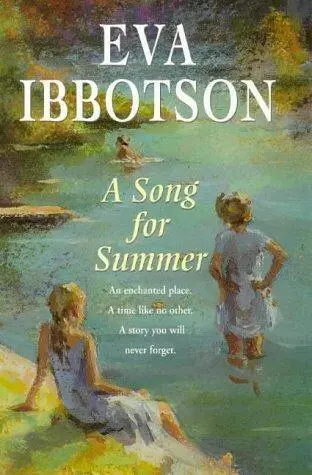
- Название:A Song For Summer
- Автор:
- Издательство:St. Martin’s Press
- Жанр:
- Год:1997
- Город:New York
- ISBN:нет данных
- Рейтинг книги:3 / 5. Голосов: 1
-
Избранное:Добавить в избранное
- Отзывы:
-
Ваша оценка:
A Song For Summer: краткое содержание, описание и аннотация
Предлагаем к чтению аннотацию, описание, краткое содержание или предисловие (зависит от того, что написал сам автор книги «A Song For Summer»). Если вы не нашли необходимую информацию о книге — напишите в комментариях, мы постараемся отыскать её.
What she finds when she reaches the Hallendorf School in Vienna is a world that is magically unconventional-and completely out of control. The children are delightful, but wild; the teachers are beleaguered and at their wits’ end; and the buildings are a shambles. In short, the whole place is in desperate need of Ellen’s attention.
Ellen seems to have been born to nurture all of Hallendorf; soon everyone from Leon the lonely young musical prodigy to harassed headmaster Mr. Bennet to Marek the mysterious groundsman depends on Ellen for-well, everything. And in providing all of them with whatever they need, especially Marek, for whom she develops a special attachment, Ellen is happier than she’s ever been.
But what happens when the menace of Hitler’s reign reaches the idyllic world of the Hallendorf School gives this romantic, intelligent tale a combination of charm and power that only the very best storytellers can achieve.
Eva Ibbotson was born into a literary family in Vienna and came to England as a small child before World War II. She has written numerous award-winning novels for both children and adults, including A Countess Below Stairs and The Morning Gift. She currently lives in Newcastle-Upon-Tyne, England.
PRAISE FOR EVA IBBOTSON
“Eva Ibbotson is such a good writer that her characters break the bonds of the romantic novel.”
— The Washington Post Book World
A Song For Summer — читать онлайн бесплатно полную книгу (весь текст) целиком
Ниже представлен текст книги, разбитый по страницам. Система сохранения места последней прочитанной страницы, позволяет с удобством читать онлайн бесплатно книгу «A Song For Summer», без необходимости каждый раз заново искать на чём Вы остановились. Поставьте закладку, и сможете в любой момент перейти на страницу, на которой закончили чтение.
Интервал:
Закладка:
But meanwhile there was Ellen.
He put out a hand and she took it and held it. She could see his thoughts working across his face as clearly as if he had uttered them.
“Ellen, if I get out…”
“When.”
He managed a smile. “When. Why don’t we start a restaurant? I think I’d make quite a good chef.”
“Maybe. But you’re a violinist.”
“I was. I’m not any more-I tried to make Marek see that it’s over. In the camp, after they found out I was a violinist…” but he could never talk about what they had done to his hands. “When I cut my finger the other day and it didn’t matter, it was such a relief! I would work really hard. Think about it, Ellen. If I had something to look forward to… something we could do together, it might be worthwhile trying to stay alive. I’ve loved you from the moment I saw you kneeling there beside that extraordinary suitcase.”
“Oh Isaac, I love you too but—”’
“Yes, I know. Not like that. But that might come. I think we’d make a splendid team. Perhaps Marek would put some money into it.”
“Marek is convinced that you’re one of the best violinists in the world and that you’ll play again.”
He shook his head. Pretending to close his eyes, he could still see her, her head bent over her book. He had hoped she would lie down on the bunk beside him; he wouldn’t have laid a finger on her but it would have been something to remember while he sat huddled in the evil-smelling lean-tos in which the rivermen slept as they poled down towards the sea.
“It’s an hour still till the border, Isaac. Get some rest.”
She looked up and saw Marek’s silhouette against the window. He was still keeping watch and it was all she could do not to follow him into the corridor to draw comfort simply from his quiet presence, his size.
But they got through the first checkpoint without difficulty. The halt between Austria and Czechoslovakia was only a huddle of shacks and a road barrier. The two men who came along the corridor were friendly enough: Czechs with broad cheekbones; peasants without an axe to grind. Ellen gave them her passport and Chomsky’s, putting her finger to her lips to show that her patient was asleep.
They scarcely looked at one of the passports, held the other long enough to make Ellen’s heart thump almost unbearably in her chest.
“You’re British,” said one of the soldiers, in heavily accented German, and Ellen saw that it was her passport he was holding.
“Yes.”
“Your government should help us,” he said. “They should support us against Hitler,” and handed it back.
The first hurdle was over then.
She slipped out into the corridor and Marek, in his role as a well-to-do passenger starting a flirtation with a pretty nurse, turned to make way for her. They were travelling through wooded countryside towards Olomouc and Marek told her about the old woman who had sung the wrong songs to Steiner.
“Only they weren’t the wrong songs, we were being absurd. They were the songs of her youth.”
People started going past them towards the dining car, among them a heavily painted woman in a fur cape who threw Marek a sultry glance from under clogged eyelashes.
“I’m sorry you can’t come and try the quail’s eggs in aspic.”
“I don’t want to leave Isaac.” “No.” He had seen how tenderly she leant over Isaac, held his hand. “I’ll bring him a bottle of champagne. He can drink it in his bed.”
“Like Chekhov,” she said. “I was glad he died drinking champagne.”
“Yes. A good man.” He pointed out of the window at a stream just visible in the gathering dusk. “Do you see that river?”’
“Yes.”
“My grandfather used to fish in there; it flows past our house about a hundred miles to the west.”
“The Russian anarchist? The one who wanted to blow up the general but your grandmother wouldn’t let him?”’
“That’s the one. He loved fishing and he loved Chekhov. He was always quoting what Chekhov said about fishing.”
“God won’t subtract from man’s appointed span the time spent fishing,” she said. “Is that the one?”’
Marek nodded. “One day about two years before I was born he was sitting by the bank with his rod and my mother came and told them what she’d just heard in town. That Chekhov was dead. My grandfather was absolutely shattered. “To think that I should outlive Chekhov,” he kept saying-and he didn’t go fishing once for the rest of the summer.”
“He was such a gentleman-Chekhov, I mean,” said Ellen. “I always think of him coughing into little twists of sugar paper down in Yalta and writing to his wife in Moscow telling her not to worry; telling her to stay where she was and to do what she wanted. So he was an odd man for an anarchist to love so much.”
“Perhaps. But he was not a very good anarchist, if you remember. And Chekhov had been to the penal colony in Sakhalin and written about the fate of the prisoners there. My grandfather was very influenced by that.”
She was silent, thinking of the strange mix of ancestors that had gone to make the man beside her: Russian and English, German and Czech. No wonder he was at home in borderlands.
“Is this the sort of country Pettelsdorf is in?”’
“Yes. The woods are denser perhaps.”
She thought of it, this tantalising demesne to which only the wounded were admitted. “You’ll miss it when you go to America.” He was planning to sail as soon as Isaac was on his way; this was almost the last time she would see him.
Marek shrugged. “It’s best not to get too attached to places in the kind of world we live in now.”
“Or to people, perhaps.”
She was silent, remembering her mother’s latest letter. They were digging trenches in Hyde Park, she had said, and asked her daughter to come home at once if there was any sort of crisis.
“Or to people,” he agreed.
“Only I don’t know how you would write music without attachment,” she went on. “I suppose it would come out like Buddhist music; sort of prayer wheels tinkling in the wind and those sad horns. Not that I know anything about it,” she added, suddenly embarrassed.
“On the contrary, you clearly know a lot about it-and about most other things,” he said, and wondered why he wasn’t simply kissing her instead of discussing Chekhov and the Nature of Attachment. “Even though you do look like a rather delectable ham with that ruffle on your head.”
“It’s not a ruffle; it’s a proper nurse’s cap,” she said crossly. “I thought if I got one that wasn’t stodgy it would have a resale value. After all, I bought it with your money and I want to pay you back.”
More passengers came past, bound for the last sitting of dinner. “Are you certain you won’t come and join me? We’d be back long before we got to the border.”
It was hard to refuse; harder than she could have imagined, but she remembered the fear in Isaac’s eyes and shook her head. “Tell me what you ate, won’t you? In detail?”’
“I promise.”
But still he didn’t go. Was he waiting for someone?
“Isaac is convinced he won’t ever play the violin again because of something they did to his hands in the camp,” she said. “But I watched him when he was helping me in the kitchen. I could swear his hands are all right now; he made piped eclairs and you can’t do those without good coordination. I wish you’d make him see. He wants us to start a restaurant.”
He frowned. “Us? You mean you and him?”’ Isaac must be seriously gone in love then, or mad. “Do you want to do that?”’ he asked curtly.
She shook her head. She was about to make her way back to her compartment when a woman in a tight red satin skirt, a frilly gold lamé blouse and an outsize feather boa came along the corridor-a blonde of unbelievable vulgarity who smiled unashamedly at Marek.
Читать дальшеИнтервал:
Закладка:
Похожие книги на «A Song For Summer»
Представляем Вашему вниманию похожие книги на «A Song For Summer» списком для выбора. Мы отобрали схожую по названию и смыслу литературу в надежде предоставить читателям больше вариантов отыскать новые, интересные, ещё непрочитанные произведения.







Обсуждение, отзывы о книге «A Song For Summer» и просто собственные мнения читателей. Оставьте ваши комментарии, напишите, что Вы думаете о произведении, его смысле или главных героях. Укажите что конкретно понравилось, а что нет, и почему Вы так считаете.