Eva Ibbotson - A Song For Summer
Здесь есть возможность читать онлайн «Eva Ibbotson - A Song For Summer» весь текст электронной книги совершенно бесплатно (целиком полную версию без сокращений). В некоторых случаях можно слушать аудио, скачать через торрент в формате fb2 и присутствует краткое содержание. Город: New York, Год выпуска: 1997, Издательство: St. Martin’s Press, Жанр: Современная проза, на английском языке. Описание произведения, (предисловие) а так же отзывы посетителей доступны на портале библиотеки ЛибКат.
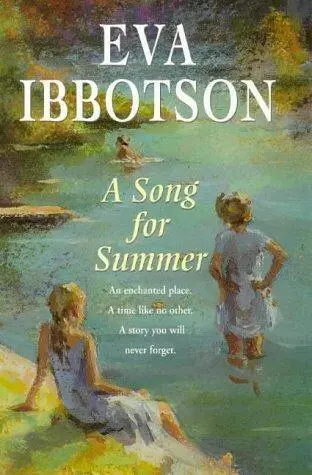
- Название:A Song For Summer
- Автор:
- Издательство:St. Martin’s Press
- Жанр:
- Год:1997
- Город:New York
- ISBN:нет данных
- Рейтинг книги:3 / 5. Голосов: 1
-
Избранное:Добавить в избранное
- Отзывы:
-
Ваша оценка:
A Song For Summer: краткое содержание, описание и аннотация
Предлагаем к чтению аннотацию, описание, краткое содержание или предисловие (зависит от того, что написал сам автор книги «A Song For Summer»). Если вы не нашли необходимую информацию о книге — напишите в комментариях, мы постараемся отыскать её.
What she finds when she reaches the Hallendorf School in Vienna is a world that is magically unconventional-and completely out of control. The children are delightful, but wild; the teachers are beleaguered and at their wits’ end; and the buildings are a shambles. In short, the whole place is in desperate need of Ellen’s attention.
Ellen seems to have been born to nurture all of Hallendorf; soon everyone from Leon the lonely young musical prodigy to harassed headmaster Mr. Bennet to Marek the mysterious groundsman depends on Ellen for-well, everything. And in providing all of them with whatever they need, especially Marek, for whom she develops a special attachment, Ellen is happier than she’s ever been.
But what happens when the menace of Hitler’s reign reaches the idyllic world of the Hallendorf School gives this romantic, intelligent tale a combination of charm and power that only the very best storytellers can achieve.
Eva Ibbotson was born into a literary family in Vienna and came to England as a small child before World War II. She has written numerous award-winning novels for both children and adults, including A Countess Below Stairs and The Morning Gift. She currently lives in Newcastle-Upon-Tyne, England.
PRAISE FOR EVA IBBOTSON
“Eva Ibbotson is such a good writer that her characters break the bonds of the romantic novel.”
— The Washington Post Book World
A Song For Summer — читать онлайн бесплатно полную книгу (весь текст) целиком
Ниже представлен текст книги, разбитый по страницам. Система сохранения места последней прочитанной страницы, позволяет с удобством читать онлайн бесплатно книгу «A Song For Summer», без необходимости каждый раз заново искать на чём Вы остановились. Поставьте закладку, и сможете в любой момент перейти на страницу, на которой закончили чтение.
Интервал:
Закладка:
“I don’t believe it.”
“Well, you can ask Marek.”
And if I hadn’t been going on your stupid trip I might have missed him, thought Ellen, and smiled at FitzAllan with ineffable joy. He would have dropped Steiner and gone away again and I wouldn’t have seen him and he wouldn’t have hugged me and thanked me for saving his friend and Isaac wouldn’t be hopping up and down now in Chomsky’s room. “I must go and serve supper,” she said, “though I doubt if anyone will eat very much. It was a sort of party we had after Marek told us we couldn’t go, oh it was lovely-and so interesting! I think if I was Professor Freud I wouldn’t waste so much time finding out what people had seen their parents do and about incest and all that-I’d take them to Herr Fischer’s shop and see what they chose. You wouldn’t believe it but Frank didn’t pick an animal at all-he chose a conker. Just an ordinary brown marzipan chestnut-there was a tree in his mother’s garden, he said, when he was small! And Sophie ate her crocodile then and there in two big bites; I was really encouraged-I think she may be getting just a little bit tough inside.”
At the door she paused and smiled once more at the patently uninterested invalid. “If you want to know what animal I bought,” she said dreamily, “I didn’t buy anything. I already have one, you see. I have a ladybird!”
The shutters were closed tight over the windows of Steiner’s little house. The boat in which Ellen and Isaac had rowed across was hidden in the Professor’s boathouse. The night was dark and moonless; hardly a ripple stirred the water.
Ellen had intended to let Isaac go alone; the reunion between him and Marek was something she thought should be conducted in privacy, but Isaac was not interested in privacy. He wanted her to come to Steiner’s house; he wanted her to come everywhere with him always. So Ellen had busied herself checking the dressing on the Professor’s wound and making coffee in the little kitchen while Isaac and Marek exchanged their memories of that frightful night. Now, over a glass of cognac, the map spread out on the table, they were discussing the next stage: Isaac’s escape from Central Europe.
“The river line is still intact,” said Marek. “Uri goes down once a week with the logs; he’ll take you. But how to get you into Poland? We can’t use the van any more, Franz is dead and they’ve doubled the guards. We’ll have to go properly armed this time and—”’
“Well I think that’s completely silly,” said Ellen.
“Oh you do?”’ said Marek. “You’ve a better idea, I suppose?”’
“Yes. It’s what I was going to do if you’d turned out to be dead,” she said.
“Well I’m not dead, so take that wi/l note out of your voice.” And then reluctantly: “All right then; how were you going to get Isaac into Poland?”’
“In a train. In a first-class sleeper. A wagon-lit, preferably with Lalique panels and Art Nouveau lamps, because I’m interested in Secessionist architecture,” she said primly. “He wouldn’t be able to go to the dining car, because being a serious mental case he would have to stay in bed, but I would, because nurses are allowed to eat-and they do quail’s eggs in aspic on the Warsaw Express, I’ve heard, and I’ve never tried them.”
They all stared at her. “What are you talking about?”’
“Chomsky,” said Ellen. “That’s what I’m talking about. They were thinking of taking him to a spa to recuperate. There’s one there in Poland.” She pointed to a place near a bend on the Vistula river. “They offered me the chance to accompany him as a sort of nurse and it so happens that I have his passport, so why shouldn’t Isaac go instead? Could you get the photo changed?”’
“Not in a hurry. The man who did the forgeries is the one they caught.”
“Well, it might not matter-Isaac’s the same age as Chomsky, and it would be night time and he’d have his head bandaged.”
“It’s still a risk,” said Marek.
“And not one that you will take. Get his passport and give it to me and—”’
“No,” said Ellen. “I won’t. You can come along and start shooting people or hanging them out of windows if things go wrong but I’m going to be Isaac’s nurse.”
“I would like her to be my nurse,” said Isaac-and Marek turned on him angrily.
“Be quiet, Isaac. This isn’t a joking matter. I’m sorry, Ellen, but I absolutely will not allow you to become involved any further. I shall always be in your debt but—”’
“Allow!” said Ellen, putting down her glass. “Allow? How dare you speak to me like that? I nearly turned Isaac over to the police because you didn’t trust me enough to tell me what you’re doing.”
“Ellen, this is no job for—”’ “Don’t!” She turned on him furiously. “Just don’t dare to say this is no job for a woman. My mother and my aunts didn’t get kicked by police horses and thrown to the ground for you to go round treating me as an imbecile. Furthermore if war comes no one will bother to distinguish between men and women. Ask the women of Guernica whether anyone cared what sex they were when they bombed the market place. Getting Isaac out is part of fighting Hitler and I won’t be left out of it.”
She broke off and they turned to look at Steiner. The old man was leaning back in his chair and laughing at some personal and highly amusing joke.
“Wonderful!” he said. “Milenka would be delighted. You should really take her to Pettovice, Marek. She and Ellen are sisters under the skin.”
Marek frowned, remembering his first sight of Ellen at the well and how he had thought that one day he might do just that.
“Don’t you see how unbearable it is for me to put you into danger?”’ he said in a low voice.
But she gave no quarter. “Don’t you see how unbearable it is for me not to be allowed to help?”’ she answered. “Isaac and I are friends.”
Friends? thought Marek, caught by the passion in her voice. Or something more? He had seen how Isaac followed her with his eyes.
He picked up his glass, drained it, and smiled at her. Then: “Since you seem to be an expert on Chomsky’s passport, did you happen to see what he put under Distinguishing Characteristics?”’
She beamed back at him. “My Hungarian’s not very good but I did look and he hasn’t mentioned it. Which is just as well. Not that Isaac will be travelling in his swimming things, but all the same…”
Isaac turned over in his bunk and gazed, from under the huge bandage which covered his head, at Ellen. The soft light of the luxurious sleeping compartment shone on her fluted cap, her snowy apron. She looked like a nurse specially lowered from heaven for his benefit and he did not know how he could bear to leave her.
“You’re being angelic, again,” he said. “Hush. You’re supposed to be asleep.”
Everything had gone smoothly. Marek had hired an ambulance and booked the sleeper. He himself had driven them to the station wearing a Red Cross armband, and they had settled Isaac into his quarantined compartment. Then Marek had driven the ambulance away, and returned dressed in his own clothes with his pigskin suitcase and his passport which stated truthfully that he was Marcus Altenburg, a musician. If asked he would have said that he was travelling to a music festival in Warsaw, but he was not asked.
Ellen could see him now, standing in the corridor unobtrusively keeping watch. He had booked a first-class compartment next to Isaac’s and hers, and seemed to have it to himself. After they left the train, he and Isaac would go on on foot and she would return to Hallendorf.
Isaac, wearing a spare pair of Chomsky’s pyjamas, lay back on the pillow. He was certain that he would be apprehended, either at the two checkpoints they faced on the train or as he reached the Baltic, and if they tried to send him back to Germany he had decided he would kill himself.
Читать дальшеИнтервал:
Закладка:
Похожие книги на «A Song For Summer»
Представляем Вашему вниманию похожие книги на «A Song For Summer» списком для выбора. Мы отобрали схожую по названию и смыслу литературу в надежде предоставить читателям больше вариантов отыскать новые, интересные, ещё непрочитанные произведения.










Обсуждение, отзывы о книге «A Song For Summer» и просто собственные мнения читателей. Оставьте ваши комментарии, напишите, что Вы думаете о произведении, его смысле или главных героях. Укажите что конкретно понравилось, а что нет, и почему Вы так считаете.