Haruki Murakami - The Wind-Up Bird Chronicle
Здесь есть возможность читать онлайн «Haruki Murakami - The Wind-Up Bird Chronicle» весь текст электронной книги совершенно бесплатно (целиком полную версию без сокращений). В некоторых случаях можно слушать аудио, скачать через торрент в формате fb2 и присутствует краткое содержание. Год выпуска: 1998, ISBN: 1998, Издательство: Shinchosha, Жанр: Современная проза, на английском языке. Описание произведения, (предисловие) а так же отзывы посетителей доступны на портале библиотеки ЛибКат.
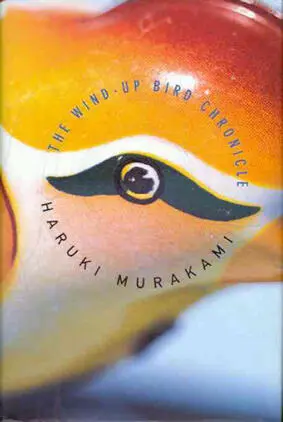
- Название:The Wind-Up Bird Chronicle
- Автор:
- Издательство:Shinchosha
- Жанр:
- Год:1998
- ISBN:0-679-77543-9
- Рейтинг книги:4 / 5. Голосов: 2
-
Избранное:Добавить в избранное
- Отзывы:
-
Ваша оценка:
The Wind-Up Bird Chronicle: краткое содержание, описание и аннотация
Предлагаем к чтению аннотацию, описание, краткое содержание или предисловие (зависит от того, что написал сам автор книги «The Wind-Up Bird Chronicle»). Если вы не нашли необходимую информацию о книге — напишите в комментариях, мы постараемся отыскать её.
In a Tokyo suburb a young man named Toru Okada searches for his wife's missing cat. Soon he finds himself looking for his wife as well in a netherworld that lies beneath the placid surface of Tokyo. As these searches intersect, Okada encounters a bizarre group of allies and antagonists: a psychic prostitute; a malevolent yet mediagenic politician; a cheerfully morbid sixteen-year-old-girl; and an aging war veteran who has been permanently changed by the hideous things he witnessed during Japan's forgotten campaign in Manchuria.
Gripping, prophetic, suffused with comedy and menace,
is a tour de force equal in scope to the masterpieces of Mishima and Pynchon.
The Wind-Up Bird Chronicle — читать онлайн бесплатно полную книгу (весь текст) целиком
Ниже представлен текст книги, разбитый по страницам. Система сохранения места последней прочитанной страницы, позволяет с удобством читать онлайн бесплатно книгу «The Wind-Up Bird Chronicle», без необходимости каждый раз заново искать на чём Вы остановились. Поставьте закладку, и сможете в любой момент перейти на страницу, на которой закончили чтение.
Интервал:
Закладка:
May Kasahara said nothing. I swallowed once.
I wonder if this'll make any sense to you: When we got married, six years ago, the two of us were trying to make a brand-new world-like building a new house on an empty lot. We had this clear image of what we wanted. We didn't need a fancy house or anything, just something to keep the weather out, as long as the two of us could be together. We didn't need any extras. Things would just get in the way. It all seemed so simple to us. Have you ever had that feeling-that you'd like to go to a whole different place and become a whole different self?
Sure, said May Kasahara. I feel that way all the time.
Well, thats what we were trying to do when we got married. I wanted to get outside myself: the me that had existed until then. And it was the same for Kumiko. In that new world of ours, we were trying to get hold of new selves that were better suited to who we were deep down. We believed we could live in a way that was more perfectly suited to who we were.
May Kasahara seemed to shift her center of gravity in the light somewhat. I could sense her movement. She seemed to be waiting for me to continue. But I had nothing more to say at that point. Nothing came to mind. I felt tired from the sound of my own voice in the concrete tube of the well.
Does this make any sense to you? I asked.
Sure it does.
What do you think about it?
Hey, I'm still a kid, ya know. I don't know anything about marriage. I don't know what was in your wifes mind when she started fooling around with another man or when she left you. But from what you just told me, I think you kinda had the wrong idea from the very beginning. You know what I mean, Mr. Wind-Up Bird? What you were just talking about... I don't know, its kind of impossible for anybody to do that stuff, like, OK, now I'm gonna make a whole new world or OK, now I'm gonna make a whole new self. That's what I think. You might think you made a new world or a new self, but your old self is always gonna be there, just below the surface, and if something happens, it'll stick its head out and say Hi.
You don't seem to realize that. You were made somewhere else. And even this idea you have of remaking yourself: even that was made somewhere else. Even I know that much, Mr.
Wind-Up Bird. You're a grown-up, aren't you? How come you don't get it? That's a big problem, if you ask me. And thats what you're being punished for-by all kinds of things: by the world you tried to get rid of, or by the self you tried to get rid of. Do you see what I'm saying?
I remained silent, staring at the darkness that enveloped my feet. I didn't know what to say.
OK, Mr. Wind-Up Bird, she said softly. You go ahead and think. Think. Think.
The cover snapped into place, and the well opening was blocked once again.
I took the canteen from my knapsack and gave it a shake. The light sloshing sound echoed in the darkness. Maybe a quarter left. I leaned my head against the wall and closed my eyes.
May Kasahara was probably right. This person, this self, this me, finally, was made somewhere else. Everything had come from somewhere else, and it would all go somewhere else. I was nothing but a pathway for the person known as me.
Even I know that much, Mr. Wind-Up Bird. How come you don't get it?
11Hunger as Pain
Kumiko's Long Letter
Bird as Prophet
I fell asleep a few times and woke up just as often. These were short, unsettled snatches of sleep, as on an airplane. Whenever deep sleep was about to arrive, I would shrink back and wake up; whenever full wakefulness was about to arrive, I would drift off into sleep, in endless repetition. Without changes in the light, time wobbled by like a wagon with a loose axle. My cramped, unnatural posture robbed my body of rest in small, accumulating doses. Each time I woke, I would check the time on my watch. Its pace was heavy and uneven.
With nothing better to do, I would pick up the flashlight and shine it at random-at the ground, at the walls, at the well cover. What I found there was always the same ground, the same walls, the same well cover. The shadows cast by the moving beam would sway, stretch and shrink, swell and contract. When I tired of this, I would spend time feeling my face, probing every line and crevice, examining my features anew to learn their shape. I had never been seriously concerned about the shape of my ears before this. If someone had told me to draw a picture of my own ears-even a rough sketch-I would have been at a loss. Now, though, I would have been able to reproduce every hollow and curve in accurate detail. I found it odd how different the ears were. I had no idea how this had come about or what effect this lack of symmetry might have (it probably had some effect).
The hands of my watch showed seven twenty-eight. I must have looked at my watch some two thousand times since coming down here. Now it was seven twenty-eight at night, that much was certain; at a ball game, it would be the bottom of the third or the top of the fourth. When I was a kid, I used to like to sit up high in the outfield stands and watch the summer day trying not to end. The sun had sunk below the western horizon, but the afterglow was still brilliant and beautiful. The stadium lights stretched their long shadows across the field as if to hint at something. First one and then another light would be turned on with the utmost caution shortly after the game got going. Still, there was enough light in the sky to read a newspaper by. The memory of the long days glow remained at the door to keep the summer night from entering.
With patience and persistence, though, the artificial illumination was winning its quiet victory over the light of the sun, bringing forth a flood of festive colors. The brilliant green of the playing field, the handsome black earth, the straight white lines newly drawn upon it, the glinting varnish on the bats of players waiting for their turn at the plate, the cigarette smoke floating in the beams of light (looking, on windless days, like souls wandering in search of someone to take them in)-all these would begin to show up with tremendous clarity. The young beer sellers would hold their hands up in the light, flashing bills tucked between their fingers. The crowd would rise from their seats to follow the path of a high fly ball, their voices rising with its arc or dissolving into a sigh. Small flocks of birds returning to their roosts would fly past toward the sea. This was the stadium at seven-thirty in the evening.
I thought about the baseball games I had seen over the years. The Saint Louis Cardinals had come to Japan once, when I was little, for a friendship game. I had seen that one with my father from an infield seat. Before the game itself, the Cardinals players stood along the perimeter of the field with baskets full of autographed tennis balls, throwing them into the stands as fast as they could. People went crazy trying to grab a ball for themselves, but I just stayed in my seat without moving, and before I knew it, I had a ball in my lap. It was a magical happening: strange and sudden.
I looked at my watch again. Seven thirty-six. Eight minutes had gone by since the last look. Just eight minutes. I took the watch off and held it against my ear. It was ticking away just fine. I shrugged my shoulders in the darkness. Something strange was happening to my sense of time. I decided not to look at my watch for a while. Maybe I didn't have anything else to do, but it wasn't healthy to be looking at a watch this often. I had to make a tremendous effort to keep myself from looking, though. The pain was like what I had felt when I quit smoking. From the moment I decided to give up thinking about time, my mind could think of nothing else. It was a kind of contradiction, a schizoid split. The more I tried to forget about time, the more I was compelled to think about it. Before I knew it, my eyes would be seeking out the watch on my left wrist. Whenever this happened, I would avert my face, close my eyes, and struggle not to look. I ended up taking the watch off and stuffing it into my knapsack. Even so, my mind went on groping for the watch inside the pack, where it continued to tick off the time.
Читать дальшеИнтервал:
Закладка:
Похожие книги на «The Wind-Up Bird Chronicle»
Представляем Вашему вниманию похожие книги на «The Wind-Up Bird Chronicle» списком для выбора. Мы отобрали схожую по названию и смыслу литературу в надежде предоставить читателям больше вариантов отыскать новые, интересные, ещё непрочитанные произведения.







Обсуждение, отзывы о книге «The Wind-Up Bird Chronicle» и просто собственные мнения читателей. Оставьте ваши комментарии, напишите, что Вы думаете о произведении, его смысле или главных героях. Укажите что конкретно понравилось, а что нет, и почему Вы так считаете.