Haruki Murakami - The Wind-Up Bird Chronicle
Здесь есть возможность читать онлайн «Haruki Murakami - The Wind-Up Bird Chronicle» весь текст электронной книги совершенно бесплатно (целиком полную версию без сокращений). В некоторых случаях можно слушать аудио, скачать через торрент в формате fb2 и присутствует краткое содержание. Год выпуска: 1998, ISBN: 1998, Издательство: Shinchosha, Жанр: Современная проза, на английском языке. Описание произведения, (предисловие) а так же отзывы посетителей доступны на портале библиотеки ЛибКат.
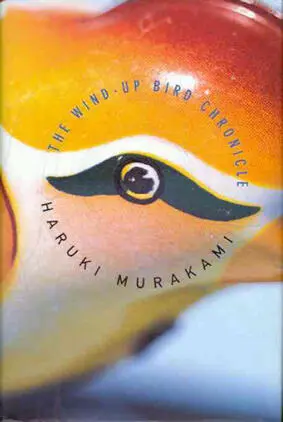
- Название:The Wind-Up Bird Chronicle
- Автор:
- Издательство:Shinchosha
- Жанр:
- Год:1998
- ISBN:0-679-77543-9
- Рейтинг книги:4 / 5. Голосов: 2
-
Избранное:Добавить в избранное
- Отзывы:
-
Ваша оценка:
The Wind-Up Bird Chronicle: краткое содержание, описание и аннотация
Предлагаем к чтению аннотацию, описание, краткое содержание или предисловие (зависит от того, что написал сам автор книги «The Wind-Up Bird Chronicle»). Если вы не нашли необходимую информацию о книге — напишите в комментариях, мы постараемся отыскать её.
In a Tokyo suburb a young man named Toru Okada searches for his wife's missing cat. Soon he finds himself looking for his wife as well in a netherworld that lies beneath the placid surface of Tokyo. As these searches intersect, Okada encounters a bizarre group of allies and antagonists: a psychic prostitute; a malevolent yet mediagenic politician; a cheerfully morbid sixteen-year-old-girl; and an aging war veteran who has been permanently changed by the hideous things he witnessed during Japan's forgotten campaign in Manchuria.
Gripping, prophetic, suffused with comedy and menace,
is a tour de force equal in scope to the masterpieces of Mishima and Pynchon.
The Wind-Up Bird Chronicle — читать онлайн бесплатно полную книгу (весь текст) целиком
Ниже представлен текст книги, разбитый по страницам. Система сохранения места последней прочитанной страницы, позволяет с удобством читать онлайн бесплатно книгу «The Wind-Up Bird Chronicle», без необходимости каждый раз заново искать на чём Вы остановились. Поставьте закладку, и сможете в любой момент перейти на страницу, на которой закончили чтение.
Интервал:
Закладка:
Lieutenant Mamiya had used a fountain pen to fill some ten thin sheets of letter paper with tiny characters. I flipped through the pages and put them back into the envelope. I was too tired to read such a long letter; I didn't have the powers of concentration just then. When my eyes scanned the rows of handwritten characters, they looked like a swarm of strange blue bugs. And besides, the voice of Noboru Wataya was still echoing faintly in my mind.
I stretched out on the sofa and closed my eyes for a long time, thinking of nothing. It was not hard for me to think of nothing, the way I felt at the moment. In order not to think of any one thing, all I had to do was think of many things, a little at a time: just think about something for a moment and fling it into space.
It was nearly five o'clock in the evening when I finally decided to read Lieutenant Mamiya's letter. I went out to the veranda, sat leaning against a pillar, and took the pages from the envelope.
The whole first page was filled with conventional phrases: extended seasonal greetings, thanks for my having invited him to my home the other day, and profound apologies for having bored me with his endless stories. Lieutenant Mamiya was certainly a man who knew the civilities. He had survived from an age when such civilities occupied a major portion of daily life. I skimmed through those and turned to the second page.
Please forgive me for having gone on at such length with these preliminary matters [it began]. My sole purpose in writing this letter today, knowing full well that my presumptuousness in doing so can only burden you with an unwanted task, is to inform you that the events I recently told you about were neither a fabrication of mine nor the dubious reminiscences of an old man, but are the complete and solemn truth in every particular. As you know, the war ended a very long time ago, and memory naturally degenerates as the years go by. Memories and thoughts age, just as people do. But certain thoughts can never age, and certain memories can never fade.
Up to and including this very day, I have never told any of these things to anyone but you, Mr. Okada. To most people, these stories of mine would sound like the most incredible fabrications. The majority of people dismiss those things that lie beyond the bounds of their own understanding as absurd and not worth thinking about. I myself can only wish that my stories were, indeed, nothing but incredible fabrications. I have stayed alive all these years clinging to the frail hope that these memories of mine were nothing but a dream or a delusion. I have struggled to convince myself that they never happened. But each time I tried to push them into the dark, they came back stronger and more vivid than ever. Like cancer cells, these memories have taken root in my mind and eaten into my flesh.
Even now I can recall each tiny detail with such terrible clarity, I feel I am remembering events that happened yesterday. I can hold the sand and the grass in my hands; I can even smell them. I can see the shapes of the clouds in the sky. I can feel the dry, sandy wind against my cheeks. By comparison, it is the subsequent events of my life that seem like delusions on the borderline of dream and reality.
The very roots of my life-those things that I can say once truly belonged to me alone-were frozen stiff or burned away out there, on the steppes of Outer Mongolia, where there was nothing to obstruct ones vision as far as the eye could see. Afterward, I lost my hand in that fierce battle with the Soviet tank unit that attacked across the border; I tasted unimaginable hardships in a Siberian labor camp in the dead of winter; I was repatriated and served for thirty uneventful years as a social studies teacher in a rural high school; and I have since lived alone, tilling the land. But all those subsequent months and years to me feel like nothing but an illusion. It is as if they never happened. In an instant, my memory leaps across that empty shell of time and takes me back to the wilds of Hulunbuir.
What cost me my life, what turned it into that empty shell, I believe, was something in the light I saw at the bottom of the well-that intense light of the sun that penetrated straight down to the very bottom of the well for ten or twenty seconds. It would come without warning, and disappear just as suddenly. But in that momentary flood of light I saw something-saw something once and for all-that I could never see again as long as I lived. And having seen it, I was no longer the same person I had been.
What happened down there? What did it mean? Even now, more than forty years later, I cannot answer those questions with any certainty. Which is why what I am about to say is strictly a hypothesis, a tentative explanation that I have fashioned for myself without the benefit of any logical basis. I do believe, however, that this hypothesis of mine is, for now, the closest that anyone can come to the truth of what it was that I experienced.
Outer Mongolian troops had thrown me into a deep, dark well in the middle of the steppe, my leg and shoulder were broken, I had neither food nor water: I was simply waiting to die. Before that, I had seen a man skinned alive. Under these special circumstances, I believe, my consciousness had attained such a viscid state of concentration that when the intense beam of light shone down for those few seconds, I was able to descend directly into a place that might be called the very core of my own consciousness. In any case, I saw the shape of something there. Just imagine: Everything around me is bathed in light. I am in the very center of a flood of light. My eyes can see nothing. I am simply enveloped in light. But something begins to appear there. In the midst of my momentary blindness, something is trying to take shape. Some thing. Some thing that possesses life. Like the shadow in a solar eclipse, it begins to emerge, black, in the light. But I can never quite make out its form. It is trying to come to me, trying to confer upon me something very much like heavenly grace. I wait for it, trembling. But then, either because it has changed its mind or because there is not enough time, it never comes to me. The moment before it takes full shape, it dissolves and melts once again into the light. Then the light itself fades. The time for the light to shine down into the well has ended.
This happened two days in a row. Exactly the same thing. Something began to take shape in the overflowing light, then faded before it could reach a state of fullness. Down in the well, I was suffering with hunger and thirst-suffering terribly. But finally, this was not of major importance. What I suffered with most down there in the well was the torture of being unable to attain a clear view of that something in the light: the hunger of being unable to see what I needed to see, the thirst of being unable to know what I needed to know. Had I been able to see it clearly, I would not have minded dying right then and there. I truly felt that way. I would have sacrificed anything for a full view of its form.
Finally, though, the form was snatched away from me forever. The grace came to an end before it could be given to me. And as I said earlier, the life I led after emerging from that hole in the ground was nothing but a hollow, empty shell. Which is why, when the Soviet Army invaded Manchuria just before the end of the war, I volunteered to be sent to the front. In the Siberian labor camp, too, I purposely strove to have myself placed in the most difficult circumstances. No matter what I did, however, I could not die. Just as Corporal Honda had predicted that night, I was fated to return to Japan and live an amazingly long life. I remember how happy that news made me when I first heard it. But it turned out to be, if any- thing, a curse. It was not that I would not die: I could not die. Corporal Honda had been right about that too: I would have been better off not knowing.
Читать дальшеИнтервал:
Закладка:
Похожие книги на «The Wind-Up Bird Chronicle»
Представляем Вашему вниманию похожие книги на «The Wind-Up Bird Chronicle» списком для выбора. Мы отобрали схожую по названию и смыслу литературу в надежде предоставить читателям больше вариантов отыскать новые, интересные, ещё непрочитанные произведения.







Обсуждение, отзывы о книге «The Wind-Up Bird Chronicle» и просто собственные мнения читателей. Оставьте ваши комментарии, напишите, что Вы думаете о произведении, его смысле или главных героях. Укажите что конкретно понравилось, а что нет, и почему Вы так считаете.