Haruki Murakami - The Wind-Up Bird Chronicle
Здесь есть возможность читать онлайн «Haruki Murakami - The Wind-Up Bird Chronicle» весь текст электронной книги совершенно бесплатно (целиком полную версию без сокращений). В некоторых случаях можно слушать аудио, скачать через торрент в формате fb2 и присутствует краткое содержание. Год выпуска: 1998, ISBN: 1998, Издательство: Shinchosha, Жанр: Современная проза, на английском языке. Описание произведения, (предисловие) а так же отзывы посетителей доступны на портале библиотеки ЛибКат.
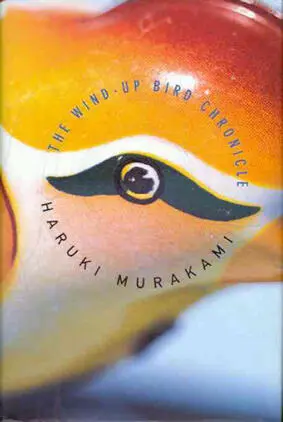
- Название:The Wind-Up Bird Chronicle
- Автор:
- Издательство:Shinchosha
- Жанр:
- Год:1998
- ISBN:0-679-77543-9
- Рейтинг книги:4 / 5. Голосов: 2
-
Избранное:Добавить в избранное
- Отзывы:
-
Ваша оценка:
The Wind-Up Bird Chronicle: краткое содержание, описание и аннотация
Предлагаем к чтению аннотацию, описание, краткое содержание или предисловие (зависит от того, что написал сам автор книги «The Wind-Up Bird Chronicle»). Если вы не нашли необходимую информацию о книге — напишите в комментариях, мы постараемся отыскать её.
In a Tokyo suburb a young man named Toru Okada searches for his wife's missing cat. Soon he finds himself looking for his wife as well in a netherworld that lies beneath the placid surface of Tokyo. As these searches intersect, Okada encounters a bizarre group of allies and antagonists: a psychic prostitute; a malevolent yet mediagenic politician; a cheerfully morbid sixteen-year-old-girl; and an aging war veteran who has been permanently changed by the hideous things he witnessed during Japan's forgotten campaign in Manchuria.
Gripping, prophetic, suffused with comedy and menace,
is a tour de force equal in scope to the masterpieces of Mishima and Pynchon.
The Wind-Up Bird Chronicle — читать онлайн бесплатно полную книгу (весь текст) целиком
Ниже представлен текст книги, разбитый по страницам. Система сохранения места последней прочитанной страницы, позволяет с удобством читать онлайн бесплатно книгу «The Wind-Up Bird Chronicle», без необходимости каждый раз заново искать на чём Вы остановились. Поставьте закладку, и сможете в любой момент перейти на страницу, на которой закончили чтение.
Интервал:
Закладка:
I came back to Japan, having lost my hand and twelve precious years. By the time I arrived in Hiroshima, my parents and my sister were long since dead. They had put my little sister to work in a factory, which was where she was when the bomb fell. My father was on his way to see her at the time, and he, too, lost his life. The shock sent my mother to her deathbed; she finally passed away in 1947. As I told you earlier, the girl to whom I had been secretly engaged was now married to another man, and she had given birth to two children. In the cemetery, I found my own grave. There was nothing left for me. I felt truly empty, and knew that I should not have come back there. I hardly remember what my life has been like since then. I became a social studies teacher and taught geography and history in high school, but I was not, in the true sense of the word, alive. I simply performed the mundane tasks that were handed to me, one after another. I never had one real friend, no human ties with the students in my charge. I never loved anyone. I no longer knew what it meant to love another person. I would close my eyes and see Yamamoto being skinned alive. I dreamed about it over and over. Again and again I watched them peel the skin off and turn him into a lump of flesh. I could hear his heartrending screams. I also had dreams of myself slowly rotting away, alive, in the bottom of the well. Sometimes it seemed to me that that was what had really happened and that my life here was the dream.
When Mr. Honda told me on the bank of the Khalkha River that I would not die on the continent, I was overjoyed. It was not a matter of believing or not believing: I wanted to cling to something then- anything at all. Mr. Honda probably knew that and told me what he did in order to comfort me. But of joy there was to be none for me. After returning to Japan, I lived like an empty shell. Living like an empty shell is not really living, no matter how many years it may go on. The heart and flesh of an empty shell give birth to nothing more than the life of an empty shell. This is what I hope I have made clear to you, Mr. Okada.
Does this mean, I ventured, that you never married after returning to Japan?
Of course not, answered Lieutenant Mamiya. I have no wife, no parents or siblings. I am entirely alone.
After hesitating a moment, I asked, Are you sorry that you ever heard Mr. Honda's prediction?
Now it was Lieutenant Mamiya's turn to hesitate. After a moment of silence, he looked me straight in the face. Maybe I am, he said. Maybe he should never have spoken those words. Maybe I should never have heard them.As Mr. Honda said at the time, a persons destiny is something you look back at afterward, not something to be known in advance. I do believe this, however: now it makes no difference either way. All I am doing now is fulfilling my obligation to go on living.
The bus came, and Lieutenant Mamiya favored me with a deep bow. Then he apologized to me for having taken up my valuable time. Well, then, I shall be on my way, he said.
Thank you for everything. I am glad in any case that I was able to hand you the package from Mr. Honda. This means that my job is done at last. I can go home with an easy mind.
Using both his right hand and the artificial one, he deftly produced the necessary coins and dropped them into the fare box.
I stood there and watched as the bus disappeared around the next corner. After it was gone, I felt a strange emptiness inside, a hopeless kind of feeling like that of a small child who has been left alone in an unfamiliar neighborhood.
Then I went home, and sitting on the living room couch, I opened the package that Mr.
Honda had left me as a keepsake. I worked up a sweat removing layer after layer of carefully sealed wrapping paper, until a sturdy cardboard box emerged. It was a fancy Cutty Sark gift box, but it was too light to contain a bottle of whiskey. I opened it, to find nothing inside. It was absolutely empty. All that Mr. Honda had left me was an empty box.
Book Two: Bird as Prophet
July to October 1984
1As Concrete as Possible
Appetite in Literature
Kumiko never came back that night. I stayed up until midnight, reading, listening to music, and waiting for her, but finally I gave up and went to bed. I fell asleep with the light on. It was six in the morning when I woke. The full light of day shone outside the window. Beyond the thin curtain, birds were chirping. There was no sign of my wife beside me in bed. The white pillow lay there, high and fluffy. As far as I could see, no head had rested on it during the night. Her freshly washed, neatly folded summer pajamas lay atop the night table. I had washed them. I had folded them. I turned off the lamp beside my pillow and took a deep breath, as if to regulate the flow of time.
I did a tour of the house in my pajamas. I went first to the kitchen, then surveyed the living room and looked into Kumiko's room. I checked the bathroom and, just to make sure, tried the closets. There was no sign of her anywhere. The house seemed more hushed than usual. I felt as if, by moving around, I alone was to blame for disrupting the quiet harmony of the place, and for no good reason.
There was nothing more for me to do. I went to the kitchen, filled the kettle, and lit the gas. When the water boiled, I made coffee and sat at the kitchen table to take a sip. Then I made toast and ate some potato salad from the refrigerator. This was the first time in years that I had eaten breakfast alone. Come to think of it, aside from a single business trip, we had never once missed breakfast together in all the time since our marriage. We had often missed lunch, and sometimes even dinner, but never breakfast. We had a kind of tacit understanding about breakfast: it was almost a ritual for us. No matter how late we might go to bed, we would always get up early enough to fix a proper morning meal and take the time to enjoy it together.
But that morning Kumiko was gone. I drank my coffee and ate my toast alone, in silence. An empty chair was all I had to look at. I looked and ate and thought about the cologne that she had been wearing the morning before. I thought about the man who might have given it to her. I thought about her lying in a bed somewhere with him, their arms wrapped around each other. I saw his hands caressing her naked body. I saw the porcelain of her back as I had seen it in the morning, the smooth skin beneath the rising zipper.
The coffee seemed to have a soapy taste. I couldn't quite believe it. Shortly after the first sip, I sensed an unpleasant aftertaste. I wondered if my feelings were playing tricks on me, but the second sip had the same taste. I emptied the cup into the sink and poured myself more coffee, in a clean cup. Again the taste of soap. I couldn't imagine why. I had washed the pot well, and there was nothing wrong with the water. But the taste- or smell-was unmistakable: it could only have been soap-or possibly moisturizing lotion. I threw out all the coffee in the pot and started to boil some more water, but it just wasn't worth the trouble. I filled a cup with water from the tap and drank that instead. I really didn't want coffee all that much anyway.
I waited until nine-thirty and dialed Kumiko's office. A woman answered the phone. May I please speak to Kumiko Okada? I asked. I'm sorry, but she doesn't seem to be here yet. I thanked her and hung up. Then I started ironing shirts, as I always did when I felt restless. When I ran out of shirts, I tied up old newspapers and magazines, wiped down the sink and cabinet shelves, cleaned the toilet and bathtub. I polished the mirrors and windows with glass cleaner. I unscrewed the ceiling fixtures and washed the frosted glass. I stripped the sheets and threw them in the washing machine, then put on fresh ones.
Читать дальшеИнтервал:
Закладка:
Похожие книги на «The Wind-Up Bird Chronicle»
Представляем Вашему вниманию похожие книги на «The Wind-Up Bird Chronicle» списком для выбора. Мы отобрали схожую по названию и смыслу литературу в надежде предоставить читателям больше вариантов отыскать новые, интересные, ещё непрочитанные произведения.



Обсуждение, отзывы о книге «The Wind-Up Bird Chronicle» и просто собственные мнения читателей. Оставьте ваши комментарии, напишите, что Вы думаете о произведении, его смысле или главных героях. Укажите что конкретно понравилось, а что нет, и почему Вы так считаете.