Haruki Murakami - The Wind-Up Bird Chronicle
Здесь есть возможность читать онлайн «Haruki Murakami - The Wind-Up Bird Chronicle» весь текст электронной книги совершенно бесплатно (целиком полную версию без сокращений). В некоторых случаях можно слушать аудио, скачать через торрент в формате fb2 и присутствует краткое содержание. Год выпуска: 1998, ISBN: 1998, Издательство: Shinchosha, Жанр: Современная проза, на английском языке. Описание произведения, (предисловие) а так же отзывы посетителей доступны на портале библиотеки ЛибКат.
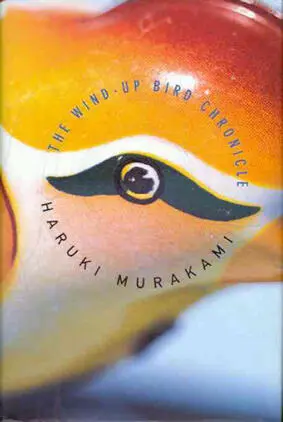
- Название:The Wind-Up Bird Chronicle
- Автор:
- Издательство:Shinchosha
- Жанр:
- Год:1998
- ISBN:0-679-77543-9
- Рейтинг книги:4 / 5. Голосов: 2
-
Избранное:Добавить в избранное
- Отзывы:
-
Ваша оценка:
The Wind-Up Bird Chronicle: краткое содержание, описание и аннотация
Предлагаем к чтению аннотацию, описание, краткое содержание или предисловие (зависит от того, что написал сам автор книги «The Wind-Up Bird Chronicle»). Если вы не нашли необходимую информацию о книге — напишите в комментариях, мы постараемся отыскать её.
In a Tokyo suburb a young man named Toru Okada searches for his wife's missing cat. Soon he finds himself looking for his wife as well in a netherworld that lies beneath the placid surface of Tokyo. As these searches intersect, Okada encounters a bizarre group of allies and antagonists: a psychic prostitute; a malevolent yet mediagenic politician; a cheerfully morbid sixteen-year-old-girl; and an aging war veteran who has been permanently changed by the hideous things he witnessed during Japan's forgotten campaign in Manchuria.
Gripping, prophetic, suffused with comedy and menace,
is a tour de force equal in scope to the masterpieces of Mishima and Pynchon.
The Wind-Up Bird Chronicle — читать онлайн бесплатно полную книгу (весь текст) целиком
Ниже представлен текст книги, разбитый по страницам. Система сохранения места последней прочитанной страницы, позволяет с удобством читать онлайн бесплатно книгу «The Wind-Up Bird Chronicle», без необходимости каждый раз заново искать на чём Вы остановились. Поставьте закладку, и сможете в любой момент перейти на страницу, на которой закончили чтение.
Интервал:
Закладка:
Pretty good job, don't you think? said May Kasahara, standing next to me on the train. Its easy, pays not bad.
Pretty good, I said, sucking on a lemon drop. Go with me next time? We can do it once a week. Why not? I said. You know, Mr. Wind-Up Bird, May Kasahara said after a short silence, as if a thought had suddenly come to her, I bet the reason people are afraid of going bald is because it makes them think of the end of life. I mean, when your hair starts to thin, it must feel as if your life is being worn away ... as if you've taken a giant step in the direction of death, the last Big Consumption.
I thought about it for a while. That's one way to look at it, I'm sure, I said.
You know, Mr. Wind-Up Bird, I sometimes wonder what it must feel like to die little by little over a long period of time. What do you think?
Unsure exactly what she was getting at, I changed my grip on the hand strap and looked into her eyes. Can you give me a concrete example of what you mean by that-to die little by little?
Well... I don't know. You're trapped in the dark all alone, with nothing to eat, nothing to drink, and little by little you die....
It must be terrible, I said. Painful. I wouldn't want to die like that if I could help it.
But finally, Mr. Wind-Up Bird, isn't that just what life is? Aren't we all trapped in the dark somewhere, and they've taken away our food and water, and were slowly dying, little by little ... ?
I laughed. You're too young to be so ... pessimistic, I said, using the English word.
Pessi- what?
Pessimistic. It means looking only at the dark side of things.
Pessimistic ... pessimistic ... She repeated the English to herself over and over, and then she looked up at me with a fierce glare. I'm only sixteen, she said, and I don't know much about the world, but I do know one thing for sure. If I'm pessimistic, then the adults in this world who are not pessimistic are a bunch of idiots.
10 Magic Touch
Death in the Bathtub. Messenger with Keepsakes
We had moved into our present house in the autumn of the second year we were married.
The Koenji apartment we had lived in until then was slated for renovation. We looked for a cheap, convenient apartment to move into, but finding such a place was not easy with our budget. When he heard this, my uncle suggested that we move into a house he owned in Setagaya. He had bought it in his youth and lived there for ten years. He wanted to tear the old place down and put up something more functional, but architectural regulations prevented him from building the kind of house he wanted. He was waiting for a rumored relaxation of the rules to take effect, but if he left the place vacant in the meantime, he would have to pay the property taxes, and if he rented it to strangers, there could be trouble when he asked them to vacate. From us, he would take only a nominal rent to cover the taxes, but in return he wanted us to agree to give up the place with three months notice when the time came. We had no problem with that: the part about the taxes was not entirely clear to us, but we jumped at the chance to live in a real house, if only for a little while, paying the kind of rent we had been paying to live in an apartment (and a very cheap apartment at that). The house was pretty far from the nearest station on the Odakyu Line, but it was in a quiet residential neighborhood, and it had its own small yard. Even though it didn't belong to us, it gave us the feeling, once we moved in, that we were now part of a real household.
My mothers younger brother, this uncle of mine never made any demands on us. He was kind of a cool guy, I suppose, but there was something almost uncanny about him in the way he left us alone. Still, he was my favorite relative. He had graduated from a college in Tokyo and gone to work as a radio announcer, but when he got sick of the work after ten years, he quit the station and opened a bar on the Ginza. It was an almost austere little place, but it became widely known for the authenticity of its cocktails, and within a few years my uncle was running a string of bars and restaurants. Every one of his establishments did extremely well: apparently, he had that special spark you need for business. Once, while I was still in college, I asked him why every place he opened was such a success. In the very same location where one restaurant had failed on the Ginza, he might open up the same kind of restaurant and do just fine. Why was that? He held the palms of both hands out for me to see. Its my magic touch, he said, without a hint of humor. And that was all he said.
Maybe he really did have a magic touch, but he also had a talent for finding capable people to work for him. He paid them high salaries and treated them well, and they in turn worked hard for him. When I know I've got the right guy, I put a wad of bills in his hand and let him do his thing, he once told me. You've got to spend your money for the things that money can buy, not worry about profit or loss. Save your energy for the things that money cant buy.
He married late in life. Only after he had achieved financial success in his mid-forties did he settle down. His wife was a divorcee, three or four years his junior, and she brought her own considerable assets to the marriage. My uncle never told me how he happened to meet her, and all I could tell about her was that she was a quiet sort of woman of good background. They had no children. She had apparently had no children with her first husband, either, which may have been the reason for the divorce. In any case, though not exactly a rich man, my uncle was in a position in his mid-forties where it was no longer necessary for him to break his back for money. In addition to the profits from his restaurants and bars, he had rental income from several houses and condos that he owned, plus steady dividend income from investments. With its reputation for respectable businesses and modest lifestyles, the family tended to see my uncle as something of a black sheep, and he had never shown much inclination for consorting with relatives. As his only nephew, though, I had always been of some concern to him, especially after my mother died the year I entered college and I had a falling-out with my father, who remarried. When I was living the lonely life of a poor college student in Tokyo, my uncle often treated me to dinner in one or another of his Ginza restaurants.
He and his wife now lived in a condo on a hill in Azabu rather than be bothered with taking care of a house. He was not given to indulging in luxuries, but he did have one hobby, which was the purchase of rare automobiles. He kept a Jaguar and an Alfa Romeo in the garage, both of them nearly antiques and extremely well cared for, as shiny as newborn babes.
On the phone with my uncle about something else, I took the opportunity to ask him what he knew about May Kasahara's family.
Kasahara, you say? He took a moment to think. Never heard of them. I was a bachelor when I lived there, never had anything to do with the neighbors.
Actually, its the house opposite theirs I'm curious about, the vacant house on the other side of the alley from their backyard, I said. I guess somebody named Miyawaki used to live there. Now its all boarded up.
Oh, Miyawaki. Sure, I knew him, said my uncle. He used to own a few restaurants. Had one on the Ginza too. I met him professionally a few times. His places were nothing much, tell you the truth, but he had good locations. I thought he was doing all right. He was a nice guy, but kind of a spoiled-rich-kid type. He had never had to work hard, or he just never got the hang of it or something, but he never quite grew up. Somebody got him going on the stock market, took him for everything he had- house, land, businesses, everything. And the timing couldn't have been worse. He was trying to open a new place, had his house and land up as collateral. Bang! The whole thing. Had a couple of daughters, I think, college age.
Читать дальшеИнтервал:
Закладка:
Похожие книги на «The Wind-Up Bird Chronicle»
Представляем Вашему вниманию похожие книги на «The Wind-Up Bird Chronicle» списком для выбора. Мы отобрали схожую по названию и смыслу литературу в надежде предоставить читателям больше вариантов отыскать новые, интересные, ещё непрочитанные произведения.








Обсуждение, отзывы о книге «The Wind-Up Bird Chronicle» и просто собственные мнения читателей. Оставьте ваши комментарии, напишите, что Вы думаете о произведении, его смысле или главных героях. Укажите что конкретно понравилось, а что нет, и почему Вы так считаете.