Haruki Murakami - The Wind-Up Bird Chronicle
Здесь есть возможность читать онлайн «Haruki Murakami - The Wind-Up Bird Chronicle» весь текст электронной книги совершенно бесплатно (целиком полную версию без сокращений). В некоторых случаях можно слушать аудио, скачать через торрент в формате fb2 и присутствует краткое содержание. Год выпуска: 1998, ISBN: 1998, Издательство: Shinchosha, Жанр: Современная проза, на английском языке. Описание произведения, (предисловие) а так же отзывы посетителей доступны на портале библиотеки ЛибКат.
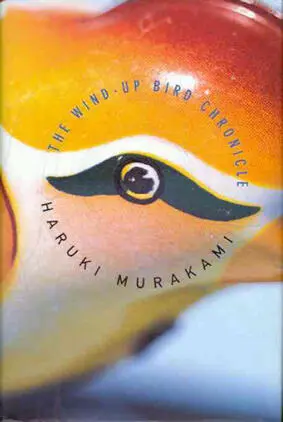
- Название:The Wind-Up Bird Chronicle
- Автор:
- Издательство:Shinchosha
- Жанр:
- Год:1998
- ISBN:0-679-77543-9
- Рейтинг книги:4 / 5. Голосов: 2
-
Избранное:Добавить в избранное
- Отзывы:
-
Ваша оценка:
The Wind-Up Bird Chronicle: краткое содержание, описание и аннотация
Предлагаем к чтению аннотацию, описание, краткое содержание или предисловие (зависит от того, что написал сам автор книги «The Wind-Up Bird Chronicle»). Если вы не нашли необходимую информацию о книге — напишите в комментариях, мы постараемся отыскать её.
In a Tokyo suburb a young man named Toru Okada searches for his wife's missing cat. Soon he finds himself looking for his wife as well in a netherworld that lies beneath the placid surface of Tokyo. As these searches intersect, Okada encounters a bizarre group of allies and antagonists: a psychic prostitute; a malevolent yet mediagenic politician; a cheerfully morbid sixteen-year-old-girl; and an aging war veteran who has been permanently changed by the hideous things he witnessed during Japan's forgotten campaign in Manchuria.
Gripping, prophetic, suffused with comedy and menace,
is a tour de force equal in scope to the masterpieces of Mishima and Pynchon.
The Wind-Up Bird Chronicle — читать онлайн бесплатно полную книгу (весь текст) целиком
Ниже представлен текст книги, разбитый по страницам. Система сохранения места последней прочитанной страницы, позволяет с удобством читать онлайн бесплатно книгу «The Wind-Up Bird Chronicle», без необходимости каждый раз заново искать на чём Вы остановились. Поставьте закладку, и сможете в любой момент перейти на страницу, на которой закончили чтение.
Интервал:
Закладка:
As a translator with liaison duties, 1 had to visit headquarters each day and was basically free to move from area to area as long as I showed my pass. Near headquarters was the train station, and a kind of one-street town with a few shabby stores, a bar, and an inn for officials and high-ranking officers on inspection tours. The square was lined with horse troughs, and a big red flag of the USSR flew from a flagpole in the center. Beneath the flag was parked an armored vehicle, with a machine gun, against which there was always leaning a bored- looking young soldier in full military gear. The newly built military hospital was situated at the far end of the square, with a large statue of Joseph Stalin at its entrance.
There is a man I must tell you about now. I encountered him in the spring of 1947, probably around the beginning of May, when the snow had finally melted. A year and a half had already passed since I was sent to the mine. When I first saw him, the man was wearing the kind of uniform they gave to all the Russian prisoners. He was involved in repair work at the station with a group of some ten of his compatriots. They were breaking up rocks with sledgehammers and spreading the crushed rock over the roadway. The clanging of the hammers against the hard rocks reverberated throughout the area. I was on my way back from delivering a report to the mine headquarters when I passed the station. The noncommissioned officer directing the work stopped me and ordered me to show my pass. I took it from my pocket and handed it to him. The sergeant, a large man, focused a deeply suspicious gaze on the pass for some time, but he was obviously illiterate. He called over one of the prisoners at work on the road and told the man to read it aloud. This particular prisoner was different from the others in his group: he had the look of a well-educated man. And it was him. When I saw him, I could feel the blood drain from my face. I could hardly breathe- literally. I felt as if I were underwater, drowning. My breath would not come.
This educated prisoner was none other than the Russian officer who had ordered the Mongolian soldiers to skin Yamamoto alive on the bank of the Khalkha River. He was emaciated now, largely bald, and missing a tooth in front. Instead of his spotless officers uniform, he wore filthy prison garb, and instead of shiny boots, he wore cloth shoes that were full of holes. The lenses of his eyeglasses were dirty and scratched, the frame was twisted. But it was the same man, without a doubt. There was no way I could have failed to recognize him. And he, in turn, was staring hard at me, his curiosity first aroused, no doubt, by my own stunned expression. Like him, I had also aged and wasted away in the nine intervening years. I even had a few white hairs now. But he seemed to recognize me nonetheless. A look of astonishment crossed his face. He must have assumed that I had rotted away in the bottom of a Mongolian well. And I, of course, never dreamed that I would run across him in a Siberian mining camp, wearing prisoners garb.
A moment was all it took him to regain his composure and begin reading my pass in calm tones to the illiterate sergeant, who had a machine gun slung from his neck. He read my name, my job as translator, my qualification to move among camp areas, and so on. The sergeant returned my pass and signaled me with a jerk of the chin to go. I walked on a short way and turned around. The man was looking at me. He seemed to be wearing a faint smile, though it might have been my imagination. The way my legs were shaking, I couldn't walk straight for a while. All the terror I had experienced nine years before had come back to me in an instant.
I imagined that the man had fallen from grace and been sent to this Siberian prison camp. Such things were not at all rare in the Soviet Union back then. Vicious struggles were going on within the government, the party, and the military services, and Stalins pathological suspiciousness pursued the losers without mercy stripped of their positions, such men would be tried in kangaroo courts and either summarily executed or sent to the concentration camps, though finally which group was the more fortunate only a god could say. An escape from death led only to slave labor of unimaginable cruelty. We Japanese prisoners of war could at least hope to return to our homeland if we survived, but exiled Russians knew no such hope. Like the others, this man would end with his bones rotting in the soil of Siberia.
Only one thing bothered me about him, though, and that was that he now knew my name and where to find me. Before the war, I had participated (all unknowingly, to be sure) in that secret operation with the spy Yamamoto, crossing the Khalkha River into Mongolian territory for espionage activities. If the man should leak this information, it could put me in a very uncomfortable position. Finally, however, he did not inform on me. No, as I was to discover later, he had far more grandiose plans for me.
I spotted him a week later, outside the station. He was in chains still, wearing the same filthy prison clothes and cracking rocks with a hammer. I looked at him, and he looked at me. He rested his hammer on the ground and turned my way, standing as tall and straight as he had when in military uniform. This time, unmistakably, he wore a smile on his face- a faint smile, but still a smile, one suggesting a streak of cruelty that sent chills up my spine. It was the same expression he had worn as he watched Yamamoto being skinned alive. I said nothing and passed on.
I had one friend at the time among the officers in the camps Soviet Army headquarters. Like me, he had majored in geography in college (in Leningrad). We were the same age, and both of us were interested in making maps, so we would find pretexts now and then for sharing a little shoptalk. He had a personal interest in the strategic maps of Manchuria that the Kwantung Army had been making. Of course, we couldn't have such conversations when his superiors were around. We had to snatch opportunities to enjoy this professional patter in their absence. Sometimes he would give me food or show me pictures of the wife and children he had left behind in Kiev. He was the only Russian I felt at all close to during the period I was interned in the Soviet Union.
One time, in an offhand manner, I asked him about the convicts working by the station. One man in particular had struck me as different from the usual inmate, I said; he looked as if he might once have held an important post. I described his appearance. The officer-whose name was Nikolai-said to me with a scowl, That would be Boris the Manskinner. You'd better not have anything to do with him.
Why was that? I asked. Nikolai seemed hesitant to say more, but he knew I was in a position to do him favors, so finally, and reluctantly, he told me how Boris the Manskinner had been sent to this mine. Now, don't tell anyone I told you, he warned me. That guy can be dangerous. I'm not kidding--they don't come any worse. I wouldn't touch him with a ten- foot pole.
This is what Nikolai told me. The real name of Boris the Manskinner was Boris Gromov. Just as I had imagined, he had been a major in the NKVD. They had assigned him to Ulan Bator as a military adviser in 1938, the year Choybal-san took power as prime minister. There he organized the Mongolian secret police, modeling it after Beria's NKVD, and he distinguished himself in suppressing counterrevolutionary forces. They would round people up, throw them into concentration camps, and torture them, liquidating anyone of whom they had the slightest suspicion.
As soon as the battle of Nomonhan ended and the Far Eastern crisis was averted, Boris was called back to Moscow and reassigned to Soviet-occupied Eastern Poland, where he worked on the purging of the old Polish Army. That is where he earned the nickname Boris the Manskinner. Skinning people alive, using a man they said he brought with him from Mongolia, was his special form of torture. The Poles were scared to death of him, needless to say. Anyone forced to watch a skinning would confess everything without fail. When the German Army suddenly burst across the border and the war started with Germany, he pulled back from Poland to Moscow. Lots of people were arrested then on suspicion of having colluded with Hitler. They would be executed or sent to prison camps. Here, again, Boris distinguished himself as Beria's right-hand man, employing his special torture. Stalin and Beria had to cook up their internal-conspiracy theory, covering up their own responsibility for having failed to predict the Nazi invasion in order to solidify their positions of leadership. A lot of people died for nothing while being cruelly tortured. Boris and his man were said to have skinned at least five people then, and rumor had it that he proudly displayed the skins on the walls of his office.
Читать дальшеИнтервал:
Закладка:
Похожие книги на «The Wind-Up Bird Chronicle»
Представляем Вашему вниманию похожие книги на «The Wind-Up Bird Chronicle» списком для выбора. Мы отобрали схожую по названию и смыслу литературу в надежде предоставить читателям больше вариантов отыскать новые, интересные, ещё непрочитанные произведения.




Обсуждение, отзывы о книге «The Wind-Up Bird Chronicle» и просто собственные мнения читателей. Оставьте ваши комментарии, напишите, что Вы думаете о произведении, его смысле или главных героях. Укажите что конкретно понравилось, а что нет, и почему Вы так считаете.