Haruki Murakami - The Wind-Up Bird Chronicle
Здесь есть возможность читать онлайн «Haruki Murakami - The Wind-Up Bird Chronicle» весь текст электронной книги совершенно бесплатно (целиком полную версию без сокращений). В некоторых случаях можно слушать аудио, скачать через торрент в формате fb2 и присутствует краткое содержание. Год выпуска: 1998, ISBN: 1998, Издательство: Shinchosha, Жанр: Современная проза, на английском языке. Описание произведения, (предисловие) а так же отзывы посетителей доступны на портале библиотеки ЛибКат.
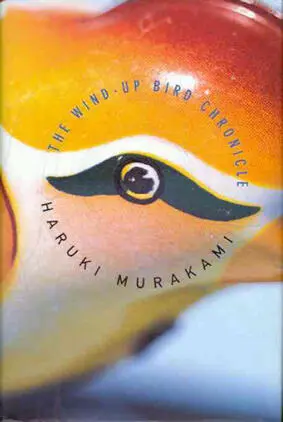
- Название:The Wind-Up Bird Chronicle
- Автор:
- Издательство:Shinchosha
- Жанр:
- Год:1998
- ISBN:0-679-77543-9
- Рейтинг книги:4 / 5. Голосов: 2
-
Избранное:Добавить в избранное
- Отзывы:
-
Ваша оценка:
The Wind-Up Bird Chronicle: краткое содержание, описание и аннотация
Предлагаем к чтению аннотацию, описание, краткое содержание или предисловие (зависит от того, что написал сам автор книги «The Wind-Up Bird Chronicle»). Если вы не нашли необходимую информацию о книге — напишите в комментариях, мы постараемся отыскать её.
In a Tokyo suburb a young man named Toru Okada searches for his wife's missing cat. Soon he finds himself looking for his wife as well in a netherworld that lies beneath the placid surface of Tokyo. As these searches intersect, Okada encounters a bizarre group of allies and antagonists: a psychic prostitute; a malevolent yet mediagenic politician; a cheerfully morbid sixteen-year-old-girl; and an aging war veteran who has been permanently changed by the hideous things he witnessed during Japan's forgotten campaign in Manchuria.
Gripping, prophetic, suffused with comedy and menace,
is a tour de force equal in scope to the masterpieces of Mishima and Pynchon.
The Wind-Up Bird Chronicle — читать онлайн бесплатно полную книгу (весь текст) целиком
Ниже представлен текст книги, разбитый по страницам. Система сохранения места последней прочитанной страницы, позволяет с удобством читать онлайн бесплатно книгу «The Wind-Up Bird Chronicle», без необходимости каждый раз заново искать на чём Вы остановились. Поставьте закладку, и сможете в любой момент перейти на страницу, на которой закончили чтение.
Интервал:
Закладка:
Without a doubt, The Wind-Up Bird Chronicle #8 was a story told by Cinnamon. He had put sixteen stories into the computer under the title The Wind-Up Bird Chronicle, and it just so happened that I had chosen and read #8. Judging from the length of the one story, sixteen such stories would have made a fairly thick book if set in type.
What could #8 signify? The word chronicle in the title probably meant that the stories were related in chronological order, #8 following #7, #9 following #8, and so on. That was a reasonable assumption, if not necessarily true. They could just as well have been arranged in a different order. They might even run backward, from the present to the past. A bolder hypothesis might make them sixteen different versions of the same story told in parallel. In any case, the one I had chosen was a sequel to the story that Cinnamon's mother, Nutmeg, had told me about soldiers killing animals in the Hsinching zoo in August 1945. It was set in the same zoo on the following day, and again the central character was Nutmeg's father, Cinnamon's grandfather, the nameless veterinarian.
I had no way of telling how much of the story was true. Was every bit of it Cinnamon's creation, or were parts of it based on actual events? Nutmeg had told me that absolutely nothing was known about what happened to her father after she saw him last. Which meant that the story could not be entirely true. Still, it was conceivable that some of the details were based on historical fact. It was possible that during such a time of chaos, a number of cadets from the Manchukuo Army officer candidate school were executed and buried in a hole in the Hsinching zoo and that the Japanese officer in charge of the operation had been executed after the war. Incidents of desertion and rebellion by Manchukuo Army troops were by no means rare at the time, and although it was rather strange to have the murdered Chinese cadets dressed in baseball uniforms, this could have happened as well. Knowing such facts, Cinnamon might have combined them with the image he had of his grandfather and made up its own story.
But why, finally, had Cinnamon written such stories? And why stories? Why not some other form? And why had he found it necessary to use the word chronicle in the title? I thought about these things while seated on the fitting room sofa, turning a colored design pencil over and over in my hand.
I probably would have had to read all sixteen stories to find the answers to my questions, but even after a single reading of #8, I had some idea, however vague, of what Cinnamon was looking for in his writing. He was engaged in a serious search for the meaning of his own existence. And he was hoping to find it by looking into the events that had preceded his birth.
To do that, Cinnamon had to fill in those blank spots in the past that he could not reach with his own hands. By using those hands to make a story, he was trying to supply the missing links. From the stories he had heard repeatedly from his mother, he derived further stories in an attempt to re-create the enigmatic figure of his grandfather in a new setting. He inherited from his mothers stories the fundamental style he used, unaltered, in his own stories: namely, the assumption that fact may not be truth, and truth may not be factual. The question of which parts of a story were factual and which parts were not was probably not a very important one for Cinnamon. The important question for Cinnamon was not what his grandfather did but what his grandfather might have done. He learned the answer to this question as soon as he succeeded in telling the story.
His stories used wind-up bird as a key phrase, and they almost certainly brought the narrative up to the present day in the form of a chronicle (or perhaps not in the form of a chronicle). But wind-up bird was not a term invented by Cinnamon. It was a phrase spoken unconsciously by his mother, Nutmeg, in a story she told me in the Aoyama restaurant where we ate together. Nutmeg almost certainly did not know at that time that I had been given the name Mr. Wind-Up Bird. Which meant that I was connected with their story through some chance conjunction.
I could not be certain of this, however. Nutmeg might possibly have known that I was called wind-up bird. The words might have affected her story (or, rather, their story), might have eaten their way into it on an unconscious level. This story jointly possessed by mother and son might not exist in a single fixed form but could go on taking in changes and growing as a story does in oral transmission.
Whether by chance conjunction or not, the wind-up bird was a powerful presence in Cinnamon's story. The cry of this bird was audible only to certain special people, who were guided by it toward inescapable ruin. The will of human beings meant nothing, then, as the veterinarian always seemed to feel. People were no more than dolls set on tabletops, the springs in their backs wound up tight, dolls set to move in ways they could not choose, moving in directions they could not choose. Nearly all within range of the wind-up birds cry were ruined, lost. Most of them died, plunging over the edge of the table.
Cinnamon had almost certainly monitored my conversation with Kumiko. He probably knew everything that went on in this computer. He had probably waited until I had finished before presenting me with the story of The Wind-Up Bird Chronicle. This had clearly not happened by chance or a sudden whim. Cinnamon had run the machine with a definite purpose in mind and shown me one story. He had also made sure I knew that there might possibly exist a whole, huge cluster of stories.
I lay down on the sofa and looked at the ceiling of the fitting room in the half-dark. The night was deep and heavy, the area almost painfully quiet. The white ceiling looked like a thick white cap of ice that had been set on top of the room.
Cinnamon's grandfather, the nameless veterinarian, and I had a number of unusual things in common-a mark on the face, a baseball bat, the cry of the wind-up bird. And then there was the lieutenant who appeared in Cinnamon's story: he reminded me of Lieutenant Mamiya. Lieutenant Mamiya had also been assigned to Kwantung Army Headquarters in Hsinching at that time. The real Lieutenant Mamiya, however, was not a paymaster officer but belonged to the mapmaking corps, and after the war he was not hanged (fate had denied him death at all) but rather returned to Japan, having lost his left hand in battle. Still, I could not shake off the impression that the officer who had directed the executions of the Chinese cadets had really been Lieutenant Mamiya. At least if it had been Lieutenant Mamiya, that would not have been the least bit strange.
Then there was the problem of the baseball bats. Cinnamon knew that I kept a bat in the bottom of the well. Which meant that the image of the bat could have eaten its way into his story the same way the words wind-up bird chronicle could have. Even if this was true, however, there was still something about the bat that could not be explained so simply: the man with the guitar case who attacked me with the bat in the entryway of the abandoned apartment house. This was the man who had made a show of burning the palm of his hand in a candle flame in a bar in Sapporo and who later hit me with the bat, only to have me beat him with it. He was the one who had surrendered the bat to me.
And finally, why did I have burned into my face a mark the same color and shape as that of Cinnamon's grandfather? Was this, too, something that came up in their story as a result of my presence having eaten its way into it? Did the actual veterinarian not have a mark on his face? Nutmeg certainly had no need to make up such a thing in describing her father to me.
The very thing that had led her to find me on the streets of Shinjuku was this mark that we possessed in common. Everything was intertwined, with the complexity of a three- dimensional puzzle-a puzzle in which truth was not necessarily fact and fact not necessarily truth.
Читать дальшеИнтервал:
Закладка:
Похожие книги на «The Wind-Up Bird Chronicle»
Представляем Вашему вниманию похожие книги на «The Wind-Up Bird Chronicle» списком для выбора. Мы отобрали схожую по названию и смыслу литературу в надежде предоставить читателям больше вариантов отыскать новые, интересные, ещё непрочитанные произведения.


Обсуждение, отзывы о книге «The Wind-Up Bird Chronicle» и просто собственные мнения читателей. Оставьте ваши комментарии, напишите, что Вы думаете о произведении, его смысле или главных героях. Укажите что конкретно понравилось, а что нет, и почему Вы так считаете.