Haruki Murakami - The Wind-Up Bird Chronicle
Здесь есть возможность читать онлайн «Haruki Murakami - The Wind-Up Bird Chronicle» весь текст электронной книги совершенно бесплатно (целиком полную версию без сокращений). В некоторых случаях можно слушать аудио, скачать через торрент в формате fb2 и присутствует краткое содержание. Год выпуска: 1998, ISBN: 1998, Издательство: Shinchosha, Жанр: Современная проза, на английском языке. Описание произведения, (предисловие) а так же отзывы посетителей доступны на портале библиотеки ЛибКат.
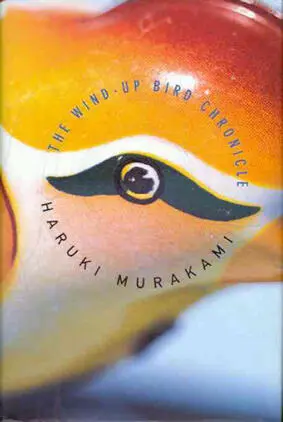
- Название:The Wind-Up Bird Chronicle
- Автор:
- Издательство:Shinchosha
- Жанр:
- Год:1998
- ISBN:0-679-77543-9
- Рейтинг книги:4 / 5. Голосов: 2
-
Избранное:Добавить в избранное
- Отзывы:
-
Ваша оценка:
The Wind-Up Bird Chronicle: краткое содержание, описание и аннотация
Предлагаем к чтению аннотацию, описание, краткое содержание или предисловие (зависит от того, что написал сам автор книги «The Wind-Up Bird Chronicle»). Если вы не нашли необходимую информацию о книге — напишите в комментариях, мы постараемся отыскать её.
In a Tokyo suburb a young man named Toru Okada searches for his wife's missing cat. Soon he finds himself looking for his wife as well in a netherworld that lies beneath the placid surface of Tokyo. As these searches intersect, Okada encounters a bizarre group of allies and antagonists: a psychic prostitute; a malevolent yet mediagenic politician; a cheerfully morbid sixteen-year-old-girl; and an aging war veteran who has been permanently changed by the hideous things he witnessed during Japan's forgotten campaign in Manchuria.
Gripping, prophetic, suffused with comedy and menace,
is a tour de force equal in scope to the masterpieces of Mishima and Pynchon.
The Wind-Up Bird Chronicle — читать онлайн бесплатно полную книгу (весь текст) целиком
Ниже представлен текст книги, разбитый по страницам. Система сохранения места последней прочитанной страницы, позволяет с удобством читать онлайн бесплатно книгу «The Wind-Up Bird Chronicle», без необходимости каждый раз заново искать на чём Вы остановились. Поставьте закладку, и сможете в любой момент перейти на страницу, на которой закончили чтение.
Интервал:
Закладка:
I'll write again soon. Next time, I'll probably be able to go a little further into all kinds of things.
P.S. Before the next letter comes, try to guess where I am and what I'm doing.
6Nutmeg and Cinnamon
The cat was covered from nose to tailtip with clumps of dried mud his fur stuck together in little balls, as if he had been rolling around on a filthy patch of ground for a long time. He purred with excitement as I picked him up and examined him all over. He might have been somewhat emaciated, but aside from that, he looked little different from when I had last seen him: face, body, fur. His eyes were clear, and he had no wounds He certainly didn't seem like a cat that had been missing for a year. It was more as if he had come home after a single night of carousing.
I fed him on the veranda: a plateful of sliced mackerel that I had bought at the supermarket. He was obviously starved. He polished off the fish slices so quickly he would gag now and then and spit pieces back into the plate. I found the cats water dish under the sink and filled it to the brim. He came close to emptying it. Having accomplished this much, he started licking his mud-caked fur, but then, as if suddenly recalling that I was there, he climbed into my lap, curled up, and went to sleep The cat slept with his forelegs tucked under his body, his face buried in his tail. He purred loudly at first, but that grew quieter, until he entered a state of complete and silent sleep, all defenses down. I sat in a sunny spot on the veranda, petting him gently so as not to wake him.
I had not thought about the cats special soft, warm touch for a very long time. So much had been happening to me that I had all but forgotten that the cat had disappeared. Holding this soft, small living creature in my lap this way, though, and seeing how it slept with complete trust in me, I felt a warm rush in my chest. I put my hand on the cats chest and felt his heart beating. The pulse was faint and fast, but his heart, like mine, was ticking off the time allotted to his small body with all the restless earnestness of my own.
Where had this cat been for a year? What had he been doing? Why had he chosen to come back now, all of a sudden? And where were the traces of the time he had lost? I wished I could ask him these questions. If only he could have answered me!
I brought an old cushion out to the veranda and set the cat down on top of it. He was as limp as a load of wash. When I picked him up, the slits of his eyes opened, and he opened his mouth, but he made no sound. He settled himself onto the cushion, gave a yawn, and fell back asleep. Once I was satisfied he was resting, 1 went to the kitchen to put away the groceries I had brought home. I placed the tofu and vegetables and fish in their compartments in the refrigerator, then glanced out to the veranda again. The cat was sleeping in the same position.
We had always called him Noboru Wataya because the look in his eyes resembled that of Kumiko's brother, but that had just been our little joke, not the cats real name. In fact, we had let six years go by without giving him a name.
Even as a joke, though, Noboru Wataya was no name for a cat of ours. The real Noboru Wataya had simply become too great a presence in the course of those six years-especially now that he had been elected to the House of Representatives. Saddling the cat with that name forever was out of the question. As long as he remained in this house, it would be necessary to give him a new name, a name of his own-and the sooner the better. It should be a simple, tangible, realistic name, something you could see with your eyes and feel with your hands, something that could erase the sound and memory and meaning of the name Noboru Wataya.
I brought in the plate that had held the fish. It looked as clean as if it had just been washed and wiped. The cat must have enjoyed his meal. I was glad I had happened to buy some mackerel just at the time the cat had chosen to come home. It seemed like a good omen, fortunate for both me and the cat. Yes, that was it: I would call him Mackerel. Rubbing him behind the ears, I informed him of the change: You're not Noboru Wataya anymore, I said. From now on, your name is Mackerel. I wanted to shout it to the world.
I sat on the veranda next to Mackerel the cat, reading a book until the sun began to set. The cat slept as soundly as if he had been knocked unconscious, his quiet breathing like a distant bellows, his body rising and falling with the sound. I would reach out now and then to feel his warmth and make sure the cat was really there. It was wonderful to be able to do that: to reach out and touch something, to feel something warm. I had been missing that kind of experience.
Mackerel was still there the next morning. He had not disappeared. When I woke up, I found him sleeping next to me, on his side, legs stretched straight out. He must have wakened during the night and licked himself clean. The mud and hair balls were gone. He looked almost like his old self. He had always had a handsome coat of fur. I held him for a while, then fed him his breakfast and changed his water. Then I moved away from him and tried calling him by name: Mackerel. Finally, on the third try, he turned toward me and gave a little meow.
Now it was time for me to begin my new day. The cat had come back to me, and I had to begin to move forward to some extent. I took a shower and ironed a freshly laundered shirt. I put on a pair of cotton pants and my new sneakers. A hazy overcast filled the sky, but the weather was not especially cold. I decided to wear a thickish sweater without a coat. I took the train to Shinjuku, as usual, went through the underground passageway to the west exit plaza, and took a seat on my usual bench.
The woman showed up a little after three o'clock. She didn't seem astonished to see me, and I reacted to her approach without surprise. Our encounter was entirely natural. We exchanged no greetings, as if this had all been prearranged. I raised my face slightly, and she looked at me with a flicker of the lips.
She wore a springlike orange cotton top, a tight skirt the color of topaz, and small gold earrings. She sat down next to me and, as always, took a pack of Virginia Slims from her purse. She put a cigarette in her mouth and lit up with a slim gold lighter. This time she knew better than to offer me a smoke. And after taking two or three leisurely puffs herself, with an air of deep thought, she dropped her cigarette to the ground as if testing gravity conditions for the day. She then patted me on the knee and said, Come with me, after which she stood to leave. I crushed her cigarette out and did as she said. She raised her hand to stop a passing taxi and climbed in. I climbed in beside her. She then announced very clearly an address in Aoyama, after which she said nothing at all until the cab had threaded its way through thick traffic to Aoyama Boulevard. I watched the sights of Tokyo passing by the window. There were several new buildings that I had never seen before. The woman took a notebook from her bag and wrote something in it with a small gold pen. She looked at her watch now and then, as if checking on something. The watch was set in a gold bracelet. All the little accessories she carried with her seemed to be made of gold. Or was it that they turned to gold the moment she touched them?
She took me into a boutique on Omote Sando that featured designer brands. There she picked out two suits for me, both of thin material, one blue gray, the other dark gray. These were not suits I could have worn to the law firm: they even felt expensive. She did not offer any explanations, and I did not ask for them. I simply did as I was told. This reminded me of several so-called art films I had seen in college. Movies like that never explained what was going on. Explanations were rejected as some kind of evil that could only destroy the films reality. That was one way of thought, one way to look at things, no doubt, but it felt strange for me, as a real, live human being, to enter such a world.
Читать дальшеИнтервал:
Закладка:
Похожие книги на «The Wind-Up Bird Chronicle»
Представляем Вашему вниманию похожие книги на «The Wind-Up Bird Chronicle» списком для выбора. Мы отобрали схожую по названию и смыслу литературу в надежде предоставить читателям больше вариантов отыскать новые, интересные, ещё непрочитанные произведения.










Обсуждение, отзывы о книге «The Wind-Up Bird Chronicle» и просто собственные мнения читателей. Оставьте ваши комментарии, напишите, что Вы думаете о произведении, его смысле или главных героях. Укажите что конкретно понравилось, а что нет, и почему Вы так считаете.