Jack O'Connell - The Skin Palace
Здесь есть возможность читать онлайн «Jack O'Connell - The Skin Palace» весь текст электронной книги совершенно бесплатно (целиком полную версию без сокращений). В некоторых случаях можно слушать аудио, скачать через торрент в формате fb2 и присутствует краткое содержание. Год выпуска: 2011, Издательство: MysteriousPress.com/Open Road, Жанр: Современная проза, Триллер, на английском языке. Описание произведения, (предисловие) а так же отзывы посетителей доступны на портале библиотеки ЛибКат.
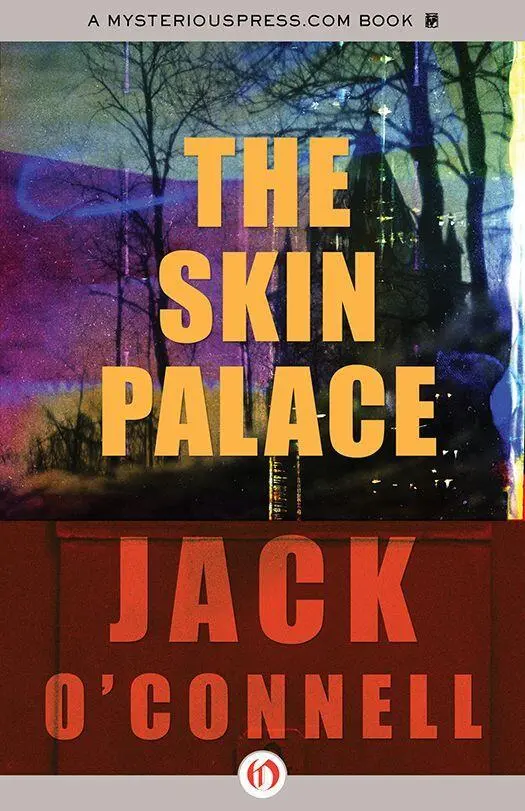
- Название:The Skin Palace
- Автор:
- Издательство:MysteriousPress.com/Open Road
- Жанр:
- Год:2011
- ISBN:нет данных
- Рейтинг книги:3 / 5. Голосов: 1
-
Избранное:Добавить в избранное
- Отзывы:
-
Ваша оценка:
The Skin Palace: краткое содержание, описание и аннотация
Предлагаем к чтению аннотацию, описание, краткое содержание или предисловие (зависит от того, что написал сам автор книги «The Skin Palace»). Если вы не нашли необходимую информацию о книге — напишите в комментариях, мы постараемся отыскать её.
The Skin Palace — читать онлайн бесплатно полную книгу (весь текст) целиком
Ниже представлен текст книги, разбитый по страницам. Система сохранения места последней прочитанной страницы, позволяет с удобством читать онлайн бесплатно книгу «The Skin Palace», без необходимости каждый раз заново искать на чём Вы остановились. Поставьте закладку, и сможете в любой момент перейти на страницу, на которой закончили чтение.
Интервал:
Закладка:
“C’mon, Sylvia,” he says. “I don’t have all night.”
He knows her name. And she’s hit with this awful surety that she knows his. And she makes herself open her mouth and say, “You’re Terrence Propp.”
20
They move through basements that connect to secondary basements, cellars that lead to subcellars. They follow the yellow beam of Propp’s penlight, though Sylvia gets the feeling he could find his way in complete darkness. They’re silent except for the short yell that slipped out when the first cobweb blanketed her face.
They climb through small portholes that have been sledgehammered out of brick walls. At some point the ground turns from concrete to loose earth and Propp slows to a halt. She hears him take a long breath through his nose, then he shines the light on her, lets it play on her face for what seems like a long time, finally asks, “You okay?”
“Where are we going?”
He swings the light up to his own face and says, “Home.”
He shines the beam in front of them and Sylvia looks ahead to see the tunnel they’ve been walking through has started to narrow down, the floorway rising and the ceiling lowering until they intersect at two heavy wooden cross-beams, these fat, dry, dense-looking timbers, like logs used in building a cabin. The beams are fitted into an X and they create an inept barrier.
“We’ve got to squeeze through here,” he says. “The beams are thorny, be careful you don’t tear your gown.”
She looks in the direction of his back and thinks he must be kidding. Her gown turned into an expensive cleaning rag when they entered the first basement. She follows him and ducks and twists until she manages to slide past the posts and ends up huddling down in a crawl space, pushed up against Propp’s shoulder. She hears him fiddling with rusty metal, then he seems to lean back against the cross-beams and kick his feet out. A half-door, like a metal hatchway, swings outward and a dim red glow of light reveals a much larger tunnel beyond.
“You’ll have to go first,” he says, “so I can resecure the door. Just edge over the side here until your foot touches the rung. It’s a short climb down. Less than ten feet.”
She does what he says. She comes forward on her behind until she can dangle her legs out and her heels hit a metal ladder rang. She reaches down and takes hold, lifts herself out into the air, pivots around until she’s facing the ladder and climbs down.
He follows, shuts the hatchway, comes next to her, takes her arm and says, “Not far now.”
They start to walk down a small incline that empties into a railroad bed. They’re in what looks like a kind of primitive subway tunnel. There’s an old bulb-eyed red railroad light mounted on the wall on the other side of the tracks. Propp motions to it and says, “It’s always on. No idea what powers it.”
They head down the middle of the tracks and Sylvia says, “What is this? What were these tracks for?”
For a second she doesn’t think he’s going to answer, then he says, “You know, the Canal Zone wasn’t always just a nightclub for dilettantes.”
He picks up the pace a little. “Quinsigamond used to be one of the biggest manufacturing centers in the Northeast.”
“So I’ve heard.”
“You’ve heard the truth. The city’s first industry was a paper mill. Early 1800s.”
She can’t believe she’s getting a history lesson here. She’s in a storybook nightgown, walking with a myth-figure through an underground railroad bed. And he wants to lecture about the industrial revolution.
“Everything from wooden wheels to hoopskirts got shipped out of here at one time. Bail wire, industrial wrenches, furnace chambers, drill presses …”
His voice drifts off and he stops walking, turns and points to a break in the opposite wall. A huge shaft is visible, like a loading platform, a shadow box whose floor is a flat apron of cement that juts out slightly from the facing wall and is covered with a kind of metal grid, a big mat of iron slats. It looks like an empty prison cell with the front wall of bars removed, a square room of three facing walls and a floor, but no visible ceiling.
“Old story,” he continues. “We all know some part of it. The city thrives. Goes into a kind of hyper-life. The need for cheap labor is filled by European peasantry. The population explodes and Quinsigamond grows into a kind of gritty, redbrick metropolis. You can picture it. Teeming streets. Tenements popping up. More factories. Bigger mills. For a time, everything congregated here.”
He turns and kind of dramatically points down the tracks in the direction they’ve just come from.
“The raw materials came in this way by handcarts,” he turns again and faces the loading platform up the embankment. “Got off-loaded to the appropriate building and then,” he makes his hand into a thumbs-up sign, “hauled up into whatever factory where it was transformed into ball valves or skiving knives or gearboxes or grinding wheels—”
“I get the picture,” Sylvia says.
He nods and continues, “—then it was lowered back down below the street, loaded onto an outgoing freight cart and sent on down the commerce highway.”
“Till the need for skiving knives started to wane—”
“And the climate in the South started to look better and better—”
“And the railroads started to groan and die.”
He says, “You know where this track leads, don’t you Sylvia?”
She looks past him into the darkness and tries, “Gompers Station?”
He nods and starts to walk again. She moves up next to him and says, “You really are Terrence Propp, aren’t you?”
“Why’ve you been looking for me, Sylvia?”
“How do you know my name? And how do you know I’ve been looking for you?”
“I guess,” he says, “we both have a lot of questions.”
“You said we were going home. You live down here?”
His voice goes lower. “Here in the tunnels? Of course not.”
“Doesn’t anybody know these tracks still exist?”
The track bed begins to curve to the left and a new red bulb lights their way.
“If you mean the DPW, probably. It’s still on their maps, though it doesn’t tie into any currently relevant sewer or power lines. If you mean the little leather bohemians writhing around above us, they don’t know their affected asses from their affected elbows.”
“Sounds like you hate your own devotees.”
“I never asked for devotees of any kind, Sylvia.”
“I’m not exactly a devotee,” she says. “I never heard of you before this week.”
“Then your luck took a change,” he says, sounding unoffended.
“For better or worse?”
“That remains to be seen, doesn’t it.”
He stops, shines his penlight up at the rounded ceiling to show a series of cracks in the masonry, veins that spread wider and wider where the concrete has separated from itself.
“The ’53 earthquake,” he says. “June nine. I don’t think anyone in this city even realized we were sitting on the O’Toole Fault until it hit. You’re about to see the most pitiful casualty of the quake.”
He clicks off the light and pockets it, takes her hand, and as the tracks begin to incline toward street level, Propp veers to the right and crawls up an ash and gravel embankment and then squeezes through this horrible manmade corridor that looks like it’s been hacked out of the earth and stone by pick ax and shovel. They have to walk sideways to fit through, Propp leading the way, and thankfully it’s only a short path, maybe ten feet, but long enough for Sylvia to get a little claustrophobic, especially when she feels the cold of the rock face behind her narrowing in.
Читать дальшеИнтервал:
Закладка:
Похожие книги на «The Skin Palace»
Представляем Вашему вниманию похожие книги на «The Skin Palace» списком для выбора. Мы отобрали схожую по названию и смыслу литературу в надежде предоставить читателям больше вариантов отыскать новые, интересные, ещё непрочитанные произведения.






Обсуждение, отзывы о книге «The Skin Palace» и просто собственные мнения читателей. Оставьте ваши комментарии, напишите, что Вы думаете о произведении, его смысле или главных героях. Укажите что конкретно понравилось, а что нет, и почему Вы так считаете.