Jonathan Dee - The Privileges
Здесь есть возможность читать онлайн «Jonathan Dee - The Privileges» весь текст электронной книги совершенно бесплатно (целиком полную версию без сокращений). В некоторых случаях можно слушать аудио, скачать через торрент в формате fb2 и присутствует краткое содержание. Год выпуска: 2010, Издательство: Random House, Жанр: Современная проза, на английском языке. Описание произведения, (предисловие) а так же отзывы посетителей доступны на портале библиотеки ЛибКат.
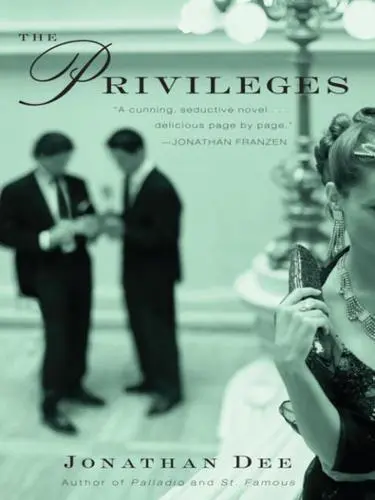
- Название:The Privileges
- Автор:
- Издательство:Random House
- Жанр:
- Год:2010
- ISBN:нет данных
- Рейтинг книги:4 / 5. Голосов: 1
-
Избранное:Добавить в избранное
- Отзывы:
-
Ваша оценка:
The Privileges: краткое содержание, описание и аннотация
Предлагаем к чтению аннотацию, описание, краткое содержание или предисловие (зависит от того, что написал сам автор книги «The Privileges»). Если вы не нашли необходимую информацию о книге — напишите в комментариях, мы постараемся отыскать её.
But the Moreys' standards are not the same as other people's. The future in which they have always believed for themselves and their children — a life of almost boundless privilege, in which any desire can be acted upon and any ambition made real — is still out there, but it is not arriving fast enough to suit them. As Cynthia, at home with the kids day after identical day, begins to drift, Adam is confronted with a choice that will test how much he is willing to risk to ensure his family's happiness and to recapture the sense that the only acceptable life is one of infinite possibility.
The Privileges
The Privileges — читать онлайн бесплатно полную книгу (весь текст) целиком
Ниже представлен текст книги, разбитый по страницам. Система сохранения места последней прочитанной страницы, позволяет с удобством читать онлайн бесплатно книгу «The Privileges», без необходимости каждый раз заново искать на чём Вы остановились. Поставьте закладку, и сможете в любой момент перейти на страницу, на которой закончили чтение.
Интервал:
Закладка:
As for Ruth, having both girls in the house helped her maintain the bizarre equanimity that had characterized her all week. She’d wept a little during the service but otherwise there had been no great outpouring of grief. Cynthia believed this was some kind of denial. Or maybe it was relief. Or maybe it was just that she was old and alone and so there was no longer any need for her customary exaggeration of how hopeless things were. She puttered and took naps and answered condolence cards and fought good-naturedly with them when they tried to cook for her. She was sixty-seven and there was nothing to suggest that she couldn’t go on like this for another twenty or thirty years.
She was easily exhausted, though, and went to bed early, and a few minutes later Cynthia was sitting numbly in the kitchen staring at a light-switch cover shaped like a rooster when Deborah walked in happily waving a bottle of Knob Creek bourbon she’d found in the liquor cabinet. Hallelujah, Cynthia thought.
“So when are you heading back?” Deborah said, after the first one.
“The day after tomorrow, I think. I’ve got a board meeting, and then we have this place down in Anguilla we go to sometimes, so we’ll go there when school’s out, which is in … What is today? Anyway, it’s next week.”
Deborah nodded but was unable to suppress an ambivalent laugh. “You guys have really been successful,” was what she said.
Cynthia wasn’t sure how to reply to that one. “It’s all Adam,” she said finally. “Some people just have a talent for investing.”
“Well, you two always did seem to have that kind of penumbra around you. And now your kids have got it too.”
“Your boys are adorable,” Cynthia said, reaching for the bottle.
“Thank you. And the weird thing is, I have two more. Sort of. Sebastian has two daughters from his first marriage. Both in college now. So after all these years, I’m the stepmother.”
“Ironic would be the word there, I guess,” Cynthia said.
“Say this for my dad,” Deborah said, holding up the bottle. “He knew that life was too short to settle for cheap liquor.”
“So I’m curious,” Cynthia said. She could see already that Deborah was something of a lightweight, and who knew but that this might be the last time they ever talked. “What’s happened to you? I mean the one thing I always thought we had in common was thinking that the whole blended-family thing or whatever people call it was bullshit. You always seemed to hate it worse than I did. And now you’re all Aunty Deborah with Jonas, and you’re treating Ruth like she’s your own mom. Is your own mom even still alive? That seems like something I should know, I guess, but I have no idea.”
Deborah looked at her slyly. “She lives with us,” she said. “Back in Boston.”
“Get the fuck out of here.”
She nodded, amused by herself. “I don’t know when it happened exactly, but somehow the older I got the more exposed I felt, and the whole family idea got real meaningful to me. I developed this need for it. I had a theory that it had to do with being an only child, like the fear of being alone that comes with that, but I guess not. It didn’t happen to you.”
“So is this it for you, in terms of coming out here to visit or to help Ruth or whatever? I’ve always kind of wondered about the step-thing. Does it end when you’re an adult? Does it end when the marriage that made it happen ends?”
Deborah considered it. She put her chin down on the kitchen table and stared at the bottle. “Time will kick your ass,” she said. “I used to be so angry about how fake the whole thing was. I was pissed about having to be in your wedding, even. But you wait around long enough and these bogus connections harden into something real, whether you like it or not. I really think of Ruth as one of my parents now. I don’t think Dad’s death can undo that.”
“What will happen to her?” Cynthia said suddenly. “You know there’s going to be a huge crash once we’re gone. It must fucking suck to be old. It must suck to have your husband die. But I mean what can we do about it? The only way to hold it off is to stay here forever. And there’s no way she’s coming to live with us, I mean, hats off to you and all that, but I could never do it.”
“She’d never come live with you anyway, even if you asked her. Or with me. No way Ruth could ever open herself up enough to depend on one of us like that. I think she’ll actually do okay living alone. Better than most people. The thing to worry about, if you want to worry about something, is what if her health goes south, like Dad’s did. Then you’re looking at some hard choices.”
Did she mean “you” as in “one,” or “you” as in “Cynthia”? But there was no way to ask for a clarification because she felt craven and selfish just for wondering. Anyway, those decisions were still a long way off. “She’s never been sick a day in her life,” Cynthia said.
There was some kind of noise from the direction of the living room, and they both cocked their heads in case Ruth was up, but only silence followed. The muted TV still flickered on the walls beyond the kitchen door.
“You know,” Deborah said, “my dad was really a great guy. He had his limits in terms of expressiveness, but he was really loving. And he always had a soft spot for you. I think because you were certain things I wasn’t. It hurt him that you didn’t think of him as a parent. You never really gave him a chance.”
Her eyes were drunk. Either she hadn’t done this in a long time or she did it a lot. Cynthia suddenly lost interest in the answer. You started taking on other people’s grievances and there was no end to it. She was nobody’s sister, and neither was Deborah. It was one thing to conspire about the future but there was no way she was going back into the past.
“I already have a father,” she said.
Juniors and seniors from Dalton still came and went at the Moreys’ apartment like it was some kind of after-school program; but months after April’s friend Robin had stopped living there, gone back to reassume her place inside her own much more opaque home, April still missed having her around. Which was ironic, she thought, because toward the end of Robin’s time there, the girl’s behavior had actually started to offend her a little, less on her own behalf than on her mother’s. Robin brought drugs into the house, she used her key to sneak out at night and flirted with the doorman so he wouldn’t bust her, she even brought guys into the downstairs half of the apartment in secret, and even though April had done just about all of these things herself at one time or another, her thought this time was: My mother takes you in and gives you every freedom and this is how you pay her back?
When it got around Dalton that she was essentially a runaway, and that her mom had beaten her (April herself may have been the one who let that slip), Robin’s school persona had undergone a sea change. She went from a carefully cultivated normality to a kind of exalted strangeness. She started playing up to her new persona by mouthing off to teachers (who, like Cynthia, basically let her get away with anything), to other kids, to the people who worked at the Starbucks near school where they hung out during free periods. Friday afternoons sometimes she’d be so drunk she’d fall asleep in class. To others it might have looked like acting out but April saw it as pure performance. Only she knew how good the chances were that this supposedly damaged badass would end the day lying in her pajamas on April’s couch with her head in April’s mother’s lap while the three of them watched movies and shared a bag of red licorice. But now that was over and Robin and she, though still friends, didn’t share anything like that at all.
Читать дальшеИнтервал:
Закладка:
Похожие книги на «The Privileges»
Представляем Вашему вниманию похожие книги на «The Privileges» списком для выбора. Мы отобрали схожую по названию и смыслу литературу в надежде предоставить читателям больше вариантов отыскать новые, интересные, ещё непрочитанные произведения.







Обсуждение, отзывы о книге «The Privileges» и просто собственные мнения читателей. Оставьте ваши комментарии, напишите, что Вы думаете о произведении, его смысле или главных героях. Укажите что конкретно понравилось, а что нет, и почему Вы так считаете.