Tash Aw - Five Star Billionaire
Здесь есть возможность читать онлайн «Tash Aw - Five Star Billionaire» — ознакомительный отрывок электронной книги совершенно бесплатно, а после прочтения отрывка купить полную версию. В некоторых случаях можно слушать аудио, скачать через торрент в формате fb2 и присутствует краткое содержание. Год выпуска: 2013, Издательство: Spiegel & Grau, Жанр: Современная проза, на английском языке. Описание произведения, (предисловие) а так же отзывы посетителей доступны на портале библиотеки ЛибКат.
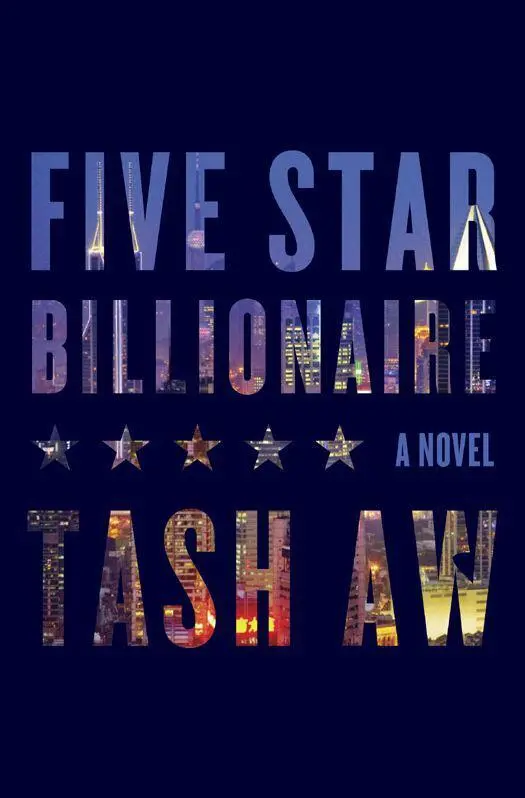
- Название:Five Star Billionaire
- Автор:
- Издательство:Spiegel & Grau
- Жанр:
- Год:2013
- ISBN:нет данных
- Рейтинг книги:3 / 5. Голосов: 1
-
Избранное:Добавить в избранное
- Отзывы:
-
Ваша оценка:
Five Star Billionaire: краткое содержание, описание и аннотация
Предлагаем к чтению аннотацию, описание, краткое содержание или предисловие (зависит от того, что написал сам автор книги «Five Star Billionaire»). Если вы не нашли необходимую информацию о книге — напишите в комментариях, мы постараемся отыскать её.
the dazzling kaleidoscopic new novel by the award-winning writer Tash Aw, offers rare insight into China today, with its constant transformations and its promise of possibility.
Five Star Billionaire — читать онлайн ознакомительный отрывок
Ниже представлен текст книги, разбитый по страницам. Система сохранения места последней прочитанной страницы, позволяет с удобством читать онлайн бесплатно книгу «Five Star Billionaire», без необходимости каждый раз заново искать на чём Вы остановились. Поставьте закладку, и сможете в любой момент перейти на страницу, на которой закончили чтение.
Интервал:
Закладка:
“We can’t hang on to it just for sentimental reasons,” his father said one day at a family meeting convened to discuss it.
“Yeah, I agree,” said Sixth Uncle. “It hasn’t made a single sen since 1971. No kidding, not one bloody sen . We’ve been subsidizing it for too long. For what?”
“For the sake of heritage,” Justin said. “For tradition. It goes back a long way in our family.”
“Tradition my foot,” Sixth Uncle said. “Who gives a damn about history in this town?”
“All right, all right,” Justin’s father said. “Son, you are right; it is valuable in that regard. But we have to face the facts — the cinema is right in the middle of town. If you were to look at a map of KL and mark its epicenter, it would be directly where the New Cathay is. It’s the most valuable real estate in the country.”
“So what? Do we need the money that badly? Who’s going to buy it, anyway?”
His father exchanged glances with Sixth Uncle, and their tiny interaction did not escape Justin. In his family’s unspoken/spoken way of communicating, he knew that something significant would soon follow.
“Consider this, son,” his father continued calmly. “No one might be interested in buying the cinema itself — there are modern cinemas everywhere now. But the land value is tremendous. The cinema can always be torn down.”
“But do we need the money that badly?” Justin repeated.
“It’s the last parcel of land in town that does not have a premium development on it. Sooner or later, it will happen. What if, say, the government makes a compulsory purchase order? They did that with our Pudu land just last month, remember? And we didn’t get the right price for it. It’s much better to act while we can still control the situation.”
“But, Father, this is one of the few remaining heritage buildings in KL. Surely the government can’t destroy it for another office block.”
Sixth Uncle snorted.
“And what about the people who have worked there for forty years? The old Indian jaga was still there the other day. It’s, like, his home.”
“For goodness’ sake,” Sixth Uncle said, “we’re not a damn charity.”
“But—” Justin began to say, and then he stopped, for he knew that the decision had been made.
“We thought that you should be in charge of the site. We have a couple of people interested in buying it, but we are thinking of developing it ourselves too. You need to … explore the options.”
Sixth Uncle looked at Justin as he remained slumped in his chair. “The boy isn’t up to it,” he said. “He doesn’t want to do it. Guess it’s too big a job for a kid.”
Justin’s father said, “He isn’t a child anymore; he’s twenty-six years old. It’s high time he assumes responsibility for important matters.”
“He’ll be okay,” Sixth Uncle replied.
And Justin thought: It was strange that people spoke about him in the third person, as if he did not exist.
What made the situation worse for Justin — what made him feel physically sick — was how he would explain his family’s plans to Yinghui. She had already started to work part-time for a charity set up by friends of theirs, Friends of Old KL, which campaigned to preserve the few remaining historic buildings in KL — the once-grand colonial mansions and the handsome Chinese shophouses that were being bulldozed to make way for the tower blocks that she described as “pathetic phalluses.” Justin had, on several occasions, been present when she and her conservation-minded friends had discussed their work. They’d called people of their parents’ generation “mindless vandals” who had happily deprived future generations of their rightful heritage: Prison would not be an overpunishment for such crimes. He had felt guilty by implication, as if he belonged to that older generation — part of an unfeeling establishment that kicked aside all that stood in their way.
“But there’s a question of practicality,” he had once ventured. “Old buildings aren’t practical. You can’t live in them easily; they’re hard to maintain.”
Yinghui had simply rolled her eyes and said, “You just don’t get it.”
But he had gotten it; he understood perfectly what the position was. For a week or two after the meeting with his father and Sixth Uncle, he avoided Yinghui, feeling as if she would see the guilt imprinted upon him, all those crimes against culture brewing within him. Whenever he came home after work and saw her lounging on the sofa with C.S., he did not stop, as he usually did, to share a Coke and a quick chat with them but headed straight upstairs instead. He decided he would not tell her; she would not know anything until it was too late, when a tower block was standing in place of the New Cathay. He would then vaguely lay the blame on his father, his family, the government — whomever. He would be no more to blame than the whole damn country.
He saw her and C.S. by chance one day at the Nasi Kandar place in Taman Tun. They had been looking at a small shop lot in the area, with a view to starting a business of some kind (she was actually going ahead with it, he thought, feeling slightly alarmed); he had just finished a round of golf with prospective business partners at the golf club nearby.
“Very busy these days?” Yinghui said as she sipped a cold rose syrup.
“Yes, kind of.”
“ Wah , I’d like to have a job where playing golf counts as working.”
Justin shrugged.
“Or maybe you were paying homage at the family cemetery?” she continued. “Tell me, how difficult was it to keep hold of the cemetery when you sold the land to develop the golf course?”
“I don’t know. I was a teenager then; I wasn’t involved in any of that.”
“Must be hard selling off all that family land to big government companies. But I’m sure you guys didn’t do too badly out of it.”
Their food arrived. Justin had been hungry, but now he felt too hot and sweaty to eat it; he’d ordered too much, and he didn’t really feel like Nasi Kandar now.
“Explain to me how it works — how you deal with it, emotionally, I mean, when you sell off something that’s been in the family for generations. Is there, like, any sentimentality involved? Or do the billions you get from the sale compensate for the loss? When you go past a shopping mall with KFC and McDonald’s and all that, do you ever think, Wow, that was where my granddad started his first business? Or do you just think, I’d like a Big Mac?”
C.S. looked away, searching for a waiter. “Anyone want another soya bean drink?”
“I don’t know.” Justin shook his head. “I don’t run that side of the business.”
“Liar,” Yinghui said. Her face suddenly flushed; it was a very hot day, and she was sweating. “You are such a fucking two-faced snake. Sitting here in front of us and saying you don’t know anything about it. Hanging out with my friends and saying, Yeah, isn’t it terrible, all this mindless development going on around us, we don’t need it, it’s just to show the West that we are a rich, modern country, we should preserve our soul. And then you turn around and raze everything to the ground. You know what? Fuck you.”
“I have no idea why you are getting so worked up. Why are you suddenly attacking me? Calm down.”
“ ‘I have no idea why you are getting so worked up,’ ” Yinghui mimicked. “So you have no idea what’s going to happen to the New Cathay Movie Theatre? No plans to tear it down and sell the land to the highest bidder? Beautiful piece of land — prime location, isn’t it? Shame it happens to have the first Art Deco building in KL on it. Oh, well, too bad, just destroy it. You are such a ruthless bastard.”
Читать дальшеИнтервал:
Закладка:
Похожие книги на «Five Star Billionaire»
Представляем Вашему вниманию похожие книги на «Five Star Billionaire» списком для выбора. Мы отобрали схожую по названию и смыслу литературу в надежде предоставить читателям больше вариантов отыскать новые, интересные, ещё непрочитанные произведения.

![Scott O’Hara - Five-Star Fugitive [= Border Town Girl]](/books/432138/scott-o-hara-five-thumb.webp)






Обсуждение, отзывы о книге «Five Star Billionaire» и просто собственные мнения читателей. Оставьте ваши комментарии, напишите, что Вы думаете о произведении, его смысле или главных героях. Укажите что конкретно понравилось, а что нет, и почему Вы так считаете.