Marisha Pessl - Night Film
Здесь есть возможность читать онлайн «Marisha Pessl - Night Film» весь текст электронной книги совершенно бесплатно (целиком полную версию без сокращений). В некоторых случаях можно слушать аудио, скачать через торрент в формате fb2 и присутствует краткое содержание. Год выпуска: 2014, Издательство: Random House Trade Paperbacks, Жанр: Современная проза, на английском языке. Описание произведения, (предисловие) а так же отзывы посетителей доступны на портале библиотеки ЛибКат.
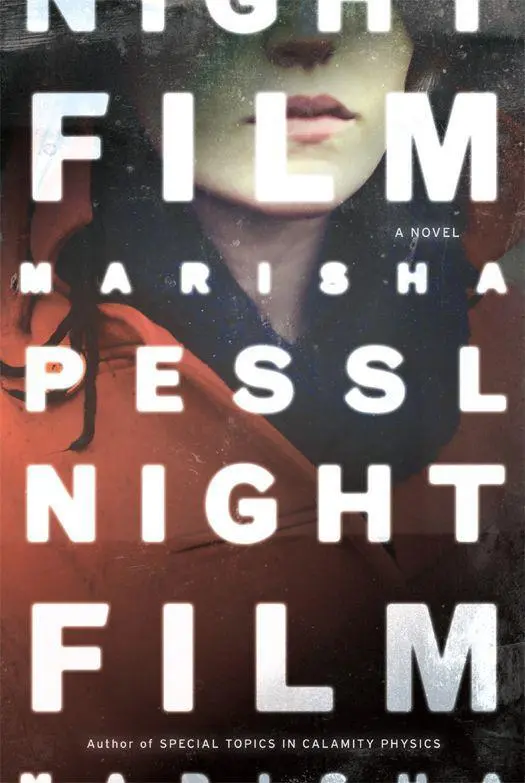
- Название:Night Film
- Автор:
- Издательство:Random House Trade Paperbacks
- Жанр:
- Год:2014
- ISBN:нет данных
- Рейтинг книги:5 / 5. Голосов: 1
-
Избранное:Добавить в избранное
- Отзывы:
-
Ваша оценка:
Night Film: краткое содержание, описание и аннотация
Предлагаем к чтению аннотацию, описание, краткое содержание или предисловие (зависит от того, что написал сам автор книги «Night Film»). Если вы не нашли необходимую информацию о книге — напишите в комментариях, мы постараемся отыскать её.
tells the haunting story of a journalist who becomes obsessed with the mysterious death of a troubled prodigy — the daughter of an iconic, reclusive filmmaker. On a damp October night, beautiful young Ashley Cordova is found dead in an abandoned warehouse in lower Manhattan. Though her death is ruled a suicide, veteran investigative journalist Scott McGrath suspects otherwise. As he probes the strange circumstances surrounding Ashley’s life and death, McGrath comes face-to-face with the legacy of her father: the legendary, reclusive cult-horror-film director Stanislas Cordova — a man who hasn’t been seen in public for more than thirty years.
For McGrath, another death connected to this seemingly cursed family dynasty seems more than just a coincidence. Though much has been written about Cordova’s dark and unsettling films, very little is known about the man himself.
Driven by revenge, curiosity, and a need for the truth, McGrath, with the aid of two strangers, is drawn deeper and deeper into Cordova’s eerie, hypnotic world.
The last time he got close to exposing the director, McGrath lost his marriage and his career. This time he might lose even more.
Night Film
Night Film — читать онлайн бесплатно полную книгу (весь текст) целиком
Ниже представлен текст книги, разбитый по страницам. Система сохранения места последней прочитанной страницы, позволяет с удобством читать онлайн бесплатно книгу «Night Film», без необходимости каждый раз заново искать на чём Вы остановились. Поставьте закладку, и сможете в любой момент перейти на страницу, на которой закончили чтение.
Интервал:
Закладка:
He leaned forward, taking a deep, uneven breath, staring at the floor.
“They found him eleven miles away, drowned in a river. Everyone thought it was an accident, that he’d gotten lost in the commotion. But I knew the truth. It was because of what I’d said. He was walking and saw the river, and he threw himself in. I did it. I killed that sweet kid who hadn’t done anything except be himself. There was nothing wrong with him. It was me. I was the loser. I was the waste of flesh. I was the one that no one loved. And no one ever would. See, Ashley had saved Orlando,” he whispered. “And I destroyed him.”
He closed his eyes. He looked so anguished whispering this, it was as if the words cut into him. After a moment, he forced himself to look up, his eyes watery and bloodshot.
“They helicoptered us out, back to base camp,” he continued. “The outraged parents descended. The counselors faced negligence charges. Two served jail time. Some of their discipline methods came out, and the camp changed its name to, like, Twelve Gold Forests a year later. No one knew I had anything to do with what had happened. Except Ash. She didn’t say anything. I just could tell from the way she looked at me. We were the last two to leave. A black SUV came for her, no parents, just a woman driver wearing a suit. Before she climbed into the backseat, she turned and she looked in at me, where I was watching inside the cabin. It would’ve been impossible for her to actually see me, but somehow she did. She knew everything.”
He seemed on the verge of crying but wouldn’t let himself, angrily wiping his eyes in the crook of his arm.
“You were supposed to be checked out by your parents,” he said, his voice hoarse. “My uncle couldn’t make it. But things were nuts with police, the local news, Orlando’s family; finally the cops just turned to me and said, ‘ Go. ’ I could just walk the fuck out. And that’s what I did.”
I’d been so absorbed listening to him, I’d hardly noticed Nora had darted across the living room. She retrieved the box of Kleenex off the bookshelf, smiling as she handed it to Hopper, slipping back to the couch.
“The next five months were a blackout,” he said, pausing to blow his nose. “Or a black hole. I hitchhiked. I went into Oregon and up into Canada. Most the time I didn’t know where I was. I just walked. I spent nights in motels and parking lots, strip malls. I stole money and food. I bought some heroin once and locked myself in a motel room for weeks at a time, floating away in a haze, hoping I’d find the end of the Earth and just float off. When I reached Alaska, I went into this one town, Fritz Creek, and stole a six-pack of Pabst from a convenience store. I didn’t know every mom-’N’-pop shop in Alaska keeps a shotgun behind their register. The owner shot two inches from my ear, right into a display of potato chips, then pointed the barrel right at my head. I asked him to please pull the trigger. He’d be doing me a favor. Only goading him like that, like a madman, I probably scared the shit out of him, because he lowered it and, visibly freaked out, he called the police. A month later, I was at Peterson Long, a military boarding school in Texas. I’d been there about a week, and I remember I was in the library — it had bars on the windows — wondering how the hell I was going to break out, when I got this email out of the blue.”
He smiled reluctantly, staring off somewhere, as if even now surprised by it.
“All it said in the subject line was ‘Do I dare?’ I didn’t know what that meant or who the hell sent it. Until I read the email address. Ashley Brett Cordova. I thought it was a joke.”
“Do I dare?” I repeated.
Hopper glanced up at me, his face darkening. “It’s from Prufrock.”
Of course. “The Love Song of J. Alfred Prufrock.” It was a T. S. Eliot poem, a crushing description of paralysis and unrequited romantic longing in the modern world. I hadn’t read the poem since college, though I still remembered some of the lines as they burned into your head the moment you read them: In the room the women come and go / Talking of Michelangelo.
“That’s kind of how our friendship started,” Hopper said simply. “Writing to each other. She didn’t talk about her family. Sometimes she mentioned her brother. Or what she was studying. Or her dogs, a couple of rescued mutts. Her letters were the reason I didn’t break out of there. I worried we’d somehow lose touch if I did. Once she wrote that maybe I should stop running from myself and try standing still. So that’s what I did.” He shook his head. “When spring break came, I was dying to see her. I think a part of me didn’t think it was actually Ashley that I’d been writing to, but some figment of my imagination. I knew she was in the city, so I went online and found a spot in Central Park, the Promenade near the Bandshell. I told her to meet me there, April the second, seven o’clock sharp. Cheesy as fuck. I didn’t care. She didn’t answer my email for two days. And when it came, her response was one word. The best word in the English language.”
“What’s that?” I asked, when he didn’t immediately go on.
“Yes.” He smiled sheepishly. “I took three buses to get to New York. I arrived a day early, slept on a park bench. I was so goddamn nervous. Like I’d never been with a girl before. But she wasn’t a girl. She was a wonder. Finally, it was seven o’clock, seven-thirty, eight. She didn’t show. Blew me off. I was friggin’ embarrassed for myself, and I was about to take off when all of a sudden I hear right behind me in her low voice, ‘Hello, Tiger Foot.’ ” He glanced up, wryly shaking his head. “It was my goddamn tribe name from Six Silver Lakes. I turn around and, of course, she was there.”
He fell silent, thinking about it, amazed.
“And that was it,” he noted quietly. “We were up the whole night just talking, walking the city. You can walk those blocks forever, take a break on the edge of a fountain, eat pizza and snow cones, awed by the human carnival all around you. She was the most incredible person. To be next to her was to have everything. When it was daylight, we’d been sitting on a stoop watching the street get light. She mentioned the light took eight minutes to leave the sun and reach us. You couldn’t help but love that light, traveling so far through the loneliest of spaces to get here, to come so far. It was like we were the only two people in the world.”
He paused, looking up at me with a penetrating stare. “She told me her father taught her to live life way beyond the cusp of it, way out in the outer reaches where most people never had the guts to go, where you got hurt. Where there was unimaginable beauty and pain. She was always demanding of herself, Do I dare? Do I dare disturb the universe? From Prufrock. Her dad revered the poem, I guess, and the entire family lived in answer to it. They were always reminding themselves to stop measuring life in coffee spoons, mornings and afternoons, to keep swimming way, way down to the bottom of the ocean to find where the mermaids sang, each to each. Where there was danger and beauty and light. Only the now. Ashley said it was the only way to live.”
After this feverish outpouring of words, Hopper paused to collect himself, taking a deep breath.
“It was how she was. Ash not only rode on the waves and dove every day down to where the mermaids sang, she was a mermaid herself. By the time I walked her home, I loved her. Body and soul.”
He admitted this evenly, his face bare and unafraid. I sensed it was the first time he had truly talked about her. There was a feeling in his unsteady voice, in the words used to describe her, that they’d been submerged inside him for years; they were musty and purpled and fragile, practically dissolving as soon as they hit the air.
Читать дальшеИнтервал:
Закладка:
Похожие книги на «Night Film»
Представляем Вашему вниманию похожие книги на «Night Film» списком для выбора. Мы отобрали схожую по названию и смыслу литературу в надежде предоставить читателям больше вариантов отыскать новые, интересные, ещё непрочитанные произведения.








Обсуждение, отзывы о книге «Night Film» и просто собственные мнения читателей. Оставьте ваши комментарии, напишите, что Вы думаете о произведении, его смысле или главных героях. Укажите что конкретно понравилось, а что нет, и почему Вы так считаете.