Marisha Pessl - Night Film
Здесь есть возможность читать онлайн «Marisha Pessl - Night Film» весь текст электронной книги совершенно бесплатно (целиком полную версию без сокращений). В некоторых случаях можно слушать аудио, скачать через торрент в формате fb2 и присутствует краткое содержание. Год выпуска: 2014, Издательство: Random House Trade Paperbacks, Жанр: Современная проза, на английском языке. Описание произведения, (предисловие) а так же отзывы посетителей доступны на портале библиотеки ЛибКат.
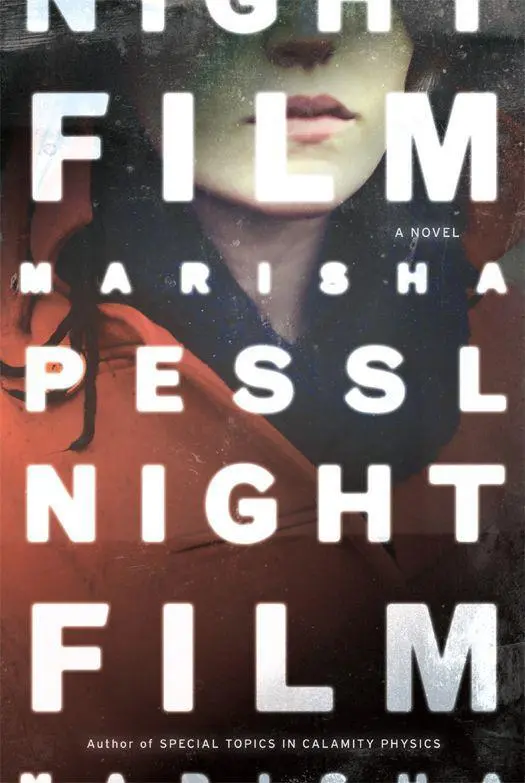
- Название:Night Film
- Автор:
- Издательство:Random House Trade Paperbacks
- Жанр:
- Год:2014
- ISBN:нет данных
- Рейтинг книги:5 / 5. Голосов: 1
-
Избранное:Добавить в избранное
- Отзывы:
-
Ваша оценка:
Night Film: краткое содержание, описание и аннотация
Предлагаем к чтению аннотацию, описание, краткое содержание или предисловие (зависит от того, что написал сам автор книги «Night Film»). Если вы не нашли необходимую информацию о книге — напишите в комментариях, мы постараемся отыскать её.
tells the haunting story of a journalist who becomes obsessed with the mysterious death of a troubled prodigy — the daughter of an iconic, reclusive filmmaker. On a damp October night, beautiful young Ashley Cordova is found dead in an abandoned warehouse in lower Manhattan. Though her death is ruled a suicide, veteran investigative journalist Scott McGrath suspects otherwise. As he probes the strange circumstances surrounding Ashley’s life and death, McGrath comes face-to-face with the legacy of her father: the legendary, reclusive cult-horror-film director Stanislas Cordova — a man who hasn’t been seen in public for more than thirty years.
For McGrath, another death connected to this seemingly cursed family dynasty seems more than just a coincidence. Though much has been written about Cordova’s dark and unsettling films, very little is known about the man himself.
Driven by revenge, curiosity, and a need for the truth, McGrath, with the aid of two strangers, is drawn deeper and deeper into Cordova’s eerie, hypnotic world.
The last time he got close to exposing the director, McGrath lost his marriage and his career. This time he might lose even more.
Night Film
Night Film — читать онлайн бесплатно полную книгу (весь текст) целиком
Ниже представлен текст книги, разбитый по страницам. Система сохранения места последней прочитанной страницы, позволяет с удобством читать онлайн бесплатно книгу «Night Film», без необходимости каждый раз заново искать на чём Вы остановились. Поставьте закладку, и сможете в любой момент перейти на страницу, на которой закончили чтение.
Интервал:
Закладка:
“I wanted to see if he was on the up and up. And he wasn’t.” Hopper exhaled a long stream of smoke. “I didn’t like that guy.”
“He certainly liked you. ”
He didn’t respond, seemingly bored by the comment.
“So, what did she really say?” I asked.
“It was kinda tough to follow because she was speaking in a Guatemalan dialect. And she was bat-shit crazy.”
“Why was she bat-shit crazy?” asked Nora.
“She believed in ghosts, spirits, like, they’re all floating around us like pollen. She went on for like fifteen minutes about how she came from a long line of curanderas. ”
“What’s that?” I asked.
“Some folksy medicine-woman bullshit. I’ve heard of them, actually. They cure bodies and souls. A one-stop shop for all your troubles.”
“So, what did he lie about?”
“He was right about the housekeeper seeing Ashley on the thirtieth floor. But the second he got to the part where she was wheeling the cart down the hall, he took all kinds of liberties. She actually called her espíritu rojo, a red spirit. She never thought it was a person sitting there, but some kind of confused soul or something, trapped between life and death. The nearer she got, she felt something, like some change in the gravitational pull of the Earth. When she crouched down in front of Ashley she said she was inconsciente. Unconscious. But not from drugs. She called her una mujer de las sombras. A woman of shadows.” He shrugged. “No clue what that meant. She touched her, and Ashley was like ice, so she shook her by the shoulders and when she opened her eyes, she saw la cara de la muerte staring back at her. The face of death.”
He fell silent, thinking it over. “She said Ashley was marked,” he added.
“In what way?”
“By the devil. Told you the woman was nuts. She said there was a second pupil in her left eye, some shit, and it was …” He tossed his cigarette to the ground. “She called it huella del mal. ” He ground the butt out with his heel, and when he glanced up again, he seemed surprised by our expectant faces, waiting for him to translate.
“It means evil’s footprint,” he said.
“That’s why she pointed at her left eye,” I said.
Nora was staring at Hopper, speechless. She rolled the Whole Foods bag containing Ashley’s coat even tighter, as if to make sure whatever aura negativo attached to it remained securely inside.
“Then what happened?” I asked. “Stigmata appeared on Guadalupe’s palms?”
“She was scared, ran to the basement, got her things, and went to church for the rest of the day. She didn’t call security, which was why Hashim was pissed. She didn’t follow housekeeping protocol. Hashim thought Ashley was homeless, and he told Guadalupe he was going to speak to her boss about her handling of the situation. So after all that, I think we got the woman in trouble.”
It made perfect sense. When I saw Guadalupe staring at herself in the bathroom mirror with that odd look on her face, it had to be because she feared she might lose her job.
Hopper now looked rather dismissive of the entire episode. He’d taken his phone from his pocket, scrolling through messages.
“I gotta bounce,” he said. “Catch you guys later.”
With a slipshod smile, he turned, stepping off the curb.
Even though cars were racing down Park, surging toward us, he jogged right out in front of them, oblivious, or else he didn’t care if he was hit. A taxi braked and honked, but he ignored it, hopping right up onto the median, waiting for the cars to pass on the other side, and then he dashed across the street, Nora and I looking on in silence.
26
Nora didn’t want me to drive her home, but I insisted, so she told me to drop her off at Ninth and Fifty-second Street.
As I drove, neither of us spoke.
It’d been a long day, to say the least. I hadn’t eaten anything but jelly beans and Bugles. Hopper’s chain-smoking had left me with a dull headache. Everything we’d uncovered about Ashley — the escape from Briarwood, the housekeeper’s apparent sighting — was too fresh to make sense of at this hour. My immediate plan was to go home, pour myself a drink, go to bed, and see how it all looked in the morning.
I made the left onto Ninth, pulling over in front of a Korean deli.
“Thanks for the ride,” said Nora, grabbing the strap of her purse and opening the door.
“Did you miss work tonight?” I asked. “The Four Seasons?”
“Oh, no. My last day was yesterday. The normal girl came back from maternity leave. Tomorrow I’m starting as a waitress at Mars 2112.”
“Where’s your apartment?”
“Down there.” She pointed vaguely over her shoulder. “Guess I’ll see you later.” Smiling, she heaved her bag onto her shoulder, slammed the door, and took off down the sidewalk.
I stayed where I was. After she’d gone about ten yards, she glanced back — clearly checking to see if I was still there — and continued on.
See you later.
I pulled out onto Ninth Avenue, stopping at the red light. Nora was still walking down the block but slowed to glance over her shoulder again. She must have seen me, because she immediately skipped up the front steps of the nearest cruddy building.
Jesus Christ. Sartre really wasn’t kidding when he said Hell is other people.
The light turned green. I floored it to get in the right-hand lane but was immediately cut off by an articulated bus. As usual, the driver was driving like he thought he was in a goddamn Smart car, not a block-long centipede on wheels. I braked, waiting for him to pass, turned right onto Fifty-first Street, again onto Tenth and then Fifty-second.
I pulled over behind a truck and spotted Nora immediately.
She was sitting back along the ledge of the front steps of the apartment building she’d seemingly disappeared into, checking her cell. After a minute, she stood, peered around the columns to take a furtive look at the spot where I’d just dropped her off. Seeing I was now gone, she skipped down the steps, heading back to the corner.
I edged into the street. Reaching the deli, she strode past the rows of fresh flowers — saying something to the old guy sitting there — and entered.
I pulled over again to wait. A minute later, she emerged carrying those two giant Duane Reade shopping bags she’d had back at the Pom Pom Diner as well as — oddly enough — a large, white wire cylindrical birdcage.
She crossed the street with this luggage, heading south down Ninth.
I waited for the light to turn green and made a right, watching her jostle down the sidewalk in front of me. I slowed, so as not to pass her — a taxi behind me laying on the horn — and saw her stop at the door of a tiny, narrow storefront. PAY-O-MATIC, read the sign. She pressed a button to enter, waiting, and vanished inside.
I accelerated, making a fast right onto Fifty-first Street, parking in front of a fire hydrant. I locked the car and headed back to Ninth.
The glass façade of PAY-O-MATIC was covered in signs: WESTERN UNION, CHECKS CASHED, 24-HOUR FINANCIAL SERVICES. The shop was tiny, with brown carpeting and a couple of folding chairs, boxes piled on the floor. Along the back wall there was a teller window with bulletproof glass.
I rang the buzzer. After about a minute, the back door opened and a large bald man stuck his head out.
He was wearing a black short-sleeved shirt and had a face like a piece of pastrami. He pressed a switch on the wall and the entrance clicked open.
Читать дальшеИнтервал:
Закладка:
Похожие книги на «Night Film»
Представляем Вашему вниманию похожие книги на «Night Film» списком для выбора. Мы отобрали схожую по названию и смыслу литературу в надежде предоставить читателям больше вариантов отыскать новые, интересные, ещё непрочитанные произведения.









Обсуждение, отзывы о книге «Night Film» и просто собственные мнения читателей. Оставьте ваши комментарии, напишите, что Вы думаете о произведении, его смысле или главных героях. Укажите что конкретно понравилось, а что нет, и почему Вы так считаете.