Marisha Pessl - Night Film
Здесь есть возможность читать онлайн «Marisha Pessl - Night Film» весь текст электронной книги совершенно бесплатно (целиком полную версию без сокращений). В некоторых случаях можно слушать аудио, скачать через торрент в формате fb2 и присутствует краткое содержание. Год выпуска: 2014, Издательство: Random House Trade Paperbacks, Жанр: Современная проза, на английском языке. Описание произведения, (предисловие) а так же отзывы посетителей доступны на портале библиотеки ЛибКат.
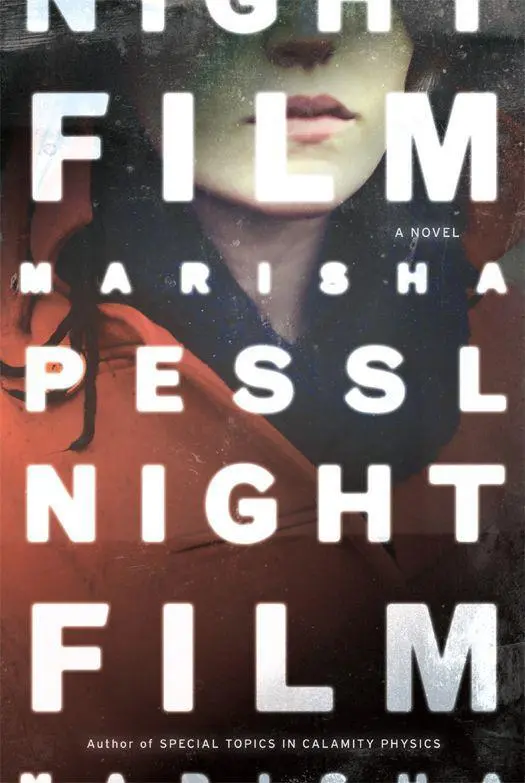
- Название:Night Film
- Автор:
- Издательство:Random House Trade Paperbacks
- Жанр:
- Год:2014
- ISBN:нет данных
- Рейтинг книги:5 / 5. Голосов: 1
-
Избранное:Добавить в избранное
- Отзывы:
-
Ваша оценка:
Night Film: краткое содержание, описание и аннотация
Предлагаем к чтению аннотацию, описание, краткое содержание или предисловие (зависит от того, что написал сам автор книги «Night Film»). Если вы не нашли необходимую информацию о книге — напишите в комментариях, мы постараемся отыскать её.
tells the haunting story of a journalist who becomes obsessed with the mysterious death of a troubled prodigy — the daughter of an iconic, reclusive filmmaker. On a damp October night, beautiful young Ashley Cordova is found dead in an abandoned warehouse in lower Manhattan. Though her death is ruled a suicide, veteran investigative journalist Scott McGrath suspects otherwise. As he probes the strange circumstances surrounding Ashley’s life and death, McGrath comes face-to-face with the legacy of her father: the legendary, reclusive cult-horror-film director Stanislas Cordova — a man who hasn’t been seen in public for more than thirty years.
For McGrath, another death connected to this seemingly cursed family dynasty seems more than just a coincidence. Though much has been written about Cordova’s dark and unsettling films, very little is known about the man himself.
Driven by revenge, curiosity, and a need for the truth, McGrath, with the aid of two strangers, is drawn deeper and deeper into Cordova’s eerie, hypnotic world.
The last time he got close to exposing the director, McGrath lost his marriage and his career. This time he might lose even more.
Night Film
Night Film — читать онлайн бесплатно полную книгу (весь текст) целиком
Ниже представлен текст книги, разбитый по страницам. Система сохранения места последней прочитанной страницы, позволяет с удобством читать онлайн бесплатно книгу «Night Film», без необходимости каждый раз заново искать на чём Вы остановились. Поставьте закладку, и сможете в любой момент перейти на страницу, на которой закончили чтение.
Интервал:
Закладка:
I made my way around a massive water tower — and there was the skylight. It was a rectangular pyramid, most of the glass missing. I walked over to it and, crouching down, looked through one of the shattered casements.
About twelve feet below me was a dark floor. Farther to my left, I could see directly into the empty shaft of a freight elevator, which extended seven stories below, the concrete brightly lit at the very bottom. It was like gazing down a throat, a corridor between two dimensions. The fall looked to be about a hundred feet. Even from this high angle, I could make out patches of rusty stains on the floor. Ashley’s blood.
She’d allegedly climbed in through this skylight, removed her boots and socks, and stepped to the elevator’s ledge. It must have been so fast, wind in her ears, her dark hair protesting in her face — and then nothing.
Falcone was absolutely right. The skylight’s blown-out metal casements were so narrow, it would’ve been hard to force Ashley down there against her will. Hard, but not impossible.
I stood up, inspecting the ground. There was no evidence, no cigarette butts or scraps, no debris of any kind. I was about to leave, heading back to the Hanging Gardens, when suddenly something moved, far below at the bottom of the elevator shaft.
A shadow had just swept across the floor.
I waited, wondering if I’d imagined it, staring at that empty, lit-up space.
But then, again, a silhouette slowly slid into view.
Someone was standing in the mouth of the elevator, his shadow tossed in front of him. He remained there for a minute, immobile, and then stepped all the way inside.
I spotted dirty-blond hair, a gray overcoat. He had to be a detective, back to inspect the scene. He ducked down, ostensibly to study the blood patterns on the concrete. Then, to my surprise, he actually sat down in the corner, propping his elbows on his knees.
He didn’t move for some time.
I leaned forward to get a better view, dislodging a shard of glass. It fell, smashing to the landing just below.
Startled, he looked up, then scrambled out of sight.
I lurched to my feet and took off across the roof.
He couldn’t be a detective. No detective I knew — with the exception of Sharon Falcone — moved that quickly.
10
I raced around the corner back to 9 Mott Street, fully expecting to find the entrance unsealed.
But the police tape remained intact, the door still padlocked.
How had he gotten in? And who the hell was it? A Cordovite? Some death-scene gawker? I checked the windows — every one nailed shut. The only other possibility was a narrow alleyway blocked with mountains of garbage. I pushed some of it aside, trying not to inhale, squeezing through. Sure enough, in the very back was an open window casting light on the opposite wall.
Whoever he was, he’d used a crowbar — lying on the ground — to pry away the old boards, leaving a space just wide enough to crawl through.
I stepped over, looking inside.
It was a brightly lit construction site, bare white neon bulbs dangling from an unfinished ceiling, plastic barrels and tarps piled by the front entrance. Hundreds of studs for building walls lined the expanse. Toward the back, on the right-hand side, a band of yellow POLICE LINE tape was strung across the elevator’s entrance.
There was no sign of the man.
“Hello?” I called out.
Silence. The only noise was the insect buzz of the lights. I grabbed the crowbar— just in case —and scrambled through, falling into a pile of concrete bags.
It was a wide-open expanse. Along the back wall there was just a stack of metal beams and mixing barrels, a plastic tarp covering something.
I stepped cautiously toward it and yanked it aside.
It was a wheelbarrow.
“Anyone here?” I called out, looking around.
There was no answer, no movement.
The guy probably got scared off.
I stepped toward the police tape, was about to duck it, when suddenly a hand seized my shoulder and something hard hit me on the side of the head. I wheeled around but was shoved to the ground, dropping the crowbar.
My eyes went white, blinded, though I managed to make out a man staring down at me. He shoved his foot onto my chest.
“Who the fuck are you?” he shouted. It was a young voice, slurred with rage. Bending over me again, he reached out as if to grab my throat, though I wrenched free, pushing him off balance, grabbed the crowbar, and socked him with it in the shoulder.
It wouldn’t exactly have made Muhammad Ali proud, but it worked. He tried to grab a metal stud for support, missed, and stumbled backward.
I staggered over to him. To my surprise, he was too wasted to stand. He reeked of booze and cigarettes, and he was just a punk —mid-twenties, shaggy hair, dirty white Converse sneakers, a faded green T-shirt that read HAS-BEEN. His eyes were watery and bloodshot, seemingly unable to focus as they stared up at me.
“My turn,” I said. “Who the fuck are you ?”
He closed his eyes and appeared to pass out cold.
My first impulse was to strangle the kid. Touching the spot where he’d cracked me on the head, I could feel blood. He wasn’t a cop, so that left random derelict or a Cordovite. Or, he knew Ashley.
I pulled his gray tweed coat out from under him, checking his pockets. There was a pack of Marlboros, three cigarettes left, a lighter, a set of apartment keys. I put them back. In the other, I pulled out an iPhone, the screen cracked, locked with a security code, the background a snapshot of a half-naked blonde.
I checked the inside pocket. It was empty. Yet, I felt something else and realized there was another compartment sewn into the ripped lining.
I reached inside, pulling out two tiny Ziploc bags. Both contained pills, one set yellow, the other green, letters and numbers stamped on the sides — OC 40 and 80. OxyContin.
So, he was a drug dealer —and pretty small-time, given the fact that he was snoozing through a body search. I returned the pills to the pocket and stood up.
“Can you hear me, Scarface?”
He didn’t answer.
“Hands in the air. FBI raid!” I shouted.
Nothing.
As gently as I could — though I don’t know why I bothered; he’d siesta through an apocalypse — I rolled him onto his side, removing his wallet from his back pocket. No driver’s license, no credit cards, only cash —seven hundred and forty bucks, mostly twenties.
I put the money and wallet back, but zipped his iPhone into my own pocket. Then I stepped around him to inspect the elevator.
There was nothing there but the dark pools of dried blood, a few tendrils spreading into the cracks of the concrete.
I took a few shots and then moved back to the kid, checking his breathing. He appeared to be only drunk —not on anything else. I pushed him deeper onto his side, so he wouldn’t suffocate if he got sick, and headed back to the window and climbed out, darting through the alley and back onto Mott Street.
I assumed I’d learn nothing more about him until tomorrow, when he discovered his phone missing. Yet during the cab ride home and even hours later, after I’d taken a shower, downed two Tylenol (given the immense pain from Beckman’s vodka and getting cracked in the side of the head, I should have swiped an OxyContin) — the kid’s phone was bombarded with texts.

That was Chloe. She wrote again six minutes later.
Читать дальшеИнтервал:
Закладка:
Похожие книги на «Night Film»
Представляем Вашему вниманию похожие книги на «Night Film» списком для выбора. Мы отобрали схожую по названию и смыслу литературу в надежде предоставить читателям больше вариантов отыскать новые, интересные, ещё непрочитанные произведения.




Обсуждение, отзывы о книге «Night Film» и просто собственные мнения читателей. Оставьте ваши комментарии, напишите, что Вы думаете о произведении, его смысле или главных героях. Укажите что конкретно понравилось, а что нет, и почему Вы так считаете.